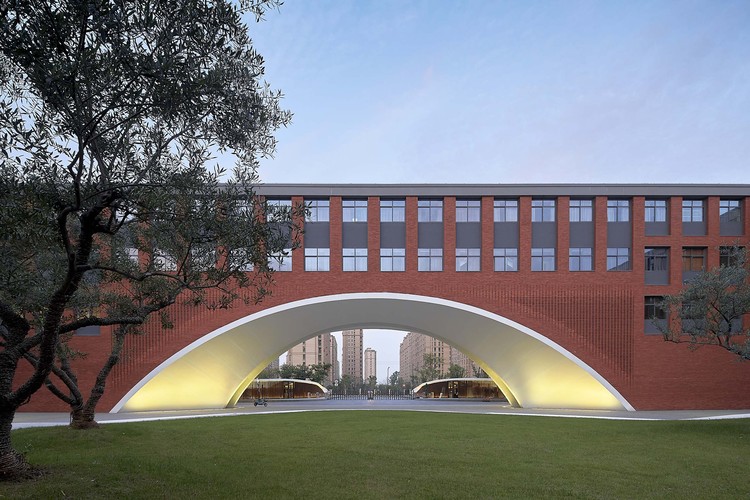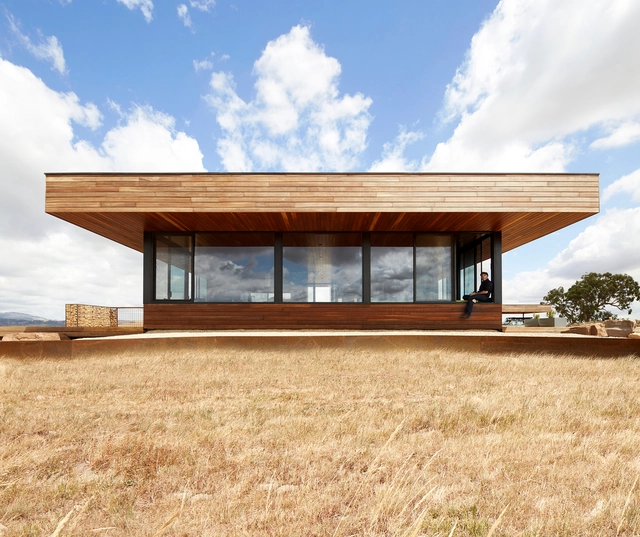
-
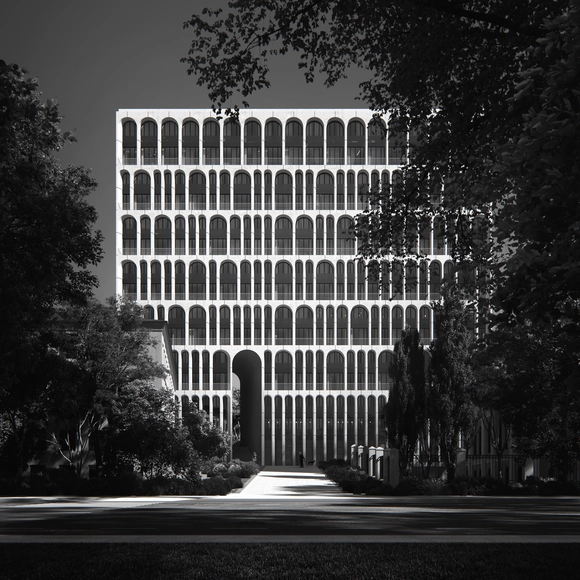
Architects: One Take Architects
- Area: 1000 m²
- Year: 2018
-
Manufacturers: Daikin, Danfoss, OPPO, WINSPIA


.jpg?1527868899&format=webp&width=640&height=580)
Bjarke Ingels Group’s LEGO House and DISSING + WEITLING’s Bicycle Snake have been recognized by the 2018 Danish Design Awards, an initiative which “highlights the impact and value of design, celebrates companies and designers across the country and showcases the difference their solutions make to industry, everyday life, and society at large.”
The LEGO House was victorious in the “Feel Good” category, while the Bicycle Snake was awarded the “Icon Award.”


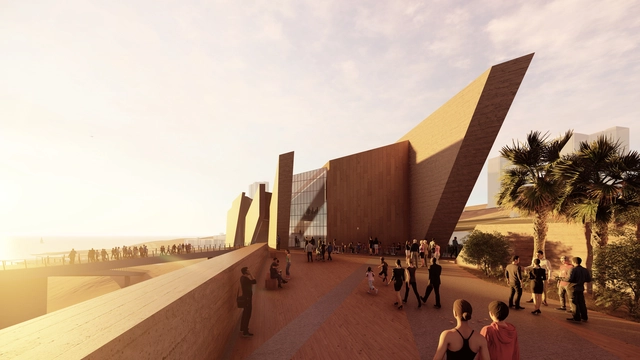
Schmidt Hammer Lassen has won an invited competition for the design of the Marine Knowledge Hub in Liverpool, United Kingdom. The 70,000-square-foot (6,400-square-meter) scheme, intended for marine engineering research, survival training, workspace, and events, seeks to elevate the status of both Liverpool and the United Kingdom in the maritime research industry.
The scheme forms part of the Wirral Waters regeneration project, a £4.5 billion masterplan, which represented the largest planning application ever submitted in the UK in 2009.

Mecanoo has released images of their proposed Taichung Green Corridor in Taiwan, set along a mile-long (1.7-kilometer) former railway line cutting through the city center. Once a valuable means of connection, the railway currently acts as a barrier due to its awkward position along a dyke, impeding circulation across the railway lines.
The Mecanoo scheme seeks to reuse the railway line to connect different parts of the city through a green corridor centered on biodiversity, cycling, and walking. Throughout the design process, Mecanoo addressed factors including urban regeneration, public participation, historic preservation, and green and water resources along the Green River waterfront.


Throughout history, architects have used sketches and paintings to display to their clients the potential outcomes of the projects rattling around their minds. Since Brunelleschi’s adoption of drawn perspective in 1415, architectural visualizations have painted hyper-realistic imaginings of an ideal, where the walls are always clean, the light always shines in the most perfect way, and the inhabitants are always happy.
With technological advances in 3D modeling and digital rendering, this ability to sell an idea through a snapshot of the perfect architectural experience has become almost unrestricted. Many have criticized the dangers of unrealistic renderings that exceed reality and how they can create the illusion of a perfect project when, in fact, it is far from being resolved. However, this is only the natural next step in a history of fantastical representations, where the render becomes a piece of art itself.
Below is a brief history of the interesting ways architects have chosen to depict their projects—from imagined time travel to the diagrammatic.

Juhani Pallasmaa Interview: Art and Architecture from Louisiana Channel on Vimeo.
In this video from the Louisiana Channel, Finnish architect Juhani Pallasmaa expounds on his view of the importance of art and architecture. In order to begin to understand this relationship, Pallasmaa stresses the importance of literature and self-construction, along with understanding the history and culture of a place.
.jpg?1527355326)
As part of our 2018 Venice Architecture Biennale coverage, we present the completed Argentinian Pavilion. Below, the curatorial team describes the exhibition in their own words.
Horizontal Vertigo, Argentinian Pavilion at the Venice Biennale 2018, delves into the notions of humanity and democratic spirit as proposed by Freespace, by establishing a cross-cutting dialog between geography, place, and architecture.
The exhibition, curated by the architects Javier Mendiondo, Pablo Anzilutti, Francisco Garrido and Federico Cairoli, is an invitation to rethink our territory as a collective construction and discover architecture in its capacity to convey unexpected generosity in every project.