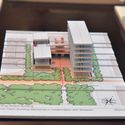
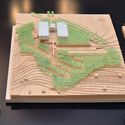
The Renzo Piano Building Workshop (RPBW) has presented their preliminary design approaches for three hospitals in Greece. Part of a €200 million ($240 million) healthcare initiative launched by the Greek government, RPBW will produce designs for a General Hospital of Kromotini, a Children’s Hospital in Thessaloniki, and the Evangelismos Hospital in Athens which will also form part of the University’s Faculty of Nursing.
The three schemes are united by a “people-centric” approach, with each project seeking to integrate into their natural environments with an emphasis on natural light. The projects will follow the design ethos of the Stavros Niarchos Foundational Cultural Center by RPBW, completed in 2016.
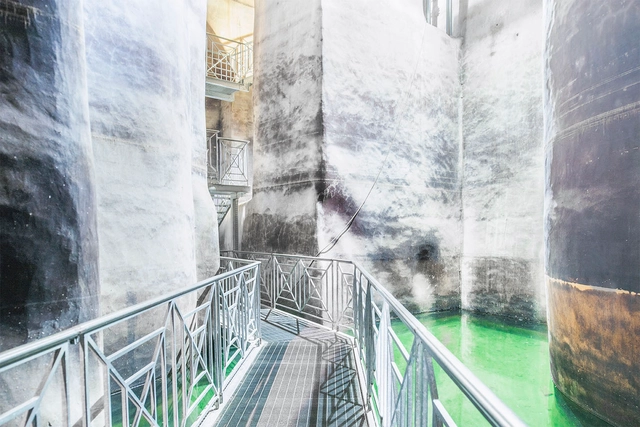
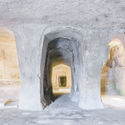
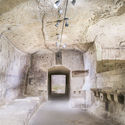
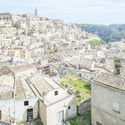
Above a steep canyon cut by the fast flowing water of the River Gravina lies one of the oldest communities in the world, whose architecture is defined by the rocks among which it sits. Matera, found in the southern Italian region of Basilicata, is a picture-perfect, white-stone city that originates from a prehistoric troglodyte settlement. The area’s special caves were used as a natural shelter from the harsh climate as early as 10,000 BC and, while the city has developed a unique, more modern personality alongside its cave-dwelling past, its success and perception has always be tied to its historic core—giving Matera a long and storied history that will culminate in a stint next year as a European Capital of Culture. Through the photos Federico Scarchillii, we can see the uncommon beauty and opportunity in this settlement.
For years, there has been a lack of diversity in the field of architecture. Whether attrition numbers have been due to the lack of available information about promotion paths, firm hiring practices, or architects seeking out new career opportunities, this profession is one that has historically been stagnant in its representation. However, there is good news on this subject, as the National Council of Architecture Registration Boards (NCARB) revealed new data which shows that the profession is becoming more diverse and that the proportion of women staying in their careers is increasing.
According to NCARB's recently published By The Numbers report,although equity and diversity in the profession have been improving in recent years, data shows that attrition along the path to licensure remains much higher for non-white individuals. “NCARB has spent the past several years updating and aligning our programs to remove unnecessary burdens while maintaining the rigor needed to protect the public,” said NCARB CEO Michael Armstrong. “A key area for us to address is identifying how pinch points along the path to licensure may vary for candidates from different backgrounds.”
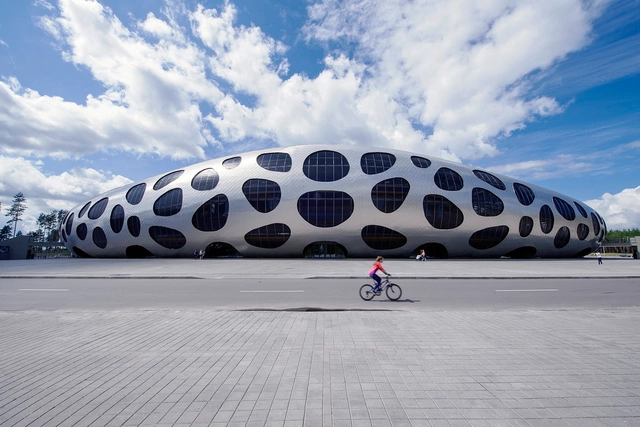
Stadiums —new or remodeled— provide excellent and innovative examples of architecture on a large scale; they are required to shelter thousands of people, including the athletes of the games they host. In addition to the technical aspects and considerations related to sports, these structures apply interesting cladding systems, with some stadiums even generating the energy needed to function.
Read on for more about stadiums and their structures in detail.
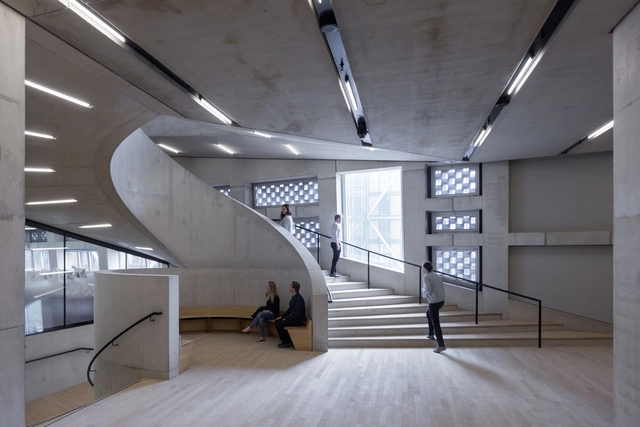
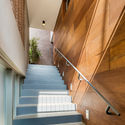
Stairs aren't only a means of vertical circulation. Through their might and scale, this building element can easily become the protagonist of a space. From afar one can observe the movement of people; from within the staircase the viewer is treated to new angles and perspectives of the building.
The prominence of staircases in the work of 2001 Pritzker Prize winners Herzog and de Meuron underscore the belief that risers and treads are never solely an element of circulation—they are generators of dynamism and rhythm that influence the essence of their projects.
This summer, July 11–13, the annual Fab City Summit will take place in Paris at the Paris City Hall and Parc de La Villette. The yearly event will gather the core team behind the Fab City Global Initiative together with city officials, innovation ecosystems from civic society and industry.
The growth and expansion of metropolitan areas has been evident over the past decade. Buildings are getting taller, and urban areas are getting larger. What if there was a way to predict this growth and expansion?
A new study by Spanish researchers from the University of A Coruna has discovered that the increase of skyscrapers in a city reflects the pattern “of certain self-organized biological systems,” as reported by ScienceDaily. The study uses "genetic evolutionary algorithms" to predict urban growth, looking specifically at Tokyo's Minato Ward. Architect Ivan Pazos, the lead author of the new study, explained the science behind the algorithm: "We operate within evolutionary computation, a branch of artificial intelligence and machine learning that uses the basic rules of genetics and Darwin’s natural selection logic to make predictions."
Read on for more about the study and what it could mean for the possibility of estimating vertical urban development.
The World Architecture Festival has announced the shortlist for their 2018 awards slate, featuring 536 projects ranging from small family homes, to schools, stations, museums, large infrastructure and landscape projects. The world’s largest architectural award program, the WAF Awards year saw more participation this year than ever before, with more than 1000 entries received from projects located in 81 countries across the world.
At the 2018 World Architecture Festival in November, the shortlisted teams will be invited to present their designs to a jury of more than 100 international judges, who will determine the best projects within the completed and future project categories. These finalists will then move on to present to the 2018 Super Jury who will determine the winners of for the 2018 World Building of the Year, Future Project of the Year and Landscape of the Year.







.jpg?1529669357)
.jpg?1529669434 "© Sergio Pirrone")
.jpg?1529669555 "© Sergio Pirrone")
.jpg?1529669479 "© Sergio Pirrone")
.jpg?1529669540 "© Sergio Pirrone")
.jpg?1529669357)
.jpg?1529938742&format=webp&width=640&height=580)





















.jpg?1530043658)


.jpg?1530043658)