This guide explains how to structure multi-image prompts in the RunDifussion platform. Explore RunDifussion's product catalog.


This guide explains how to structure multi-image prompts in the RunDifussion platform. Explore RunDifussion's product catalog.

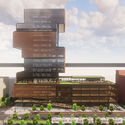
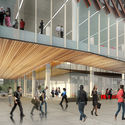
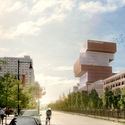
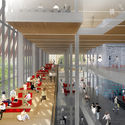
KPMB Architects have released a design to construct a 17-floor tower for Boston University's new Data Sciences Center. Located on the university’s main Charles River campus, the project will become the tallest building at the university. The vertical design was made to bring together the mathematics, computer science and statistics departments under one roof. Overlooking the Boston skyline and the Charles River, the stacked design will become a new landmark for Boston University.


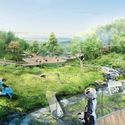
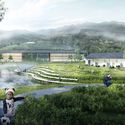
Sasaki has unveiled images of their proposed Chengdu Panda Reserve in China, intended to aid wildlife preservation efforts of the Chinese cultural icon. The masterplan for the reserve represents the launch of “China’s increasing communication, collaboration, and awareness of its pioneering strategies to protect the species and its native habitat.”
With only 1,800 left in the wild, the giant panda is one of the most vulnerable species on earth, and are native to only one region in the world: an area of western China near Chengdu. As one of the fastest-growing cities in the world, Chengdu’s rapid urbanization will yield to a 69-square-kilometer reserve, providing a framework for the protection of endangered species worldwide.

.jpg?1540405202)
The story of the Hastings Pier is an improbable one. Located in Hastings - a stone's throw away from the battlefield that defined English history - the pier was first opened to the promenading public in 1872. For decades the structure, an exuberant array of Victorian-era decoration, entertained seaside crowds but by the new millennium had fallen out of disrepair. In 2008 the pier was closed - a closure that became seemingly irreversible when, two years later, it burnt down.


YAC - Young Architects Competitions and Mothe Chandeniers launched “Common Ruins”, a competition of ideas aiming to breath a new life into an astonishing castle in France. A cash prize of € 20,000 will be awarded to winners selected by a well-renowned jury made of, among the others, Anish Kapoor, Rudy Ricciotti, Edoardo Tresoldi, Dagur Eggertsson, Alfonso Femia, Aldo Cibic, Marco Amosso (Lombardini 22), Luca Dolmetta (LD+SR architetti).

To rank architects, or to even pretend that any list or selection would be exhaustive and/or apply to the individual tastes of every architecture lover, seems, on the surface, a pointless task. However, as we move away from looking for inspiration from merely the great masters or the handful of contemporary firms studied in academic programs, it is important to shine a light on the works that we, as ArchDaily editors, have found particularly valuable. Of the thousands of architects whose projects have been selected to be published on our site, we occasionally notice firms whose work stands out. Whether we’re drawn to their innovative approach to practice, the role they play in contributing to their local communities, or their generosity, we are eager to display their work as an example, so that others may be inspired to challenge the status quo.

.jpg?1540568894)
About the Competition
Turkistan Architect Awards is an international architectural competition for the conceptual development of objects located in the historical city of Kazakhstan — Turkistan, initiated by the Governor of the Turkestan region. The main objective of the competition is to give a new impetus to the development of the Turkestan region: as a touristic hub with the unique architecture. The competition is aimed at creating equal conditions for creative competition between the participants in order to determine the most interesting and progressive solutions, both architectural and engineering, taking into account the use of innovative technologies, materials, design and methods of building structures in the project.


This article was originally published on August 14, 2014. To read the stories behind other celebrated architecture projects, visit our AD Classics section.
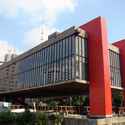
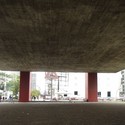
When Lina Bo Bardi received the commission to build a new museum of art on São Paulo’s Terraço do Trianon, she was given the job under one condition: under no circumstances could the building block the site’s panoramic vistas of the lower-lying parts of the city. This rule, instituted by the local legislature, sought to protect what had become an important urban gathering space along Avenida Paulista, the city’s main financial and cultural artery. Undeterred, Bo Bardi came up with a solution that was simple and powerful. She designed a building with a massive split through its midsection, burying half of it below the terrace and lifting the other half into the sky. As a result, the plaza remained open and unobstructed, and in 1968, the iconic São Paulo Museum of Art (MASP) was born.









.jpg?1540405410 "Hastings Pier / dRMM. Image © Laurian Ghinitiou")
.jpg?1540404858 "Hastings Pier / dRMM. Image © Laurian Ghinitiou")
.jpg?1540405254 "Hastings Pier / dRMM. Image © Laurian Ghinitiou")
.jpg?1540583713 "Hastings Pier / dRMM. Image © Laurian Ghinitiou")
.jpg?1540405202)