



-
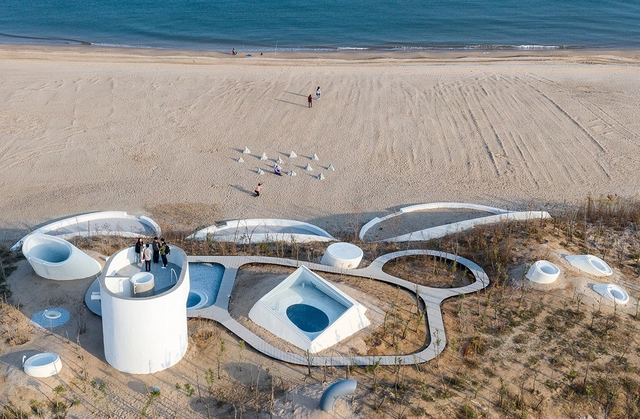
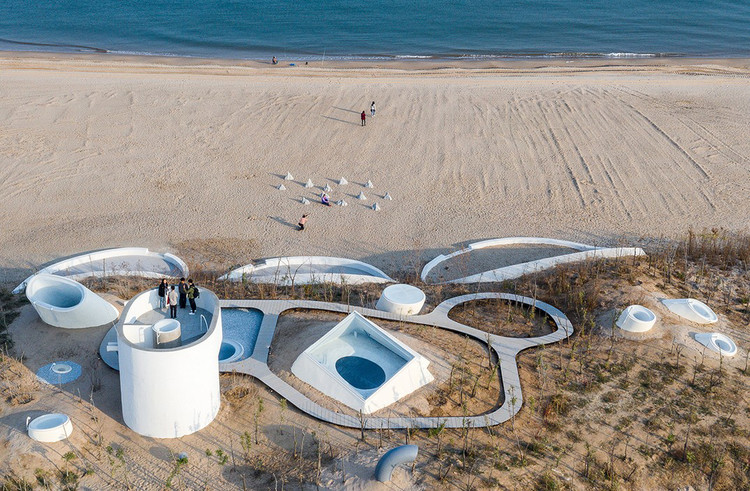
Architects: OPEN Architecture
- Area: 930 m²
- Year: 2018
-
Professionals: X Studio, Tsinghua University, China + OPEN Architecture





New details of Google's North Bayshore campus have been revealed. The latest scheme includes a combination of office, retail, public and residential space. Located in North Bayshore, California, the revised plan focuses on the site's natural environment and affordable housing.


Kohn Pedersen Fox Associates (KPF) has unveiled details of Huamu Lot 10 in Shanghai. The three-tower scheme, totaling 279,000 square meters, is dedicated to commercial offices and a future museum, positioned around a central grand plaza.
Described as a “new form of participatory urbanism,” the scheme has been designed to accommodate large-scale artwork in a public setting, thus activating the central plaza as a cultural hub.

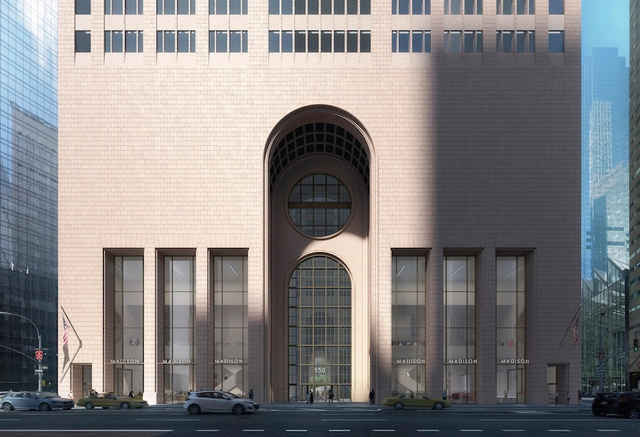
Labeled as "vandalism" and "murder" of an icon of postmodernism, Oslo-based firm Snøhetta's redesign proposal for Phillip Johnson and John Burgee's AT&T Headquarters was received with instantaneous backlash across the architectural community last year. Architect Robert A. M. Stern, marched alongside a protest outside 550 Madison Avenue, and even critic Norman Foster, who never claimed to have any sympathy for the postmodern movement, still vocalized his sentiments that "[the building] is an important part of our heritage and should be respected as such."
A rejection of the bland and cold functionality of Midtown's crystal skyscrapers, the AT&T building was intended to encourage a more playful approach architecture in the corporate world; the crazy socks beneath a three-piece suit. It was not without controversy. Upon its completion, the building was derided for its decorative and outsized pediment and occasionally dark interior spaces. Indeed, the building's arched entry spaces were among the only architectural elements to be met with praise from both critics and the public.


Architects use meshes and nets as a way to brighten up homes, hostels, and even office spaces. Functioning as a hammock, mesh establish a connection between floor levels. This playful feature often creates unexpected places for leisure, escape, and rest. Below, we've selected 17 projects that feature nets and meshes.
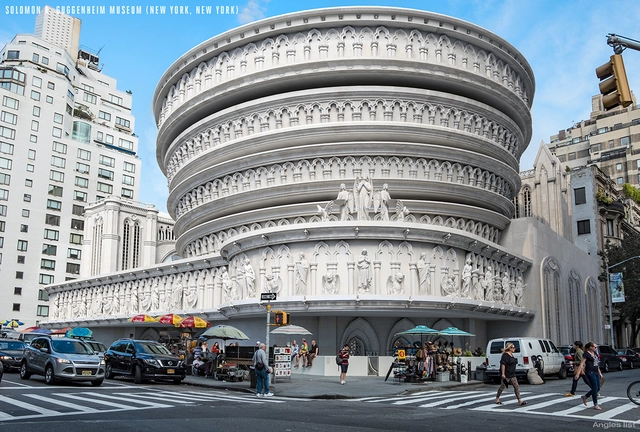
With its intricate ornamentation and complex ribbed vaulting, Gothic architecture introduced a slenderness and exuberance that was not seen before in medieval Europe. Epitomized by pointed arches, flying buttresses, and tall spires, Gothic structures were easily identifiable as they reached new heights not previously achievable, creating enigmatic interior atmospheres.
Several centuries later, a new appreciation for Victorian-era architecture was reborn in the United States with the Gothic Revival movement most famously depicted by Chicago's Tribune Tower. A series of computer-graphics (CG) renderings done by Angie's List reinterpret some of America's iconic architecture from the 20th century to mirror buildings from the Middle Ages. View the republished content from Angie's List complete with each building's informative descriptions below.
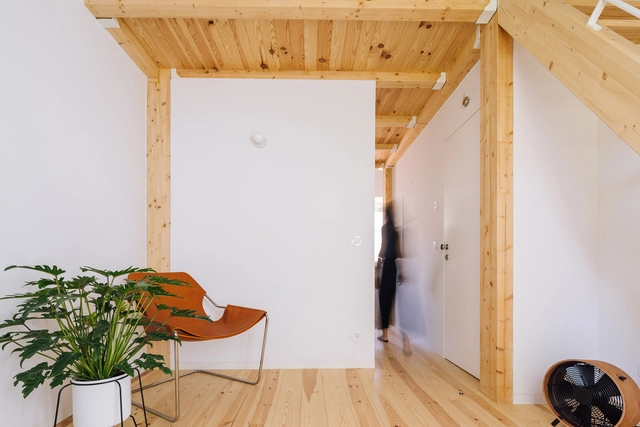


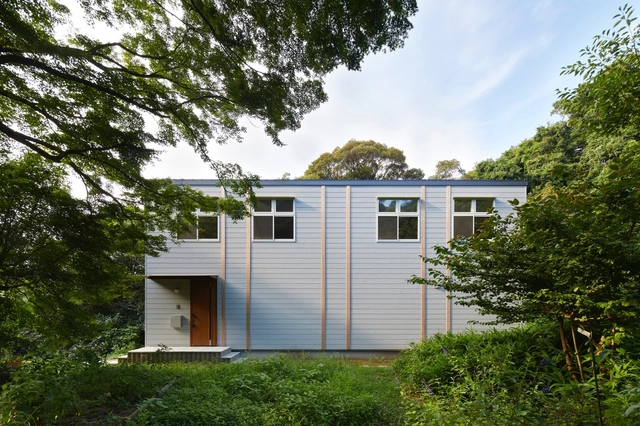



































.jpg?1544343835 "Courtesy of LMNB & Snøhetta")
.jpg?1544343847 "Courtesy of LMNB & Snøhetta")