


-
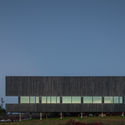
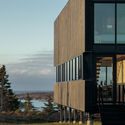
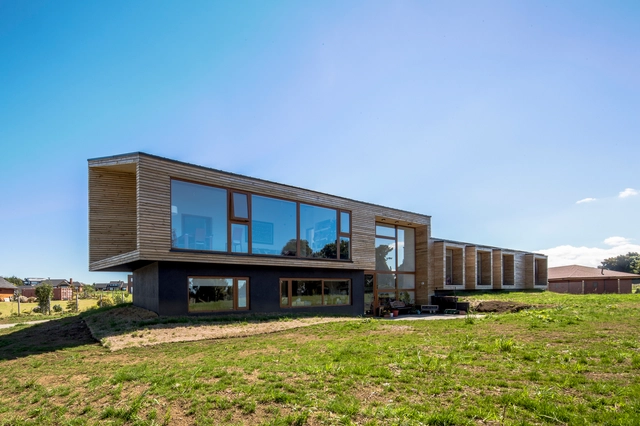
Architects: Amunt
- Area: 280 m²
- Year: 2017
-
Manufacturers: Geberit, FSB Franz Schneider Brakel, Arpa Fenix , Siedle, Uzin
-
Professionals: Reinhard Kaltenbach




This article was originally published on July 28, 2016. To read the stories behind other celebrated architecture projects, visit our AD Classics section.
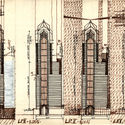
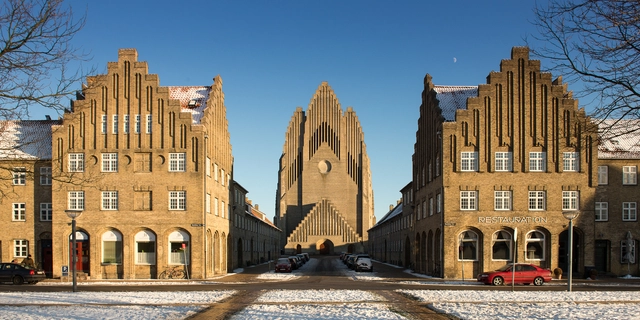
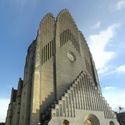
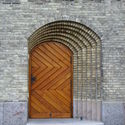
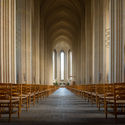
Six million yellow bricks on a hilltop just outside Copenhagen form one of the world’s foremost, if not perhaps comparatively unknown, Expressionist monuments. Grundtvigs Kirke (“Grundtvig’s Church”), designed by architect Peder Vilhelm Jensen Klint, was built between 1921 and 1940 as a memorial to N.F.S. Grundtvig – a famed Danish pastor, philosopher, historian, hymnist, and politician of the 19th century.[1] Jensen Klint, inspired by Grundtvig’s humanist interpretation of Christianity, merged the scale and stylings of a Gothic cathedral with the aesthetics of a Danish country church to create a landmark worthy of its namesake.[2]
It was decided in 1912 that Grundtvig, who had passed away in 1873, had been so significant to Danish history and culture that he merited a national monument. Two competitions were held in 1912 and 1913, bringing in numerous design submissions for statues, decorative columns, and architectural memorials.[3]




The American Institute of Architects have released the winning films for the 2018 Film Challenge. As part of the institute's larger Blueprint for Better campaign, the film challenge asked participants to produce, shoot, and edit 3 to 5 minute documentary-style short films. The AIA invited architects and filmmakers to collaborate in telling stories of architects, civic leaders and communities working together toward positive community impact.
_HI_RES_(5)_copy.jpg?1539181939)


In the last few years something has happened to architects’ willingness to strive for originality. The boldest visions now often come from the old guard of architecture - and frankly, I enjoy conversations with them much more. The current insistence on having common ground pushed so many younger architects into a zombie-like copycat state of mind. But to me, common ground means not to think alike – then there is space for discourse.
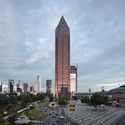
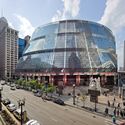
My most recent conversation with Helmut Jahn at his Chicago office is a case in point. “Architecture is all about going with your gut. I prefer when form follows force rather than function,” he told me. His distinguished career has been one of twists and turns, and he is not planning to give up exploring new ideas any time soon. His 1985 quadrant-in-plan Thompson Center reinvented a mundane government typology into a soaring public place, with its curved colored glass facade decisively welcoming a postmodernist period to Chicago (one we thought had finished, but now seems to be ongoing, encompassing all of post-Modern movements as its mere shades and variations.) Jahn’s architecture shook and modernized a number of global cities, and with time and experience, what began as a rebellion against Mies’s “less is more” modus operandi matured into nuanced, measured, though unquestionably gutsy, production of towers, airports, convention centers, headquarters, and, most importantly, public spaces. As Jahn himself says, “...anything you don’t need is a benefit. Not only you have to have less things but with the things you have left you have to do more.”

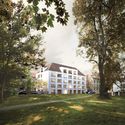
David Chipperfield and Euroboden have collaborated on the design of a five-story building in Munich, located near the city’s Herzog Park. The 2800-square-meter scheme seeks to “fit sensitively into the historic fabric of the neighborhood.”
The design process revolved around the incorporation of history and pattern from the surrounding environment, without copying or resorting to historicization. The result is a scheme which is “simultaneously self-confident yet restrained, a building that integrates itself into its context without subordinating itself.”

























_HI_RES_(13)_copy.jpg?1539181964 "© Robin Hill")
_HI_RES_copy.jpg?1539182050 "© Robin Hill")
_HI_RES_copy.jpg?1539181952 "© Robin Hill")
_HI_RES_(7)_copy.jpg?1539181989 "© Robin Hill")