Once the construction of an architecture project is finished, it's time to install the claddings that will make up the visible faces of the interior spaces. Wallpaper –an efficient way to bring color and design into rooms – is generally specified according to the square meters we want to cover, so we must start by calculating the area of each surface with great precision.
This task can be easy on clear walls with standard dimensions, but it can generate mishaps or unnecessary expenses in more complex designs. We present some tips to make an estimate as accurate and efficient as possible.
Flowing Fish. Image Courtesy of Bay Huynh Architects
Vietnam-based Bay Huynh Architects have created a proposal for an urban waterway as a new rooftop for Notre Dame Cathedral in Paris. Designed to explore the value of faith and society, the proposal comes after the Notre Dame fire in April this year. Called the Flowing Fish, the project aims to break the traditional notion of a church to create a "new ecosystem" for worship.
It's very likely that you are reading this text in an interior space with the lights on. For most people, modern living entails spending most of the day in closed rooms, bathed in a sum of artificial and natural lights. Yet while artificial light has afforded mankind incalculable possibilities, it has also caused some confusion in our bodies, which have evolved for thousands of years to respond to the stimuli of sunlight in the day and darkness at night. This responsiveness to natural light is called the circadian rhythm or cycle, and describes the 24-hour biological cycle of almost all living beings. Circadian rhythms are primarily influenced by light reception, but temperature and other stimuli also play a role in the process.
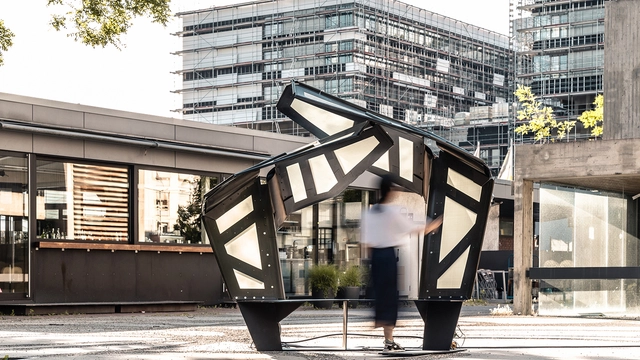
The Institute for Computational Design and Construction (ICD), the Institute of Building Structures and Structural Design (ITKE) and the Institute for Textile and Fiber Technologies (ITFT) at the University of Stuttgart have launched the ITECH Research Demonstrator 2018-19. The project aims to investigate large-scale compliant architecture.



.jpg?1565290135 "Modern Sampran Wangprom Office / Apostrophy's. Image © Sitthisak Namkham")

















.jpg?1565615567&format=webp&width=640&height=580)
.jpg?1565614690 "© Sergio Pirrone")
.jpg?1565615104 "© Sergio Pirrone")
.jpg?1565615518 "© Sergio Pirrone")
.jpg?1565614906 "© Sergio Pirrone")
.jpg?1565615567)
















.jpg?1565262499)
.jpg?1565262587 "© Federico Cairoli")
.jpg?1565262628 "© Federico Cairoli")
.jpg?1565262567 "© Federico Cairoli")
.jpg?1565262546 "© Federico Cairoli")
.jpg?1565262499)

.jpg?1565380463 "© Erieta Attali")
.jpg?1565380193 "© William Rojas")

.jpg?1565380345 "© Erieta Attali")