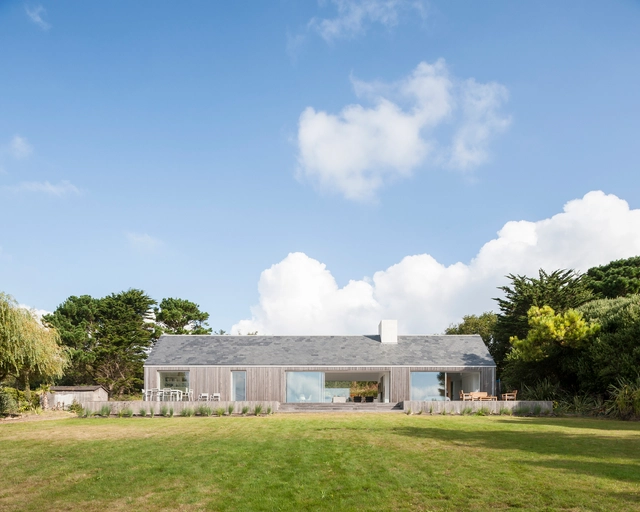

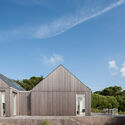
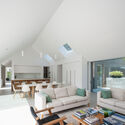
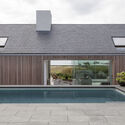

-
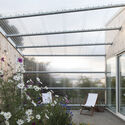
Architects: SOUP Architects
- Area: 250 m²
- Year: 2017
-
Manufacturers: Fineline Aluminium
-
Professionals: Gillingham Pools Guernsey, WT Partnership, Tickled Pink, Babbe McCathie, Marquis Surveys, +1
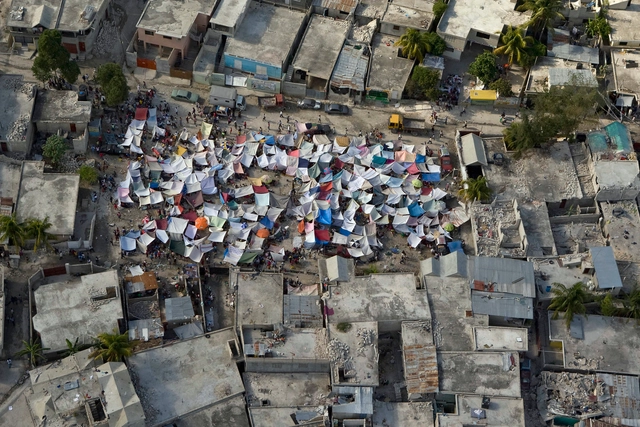
Haiti is suffering the consequences of a magnitude-7.2 earthquake that worsen a national crisis. News agencies have published photographs of collapsed buildings in Port-au-Prince recalling the destruction due to the 2010 earthquake.
As humanitarian aid is been deployed around the world to collaborate in rescue, shelter, health care, and food, questions arise: how does architecture help?

As the world's leading annual international juried design competition, the A' Design Awards were established to promote and recognize the best design work in all countries and in all creative disciplines. The Award has 100 main categories, including some of the most popular categories such as Architecture, Building and Structure Design, Interior Space and Exhibition Design, and Furniture Design, in addition to others related to the world of Lighting, Landscape, Building Materials, and many others. This year's edition is now open for entries; designers can register their submissions here.
In a Design and the City episode - a podcast by reSITE on how to make cities more livable – architect and founder of Doula x Design and co-founder of SHoP Architects Kim Holden discusses how rethinking and redesigning the ways birth is approached can change the outcomes of labor and birth experiences, and improve the qualities of life for both the babies and women giving birth to them. The interview explores how it is crucial to investigate the spaces where generations come into this world, just as we have been planning and building better cities for them to work and live in.

The Royal Institute of British Architects (RIBA) and the Jencks Foundation announced renowned Indian architect Anupama Kundoo as the winner of this year's RIBA Charles Jencks Award. The accolade given in recognition of significant contributions to the theory and practice of architecture acknowledges Kundoo's holistic practice that marries theoretical investigations, material research and sustainable building methods.
.jpg?1624956731&format=webp&width=640&height=580)
The automation of architectural design and rendering has been further accelerated by digital production tools. Tools such as 3D printers, assembly robots, and laser cutters, have all but perfected the design and construction process and have proven essential in optimizing resources, improving precision, and increasing control of the process.
In woodworking, the most frequently used digital production tools are milling machines or CNC (computer numerical control) routers. These tools facilitate the rendering of 2D vectoral drawings and 3D models, codifying them into instructions for the machine to follow and execute. Through this process, which starts with digital archives (typically created using design software widely known as AutoCad), milling machines and CNC routers can rapidly and precisely cut wood, producing ready to assemble pieces.
.jpg?1578004263&format=webp&width=640&height=580)
The "Climate Emergency" continues to embody a renewed worldwide focus on tackling climate change. While there is no "one solution" to the multifaceted challenges brought about by this crisis, there is an onus on every citizen, in both a personal and professional capacity, to apply their skills and actions in addressing the profound pressures on the natural world.
For those involved in the design of buildings and cities, be they architects, urbanists, or citizens, there is a deep responsibility to be aware of, and design for, the impact of climate change. With 36% of global energy devoted to buildings and 8% of global emissions caused by cement alone, the architectural community is deeply entwined with the flows of materials, energy, and ideas that relate to climate change, both causes, and solutions.
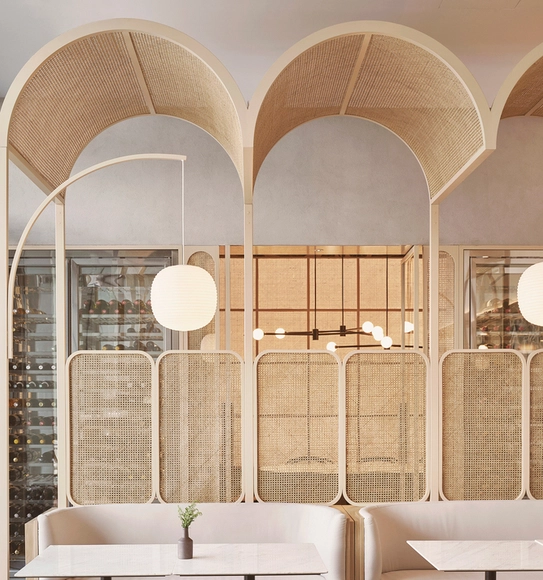
Over the past couple of years, many designers have voiced their commitment to ethical and ecological sourcing, resorting to frugal designs through local materials, traditional techniques, and equitable architecture. Having this approach in mind, many found inspiration in their cultural heritage, reimagining ancient designs in contemporary contexts.
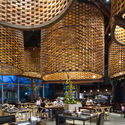
When thinking of recycled design trends, we can't overlook one of the most well-known and popular materials that was shared by nations all around the globe over the span of 100 years; on balconies, outdoor patios, gardens, and indoor living spaces: rattan. It is estimated that almost seven hundred million people worldwide use rattan, with many countries presenting it as an integral part of their cultures. In this article, we look at how architects and designers integrated rattan in their designs and found numerous ways to make the best out of Southeast Asia's popular local material.

A new report from the Intergovernmental Panel on Climate Change (IPCC) states that global warming of 1.5°C (2.7 °F) is essentially inevitable in coming decades. The question now is whether the world can prevent further, more destructive warming of 2°C (3.6°F), or, even worse, 3°C (5.4°F), which is what current policies put us on a trajectory to experience. Our economies can only put another 420 gigatons of greenhouse gas emissions into the atmosphere if we want a good chance of keeping a temperature increase to 1.5°C instead of 2°C. At our current pace, the world’s carbon budget will be used up before 2030. We need to phase out fossil-fuel use, build thousands of new clean power plants -- and swiftly move to power our homes, offices, schools, and transportation systems with clean energy.

















.jpg?1624956731)