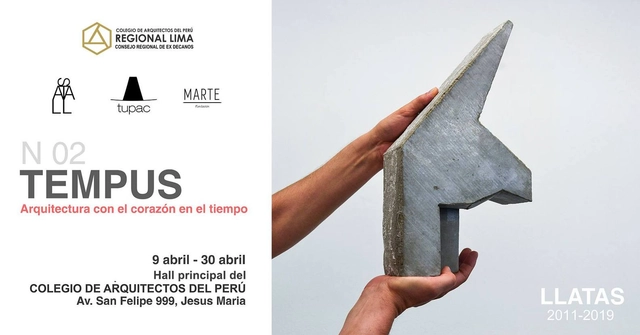
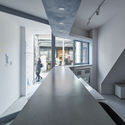
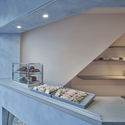
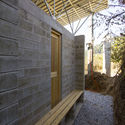
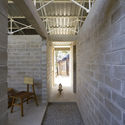
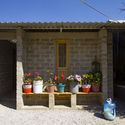
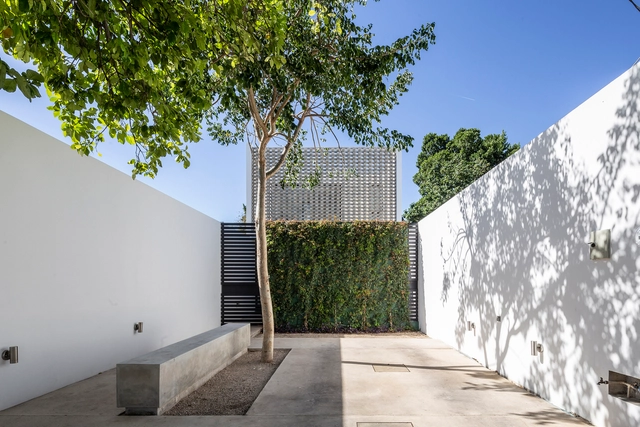
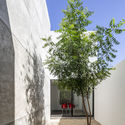
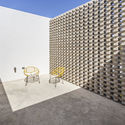
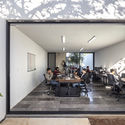
“To make is to think”—a phrase we have taken from Richard Sennett’s book The Craftsman—summarizes our working system across the various projects developed for this exhibition. Architecture takes time; constructing a project can take years. It is these almost infinite moments that allow the architect to rethink their work, evolve it, sometimes contradict it, and at other times, perfect it. When we speak of architecture and ask ourselves what it is, we can recall the words of one of the great masters, Mies van der Rohe, who reminds us that “Architecture starts when you put together two bricks, carefully.” In other words, architecture begins with placing one brick next to another, but the detail lies in doing so with care.
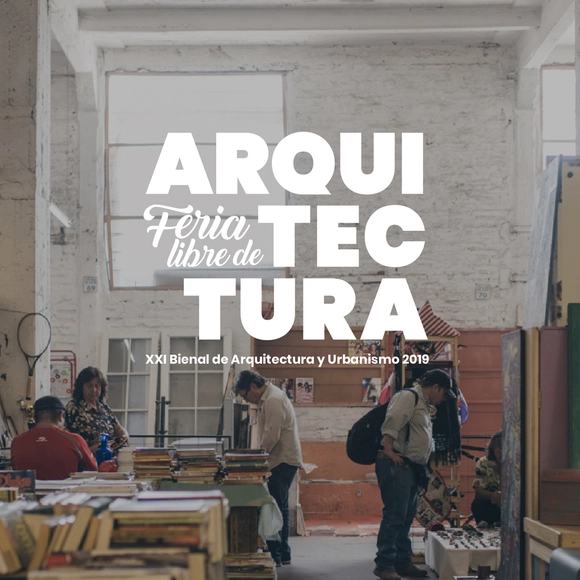
The XXI Chile Architecture and Urbanism Biennial invites students, architects, firms, institutions, publishers, and collectives to participate in the country's most significant event of its kind. This year, the event will focus on proposals geared toward the "everyday" public.
I.Project Introduction 1.1 Project Name:International Competition for the Landmark Design of Qianhai New City Center 1.2 Host: Authority of Qianhai Shenzhen-Hong Kong Modern Service Industry Cooperation Zone of Shenzhen;Shenzhen Bureau of Urban Planning and Natural Resources Organizer: Shenzhen Qianhai Shekou Free Trade Investment Development Co. Ltd. 1.3 Project location: the landmark is proposed to be located in the northwest coastal area of 01, Unit 17, Qianhai Mawan Area, Shenzhen.
1.4 Competition Purpose: As the fourth great bay area in the world, the Guangdong-Hong Kong-Macao Greater Bay Area is an important spatial carrier for China to build world-class city group and engage with the world. In accordance with the requirements of "relying on Hongkong, serving the mainland and facing the world", Qianhai has undertaken a number of national strategic goals that include these four major national strategic missions-Free Trade Zone, Guangdong-Hong Kong-Macao Cooperation, One Belt One Road and Innovation-driven Development. It is the Special Zone in Special Zones. With the official launch of the Development Plan for the Guangdong-Hong Kong-Macao Greater Bay Area, it is of great significance to build a world landmark which represents the image of the Guangdong-Hong Kong-Macao Greater Bay Area and promotes the spirit of the special zone.
https://www.archdaily.com/913494/call-for-entries-international-competition-for-the-landmark-design-of-qianhai-new-city-centerMilly Mo
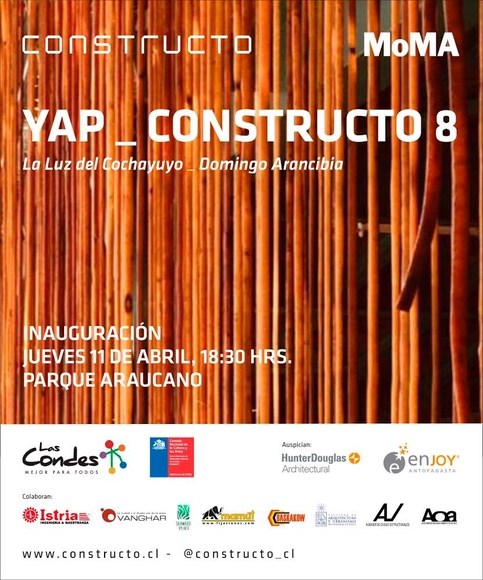
The inauguration of YAP_Constructo 8 will take place next Thursday, April 11, at Parque Araucano (Santiago). The program is developed in Chile by CONSTRUCTO in partnership with MoMA and is directed by architects Jeannette Plaut and Marcelo Sarovic.
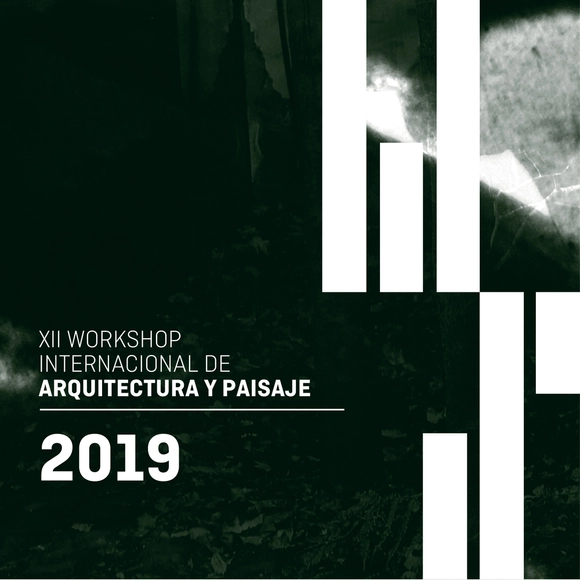
The workshop focuses on providing participants with a direct experience, introducing them to the territory where the work of RCR Arquitectes is rooted. The goal is to understand its relationship with the site and the landscape, while sharing and conveying an attitude toward life, architecture, and creativity by putting their working methods into practice.
The workshop aims to expand knowledge of audiovisual media and photography, with a focus on architecture and space. The course is developed through an exploration of the territory and RCR's architecture, combining reflection on the visual arts with practical application through creative work. The exercises are designed to awaken the senses, stimulating the creation of images that evoke the desire to touch, listen, and inhabit the space.
Mal Pelo, under the artistic co-direction of Pep Ramis and María Muñoz, is a creative group defined by shared authorship. Since 1989, Mal Pelo has developed its own artistic language through movement, incorporating theatricality by creating dramaturgy that includes the spoken word, working with composers to create original soundtracks, and collaborating with video artists, among others.
Scenography creates ephemeral spaces that, due to their short lifespan, must express an intention or an idea without room for doubt. Ultimately, space expresses a way of understanding a human story.
Once again, the application process is open for the 2019 Cantabria Traditional Architecture Summer School, organized by the Rafael Manzano Prize and INTBAU.
Des-Adarve aims to be a gateway, open to the public, to explore the iconic spaces of the city of Tudela through participation and contemporary art, while simultaneously highlighting its architectural and cultural heritage.
Panel: Rodrigo Garcia (Vice-Governor and Secretary of Government) - to be confirmed Renato Viegas (Former President of Emplasa) Mario Reali (CAU/SP and Escola da Cidade) Carolina Heldt (Rede Metropolitana) Regina Meyer (FAU-USP) Sânia Batista (Emplasa employee) Moderator: Fernando Túlio (President of IABsp)
SAAU'19: IESP Architecture and Urbanism Academic Week
During the final week of April 2019, João Pessoa, the capital of Paraíba, will host leading figures associated with discussions on the right to the city. Students, researchers, professionals, intellectuals, and activists from across Brazil will participate in the IESP Faculdades Academic Week of Architecture and Urbanism (SAAU’19), which this year will incorporate one of the most important events of the Institute of Architects of Brazil (IAB) into its program. The event will take place at the Espaço Cultural José Lins do Rêgo, provided in partnership by the Cultural Space Foundation (FUNESC) of the Paraíba State Government.
Videos
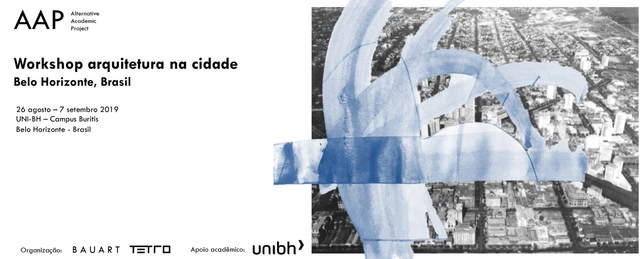
Architecture in the City Workshop - Belo Horizonte - AAP Alternative Academic Project
The AAP (Alternative Academic Project) is the result of an interest in fostering an alternative debate regarding architecture, urban planning, and landscape. We believe that contemporary education is built upon small components with a strong emphasis on diversity and internationality. Practice as an exercise of the architectural profession, with the intent of offering intellectual freedom, is fundamental to the future of the discipline. Through this project, we seek to blur boundaries and bring people together. The AAP aims to be an organization of professionals capable of providing concrete responses to territorial transformations, serving as a critical complement to architecture schools.