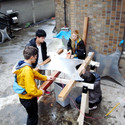
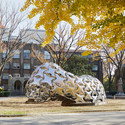
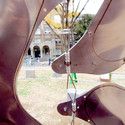
How often are spontaneous, primitive, radical actions implemented in large urban centres? Siempre Fiesta (or Always Party) by Andrés Carretero and Carolina Klocker was recently voted by the We-Traders community as their favourite in the recent Open Call Madrid competition. Viewing the city through children's eyes, where the order of the day is primarily playing or making, and using the concept of "free movement of our body in space" as a key driver, Carretero and Klocker developed a playful scheme that proposed filling a niche in Madrid's urban grid with sand as a way of managing the environment to create "comfortable space."
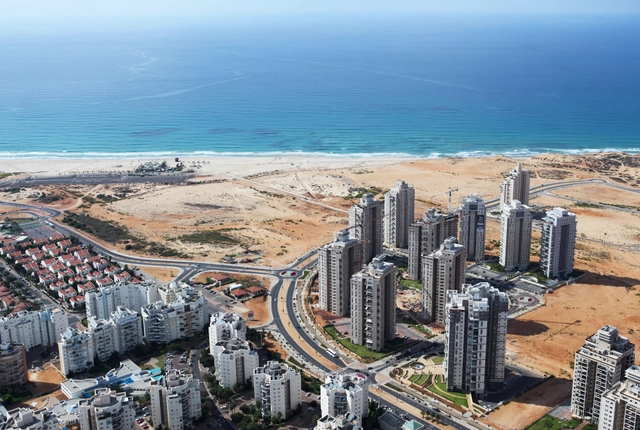
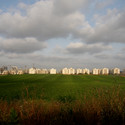
Neither urban nor suburban, the Urburb is a fragmented mosaic of one hundred years of modernist planning in Israel: early twentieth century garden-cities, mid-century social housing and generic, high-rise residential typologies of the past two decades. These residential mutations dominate the contemporary Israeli landscape, expanding and replacing existing textures, in an endless, repetitive cycle.
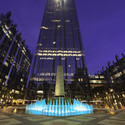
The design of PPG Place, by Philip Johnson and John Burgee, melds the notion of the modern corporate tower with a neo-gothic monument. Clad in almost a million square feet of glass manufactured by the anchor tenant PPG industries, the architects ingeniously rethought accepted practices in curtain wall design to create "the crown jewel in Pittsburgh's skyline." (1) The 1.57 million square foot complex was one in a series of high profile corporate projects completed during Johnson's controversial foray into postmodernism.
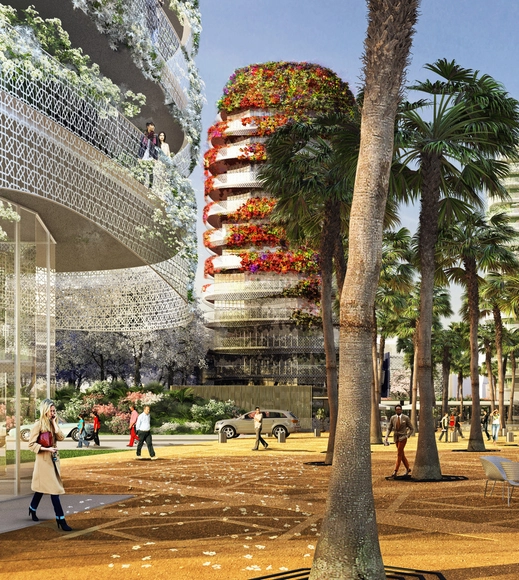
Maison Edouard Françoishas masterplanned a new mixed-use neighborhood for the Moroccan city Casablanca: “The Gardens of Anfa.” Scheduled for completion in 2017, the plan calls for three mid-rise residential towers, a low-rise office tower, and a series of residential blocks connected by a central piazza and concealed within a lush multicolored landscape. Each “organically-shaped” tower will be enhanced by a trellised facade that fosters the growth of bougainvilleas and jasmine, further camouflaging the structure and “demarcating the limits of a garden.”
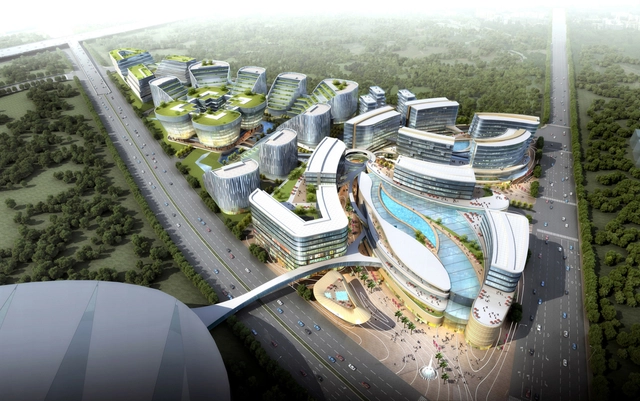
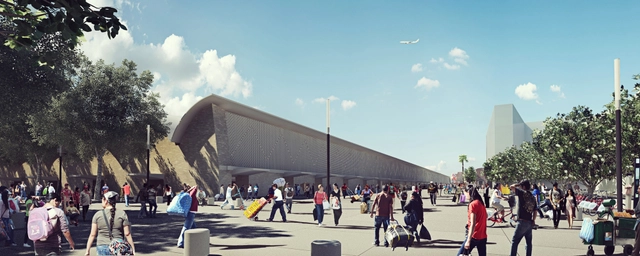
Urban Architecture (UA Studio 7) and Aedas' winning proposal for the Hongqiao Central Business District has broke ground at Shanghai’s domestic Hongqiao Airport, mainland China's fourth busiest airport. The 18.4 hectare office and retail center, masterplanned by UA, has been divided into two parts: UA Studio 7 will design the office district, “a flower with eight leaves,” while Aedas designs the shopping, hotel, and conference center along a "bow curve" of pedestrian flow.
According to UA, the winning scheme's success was "due to a highly energy-efficient architecture proposal combined with an urban plan that allows for pedestrian-friendly spaces."
Plaza. Image Courtesy of José Muñoz Villers Arquitectos + lab07
A design team led by Carlos Marín and José Muñoz-Villers has claimed first prize in Mexico City’s "La Merced" competition for their masterplan proposal to re-conceive the popular marketplace, Plaza Central La Merced. The team’s design, which beat out about 100 other entries, proposed the realization of a new public square to centralize pedestrian activity and to anchor strategies for urban revitalization, such as the reclamation of local heritage sites, the careful manipulation of natural elements, and the installation of urban furniture as a means for placemaking.
The RIBA's recent report "City Health Check: How Design Can Save Lives and Money" looks at the relationship between city planning and public health, surveying the UK's 9 largest cities in a bid to improve public health and thereby save money for the National Health Service. The report includes useful information for city planners, such as the idea that in general, it is quality and not quantity of public space that is the biggest factor when it comes to encouraging people to walk instead of taking transport.
Read on for more of the results of the report - and analysis of these results - after the break
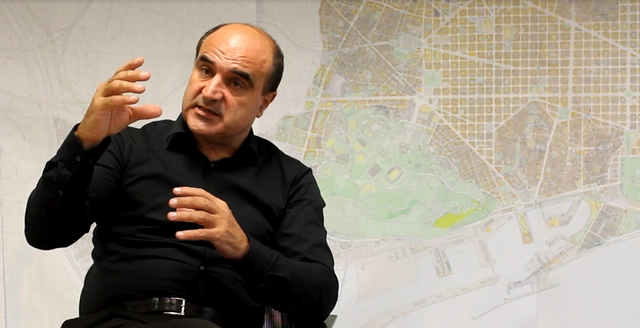
In the following article, originally published in Polish in theDecember 2013 issue of A&B, Ewa Szymczyk interviews Vicente Guallart, the Chief Architect of Barcelona since 2011 as well as the founder of Guallart Architects and IAAC (Institute of Advanced Architecture in Catalunya). Szymczyk questions Guallart about his experience in urban design, asking: how can you measure a city's success?
Ewa Szymczyk: When measuring the contemporary city’s success we typically use economic measures. In this sense Barcelona ranks very high, being a top tourist destination and managing its budget in times of global crisis. But there are many other ways to measure its success. What in your opinion makes a city a good city? Isn’t it much more than economic prosperity?
Vincente Guallart: A good city is a place where the citizens live well. So the best measure for a good city is how the citizens live. The truth is that the city is a physical representation of a social agreement. If you think for instance about Phoenix in Arizona, maybe people live there the way they want and the way they like to live. Obviously there are also questions related to cost. I mean, questions related to environmental and economic costs. Therefore the cost of a city like Phoenix is very different from the cost of a city like Hong Kong, which is the densest city and probably the most efficient urban structure in the world. So the question is the economic efficiency and also the quality of life of the citizens. And the best way to know is to ask citizens how happy they are to live in a place like this. The truth is that if you are a citizen of Barcelona you are quite happy. We have been evaluating this over the past few years and the average rating is seven out of ten. So that is in general very good! The people are proud to live in a place like this.
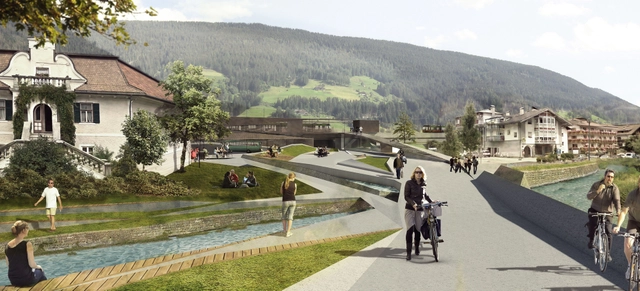
PLASMA Studio, in collaboration with Groundlab, won first prize in an international competition to masterplan the relocation of the Innichen/San Candido train station in North Italy. The project, now under construction, forms a new "Mobile Centre" that integrates a new public plaza, skate park, youth centre and more into a streamlined rail station that enhances connectivity throughout the town.
There are few recent trends in urbanism that have received such widespread support as cycling: many consider cycling the best way for cities to reduce congestion and pollution, make cities more dense and vibrant, and increase the activity and therefore health of citizens. Thus, it's no surprise a number of schemes have been proposed worldwide to promote cycling as an attractive way to get around.
However, recently it seems that many cycling schemes are running into bumpy ground. Read on to find out more.



















.jpg?1393213214&format=webp&width=640&height=580)
.jpg?1393212853 "© Filip Dujardin")
.jpg?1393212968 "© Filip Dujardin")
.jpg?1393212863 "© Filip Dujardin")
.jpg?1393213129 "© Filip Dujardin")
.jpg?1393213214)



.jpg?1390400182&format=webp&width=640&height=580)