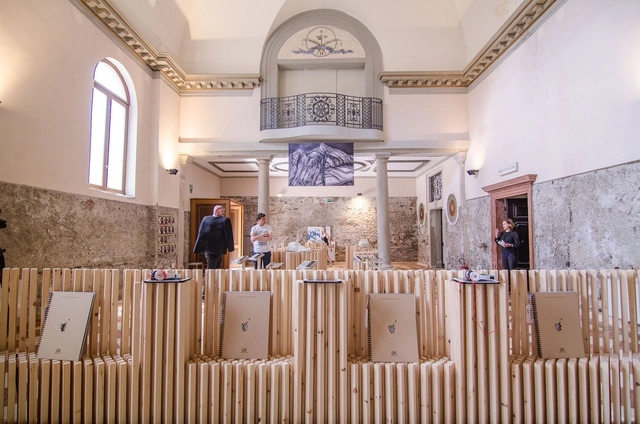
The Alexander Thomson Society is pleased to announce an international ideas competition open to architects and students of architecture to celebrate the work of Alexander 'Greek' Thomson, one of Glasgow’s greatest nineteenth century architects. It is being launched to coincide with the Year of Architecture 2016 and culminates in 2017 by an exhibition of selected entries to mark the bicentennial of the architect’s birth. The exhibition will take place in The Lighthouse, Scotland's Centre for Design and Architecture, housed in a Charles Rennie Mackintosh designed building.
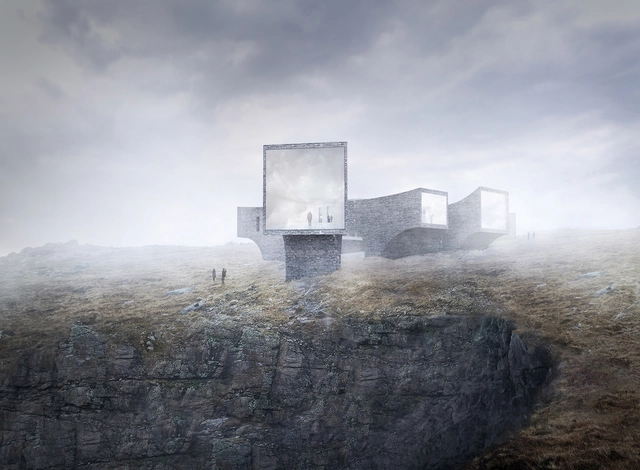
Reiulf Ramstad Arkitekter and Dualchas Architects have unveiled their plans for the St Kilda Visitor Center, which will be located on a cliff-top site at Geodha Sgoilt in the Uig area of the island of Lewis in the Outer Hebrides. Through the project, visitors will be able to experience the drama of St Kilda without physically visiting the famous archipelago, which lies over 50 miles to the southwest.
A triple world heritage site, St Kilda is famous not only for its sea cliffs and marine life but more for the story of how a community survived at the remote location before being evacuated in 1930.
By telling the story of this abandoned community, the current community of Uig hopes to catalyze economic development and reverse the population decline they have been suffering.
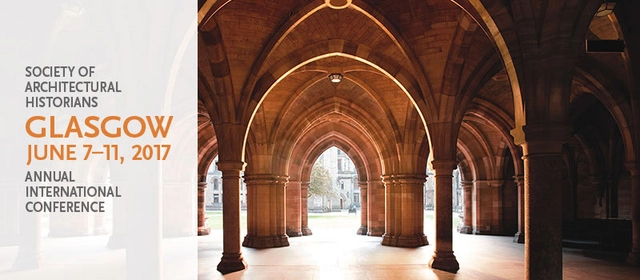
The Society of Architectural Historians will host its 70th Annual International Conference in Glasgow, Scotland, from June 7–11, 2017. Meeting in Glasgow reflects the increasingly international scope of the Society and its conference, and we expect SAH members from all over the world to join us in Scotland's largest city, world renowned for its outstanding architectural heritage. This is the first time that SAH has met outside North America since 1973, when it planned a joint meeting in Cambridge with the Society of Architectural Historians of Great Britain. Architectural historians, art historians, architects, museum professionals and preservationists from around the world will convene to present new research on the history of the built environment. The Glasgow conference will include 36 paper sessions, an introductory address, a plenary talk, roundtable discussions, a public seminar, public architecture tours, and special events.
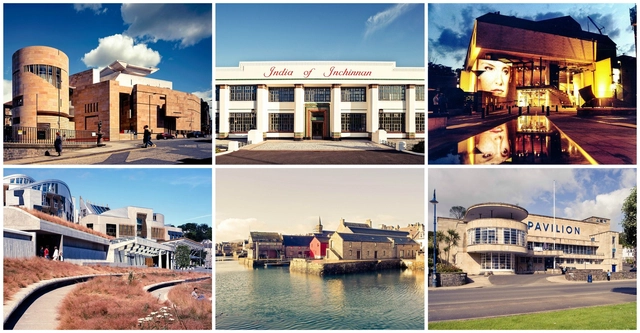
The top 10 buildings in Scotland of the past 100 years have been named as part of the traveling Scotstyle exhibition. Voters selected the list from an exhibition of 100 Scottish buildings, currently on display at the Scottish Parliament during the Festival of Politics, and will now vote to determine which building will be bestowed the title of “Building of the Century.”
“This brilliant list testifies to the extraordinary quality of Scotland’s buildings. The fact that so many are relatively recent demonstrates that our national architecture is in very good health. We have much to celebrate,” said Neil Baxter, RIAS Secretary and co-editor of Scotstyle.
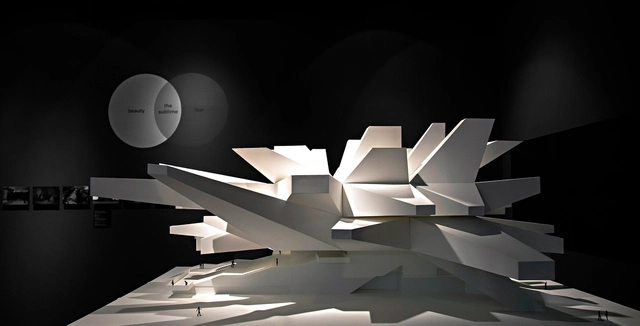
Sublime & Climatic Architecture _ Guggenheim Proposal _ Our weather has become so ingrained in our everyday routines that many of us forget just how profoundly this omnipotent force shapes our design culture.
Scotland / ‘Shadow Land’ The word Scotland is derived from the ancient Greek word for shadow, or darkness and gloom ‘skótos’. Quite simply Scotland’s ancient meaning being ‘shadow land’.
“Our weather shapes everything in our world; our psyche, our homes, our fashion, our architecture, our culture … weather is an omnipresent force”.
Scottish practice Stallan-Brand present art and architectural works that explore ‘how our place on earth defines us’ challenging the popular idea that ‘people make places’ by demonstrating that they in fact make us.
In Scotland 2016 is the Year of Innovation, Architecture & Design. Initiated by a group of architects, photographers, engineers, visual artists, curators and musicians the Architecture Fringe is an independent, contributor-led series of events and projects across the arts which will explore architecture and how it makes a difference to our lives.
As part of ArchDaily's coverage of the 2016 Venice Biennale, we are presenting a series of articles written by the curators of the exhibitions and installations on show.
People wearing the huge sculptural head of a unicorn has become one of the most surreal images to be seen at this year’s 15th Venice Architectural Biennale.
Part of the Prospect North exhibition at the Scottish Pavilion, which is jointly produced by Lateral North, Dualchas Architects and Soluis, a design-visualization studio from Glasgow, the heads of the unicorn, moose and polar bear allows you to enter an immersive virtual reality world of the Highlands past, present and future.
Exterior Perspective Views. Image Courtesy of Konishi Gaffney Architects
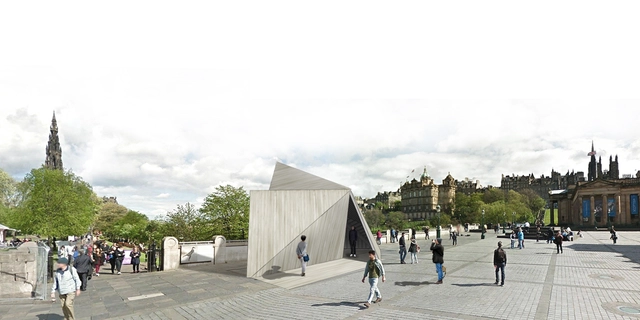
Edinburgh-based studio, Konishi Gaffney Architects, has won the competition to design a temporary pavilion for the Pop-Up Cities Expo. The Pop-Up Cities Expo is a headline event at Scotland’s Festival of Architecture, featuring pop-up pavilions at Mound Square from cities around Europe. Konishi Gaffney will be representing Edinburgh – the host of the expo - with their winning pavilion design.
Gillespie, Kidd & Coia's celebrated St Peter's Seminary—once voted Scotland's best modern building—has for too long been a victim of fate, left to decay after it was abandoned just 20 years after its completion. Fortunately, plans are well underway to restore the building. This article, originally published by Metropolis Magazine as "Ruin Revived," explains how even in its ruined state, the dramatic brutalist structure is already showing its value as a cultural destination.
Modernist architecture, it used to be said, was inadequate because the machined materials of modern buildings wouldn’t lend themselves well to picturesque ruination. What, minus the taut skins of glass and plaster, could these stark, boxlike carcasses possibly communicate to future generations?
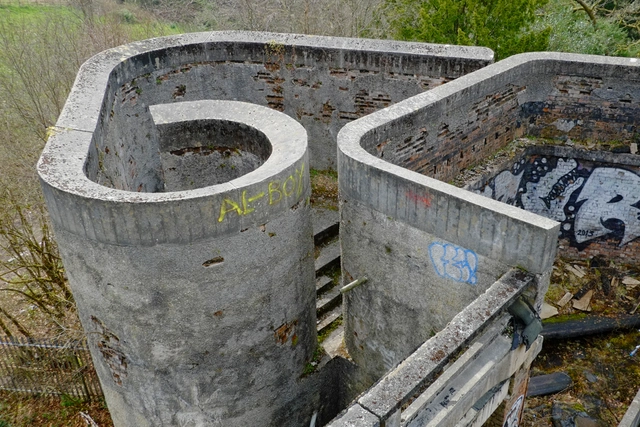
St. Peter’s Seminary in Cardross, Scotland, is a forceful rejoinder to that jibe. Built in 1966 and abandoned 20 years later, the seminary has settled into a state of pleasing decrepitude. Glass and plaster are long gone. The concrete remains largely intact but stained, spalled, and spoiled. Entire roofs and staircases have caved in. The only fresh signs of life are the aprons of graffiti draped all over the “interiors.” Yet, the sense of the place lingers, its noble forms still remarkably assertive—jutting forth from the dense surrounding forest—and optimistic.
The Society of Architectural Historians is now accepting abstracts for its 70th Annual International Conference in Glasgow, Scotland, June 7–11. Please submit an abstract no later than June 6, 2016, to one of the 32 thematic sessions, the Graduate Student Lightning Talks or the open sessions. The thematic sessions have been selected to cover topics across all time periods and architectural styles. SAH encourages submissions from architectural, landscape, and urban historians; museum curators; preservationists; independent scholars; architects; and members of SAH chapters and partner organizations.
Scotland, a country within the United Kingdom, will be showcasing a projected entitled Prospect North at the forthcoming Venice Biennale. Curated collaboratively between the Scottish Government, Architecture and Design Scotland, Creative Scotland,and the British Council Scotland, the installation will be designed by Lateral North, Dualchas Architects, and Soluis. As reported by the Architects' Journal, the show is set to examine "Scotland’s relationship with its northern neighbours" by focusing "on people and place, [and] looking at how communities from the Northern Isles of Orkney to the central belt of Scotland are using grassroot action."
The Burning Envelope - The Universal Emblem of the Turncoats. Image Courtesy of Turncoats
Turncoats, the irreverent architectural debate society from London, is launching an international series, starting chapters in Canada, Scotland, Serbia and the US. Originally created by Phineas Harper, Maria Smith and Robert Mull, Turncoats has “electrified London’s architectural scene” since its inception.
Combining architectural debate with unique settings, alcohol, and an absence of recordings or wireless devices, Turncoats has gathered significant attention, their signature flaming envelope emblem appearing on lapels across the city, and soon all over the world.
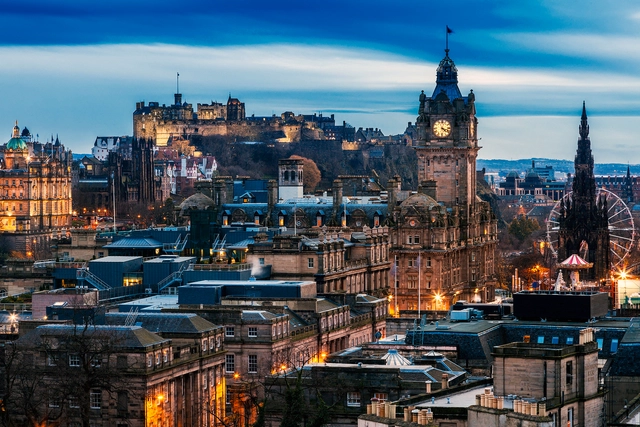
"A spectre," writes Kevin McKenna for The Guardian, "thought happily to have been exorcised from the heart of beautiful Edinburgh, is stalking the city’s old wynds and crevices once more." To put it more bluntly, the "formal recognition of [the Scottish capital] as one of the world’s most beautiful cities is under threat, amid a battle for the soul of its most historic quarter." As the UNESCO inspectorate moves in to determine whether the city's World Heritage Status should be renewed McKenna laments, through a series of case studies, the potentially bleak built future of one of Britain's most loved urban centres.
The Royal Institute of British Architects (RIBA)’s Future Trends Survey for September 2015 shows a level of consistency with the workload index remaining unchanged at a balance figure of +21. All nations and regions within the United Kingdom returned positive balance figures, with practices in Scotland responding most confidently about workloads in the next quarter. The report states that practices remain firmly positive about overall workload prospects in the medium term, though with "an apparent leveling-off in the rate of growth."