Have you ever thought a building looked suspiciously similar to a futuristic tank? Or, perhaps a gothic spire was eerily reminiscent of a matchstick? You’re not alone. Rich McCor, aka paperboy, has been traveling the world since 2015 filling his Instagram account with whimsical photographs of black paper cut-outs that transform often serious works of architecture into playful cartoon-like images.
Taking Christoph Niemann’s surreal account abstractsunday as a starting point, McCor was inspired to disrupt the norms of architecture and embellish the everyday. Though the account originally began while McCor was exploring the UK “it's taken me way beyond London to corners of the world I never thought I'd see,” he says. It’s easy to see why his humorous images of golf ball domes, beach-side creatures, and a pyramid-turned-magic trick have garnered McCor over 350k followers.
In his latest photo series, "Viennametry," Hungarian photographer and printmaker Zsolt Hlinka captures the unexplored voids in Vienna’s patchwork of historical and contemporary architecture. After previously studying the symmetrical corner buildings of grandiose Budapest, Hlinka has moved north to Austria on his quest to find geometry and symmetry within the urban landscape.
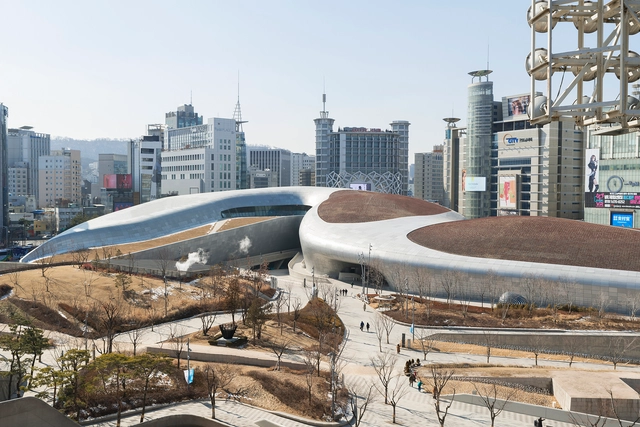
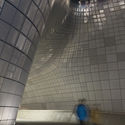
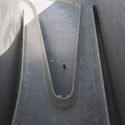
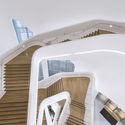
In the bustling streets of Seoul, the Dongdaemun Design Plaza by Zaha Hadid Architects has become a landmark for its atypical architecture. A complex yet effortless building, the Design Plaza encapsulates the energy of the cultural hub in Dongdaemun, an area that has itself earned the nickname of the "town that never sleeps" thanks to its late-night fashion market.
Investigating the building's twists and turns, Andres Gallardo has photographed the structure's fluid compositions. Although his photographs display little human presence, the building itself expresses the activity that occurs throughout day and night. Beneath the walkable park on the roof, Dongdaemun Design Plaza includes large global exhibition spaces, a design museum, 24-hour retail stores and a media center, among many other facilities that intertwine across the levels.
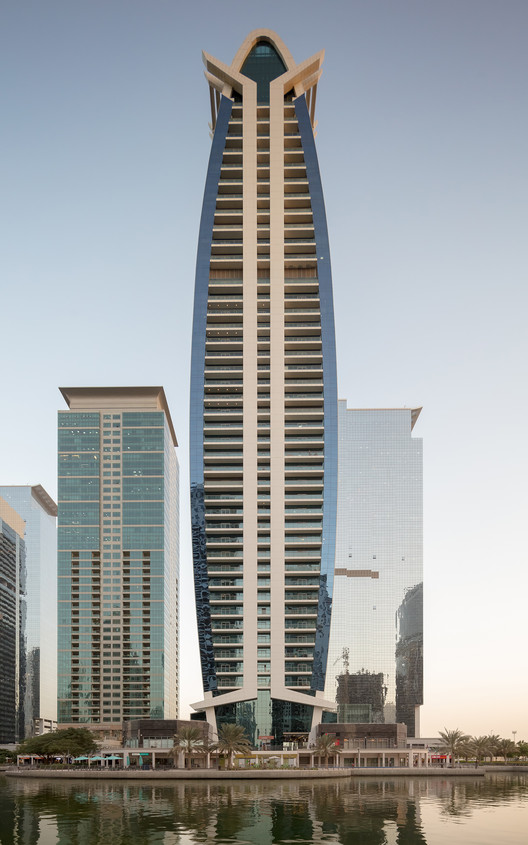
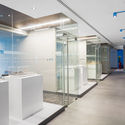
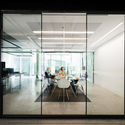
From Barcelona to Bejing, Marc Goodwin is capturing architectural workspaces around the world. Goodwin’s latest endeavor: Dubai. Scroll down to get a glimpse of where architects like the ones at RMJM and EDGE work in the “City of Gold.”
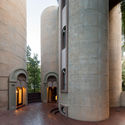
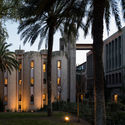
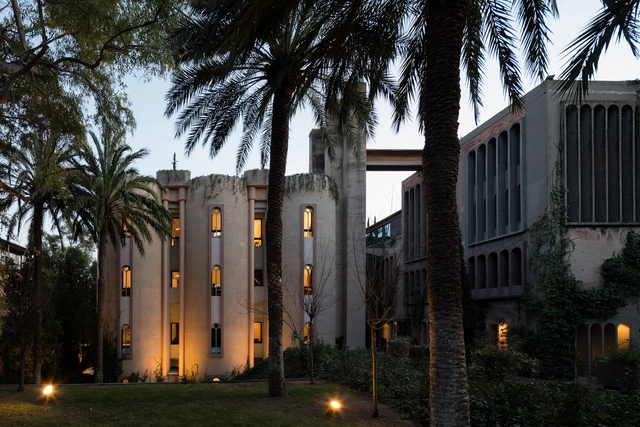
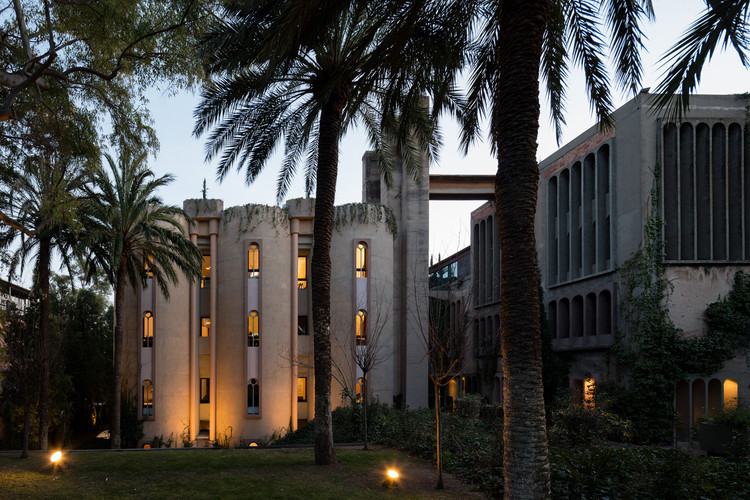
The International Workshop RCR is born of a way of understanding Architecture and Landscape from a humanistic spirit. The coexistence in a space and time of different creative disciplines creates synergies for mutual enrichment between the parties.
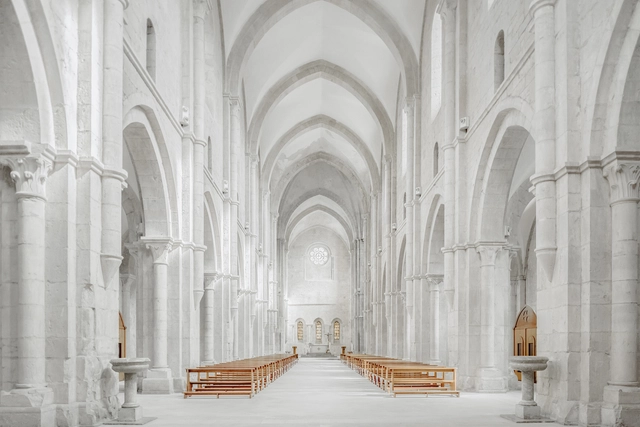
In his latest photographic collection, Federico Scarchilli captures Cistercian order in the form of Abbazia di Fossanova, Casamari, and Valvisciolo. Simple and utilitarian, Cistercian architecture reflects the transition between the Romanesque and Gothic periods. During this time, many religious authorities felt excessive ornamentation was a distraction to spiritual studies.
The Instagram account @streetview.portraits presents stunning images of people and architecture from Arizona to Kyrgyzstan. At first glance, it seems to be the work of a professional photographer gallivanting across the globe, but the owner of the account is actually Jacqui Kenny, a woman who suffers from agoraphobia and anxiety, capturing these beautiful images through Google Street View.
Through her alternative method of travel, Kenny discovered incredible scenes that displayed the magic of the ordinary: "I found a surprising and unique refuge in the creative possibilities of Google Street View. I began clicking through Google Maps to navigate to faraway countries like Mongolia, Senegal, and Chile. I found remote towns and dusty landscapes, vibrant architectural gems, and anonymous people, all frozen in time. I was intrigued by the strange and expansive parallel universe of Street View, and took screenshots to capture and preserve its hidden, magical realms."
There's an old, weary tune that people sing to caution against being an architect: the long years of academic training, the studio work that takes away from sleep, and the small job market in which too many people are vying for the same positions. When you finally get going, the work is trying as well. Many spend months or even years working on the computer and doing models before seeing any of the designs become concrete. If you're talking about the grind, architects know this well enough from their training, and this time of ceaseless endeavor in the workplace only adds to that despair.
Which is why more and more architects are branching out. Better hours, more interesting opportunities, and a chance to do more than just build models. Furthermore, the skills you learn as an architect, such as being sensitive to space, and being able to grasp the cultural and societal demands of a place, can be put to use in rather interesting ways. Here, 3 editors at ArchDaily talk about being an architect, why they stopped designing buildings, and what they do in their work now.
The history of Mexican photography has contributed to highlighting Mexico's presence in the world. Photographers like Elsa Medina, Lola Álvarez Bravo, Graciela Iturbide, Maya Goded, and Juan Rulfo have masterfully portrayed the life of the buildings, houses and the streets of a rapidly built, nineteenth-century Mexico.
As a consequence, the contemporary scene of Mexican photography has become a fundamental tool for architecture and has contributed to a better visual understanding of the works that are erected every day.
Photography and architecture are two disciplines that go hand in hand and whose relationship has been reinforced thanks to the digital tools that we currently have. For that reason, we have compiled the work of contemporary Mexican photographers who record our walk through the world we live in and contribute to constructing the image of contemporary Mexico.
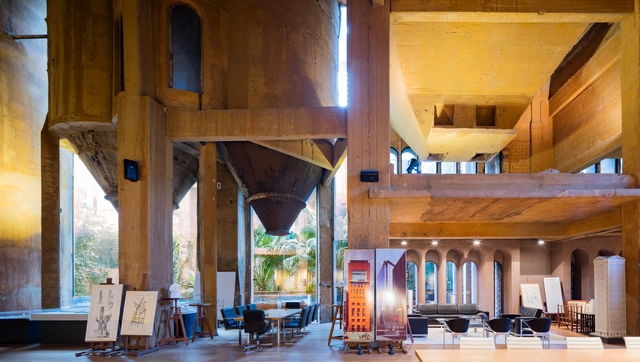
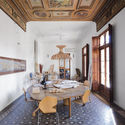
Architectural photographer Marc Goodwin captures the unique workspaces of architects around the world. So far, Goodwin’s photography has helped us imagine what office life might be like as an architect in London, Paris, Beijing, Shanghai, Seoul, the Nordic countries, and now, Barcelona. Read on to see the spaces where architects from Ricardo Bofill to Fermin Vazquez design solutions that impact our world.
A great photograph is often as important as a great building—sometimes even more. From the pages of glossy magazines to the galleries of digital publications and online portfolios, high-quality photography is crucial for contemporary architects. Yet the array of camera options, equipment, accessories, and technical jargon (aperture, ISO, shutter-speed, etc.) can be dizzying, if not intimidating. So what happens when the camera in your iPhone is no longer enough?
To ensure emerging practitioners and professionals alike take the perfect shot, Eric Reinholdt summarizes at length the photography equipment used in his own practice in this two-part video from 2016. The first instalment on the architect, writer, and photographer's channel 30X40 Workshop makes it clear that his preference is a digital SLR camera. The 20+ megapixel image quality as well as range of larger aperture lenses with added versatility are crucial features for large format printing and digital publishing. Canon and Nikon are among the suggested brands as they are established with a large offering of products. And, are expected to provide additional upgrade paths as new equipment is released.
Update:The deadlines for this opportunity have been extended
Call For tutors : Extended till January 28
Call for participants : Ends on February 28
MEDS workshop “Meetings of Design Students” is an international workshop that takes part each summer in a different country, focusing on various issues, themes, topics and settings that will help any designer expand their expertise. It is a chance to get in touch with diverse approaches to design, different building techniques, traditions and skills. MEDS workshop is both practical and educational because it focuses not only on creative theoretical designs, but actually compels participants to execute these designs during the 2-week span of the workshop. You can apply to MEDS as a tutor or as a participant.
In this fast-paced era a lot of little details are missed in a matter of seconds. Just like architecture that we see everyday and everywhere, the stunning beauty of it all are tend to be overlooked.
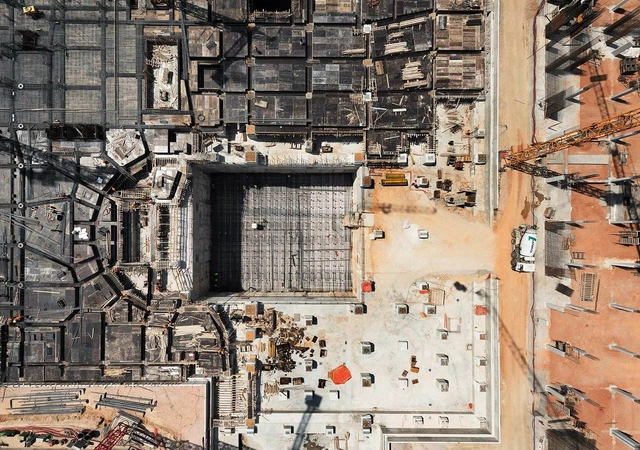
From Greek architect and photographer, Yiorgis Yerolymbos comes a book which captures the construction process of Renzo Piano’s Stavros Niarchos Foundation Cultural Centre in Athens, Greece. Yerolymbos carefully documented every moment where the superfluous Olympic parking lot became a cultural center and sloping park with waterfront views. For almost a decade, and from every angle, the photographer watched the site transform. Birds-eye imagery proved to be some of the most captivating. As photographs, they manage to possess the characteristics of an architectural drawing.
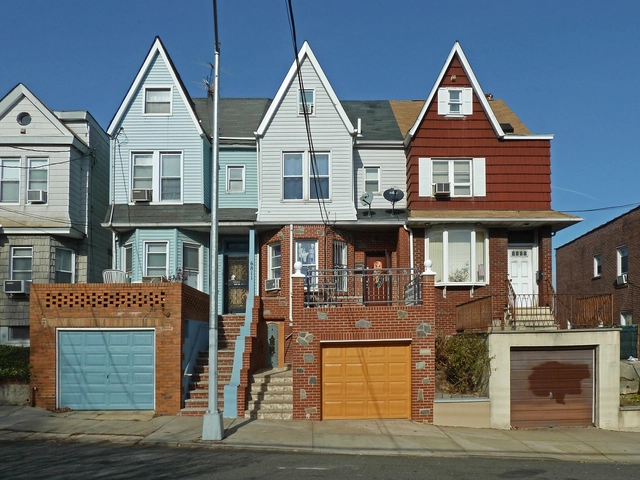
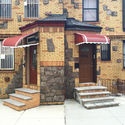
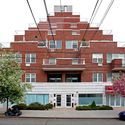
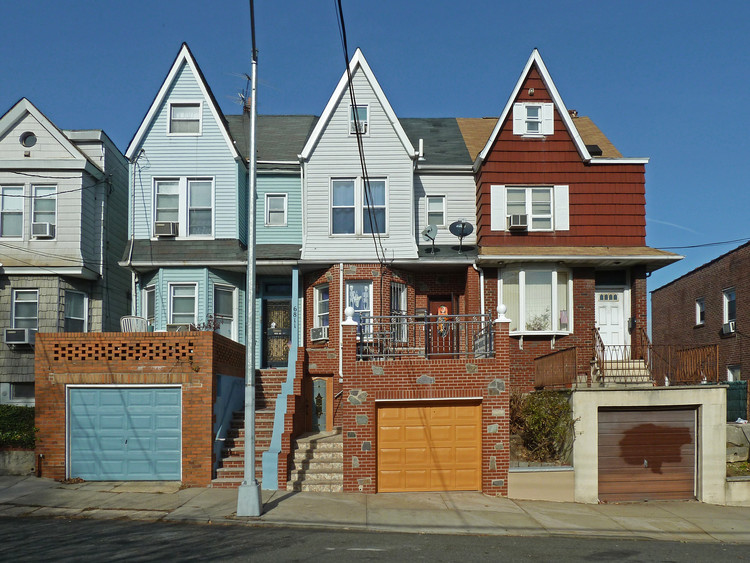
Queens, NY is one of the most diverse places in the world, so it should be no surprise that it’s residences reflect that diversity. From the Architectural League of New York comes Rafael Herrin-Ferri’s exhibition “All the Queens Houses.” An architect and artist, Herrin-Ferri compiled 273 photographs of homes in Queens. The ever growing photographic survey conveys themes of identity, differentiation, and adaptation.
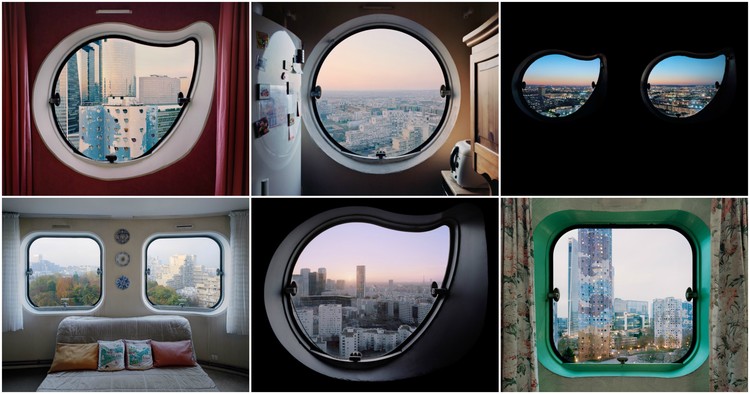
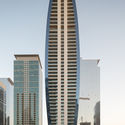
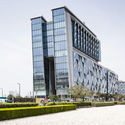
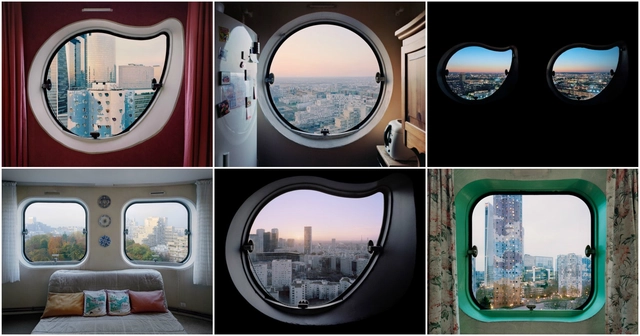
French photographer Laurent Kronental’s latest photo series, “Les Yeux des Tours” views of Paris, are framed by the quirky windows of the Tours Aillaud, and by the subtle differences in which the spaces around them are inhabited. Kronental considers the towers as some of the most spectacular of the Grands Ensembles built in the post-war economic boom in France. For him, photographing these buildings was a form of nostalgia, a way of satisfying a deep sense of childhood wonder and curiosity that fostered in him as a young boy perceiving them from the nearby business and shopping center "La Défense," questioning the lives of the people who live there.
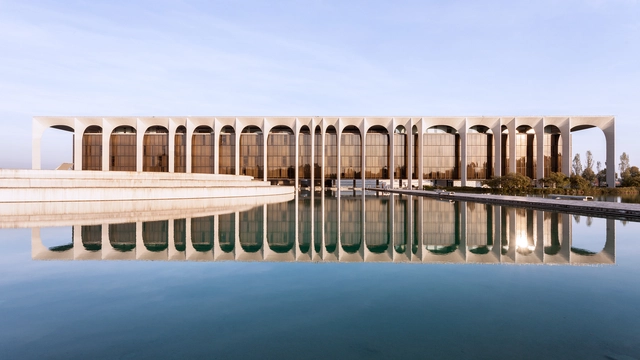
As a trailblazer of Brazilian Modernism, Oscar Niemeyer is celebrated for his bold, sinuous forms, and his use of the “the liberated, sensual curve.” Paul Goldberger described it best when he wrote that “Niemeyer didn’t compromise modernism’s utopian ideals, but when filtered through his sensibility, the stern, unforgiving rigor of so much European modernism became as smooth as Brazilian jazz.”
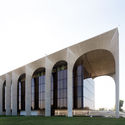
When Georgio Mondadori, chairman of the Italian publishing house Mondadori, commissioned Niemeyer to design the company’s new headquarters in 1968, he wanted the building to look like the Itamaraty Palace (also known as Palace of the Arches) in Brasília. Niemeyer agreed, but given his playful spirit, he deliberately deviated from the earlier design and proceeded to build what he would later identify as his favorite of the projects he completed in Europe. Read on to see a striking set of sixteen photographs of the Mondadori building by Milan-based photographer and visual artist Karina Castro, who was commissioned by Mondadori to capture their headquarters over 40 years after the building's completion.










.jpg?1511735650 "SAVE. Image © Laurent Kronental")
.jpg?1511735614 "SAVE. Image © Laurent Kronental")
.jpg?1511735644 "© Laurent Kronental")
.jpg?1511735634 "© Laurent Kronental")