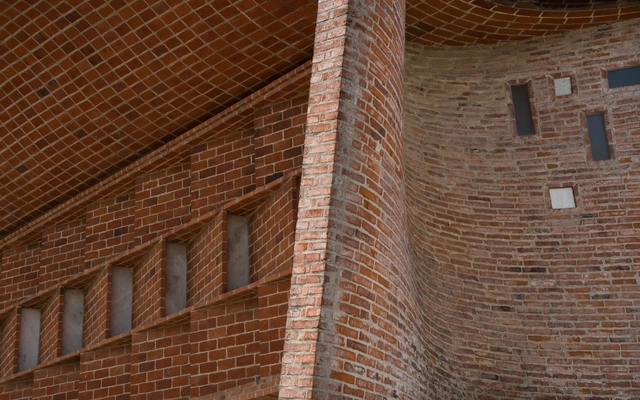
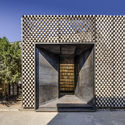
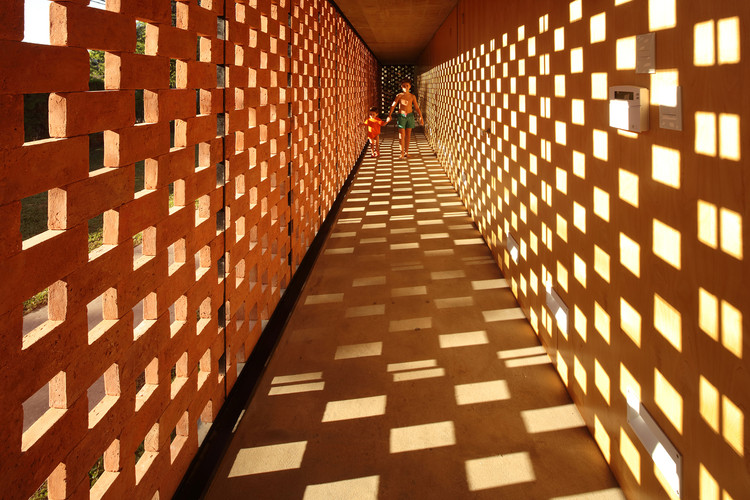
Gonzalo Viramonte has released a series of photographs that focus in on the use of bricks by engineer Eladio Dieste in his Atlántida Cristo Obrero church.
Viramonte shows us the essence of the project with an artful register that places the serial yet simple material element (the brick) at the forefront. This gallery also celebrates the potential and versatility of bricks by highlighting the artfully geometric interior and exterior spaces and the apertures that allow natural light to cast upon the walls, floors, and other surfaces.
The mayor of Strasbourg, Roland Ries, has announced the winner of the architectural design competition for a residential tower. The site is located near the Rhine, within the ‘Strasbourg, Presqu’ile--Citadelle’ neighborhood -- dense with low-rises, not exceeding five levels. The winning design by KCAP Architects & Planners and OSLO Architectes is commended for its contextual sensitivity and formal relationship with Germany which sits just on the other side of the Rhine river.
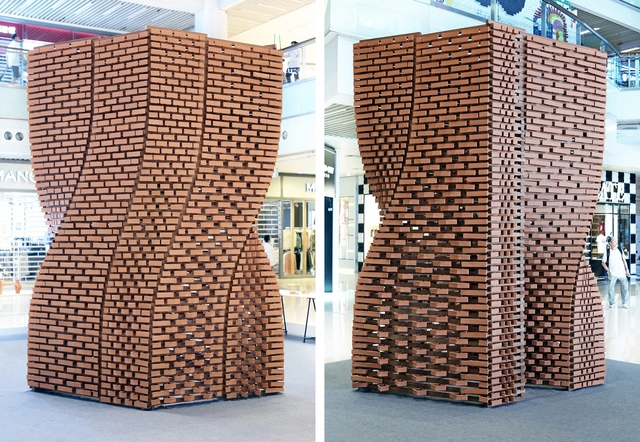
Developed by researchers and students from the Faculty of Architecture at HKU and supported by Sino Group, the 'Ceramic Constellation Pavilion' is built on a wooden structure that supports a series of "walls" formed by about 2,000 clay bricks. Each of these individual components is unique and has been manufactured using robotic technology and 3D printing, allowing to generate different types of transparency and opacity in their different faces.
A design by Ashari Architectsforan architectural installation in Iran is a direct response to the need to reconnect with the senses. The project, a pavilion built from a cube that holds a suspended brick volume, shows the potential of the use of this material by creating distinct atmospheres.
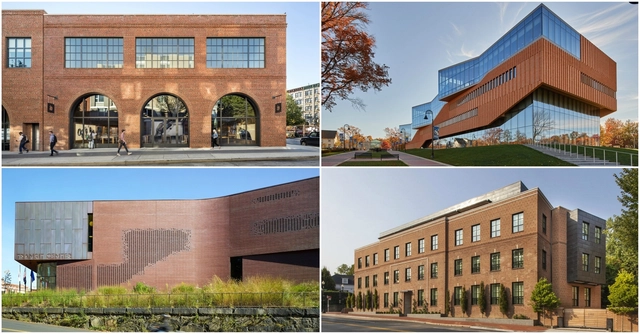
The Brick Industry Association (BIA) has announced the winners of the 2017 Brick in Architecture Awards, given to “the country’s most visionary projects incorporating fired-clay brick.” This year, 35 projects from 19 states were selected as winners, with a best in-class project awarded across eight categories: Commercial, Educational (Higher Education), Educational (K-12), Renovation / Restoration, Municipal/Government, Residential (Multifamily), Residential (Single Family) and Paving & Landscape.
“The winners demonstrate brick’s aesthetic flexibility, and its integral role in any sustainable, low maintenance and durable building strategy,” said Ray Leonhard, BIA’s president and CEO.
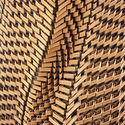
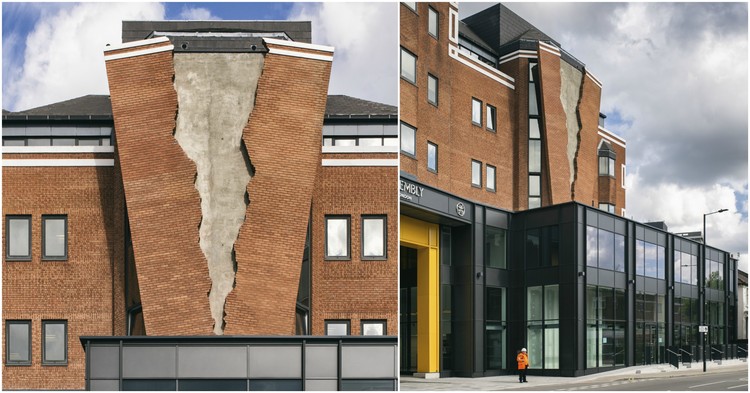
The work of artist Alex Chinneck is grounded in architecture. From melting buildings to a slumping facade to a structure ripped in half and hovering, Chinneck’s work plays with the expectation of materials and tectonics, resulting in captivating mind-bending illusions. His latest work (and first permanent sculpture), Six Pins and Half a Dozen Needles, continues this exploration, taking the form of a large brick wall ripped down the center.
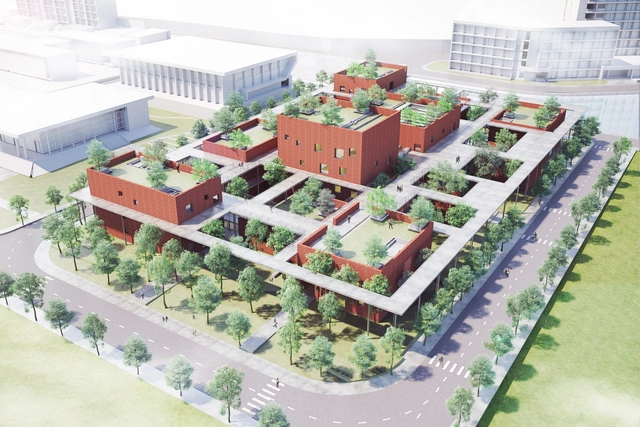
VTN Architects has revealed plans for a new training complex for Vietnam’s largest mobile network operator located within a training center campus at Hoa Lac Hi-Tech Park, 30 km outside of the capital city of Hanoi. Currently under construction, the Viettel Academy Education Center has been designed as a “cooling microclimate” with short-term residential accommodation aimed at creating a quiet, peaceful space for the company’s new trainees to focus on their studies away from the distraction of the city.
A design by C-re-a.i.d. for a Maasai village in northern Tanzania, is a morphological response to the imposed need to settle, using sustainable, local and accessible materials to redefine its construction culture.
The project is built by a series of earthbags and glass bottles that in addition to generating private and comfortable spaces, allow a quick and easy construction.
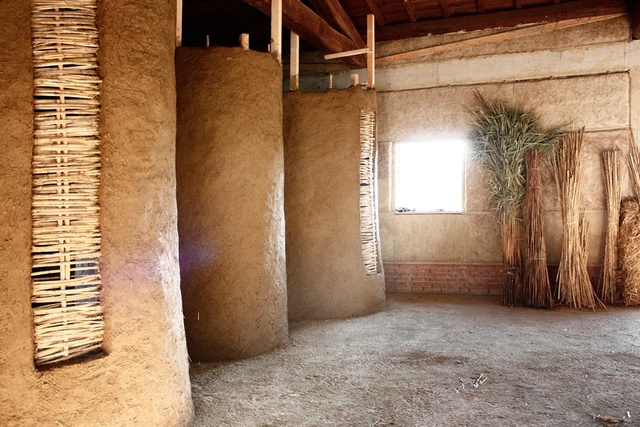
In a 12-day workshop, Building Trust International and Terraepaglia joined the Ciuffelli Agricultural Technical Institute in Todi, Italy, with the aim of exploring a series of construction techniques with raw soil. In addition to producing earth bricks and rammed earth structures -in collaboration with experts such as Eliana Baglioni and Pouya Khazaeli-, a curved wall was erected with a wooden structure and a cane framework, on which a massive layer of earth and straw was spread.
The activity generated a series of internal spaces as a kind of laboratory, to show the construction methods and the materials in situ.
It can't be denied that architects love brick. The material is popular both for its warmth and for the diversity of expressions that can be achieved by applying it in a creative way—depending on the arrangement of individual bricks or the combination of bonds, it’s possible to arrive at a result that is both original and attractive. That ingenuity is what photographers like Hiroyuki Oki, Gustavo Sosa Pinilla, and François Brix, among others, have attempted to capture in their photographs. In these images, light is a key element of good composition, allowing the photographers to control the intensity of color and the contrast of masses and voids, as well as enhancing the incredible textures of the brick we love so much.
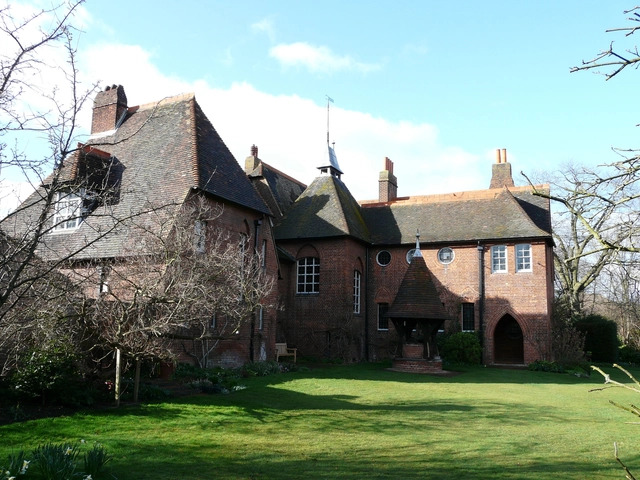
The L-shaped footprint of the building allows it to focus in on the garden. ImageCourtesy of Flickr user Gabrielle Ludlow (licensed under CC BY-NC-ND 2.0)
In the heart of a suburb just east of London stands an incongruous red brick villa. With its pointed arched window frames and towering chimneys, the house was designed to appear like a relic of the Middle Ages. In reality, its vintage dates to the 1860’s. This is Red House, the Arts and Crafts home of artist William Morris and his family. Built as a rebuttal to an increasingly industrialized age, Red House’s message has been both diminished by the passage of time and, over the course of the centuries, been cast in greater relief against its context.
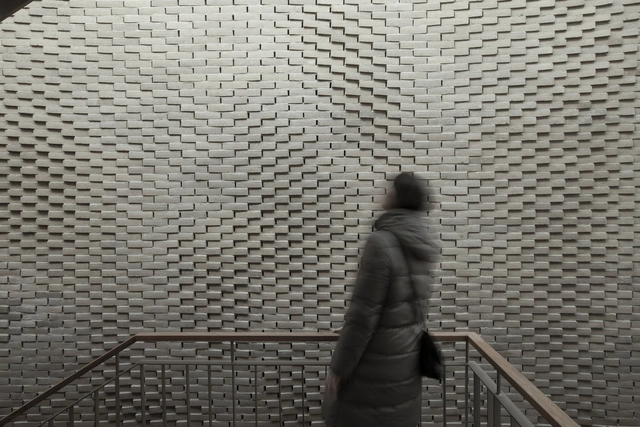
German architecture firm 22quadrat was inspired by the visual effect created by soundwaves moving through water when designing “impulses,” a brick relief wall in the interior courtyard of the Pallotti Residential Complex in Freising, Germany. The architects derived the concept from a metaphor; a single brick is like a single particle, hardly noticeable on its own but capable of much greater impact when combined with others.
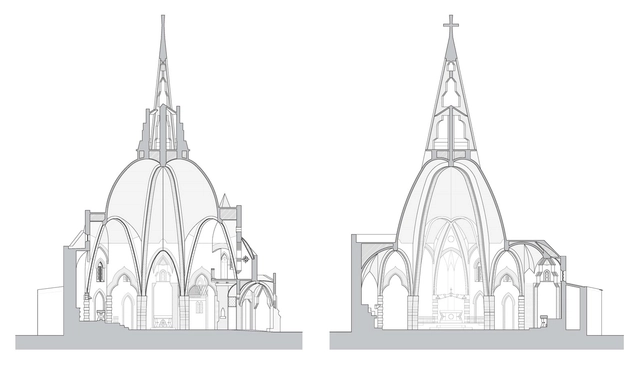
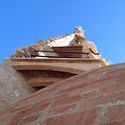
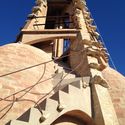
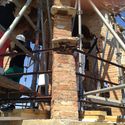
The object of this architectural restoration is the Church of the Sacred Heart of Jesus, in Vistabella, the work of Catalan architect Josep Maria Jujol (16 September 1879 – 1 May 1949). The original design dates from 1917 with the construction completed in 1923. The building is a magnificent and personal work of Catalan architecture.
The simplicity of the materials used—basically brick, mortar, and stone—contrasts with the spectacular formal richness of the structural solutions: columns, arches, and vaults that generate a complex, rich, and surreal interior space typical of the mysticism of Jujol.
Bricks are as old as the hills. An enduring element of architectural construction, brick has been a material of choice as far back as 7000BC. Through the centuries, bricks have built ancient empires in Turkey, Egypt, Rome and Greece. Exposed stock brick came to define the Georgian era, with thousands of red brick terraces still lining the streets of cities such as London, Edinburgh and Dublin.
South Korea presents an interesting case for the changing face of brick, with a preference for dark, grey masonry striking a heavy, brutalist, yet playful tone. Like many countries, South Korean brick architecture has questioned conformity, experimenting with stepped, perforated, permeable facades, and dynamic, curved, flowing walls. Below, we have rounded up 12 of their most interesting results.
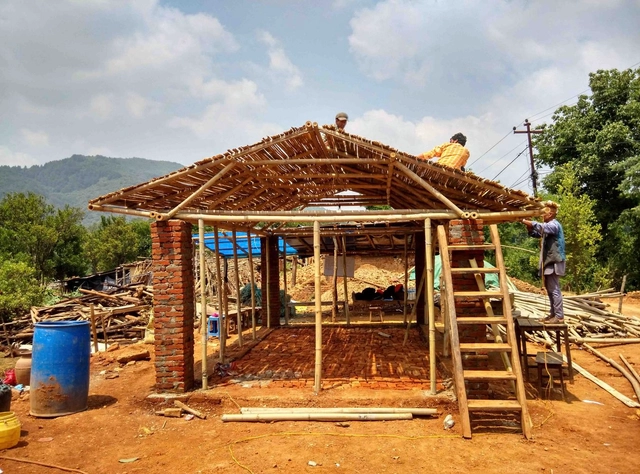
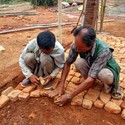
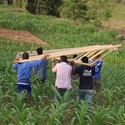
In 2015, after the catastrophic earthquake in Nepal, Maria da Paz invited Joao Boto Caeiro from RootStudio to design and build a model house in Nepal. Using local and accessible materials, they built two prototype houses out of bamboo and partitions, via a collaboration between locals and volunteers that came to the region.
The prototypes respond to the need for housing that is able to be built quickly with the goal of providing independence and immediate shelter, while at the same time introducing basic building techniques using bamboo and bricks. In doing so, they're able to create a set of tools that allow for future construction that the community can make themselves.
Enter the 2017 Brick in Architecture Awards competition by April 30.
The Brick Industry Association (BIA) has opened its call for entries for the 2017 Brick in Architecture Awards, the country’s premiere architectural design competition featuring clay brick.