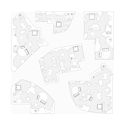
BIG has unveiled its design for AI CITY, the future home for Terminus Group, a smart service provider. Imagined as the new center of innovation for China, the project will be dedicated to "artificial intelligence, robotics, networking, and big data”. Located in Chongqing, in southwest China, known as the “mountain city”, the project is set within the Chongqing Hi-Tech Industrial Development Zone.
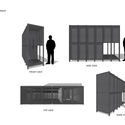
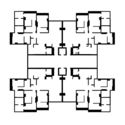
Part of Reparametrize Studio’s ongoing research on “Re-Coding Post War –Syria”, “House Re-Coding” is a new generation of housing solutions adaptable to the post-war cities. Focusing on innovation, collecting comprehensive infrastructural and socioeconomic analytics data through Artificial intelligence, the project seeks to envision the future of post-war cities, as a Smart urban development where all different actors come together, using the existing, and still useful, urban fabric.
Architects don’t make buildings. Architects make drawings of buildings. But of course, someone has to make the building. The construction industry is one of the largest economic sectors and we all interact with the built environment on a daily basis, but the actual work of getting a building from drawing to structure has barely evolved over the decades. While the rest of the world has moved into Industry 4.0, the construction sector has not kept pace. Architecture has begun to embrace some digitalization. After all, not many of us work with mylar on drafting tables anymore. So with the architecture industry’s everlasting link to the construction industry, will the latter pick up some new technological tricks by association? And when it does, how will that change the role of the architect?
Videos
the city of Homs in Syria. Image via Shutterstock/ By Fly_and_Dive
In a world devastated by war and destruction, new ideas for future reconstruction of cities are emerging. The latest technologies are creating opportunities to shape better built environments and better urban experiences. While the world has had its fair share of failed attempts of post-war reconstruction, the 21st century is promising concepts more in touch with culture, integration, and sustainability.
As we all know, technology is the game-changer of this century. It has ultimately modified how we design and build, and with the development of Artificial Intelligence, boundaries have been pushed furthermore. Able to transform the environment we live in, AI can also help shape a better version of the environment we have lost.
The use of artificial intelligence (AI) is based on the idea of optimizing, streamlining and expanding the reach of the most diverse operations. Their systems are programmed to identify patterns and carry out predictions, decisions, and ultimately perform and actions with speed and accuracy. The efficiency of the models depends on the quantity and quality of the data, which can be obtained by applications, cameras, and sensors. In the urban context, technology based on the use of artificial intelligence has been seen as a way to improve the management of cities, especially those that are denser and have larger footprints.
Autodesk has quickly become an industry standard for architecture and engineering software. Bringing together a range of tools and programs with resources like Autodesk University and the Autodesk Foundation, the company is exploring the future of how we design and build. In an exclusive interview with ArchDaily, we explore the company's thoughts on generative design, machine learning and new emerging technologies.
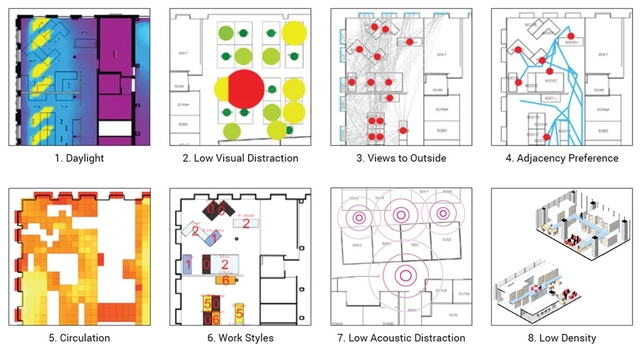
The images of Autodesk’s MaRS Offices in Toronto, show multiple iterations and plan layouts that met many different criteria both from the employee’s preferences, project program and environmental needs. . Image Courtesy of Autodesk
While the idea of AI can be a scary one to many people, the main thing to keep in mind is that it is still just a tool. Like many things in our history, we have consistently found ways to do more with less; to become more efficient and better than we were before. The development of AI is a big step towards creating many new applications that could drive several industries forward.
For example, designers in manufacturing and healthcare have taken the lead in applying AI and generative design to benefit their trades. There have been some great examples of cutting-edge use cases from racing teams to companies like Airbus that are using these tools, as well as others like IoT and VR which are also starting to gain more traction in our industry.
GXN, a sister company of 3XN, rethinks architecture, spaces, and materials. Researching how architects can and should close the feedback loop with their structures, the multidisciplinary team at GXN harvests and analyzes vital data from buildings in order to help architects build a better future. Concentrating their efforts on Circular Design, Behavior Design, and Digital Design, the people behind GXN are architects, engineers, designers, and social scientists. From Copenhagen, Kåre Poulsgaard, Head of Innovation at GXN, spoke with ArchDaily’s Christele Haarouk, about Artificial Intelligence in Architecture.
Trial and error. On a napkin, on tracing paper, or on a black CAD background, much of an architect's work is to make and redo lines, shapes, objects, and images. Discard, start over, repeat. Between an initial idea and a final project is a long and exhausting path. This difficulty lies in the root of designing as a process of making infinite decisions, where a change can influence countless other elements and consequently is an exercise in choosing benefits and concessions. These choices can take a number of forms, from determining how much area to cover while minimally impacting the environment to fitting as many work tables in an office as possible without losing good circulation. Each require many studies or considerations to arrive at the most suitable option. For example, the position of a window, even if it looks great on a the façade, can make the location of the bed in a dormitory unfeasible or increase the building's energy consumption.
Of course, there are always tight deadlines and budgets throughout any project, with the client often in a hurry and willing to devote limited time to thinking about every possible combination or the precise appropriateness of each decision. This stage is where, increasingly, the concept of Generative Design has appeared in architecture.
As Artificial Intelligence has become one of the most significant forces driving innovation and economic development, this societal transformation requires new knowledge and an additional set of skills. Just as knowing a BIM software has become a prerequisite for most architecture jobs, understanding or even knowing how to use AI-related tools would become a desirable asset, if not a requirement in the future. However, with a vast array of information available, how does one begin to venture into this topic? The following is a compilation of online resources, lectures, and courses, that could provide a better understanding of the field and how to incorporate it into the practice of architecture.
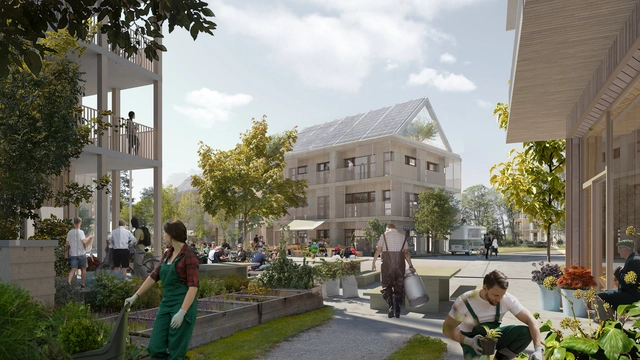
White Arkitekter, in collaboration with Silicon Valley-based ReGen Villages, have joined forces to create fully circular, self-sufficient and resilient communities in Sweden. Inspired by computer games, the project puts in place organic food production, locally produced and stored energy, comprehensive recycling, and climate positive buildings.
In this article, we tap into how AI could be augmenting, changing design processes, and how architects and other professionals are responding and incorporating these technological advancements into their design work. What kind of innovation can AI bring to this industry, and what has been experimented with so far? This selection of projects can help form an opinion on the architectural application of AI.
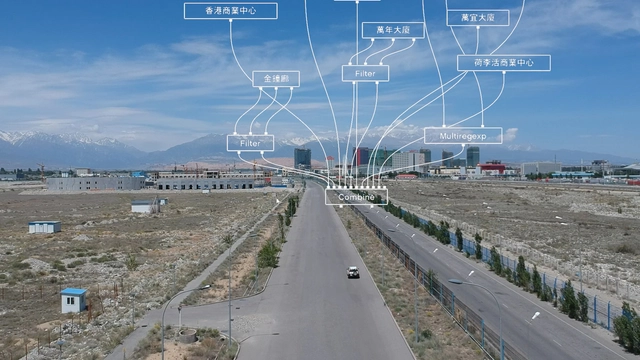
In his book "Life 3.0", MIT professor Max Tegmark says "we are all the guardians of the future of life now as we shape the age of AI." Artificial Intelligence remains a Pandora's Box of possibilities, with the potential to enhance the safety, efficiency, and sustainability of cities, or destroy the potential for humans to work, interact, and live a private life. The question of how Artificial Intelligence will impact the cities of the future has also captured the imagination of architects and designers, and formed a central question to the 2019 Shenzhen Biennale, the world's most visited architecture event.
https://www.archdaily.com/936533/6-visions-of-how-artificial-intelligence-will-change-architectureNiall Patrick Walsh
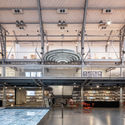
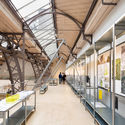
The AI & Architecture at the Pavillon de l'Arsenal in Paris, France was scheduled to be open for the past couple of months, showcasing work by Stanislas Chaillou on generative design and machine learning. However, due to the global pandemic, people were able to virtually explore the ideas through a series of interviews and a virtual tours. The work explored current scales of experimentation: plans, elevations, structures and perspectives in which AI could already make a contribution, whether real or speculative.
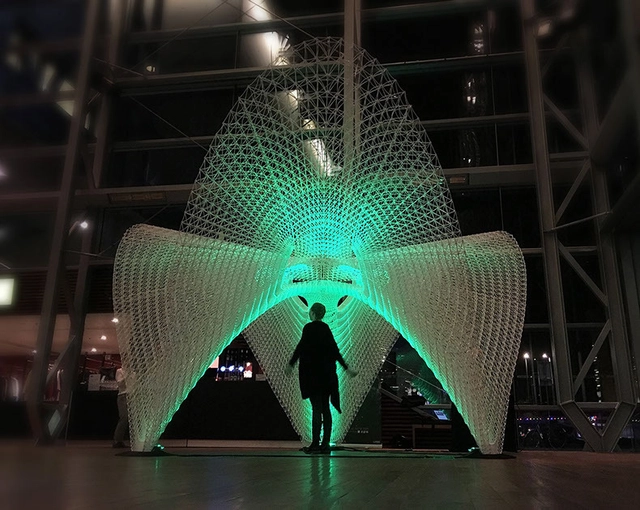
Opening in December in Shenzhen, China, the Bi-City Biennale of Urbanism and Architecture (UABB), organized by the cities of Shenzhen and Hong Kong, will discuss the theme of “Urban Interactions”. First to use Facial Recognition and Artificial Intelligence, the public exhibition will test new grounds to reflect on the impact of digital technologies on the urban environment.
By 2050, the world’s population is expected to have exceeded 10 billion people, making overcrowded cities one of the most pressing issues of the present. Data analysis, machine learning, transportation developments, and the rapid development of new social technologies are increasingly changing the needs of people and communities, which will have a direct impact on the issue of overcrowding and on our built environment more largely.
Bleutech Park Las Vegas. Image Courtesy of Bleutech Park Properties
Cities across the globe are undergoing makeovers - swapping out old, antiquated technology for new, sleek alternatives. The development and implementation of computer vision and real-time analytics are ushering in the newest wave of smart cities. The combination of cloud-based dashboards and machine learning are providing actionable data to be collected and understood regarding everything from vehicle concentration to pedestrian activity. As cities continue to push forward and develop socially and technologically, there is no doubt we will continue to see cities incorporate tools like Artificial Intelligence (AI) to facilitate such changes. Despite the fact that eye-popping technologies like drones and robots are at the forefront of this technological revolution, there are also a number of unexpected ways cities are becoming smarter.
Designer and Fulbright fellow Stanislas Chaillou has created a project at Harvard utilizing machine learning to explore the future of generative design, bias and architectural style. While studying AI and its potential integration into architectural practice, Chaillou built an entire generation methodology using Generative Adversarial Neural Networks (GANs). Chaillou's project investigates the future of AI through architectural style learning, and his work illustrates the profound impact of style on the composition of floor plans.
.jpg?1601458231&format=webp&width=640&height=580)
.jpg?1601458348 "Courtesy of BIG")
.jpg?1601458303 "Courtesy of Lucian R and BIG")
.jpg?1601458288 "Courtesy of Lucian R and BIG")
.jpg?1601458179 "Courtesy of Lucian R and BIG")
.jpg?1601458231)
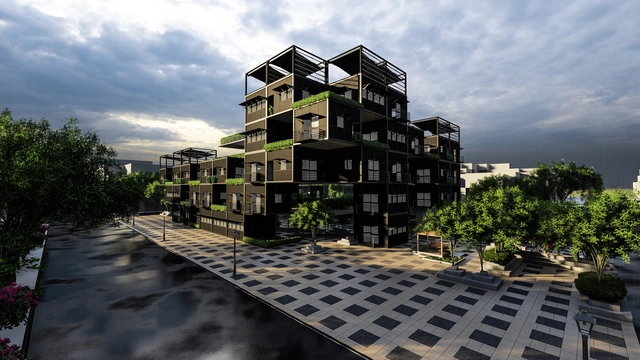


Ai_Qing_Courtesy_of_KPF.jpg?1592356426&format=webp&width=640&height=580)