The Chicago Architecture Biennial has announced the appointment of curator and educator Sepake Angiama and architect and urbanist Paulo Tavares to the curatorial team for the event’s 2019 edition.
The new appointees will combine with Artistic Director Yesomi Umolu to lead the curation of the 2019 event, bringing expertise in research architecture and discursive practices.
https://www.archdaily.com/894627/chicago-architecture-biennial-appoints-sepake-angiama-and-paulo-tavares-as-2019-co-curatorsNiall Patrick Walsh
Chicago Mayor Rahm Emanuel has announced the figures for the 2017 Chicago Architecture Biennial, which closed its four month run on Sunday, January 7th.
The second edition of the event, helmed by Artistic Director Sharon Johnston and Mark Lee, was able to match the success of the inaugural edition, seeing 554,866 visitors from around the world.
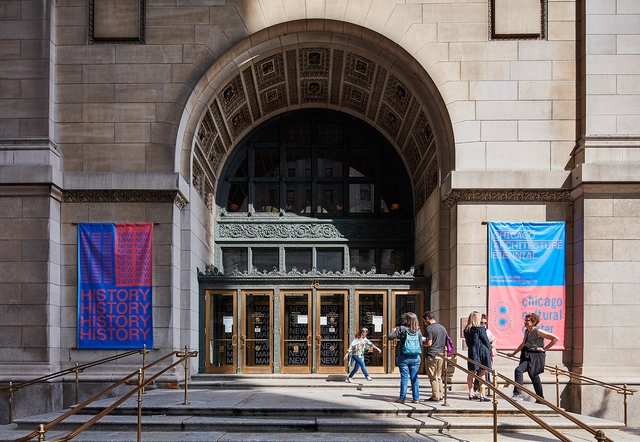
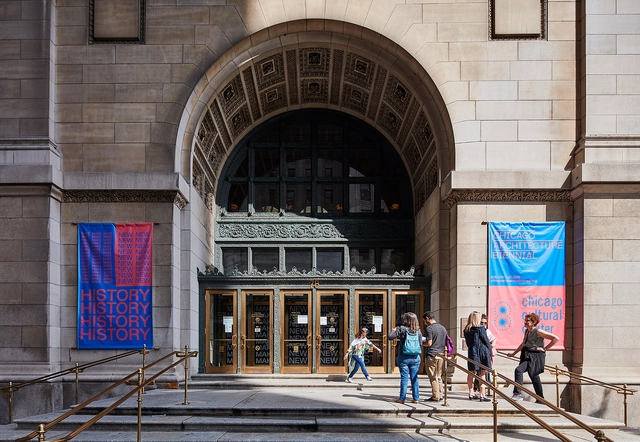
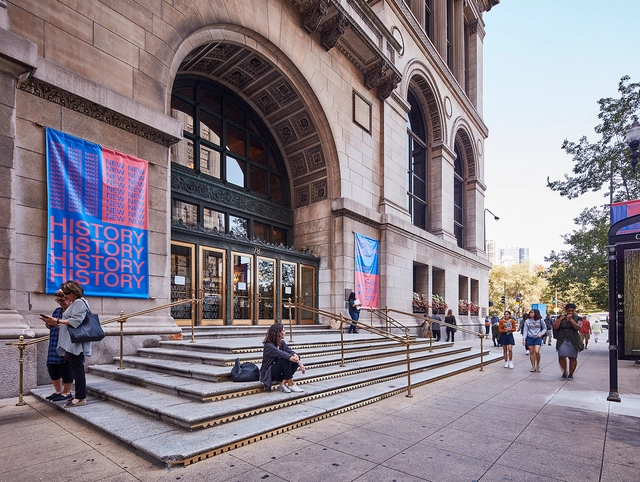
The 2017 Chicago Architecture Biennial is drawing to a close next week after almost 4 months of exhibitions, discussions, tours, film screenings, and other events. The second edition of the event, which opened on September 16th and is based upon the theme of "Make New History," will round out with two final events before the exhibition finally closes on Sunday, January 7th. Read on for more about the remaining events.
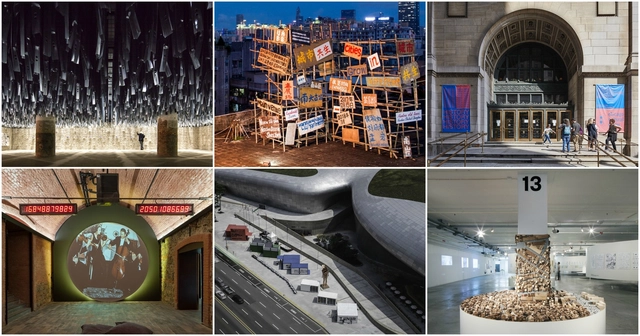
Venice? Chicago? Lisbon? Seoul? Architecture biennials, biennales, triennials, and triennales have become a vital part of the culture of modern architecture. Every two or three years, they debut new ideas, discuss popular topics, and showcase the best of what is happening in the field for both today and tomorrow. But, with the proliferation of these events in countries around the world, they can be tough to keep track of. How many are there, and when are they? ArchDaily has you covered. Below we have compiled what we believe is a comprehensive list showing the what, where, and when of the world's architecture and design biennials, triennials, and a handful of the larger yearly events. We've also included some more in-depth descriptions of a handful that have (in recent years at least) proven themselves to be big names.
"We are at a moment of great cultural transition," Jorge Otero-Pailos argues. "The kinds of objects that we look to to provide some sort of continuity in that transformation is often times architecture, [...] one of the most stable objects in culture." This short film, in which an number of participants of the 2017 Chicago Architecture Biennial reflect on their work and those of others, tackles the theme conceived by artistic directors Sharon Johnston and Mark Lee: Make New History.
https://www.archdaily.com/880402/how-architects-in-chicago-architecture-biennial-2017-are-making-new-historyAD Editorial Team
Their challenge was in considering the forms and ways that their selection "might extrapolate out from the cropped photographic frame into a spatial and lifestyle construction across a larger, horizontal site" – in this case, a field of plinths, the size and positioning of which is a direct reference to the footprint of Mies van der Rohe's 1947 plan for the IIT Campus in Chicago.
https://www.archdaily.com/880306/in-horizontal-city-24-architects-reconsider-architectural-interiors-at-2017-chicago-architecture-biennialAD Editorial Team
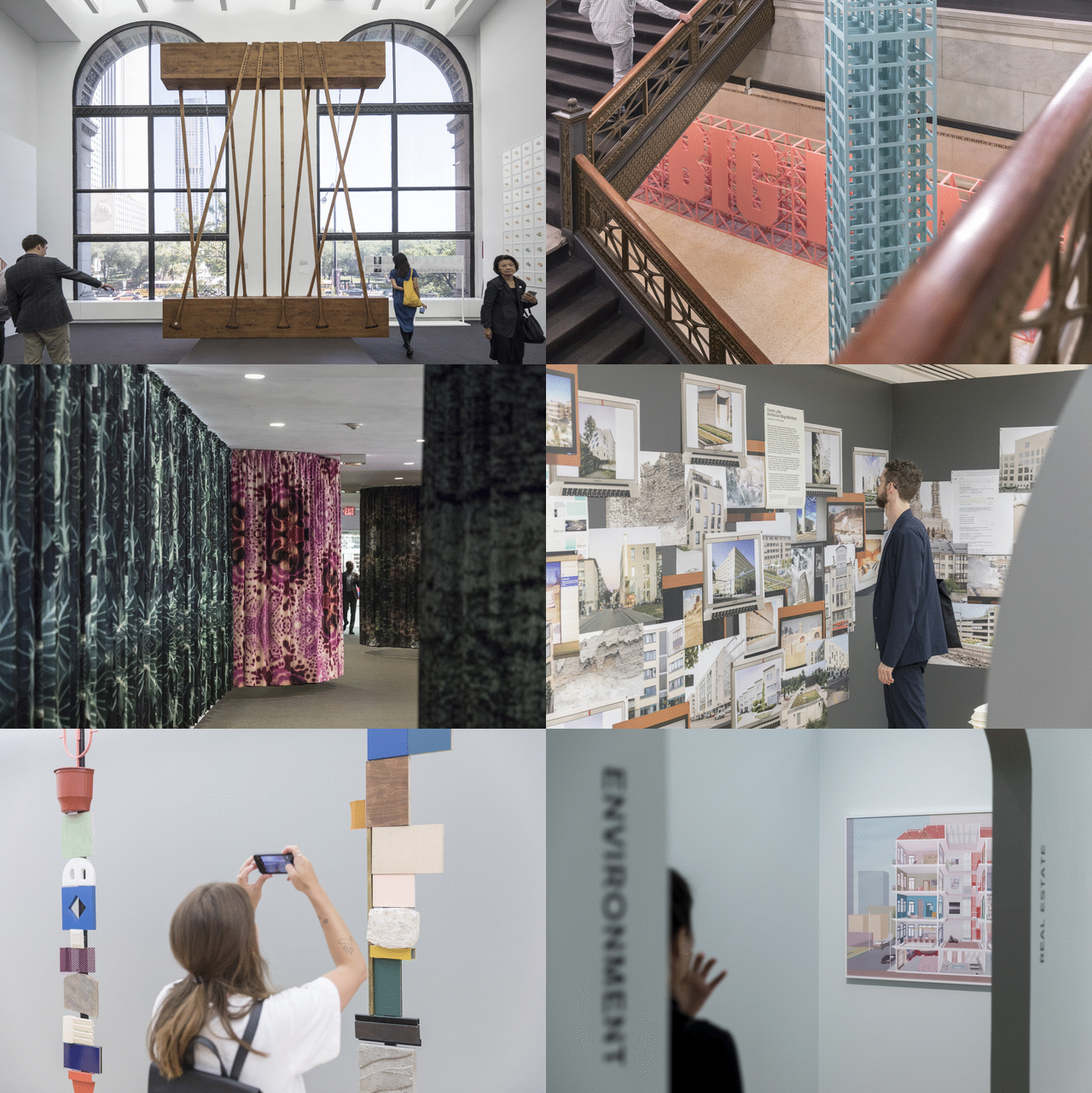
With the 2017 Chicago Architecture Biennial in full swing and open to the public until January 7, 2017, we've scoured the galleries, halls and corridors of the Chicago Cultural Center to bring you our favorite fifteen installations. Documented through the lens of Laurian Ghinitoiu and assembled by our Editorial Team on location, this selection intends to shed light on the breadth, scope and preoccupations of Make New History– the largest architecture event in North America.
American architect and MacArthur FellowJeanne Gang has been selected as the recipient of the 2017 Marcus Prize.
Awarded every two years by the University of Wisconsin-Milwaukee School of Architecture and Urban Planning in partnership with the Marcus Corporation Foundation, the $100,000 prize was established to recognize architects from around the globe currently “on a trajectory to greatness.” In addition to the cash prize, the award will support an upcoming design studio at the school led by Gang.
Understanding the trace of history is more important than ever. Maybe now it's a good time to take stock and reevaluate to see what architecture could do better, and there are certain issues that other disciplines address better than architecture itself.
https://www.archdaily.com/879750/curators-johnston-marklee-introduce-the-2017-chicago-architecture-biennial-make-new-historyAD Editorial Team
This article by Fred A Bernstein originally appeared in Metropolis Magazine as "Worth Preserving". Bernstein tracks the preservation battles fought, won and lost in 2013, unearths their root cause (money), and questions: was preservation better off in recession?
“It’s the old adage: location, location, location,” says Linda Dishman, executive director of the Los Angeles Conservancy. Dishman isn’t talking real estate, but historic preservation. In California, a midcentury house on a modest lot may find a buyer willing to maintain it. But the same modernist house on a large lot in Brentwood or Pacific Palisades, is practically wearing a “tear me down” sign. (How does a 1,200-square-foot house stand a chance in a neighborhood where 12,000 is the new normal?) “Small houses on large lots are the greatest concern,” says Dishman.
The Conservancy won a victory this year when ten of the surviving Case Study Houses—including the celebrated Stahl House by Pierre Koenig—were added to the National Register of Historic Places. But listing doesn’t stop the houses from being demolished—it simply triggers additional reviews before bad things can happen to good buildings, the kind of red tape that doesn’t always deter the super-rich. Money, especially big money, can be the enemy of preservation.
Read on about preservation's fight with big money after the break.




.jpg?1505616851&format=webp&width=230&height=230&crop=true)
.jpg?1505616994&format=webp&width=230&height=230&crop=true)
.jpg?1505616940&format=webp&width=230&height=230&crop=true)
.jpg?1505616970&format=webp&width=230&height=230&crop=true)

_Hedrich_Blessing.jpg?1505749276&format=webp&width=640&height=580)
_Hedrich_Blessing.jpg?1505749257&format=webp&width=230&height=230&crop=true)
_Hedrich_Blessing.jpg?1505749243&format=webp&width=230&height=230&crop=true)
_Tom_Harris.jpg?1505749667&format=webp&width=230&height=230&crop=true)
_Ronald_Leon_Hale_-_Diner_en_Blanc_Chicago_2014.jpg?1505749688&format=webp&width=230&height=230&crop=true)
_Hedrich_Blessing.jpg?1505749276)