
Shengliang Su
BROWSE ALL FROM THIS PHOTOGRAPHER HERE
↓
Hangzhou Tides Kindergarten / GLA


https://www.archdaily.com/913953/hangzhou-tides-kindergarten-glaCollin Chen
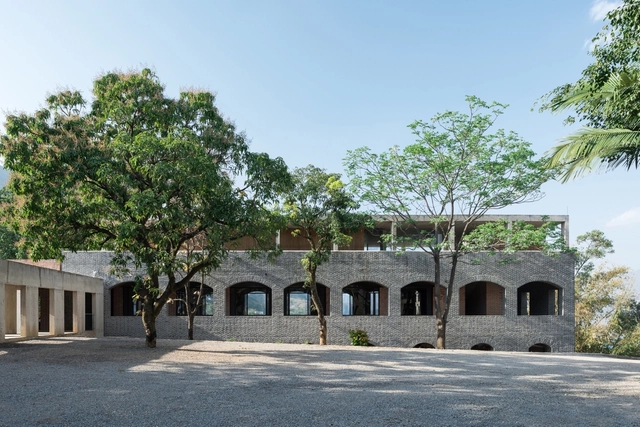
Xinzhai Coffee Manor / TAO - Trace Architecture Office


-
Architects: TAO - Trace Architecture Office
- Area: 3140 m²
- Year: 2018
-
Professionals: Yunnan Baoshanxia Village Architecture Engineering co.Ltd
https://www.archdaily.com/910562/xinzhai-coffee-manor-tao-trace-architecture-office韩爽
Zhang Ke of ZAO/standardarchitecture: "Is a New Revolution Possible Today?"
.jpg?1548614735&format=webp&width=640&height=580)
Beijing-based architect Zhang Ke was educated first at China’s leading school, Tsinghua University, going on to later graduate from Harvard’s GSD in 1998. The former equipped him with technical know-how, while the latter encouraged him to question the essential elements of the profession, such as why we build. After working for three years in Boston and New York, Ke returned to Beijing to open his practice in 2001.
.jpg?1548614097&format=webp&width=230&height=230&crop=true)
.jpg?1548615395&format=webp&width=230&height=230&crop=true)


.jpg?1548614735)
https://www.archdaily.com/910268/zhang-ke-of-zao-standardarchitecture-is-a-new-revolution-possible-todayVladimir Belogolovsky
Nanchang Shimao Water City Cloud Office Center / Dplus-Studio


-
Architects: Dplus Studio
- Area: 2100 m²
- Year: 2017
-
Professionals: Australia BG&E Curtain Technology Co.Ltd
https://www.archdaily.com/905883/nanchang-shimao-water-city-cloud-office-center-dplus-studio舒岳康 - SHU Yuekang
Xiangcheng District Planning Exhibition Hall / Lacime Architects


-
Architects: Lacime Architects
- Area: 6030 m²
- Year: 2017
-
Manufacturers: CSG HOLDING, Olympia Stone Corp., OlympiaTile+Stone, Southwest Aluminum
-
Professionals: G-ART
https://www.archdaily.com/905081/xiangcheng-district-planning-exhibition-hall-lacime-architectsCollin Chen
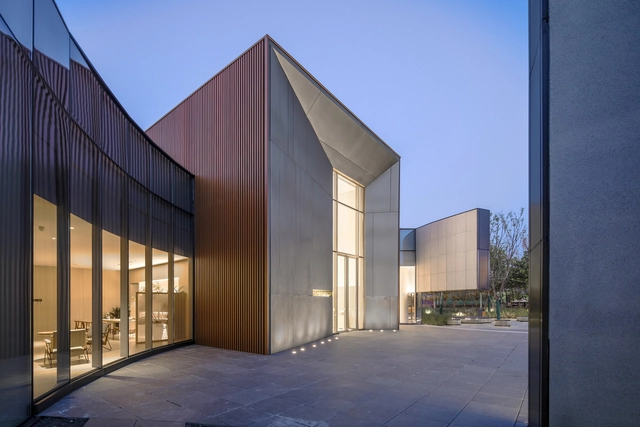
HeFei Fei River Central Smart Garden Library / GEEDESIGN


-
Architects: GEEDESIGN
- Area: 1760 m²
- Year: 2018
-
Manufacturers: Hefei Anbo Energy Saving Glass Technology, Jingpeng Aluminum Manufacturing Co., Shandong Donghong Stone Import&Export Co.
-
Professionals: Horizontal Space Design, Z+T Studio
https://www.archdaily.com/904113/hefei-fei-river-central-smart-garden-library-geedesignCollin Chen
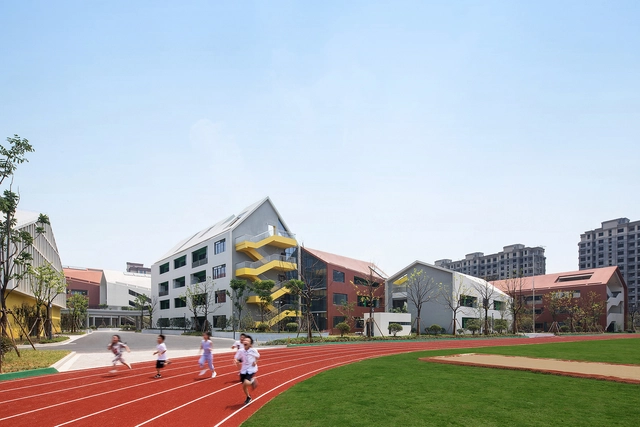
Hangzhou Haishu School of Future Sci-Tech City / LYCS Architecture


-
Architects: LYCS Architecture
- Area: 44900 m²
- Year: 2018
https://www.archdaily.com/904284/hangzhou-haishu-school-of-future-sci-tech-city-lycs-architecture舒岳康 - SHU Yuekang
Gusu Aristo Villa / Shanghai Dushe Architectural Design


https://www.archdaily.com/902304/gusu-aristo-villa-shanghai-dushe-architectural-designCollin Chen
Miniature Beijing: the Conversion of No. 28 Dayuan Hu Tong / Atelier Li Xinggang


https://www.archdaily.com/901323/miniature-beijing-the-conversion-of-no-28-dayuan-hu-tong-atelier-li-xinggangLaurene Cen
MIYA | LOSTVILLA Huchen Barn Resort / Ares Partners


.jpg?1533651376&format=webp&width=230&height=230&crop=true)

-
Architects: Ares Partners
- Area: 2630 m²
- Year: 2017
-
Manufacturers: VENEZINA
https://www.archdaily.com/899756/miya-lostvilla-huchen-barn-resort-ares-partners罗靖琳
Renovation of Cotton Lab in Changzhou / Atelier Archmixing


-
Architects: Atelier Archmixing
- Area: 6300 m²
- Year: 2018
-
Manufacturers: Jiangsu Guoqiang Galvanization Industrial, Ningbo JSD, Shanghai SKF Builder
https://www.archdaily.com/899884/renovation-of-cotton-lab-in-changzhou-atelier-archmixing罗靖琳
Philip Yuan of Archi-Union Architects: "The Process of Construction can be Elevated to Art Performance"
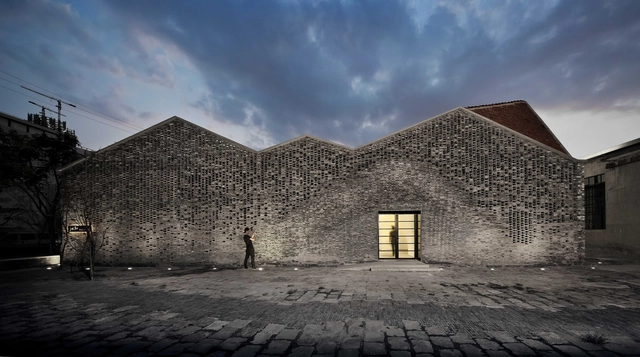
Though the understated Swiss and British Pavilions were the big (and perhaps overly literal) winners at this year’s Venice Architecture Biennale investigating Freespace, it was the Chinese that put their relentless architectural progress on display. Nestled in the back of the Arsenale, the Chinese Pavilion presented dozens of built works all around Chinese countryside, each project demonstrating a meaningful social impact through the involvement of villagers in the production process. Among the most visible Chinese architects presenting at the pavilion was Shanghai-based educator and practitioner Philip Yuan, whose office Archi-Union Architects has become a major voice in the already-distinctive contemporary Chinese architecture scene.
On 19 July, 2018 curator Vladimir Belogolovsky will join gallerist and curator Ulrich Müller to discuss Philip Yuan’s work at the opening of Archi-Union Architects Collaborative Laboratory exhibition at Architektur Galerie Berlin. Belogolovsky’s interview with Philip Yuan follows after the break:


https://www.archdaily.com/898395/philip-yuan-of-archi-union-architects-the-process-of-construction-can-be-elevated-to-artVladimir Belogolovsky
Deep Dive Rowing Club / Scenic Architecture Office
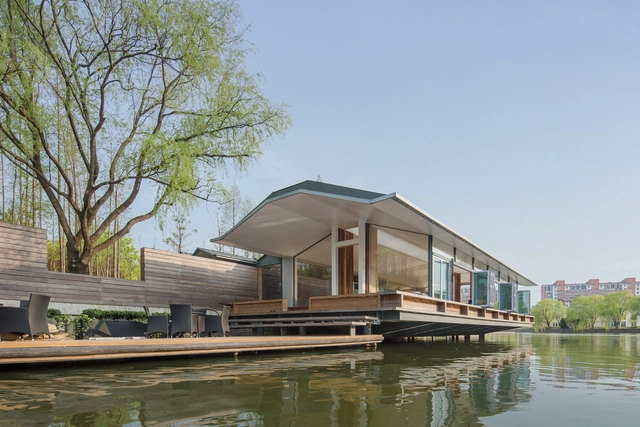


-
Architects: Scenic Architecture Office
- Area: 300 m²
- Year: 2017
-
Professionals: AND Office
https://www.archdaily.com/898043/deep-dive-rowing-club-scenic-architecture-officeLaurene Cen
Shanghai Baoye Center Interior / LYCS Architecture
.jpg?1530429837&format=webp&width=640&height=580)
.jpg?1530429806&format=webp&width=230&height=230&crop=true)


.jpg?1530429837)
-
Architects: LYCS Architecture
- Area: 27394 m²
- Year: 2018
https://www.archdaily.com/897383/shanghai-baoye-center-interior-lycs-architecture舒岳康 - SHU Yuekang
The House with a Tiny Patio / Atelier TAO+C
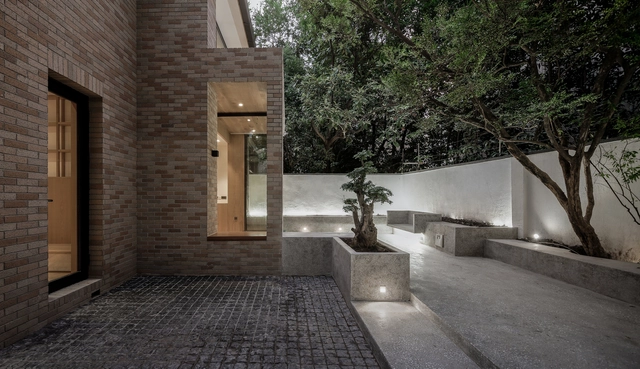


-
Interior Designers: Atelier TAO+C
- Area: 190 m²
- Year: 2017
-
Manufacturers: Fritz Hansen, Duravit, Cassina, Donbracht, Häcker
-
Professionals: Shanghai Tianci Building Decoration Co.Ltd
https://www.archdaily.com/896723/the-house-with-a-tiny-patio-atelier-tao-plus-c舒岳康 - SHU Yuekang
Naked Castle / Shanghai Tianhua Architectural Design


-
Architects: Shanghai Tianhua Architectural Design
- Area: 15000 m²
- Year: 2017
-
Manufacturers: Jacquet thermal technology (Shanghai), QUACENT Dalian, ROOMEYE
-
Professionals: Aoyuguan Engineering Consulting co. LTD., Naked, Naked / Xiaohui Design Studio
https://www.archdaily.com/894987/naked-castle-shanghai-tianhua-architectural-design罗靖琳
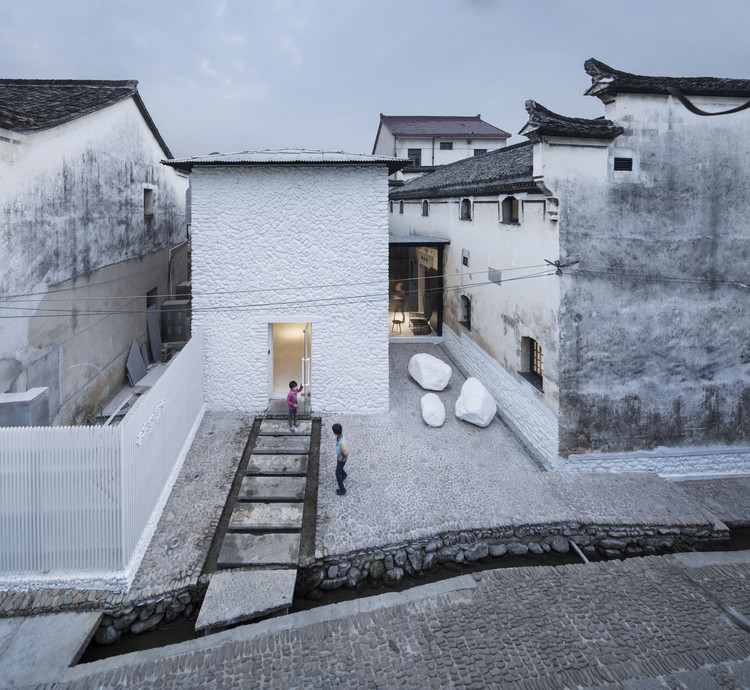
Chinese Pavilion at 2018 Venice Biennale to Investigate "Building a Future Countryside"

As part of our 2018 Venice Architecture Biennale coverage we present the proposal for the Chinese Pavilion. Below, the participants describe their contribution in their own words.
The motivation for this exhibition is more than just xiangchou, a Chinese term that refers to nostalgia for rural lands. We return to the countryside where Chinese culture originated to recover forgotten values and overlooked possibilities; from there, we will build a future countryside.
– Li Xiangning (Curator)
One of the major challenges facing contemporary built environments is the future of rural development. In China, the countryside has become a new frontier for experiments in this area, and the country is developing its countryside at a speed and scale unseen in the West. Drawn by the promise of boundless opportunity, architects, artists, developers—as well as capital flow—are converging in rural areas across the nation.


https://www.archdaily.com/894256/chinese-pavilion-at-2018-venice-biennale-to-investigate-building-a-future-countrysideRory Stott
Atelier Deshaus: "The Idea Is Not to Create an Object But to Construct a Path"
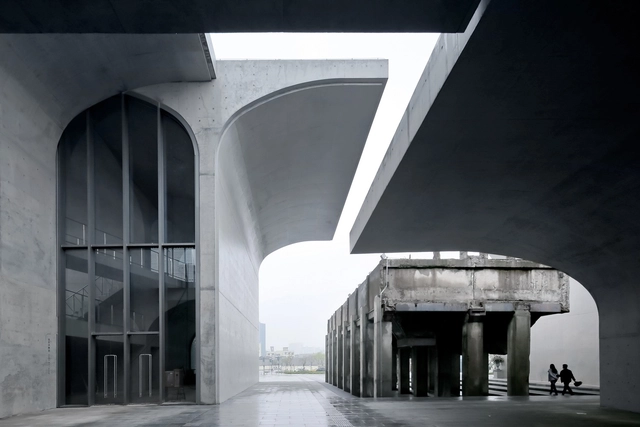
In China's newly emerging constellation of famed architects, few firms elicit the sense of surprise caused by the work of Atelier Deshaus. With projects ranging from awe-inspiring to humble, their work does not adhere to any stylistic rules, but all of their projects exude an enigmatic aura. In this interview, the latest in Vladimir Belogolovsky’s “City of Ideas” series, principals Liu Yichun and Chen Yifeng discuss the role of identity in their work and how they try to connect their buildings to the landscape.
Vladimir Belogolovsky: Is it true that you each design different projects in the studio? Why is that?
Liu Yichun: This has been true since 2010. Before that we always designed everything together. We used to have endless discussions and too many disagreements and arguments. That’s why we decided to pursue two parallel paths. This approach led to greater efficiency and it helped us to formulate clearer ideas of our independent views of architecture. It also helps us to diversify our work and to avoid forming one recognizable style.
Chen Yifeng: It is important for us to express our solutions differently, even though, fundamentally, we are working in one direction and pursuing one family of ideas.


https://www.archdaily.com/894083/atelier-deshaus-the-idea-is-not-to-create-an-object-but-to-construct-a-pathVladimir Belogolovsky