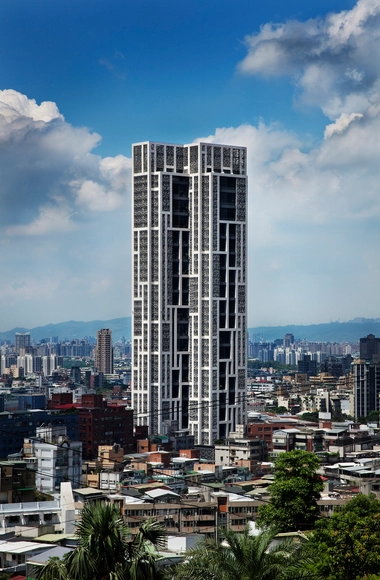
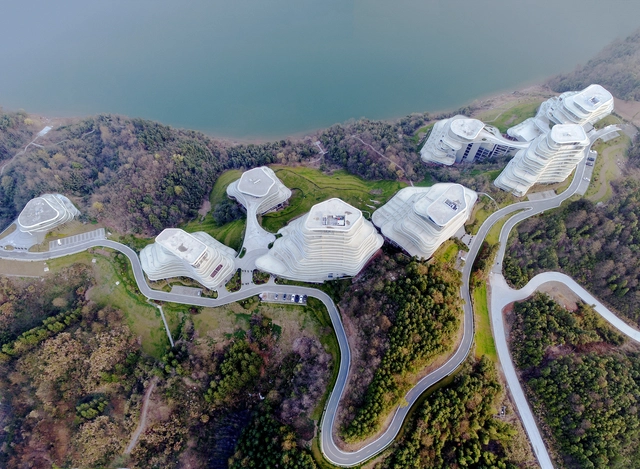
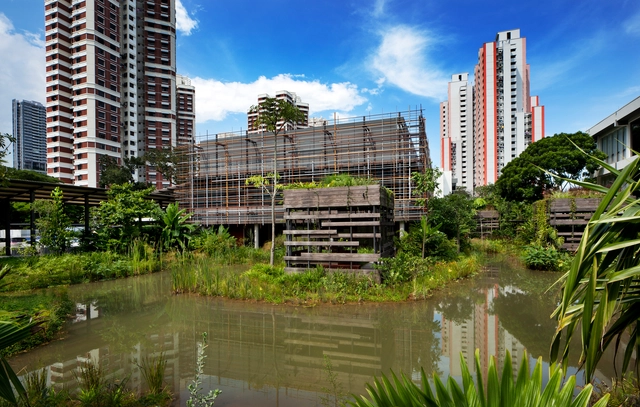
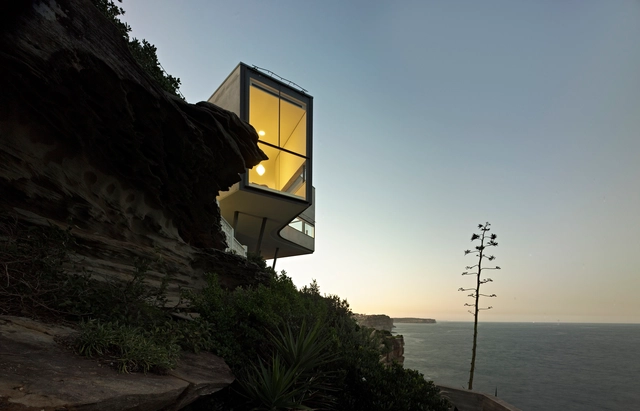
With a mission to provide tools and inspiration to improve the quality of life in our built environment, ArchDaily curators constantly track and share with our audience the best "built projects" in the world. In order to celebrate these achievements and thank our readers for actively participating in our community, we selected the 50 best architectural works published during 2019.
The challenges associated with the provision of adequate and affordable housing around the world demand that architects respond with original solutions that challenge traditional building forms, typologies and methods of delivery.
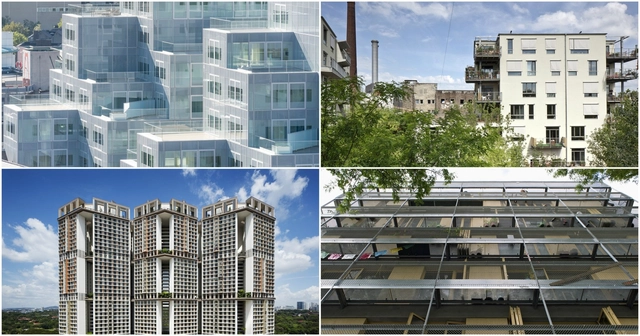
PLANE–SITE brought together the architects of four inventive housing projects. These projects represent a diversity of approaches to similar housing challenges across radically different global contexts. From the redensification of European urban centers to the rapid urbanization of the tropical Asian megacity, these radical housing models challenged existing paradigms in order to advance resident well-being as their principle design concern. In contrast to Schumacher’s divisive speech, the panel illustrated projects that were deliberately designed to promote community life and social interaction between residents – and in some cases also with other citizens in spaces that blur the line between public and private.
The second day’s judging categories spanned a wide area, from future masterplanning visions to completed religious structures. The festival, held this year in Amsterdam, will culminate Friday 30 November with the World Building of the Year and Future Project of the Year Awards. These awards, selected from the festival’s list of category winners, will be selected by the festival’s “super jury”: Nathalie de Vries, Frederick Cooper Llosa, Lesley Lokko,Li Xiaodong, and Manuelle Gautrand.
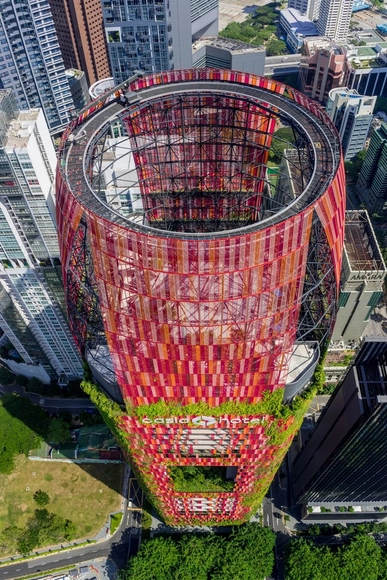
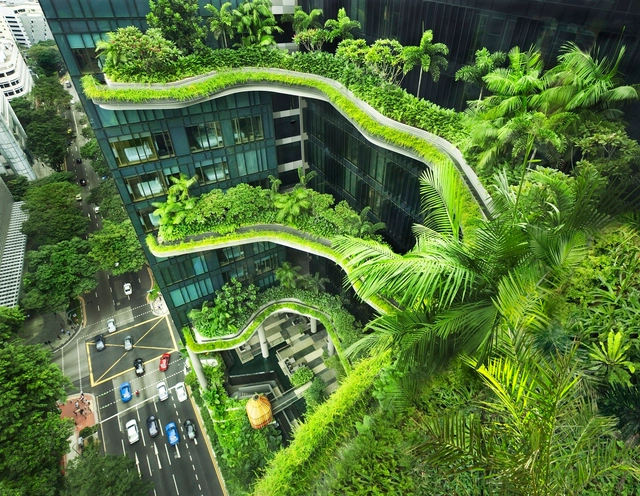
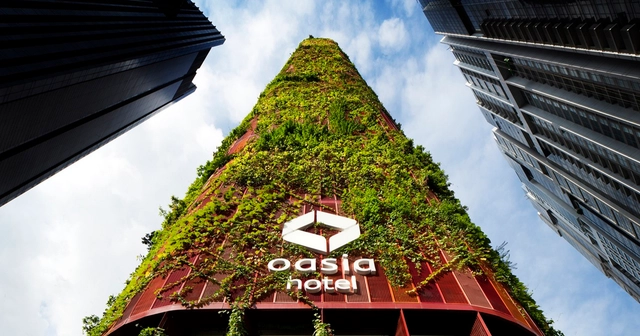
The Council on Tall Building and Urban Habitat have announced the winners of the 16th edition of the CTBUH Tall Building Awards. From over 48 finalists in 28 countries, the best buildings from four regions – the Americas, Asia & Australasia, Europe, and Middle East & Africa – were selected, along with recipients of the Urban Habitat Award, the Innovation Award, the Construction Award and the 10 Year Award. From these finalists, the CTBUH has also awarded the Best Tall Building Worldwide to the Oasia Hotel Downtown by WOHA.
The towers were chosen by a panel of architects from world-renowned firms and were judged on every aspect of performance, looking in particular for those which “have made extraordinary contributions to the advancement of tall buildings and the urban environment, and that achieve sustainability at the highest and broadest level.”
At ArchDaily, we're lucky enough to know a fantastic network of architecture professionals, allowing us to share the world's best architecture with our audience. But our articles wouldn't be the same without the many photographers who dedicate themselves to making incredible, inspiring images. For that reason, here we present the 50 most popular architecture images of 2017.
Alongside Camilla Block and David Jaggers, Neil Durbach of Durbach Block Jaggers has carved out a unique place in Australian architecture. Known primarily for their carefully sculpted modernist houses, the firm's architecture is simultaneously rich in architectural references and thoroughly original. In this interview, the latest in Vladimir Belogolovsky's “City of Ideas” series, Durbach explains the true inspirations behind their work, why these inspirations have little to do with the public descriptions of their projects, and why for him, the intention of all of his architecture “is to win Corb’s approval.”
Vladimir Belogolovsky:You came to Australia while the Sydney Opera House was still under construction. Does this mean you were here even before going to the US?
Neil Durbach: Yes, I first came to Australia as an exchange student while still in high school.
VB:So you have seen the Opera under construction then. How special was that? Did that building change anything in particular in you?
ND: Well, at that time I wanted to be an artist. A friend took me on a boat to see it. It was kind of staggering... And I thought – you know, this is much more interesting than art. And I felt – maybe architecture is what I should pursue.
Driven by the hyper-density of the city-state from which they operate, WOHA have emerged as Singapore's quintessential architects. Combining a locally-specific approach to climate control and spatial planning with an international approach to form and materials, their work holds lessons that can be instructive to architects in all climates. In this interview, the latest in his “City of Ideas” column, Vladimir Belogolovsky speaks to WOHA founders Wong Mun Summ and Richard Hassell about their environmental approach and the future of our global cities.















_thyssenkrupp.jpg?1528124871&format=webp&width=230&height=230&crop=true)
_Antony_Wood.jpg?1528124897&format=webp&width=230&height=230&crop=true)
_Patarick_Bingham-Hall.jpg?1528124951&format=webp&width=230&height=230&crop=true)