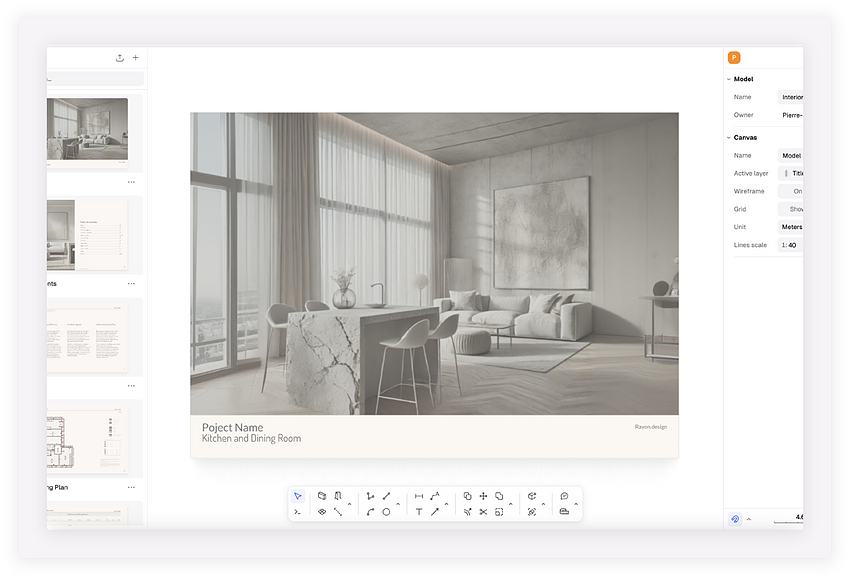
Organize drawings, prepare presentation pages, incorporate schedules, and share the finished set.
Organize drawings, prepare presentation pages, incorporate schedules, and share the finished set.
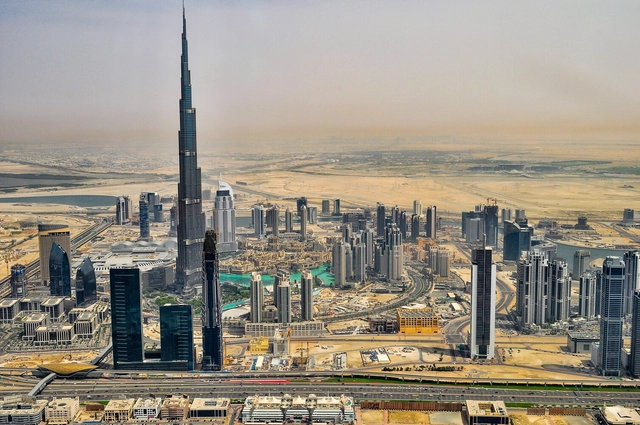
Dubai has evolved from a humble trading port into a global metropolis renowned for its futuristic skyline and pioneering architectural feats. In the early 20th century, its landscape was shaped by traditional Arab homes featuring internal courtyards and wind towers, designed to endure the harsh arid climate. The discovery of oil in the 1960s marked a turning point, triggering rapid urbanization. Throughout the 1970s and 1980s, a surge in construction, fueled by oil revenues, led to the rise of concrete tower blocks and low-rise apartment complexes, accommodating an influx of expatriates drawn to UAE's booming economy. By the 21st century, the UAE witnessed unparalleled architectural advancements. Landmark projects like the Burj Khalifa—the world's tallest building—and the Palm Jumeirah—an artificial archipelago—transformed the country's skyline, solidifying the UAE's reputation as a global hub of architectural ambition and innovation.
This rapid growth has also brought diverse challenges across the UAE, particularly in housing and the difficulty of ensuring dignified living conditions for the working class. Dubai serves as a striking example of how urban expansion has transformed the country, but different geographies and regions within the UAE have distinct needs, shaped by their local environments and communities. The House of the Future competition—organized by Buildner in partnership with the Sheikh Zayed Housing Programme—calls on visionaries to rethink residential architecture across the UAE. With submissions open until April 30, the competition offers a platform for bold ideas that could shape the homes of tomorrow, addressing the varied demands of different locations.
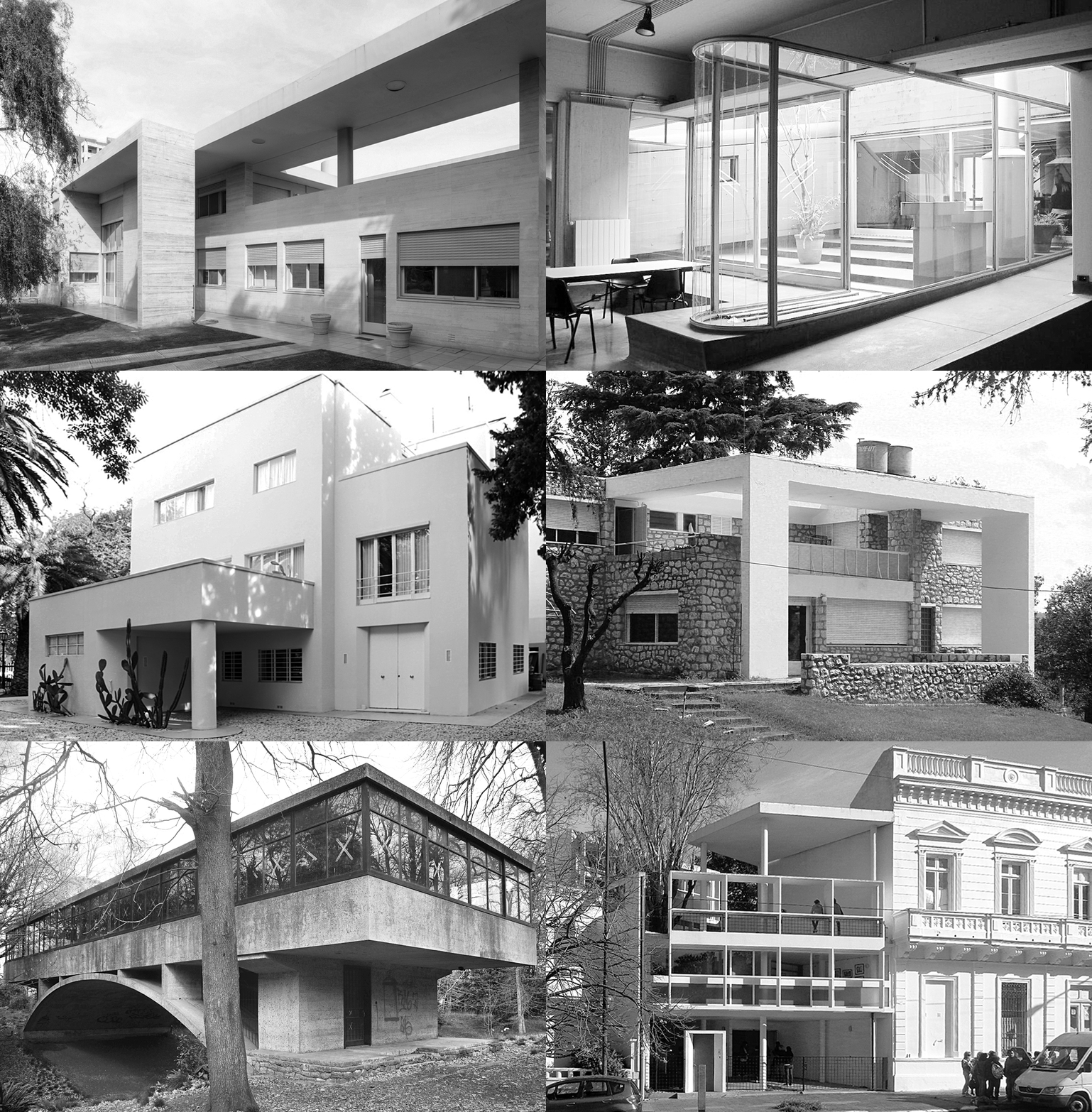
Modernism played an undeniable role in the renewal of architectural ideals, contributing a new attitude toward understanding new ways of living, construction techniques, and aesthetics, marking profound changes in the general perception of the world. In Argentina, while it is complex to define modern architectural production periodically, it is possible to mention some architects who began, starting in the 1920s, to engage with these ideas. The intellectual contributions and architectural creations of Alejandro Virasoro, Alberto Prebisch, Ernesto Vautier, Fermín Beretervide, Wladimiro Acosta, Alejo Martinez, Antonio and Carlos Vilar, Juan Kurchan, Jorge Ferrari Hardoy, Antonio Bonet, Abel López Chas, Eduardo Catalano, Eduardo Sacriste, and Amancio Williams, among others, often included original approaches associated with new modes of thought, manifesting an architecture resulting from the analysis of the local and regional conditions of their cities.



Doors are part of our daily routine, opening and closing so naturally that we rarely consider how they work. That is why, when discussing innovations in their design, many might think, "If it ain't broke, don't fix it." However, just because something functions well doesn't mean it can't be improved. Doors are no exception—their components can be optimized for better performance without changing their fundamental nature. Instead of sticking to the familiar, why not open the door for enhancement? Pivot doors are a clear example. In addition to offering aesthetic versatility and nearly endless design possibilities, their opening system on a central axis allows for fluid and controlled movement, especially indoors. However, a challenge remains in their design: making them hold steady at different angles.