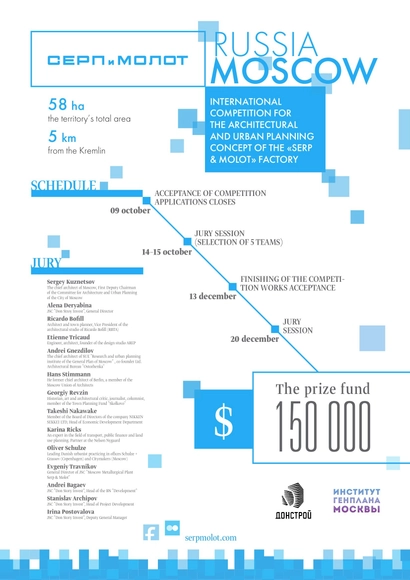
The international competition for the architectural and urban planning concept of the 'Serp & Molot' Factory in Moscow opened its registration last week.
The international competition for the architectural and urban planning concept of the 'Serp & Molot' Factory in Moscow opened its registration last week.
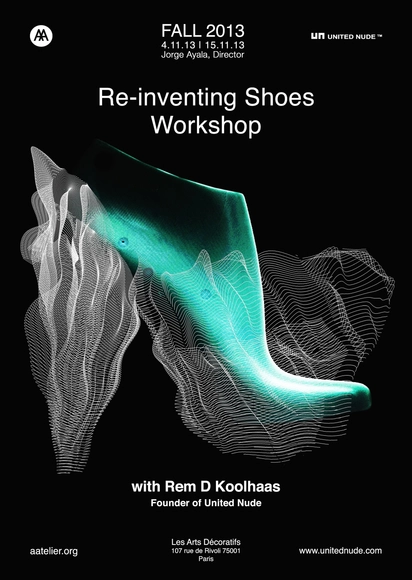
The AA (Architectural Association) is one of the world’s most renowned Schools of Architecture. It offers twice a year, since 2011, AAtelier: a 10-day highly international AA visiting school in Paris. What makes this course unique in the world today is its crossover approach between architecture and fashion.
The course is an intensive studio-based program that requires full-time participation and is run by Jorge Ayala whom graduated from the Architectural Association School in 2008. An AA certificate will be awarded upon completion.
More information after the break.

The Royal Institute of British Architects (RIBA) has announced the 2014 International Fellowships of the RIBA. RIBA International Fellowships reward the particular contributions non-UK architects have made to architecture.
The RIBA’s 2014 International Fellowships will be awarded to:
Today, September 20th, citizens, artists and activists have transformed hundreds of metered parking spaces worldwide into temporary public places with mission to call attention to the need for more open space. Since the establishment of PARK(ing) Day in 2005, by the San Francisco art and design studio Rebar, PARK(ing) Day has quickly become an international phenomenon. In 2011, close to 1000 parks were created in 162 cities, 35 countries and 6 continents.
Whether you are a participator or an observer this year, be sure to check out the official PARK(ing) Day Map and see what may be happening in your area of town. Learn how to map your park here.

Launched in 2007, FuturArc Prize aims to generate forward-thinking, innovative Green building design ideas for Asia. The Competition offers a platform to professionals and students who are passionate about the environment. Through the force of their imagination, it aspires to capture visions of a sustainable future. This is open to architects and architecture students in Asia and the world.

The OAO HOTEL UKRAINA, with the support of the non-state educational institution Strelka Institute for Media, Architecture and Design, are pleased to announce the opening of a competition for the redesign of the entryway to this cultural heritage site of regional significance. This two-stage competition, lasting from 17th September 2013 to 25th February 2014, gives architects from all over the world the rare chance to work with an example of Moscow’s unique Stalinist architectural heritage.
The Ukraina Hotel is one of seven original Soviet skyscrapers (‘sisters’) that form a famous silhouette on Moscow’s skyline. Built in the 1950s, the Ukraina is today a landmark, marking the beginning of Kutuzovsky prospekt, one of the city’s main transport arteries.
Complete details after the break.
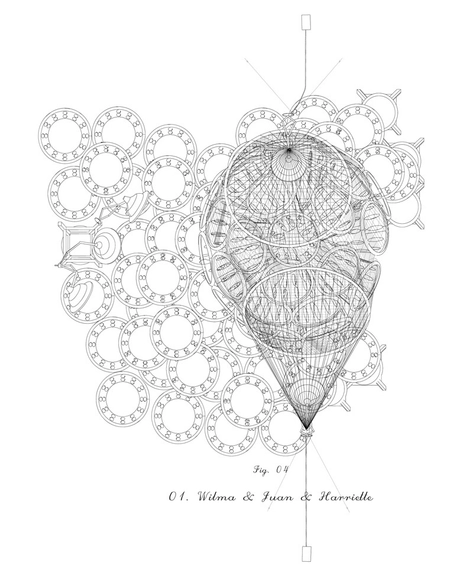
In this first solo project by Andrés Jaque / Office for Political Innovation in Los Angeles, the architect prepares an exhibition, with a series of architectural case studies based in the city of L.A., in which he problematizes the importance of such cases as places of socialization and community, leaving behind the stereotypes that characterize them as disconnected spaces, symbols of ultra-individuality and comfort.
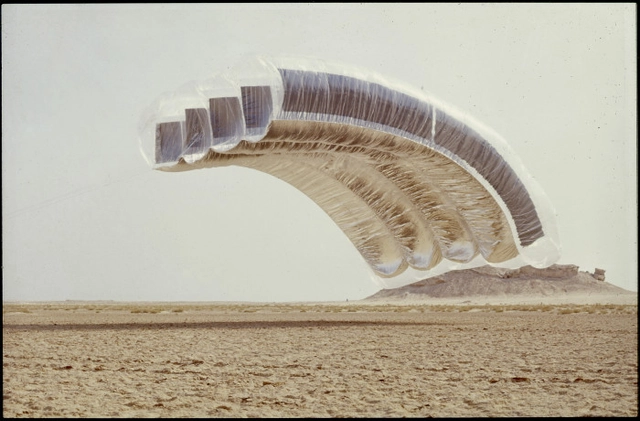
Far-out Voices presents a selective insight into the pioneering, counter-cultural origins of what we today call green design. Organized around a series of oral histories (filmed interviews) collected by Caroline Maniaque-Benton in 2002, the exhibition offers a point of entry into the thinking of some of the advocates of “sustainable” planning within the alternative architecture movement of the 1960s and 1970s.

In yet another twist to the ongoing story of the Southbank Centre redevelopment, the Architects' Journal reports that the Southbank Centre has agreed to back a fundraising campaign to keep the famous skate park (if you missed the potential re-designs, click here), with the stipulation that a plan B be put in place in case the fundraising fails. And with at least £17 million needed to replace the revenue that the Centre would have gained by filling the undercroft with retail units, it could be time for the thousands who objected to the proposals to put their money where their mouth is. Find the full article here.

Design Corps and the Social Economic Environmental Design (SEED) Network announce the Call for Entries in the fourth annual SEED Awards for Excellence in Public Interest Design competition. Recognizing excellence in social, economic and environmental design, the SEED Awards represent the confluence of forces needed to create truly sustainable projects and change in the world.
Deadline for applications is Tuesday, November 12, 2013 by 11:59 p.m. EST. Winners will be announced January 22, 2014. For application details and guidelines, go to www.designcorps.org/awards.
More information after the break.

The skyline rises in tandem with the population of the city. Demographers predict that New York alone will add one million more residents by 2040. Finding housing will pose a crisis for hundreds of thousands of them, unless new residential towers are built to house this urban influx.
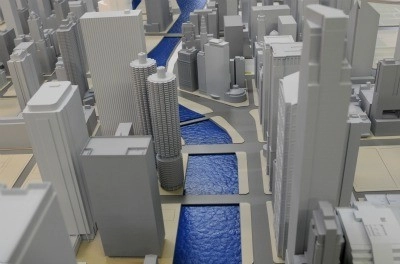
Even if you're a 3D printing whiz (if so, consider entering our exciting 3D Printing Challenge), to many people it remains something of a mystery: how does it work, what can it do and how much does it cost? Thankfully, this recent article and infographic by Line//Shape//Space, aimed at "early adopters" of the technology, covers all this information (and even some common pitfalls to be avoided). You can read the full article here.
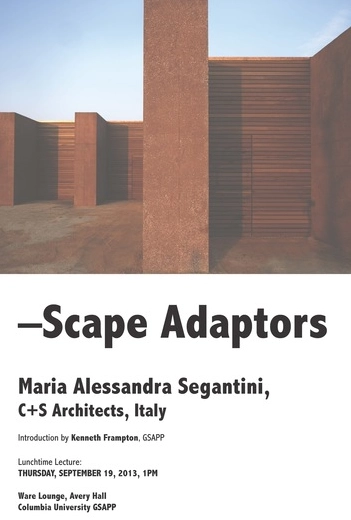
Maria Alessandra Segantini, principal of C+S Architects will be giving a lecture on Thursday, September 19, 1:00pm at Columbia GSAPP, New York. The lecture, called -Scape Adaptors, will be introduced by Kenneth Frampton.
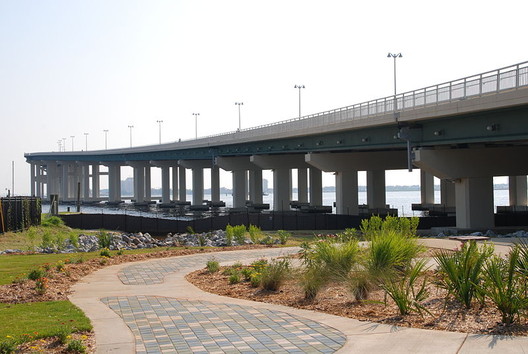
In the wake of Hurricane Katrina, design charettes involving the Gulf coast community led to many proposals, ranging from the large-scale (establishing Gulfport as a major harbor city) to the more personal (bike paths). Eight years after the fact, many of these projects are still in progress, or have yet to begin - but the outlook remains bright. The Sun-Herald's Michael Newsom explores the background behind these efforts, and explains the hurdles they’ve faced along the way. Read the full piece here.
(1).jpg?1378844872&format=webp&width=640&height=580)
Ma Yansong, founder of MAD Architects, will be having a workshop at Ajman University of Science & Technology, UAE from October 7 to October 10. For registration you need to contact Dr. Jihad Awad at j.awad@ajman.ac.ae.

Jimenez Lai, founder of Chicago-based Bureau Spectacular has been selected as winner of the first Lisbon Triennale Millennium BCP Début Award. The award, presented by Millennium BCP president Fernando Nogueira, distinguishes a young architect or studio under 35 on outstanding work, development of original design thinking and the pursuit of critical ideas with a monetary prize of €5,000.
Jimenez Lai was chosen from 180 candidates for the “originality and range of his body of work, whose uncompromising and thought-provoking approach to formalism lends it an exploratory vein that,” in the words of the jury, “is crucial to the future of architecture.”

Cricklewood, a North London suburb devoid of public space, is finding a new lease of life through a series of pop-up interventions - including a mobile town square designed by Studio Hato and Studio Kieren Jones - put together by civic design agency Spacemakers. While the project might have a bit further to go before any benefits are truly felt by the local residents, the project is part of a wider scheme financed by the Mayor’s Outer London Fund which will hopefully lead to the rejuvenation of more of the capital's suburbs. Read Liam O'Brien's full article in The Independent here.

The term 'green' is notoriously difficult to define, and even more so when it comes to architecture. An often overused and fashionable way of describing (or selling) new projects, 'green' design seems to have permeated into every strand of the design and construction industries. Kaid Benfield (The Atlantic City) has put together a fascinating case study of a 1,700 dwelling housing estate near San Diego, challenging what is meant by a 'green' development in an attempt to understand the importance of location and transport (among other factors) in making a project truly environmentally sustainable. In a similar vein, Philip Nobel (The New York Times) explores how 'green' architecture is less about isolated structures and far more about "the larger systems in which they function". Read the full article from Kaid Benfield here, and Philip Nobel's full article here.