1. ArchDaily
  2. Mini

Mini

Benedetta Tagliabue to Recieve 2013 RIBA Jencks Award

The Royal Institute of British Architects (RIBA) has announced Italian architect Benedetta Tagliabue as the 2013 recipient of the annual RIBA Jencks Award for her contributions internationally to both the theory and practice of architecture.

Upon announcing the news, Charles Jencks stated: “I am delighted to announce that the judging panel of the 2013 RIBA Jencks Award was unanimous in premiating the extraordinary talent and career that Benedetta Tagliabue has had, particularly while leading the EMBT Miralles Tagliabue studio to create a tough, warm, surprising, complex and open-ended architecture that is very much like the city from where it springs, Barcelona.”

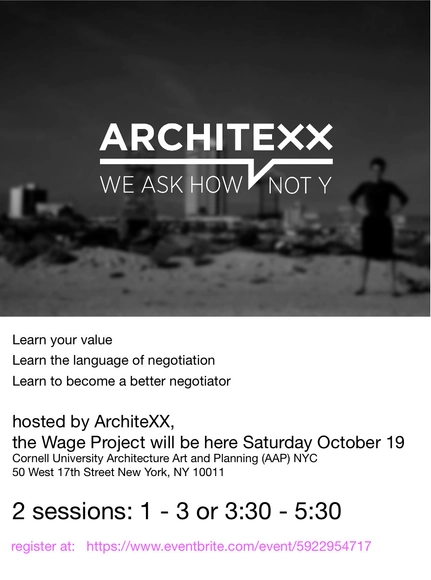
Women Architects: Learn Your Value, Learn to Negotiate / ArchiteXX & The Wage Project

All too often when it comes to the issue of women disappearing from the architecture profession, the question is: why? But perhaps we really should be asking: how?  How can we keep women in the profession? How can more women advance to positions of power? And how can women start earning the money they deserve? 

Unanimous Approval for Apple's Cupertino Campus

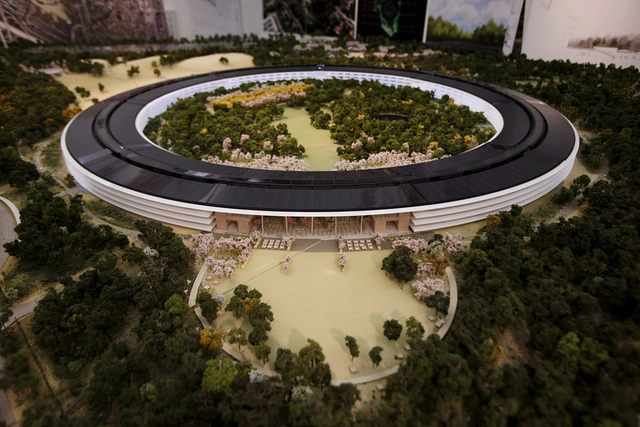
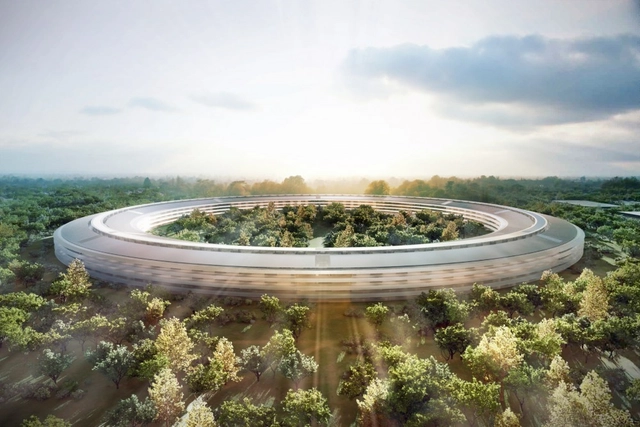
UPDATE: Although having already cleared a preliminary vote, the Apple HQ was given unanimous approval from the Cupertino council yesterday. One "largely perfunctory" vote remains for November 15th. Detailed images, after the break.

Richard Nieva (CNET) reports that plans for Apple's new corporate headquarters have been approved by Cupertino's planning commission (the final, deciding vote will be in November 2014). The "spaceship", designed by Foster + Partners in collaboration with Kier & Wright, will cover 2.8 million square feet, host up to 14,000 employees, include "a 600-seat restaurant with four-story glass sliding doors", be surrounded by over 6000 trees, and - to top it off - come with a price tag close to $5 billion.

Shortlist Announced for Oslo's July 22 Memorial Sites

Eight candidates have been selected for the second phase of the international competition to design two national public art memorial sites to commemorate the 2011 terror attacks in Oslo and on the island of Utøya. Selected from over 300 artists and architects from 46 different countries, the Art Selection Committee have shortlisted the following candidates:

The 10 Best Emerging Designers Right Now

In their quest to find the best emerging young designers in the world, Metropolis Magazine reached out to critics, curators and other industry leaders to get their picks for the most promising young professionals in the worlds of architecture, art, graphic design and product design. The results feature a trend towards interdisciplinary and collaborative work. Particular highlights are Pernilla Ohrstedt, selected by John Cary of Public Interest Design; Elliott Hedman, selected by President of IDEO Tim Brown and Alexandra Daisy Ginsberg selected by Paola Antonelli of MoMA. You can view all the selections here.

What Happens When Smart Cities Malfunction?

An interesting essay by Anthony Townsend in Design Observer investigates a largely unconsidered aspect of smart cities: what happens if (or perhaps when) they malfunction? Townsend argues that as technology seeps into every aspect of our life within a complex system such as a smart city, glitches and bugs are likely to be magnified many times. He also explains that many of the communications systems that smart cities will rely on are insufficiently resilient, meaning entire cities could be vulnerable to failure or attack - an issue that will not sit well with the AIA. You can read the whole essay here.

RTKL to Debut Smart Transit Hub Proposal

RTKL, a global architecture and design practice, announced its HALO project will be featured as part of the TransformKC Exhibition (October 4th - 25th in Kansas City, Missouri), which seeks to illustrate what the future could look like for Kansas City transit and innovative rail projects. The HALO concept is a modular, five-foot panelized, glass-enclosed, sustainable walkway for bus passengers that will utilize new technology to capture kinetic energy expended from foot traffic - approximately 7 watts per tile per footstrike. More info here.

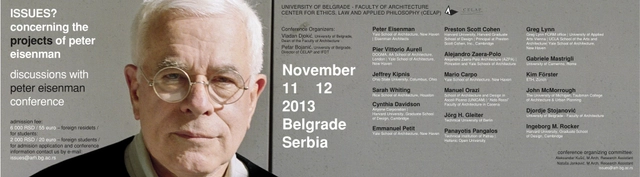
ISSUES? Concerning the projects of Peter Eisenman

The conference will focus on Peter Eisenman's long and outstanding oeuvre.Thematization of almost 50 years of his theoretical and educational work and almost 25 years of his full-time architectural practice is seen here as vital to the understanding of both the past and the presence of contemporary architecture. From the questions related to Renaissance heritage to the problems associated with disciplinary autonomy and the digital, the conference aims to provide a space for a critical debate among architects and theorists.

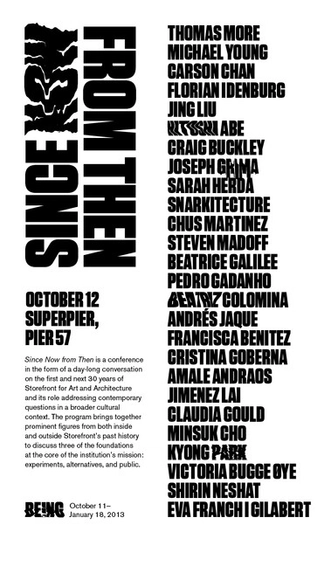
Conference: Since Now From Then

The cultural, political and social context that produced - 30 years ago - Storefront for Art and Architecture has radically changed, yet the need to produce alternatives to the contemporary forces that shape public life are still as vital as ever.

Since Now From Then is a conference that takes the form of a day-long conversation on the first and next 30 years of Storefront for Art and Architecture and its role addressing contemporary questions in a broader cultural context. The program brings together prominent figures from both inside and outside the organization’s past history to discuss three of the foundations at the core of the institution’s mission: Experiments, Alternatives, and Public.

Participants include Carson Chan, Michael Young, Florian Idenburg, Jing Liu, Hitoshi Abe, Craig Buckley, Joseph Grima, Sarah Herda, Snarkitecture, Chus Martinez, Steven Madoff, Betarice Galilee, Pedro Gadanho, Beatriz Colomina, Andres Jaque, Francisca Benitez, Cristina Goberna, Amale Andraos, Jimenez Lai, Claudia Gould, Minsuk Cho, Kyong Park, Victoria Bugge Oye, Shirin Neshat and Eva Franch i Gilabert.

More information after the break.

Reviving Beijing's Hutongs with Micro Installations

The Guardian's Oliver Wainwright documents the current trend of micro-scale installations spurring new life into the historic hutongs of Beijing and gaining support from the local communities, eager to reject the economic pressures of destroying/rebuilding. The local government’s endorsement, however, comes as a surprise - especially considering its fervent impetus to raze these areas just a few years ago. Read the full article here: Designers Use 'Urban Acupuncture' to Revive Beijing's Historic Hutongs.

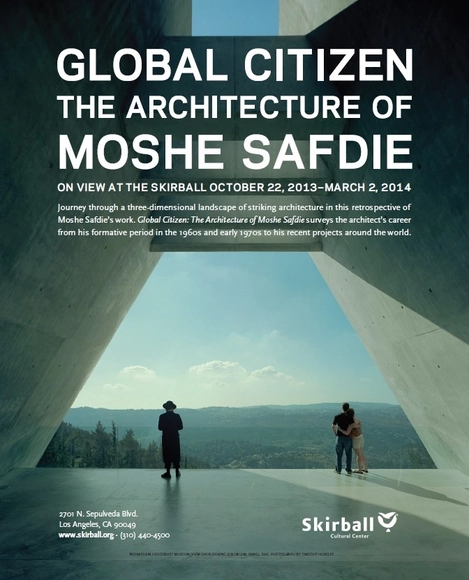
Global Citizen: The Architecture of Moshe Safdie

Journey through a three-dimensional landscape of striking architecture in this career-spanning exhibition of Moshe Safdie’s work. Global Citizen: The Architecture of Moshe Safdie surveys the renowned architect’s career from his formative period in the 1960s and early 1970s to his recent projects around the world, exploring his aesthetic language of transcendent light, powerful geometry, and iconic forms.

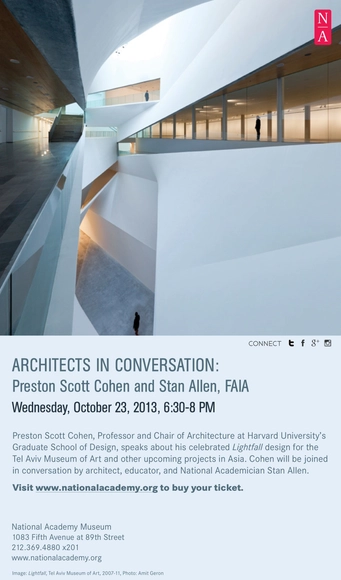
Architects in Conversation: Preston Scott Cohen and Stan Allen, FAIA

Architect Preston Scott Cohen, Professor and Chair of Architecture at Harvard University’s Graduate School of Design, speaks about projects in Asia and his design for the Tel Aviv Museum of Art’s celebrated Lightfall with architect, educator and National Academician Stan Allen. The event will take place October 23, from 6:30pm till 8:00pm at the National Academy Museum. For tickets, please click here.

“A Short History of the Highrise”

The New York Times has published “A Short History of the Highrise” - an interactive documentary that explores the 2,500-year global history of vertical living and issues of social equality in an increasingly urbanized world. Organized in four short films - “Mud,” “Concrete,” “Glass,” and “Home” - viewers are given the option to "dig deeper" into each subject and explore additional archival material while viewing the film. Check out the film here.

Turkey Design Mission 2013

Turkey Design Mission 2013 - Image 4 of 4
Courtesy of Turkey Design Mission

Turkey's fast growth has increased the demands in the construction sector, opening many opportunities for architects. 

If Skyscrapers Predict Crises, What Do "Donuts" Tell Us?

In a recent article for the Financial Times, Edwin Heathcote explores the 'Skyscraper Index', an informal term that suggests a correlation between the construction of a big company's ambitious headquarters and subsequent financial crisis: "Think of the Empire State Building opening into the Wall Street crash of 1929, the Twin Towers being completed as New York City was flirting with bankruptcy or the Petronas Towers in Kuala Lumpur taking the mantle of the world’s tallest building and presaging the Asian financial crisis." Heathcote goes on to describe the latest generation of headquarters being constructed for our current, tech-oriented goliaths - like Apple's monolithic "donut", by Foster + Partners, and Facebook's Gehry-designed Menlo Park campus - and wonders: "if skyscrapers can tell us something about the temperature of an overheating economy, what do these groundscraping new HQs say?" Read the full article here.

Could Mobile Technology Help Us Define "Good" Architecture?

Could Mobile Technology Help Us Define "Good" Architecture? - Featured Image
Courtesy of gizmodo.com

Architecture researchers in Edinburgh have completed a breakthrough study on brain activity recorded in situ by using mobile electroencephalography (EEG) technology, which records live neural impressions of subjects moving through a city. Excitingly, this technology could help us define how different urban environments affect us, a discovery that could have provocative implications for architecture. Read the full story on Salon. Also, check out this article from Fast Company about how a similar mobile technology could show us the effects of urban design - not on our brains, but on our bodies.

Sukkah City: An Architectural Take on an Old Tradition

Subscriber Access | 
Sukkah City: An Architectural Take on an Old Tradition - Featured Image
Courtesy of oxbowlakefilms.com

Each year, Joshua Foer, author of the bestseller Moonwalking with Einstein, would celebrate sukkot (a traditional Jewish holiday) with his family by building a sukkah, a small temporary shelter that acts as a reminder of the Jews' plight after being expelled from Egypt. Years later, he co-founded a competition to challenge architects to consider the holiday from a designer's point of view. Sukkah City, a documentary on the competition, follows a couple projects through their inspiration and construction. Read more about it here.

AA Students "Amplify the Forest"

Marking the Forest, now in its second year, is a ten-day summer course by the Architectural Association. Set in a managed forest in central Oregon, it aims to engage students with the forest through thoughtful architectural intervention.

You've started following your first account!

Did you know?

You'll now receive updates based on what you follow! Personalize your stream and start following your favorite authors, offices and users.