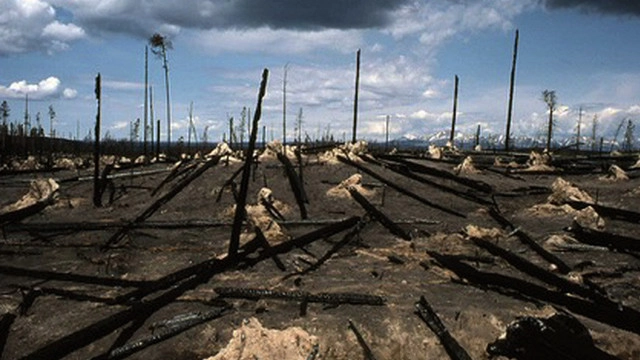
The 'Sa(ndy)licornia' proposal, which was one of the selected entries in the MOMA PS1 Rockaway Call for Ideas, is a reaction to the fact that in many ways Sandy, effectively, became a brand, and in doing so it provided all sorts of people with various sorts of "meaning". From this point of view, architect Daniel J Wilsonfocuses on how disasters can be understood to provide a form of social glue, clear-eyed perspectives about "what really matters", and the possibility of rebuilding something from scratch, only better. More images and architects' description after the break.
Taking place during the National Building Museum's Summer Block Party, the Architecture 101 lecture series explores iconic styles during significant periods in architectural history. The two lectures, titled 'Miesian' (July 20) and 'Expressionism' (July 27) will serve as a refresher course for the professional or student or providing the novice with a chance to learn more about the world of architecture. More information after the break.
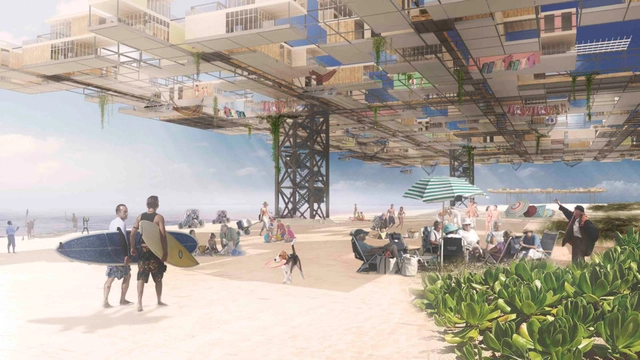
One of the selected entries in the MoMA PS1 Rockaway Call for Ideas, Stephen Yablon Architect’s "Yona on the Beach" accepts the inherent and increasingly dynamic weather conditions of barrier islands. Their idea is a new model for barrier island settlements; entire beach neighborhoods are raised high above the 100 year flood plain so that the barrier island below can naturally shift and change during storms with minimal impact to human habitation. More images and architects' description after the break.
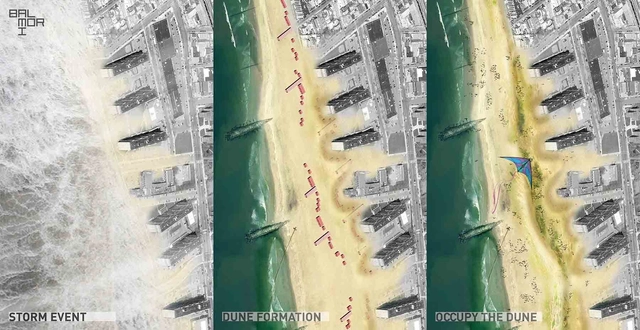
Recently chosen as one of the selected entries for the MOMA PS1 Rockaway Call for Ideas, the 'Occupy the Dune' proposal by Balmori Associates focuses on an infrastructure as the center for civic activity, protecting the community while connecting it socially and ecologically. Vegetation that colonizes the dunes surface is the most critical part of the ecosystem, adding strength and stability to blunt extreme winds and storm surge. More images and architects' description after the break.
In response to MoMA PS1's call for new ideas for rebuilding in the Rockaways after Hurricane Sandy, the 71% proposal by Reddymade Design + Horns and Tails Productions was one of the selected entries which suggests ways in which uncontrollable natural phenomena might be absorbed by the environment to create a balanced system of landscape, infrastructure, and architecture. A multi-layered proposal, it suggests several lines of defense and integration. More images and architects' description after the break.
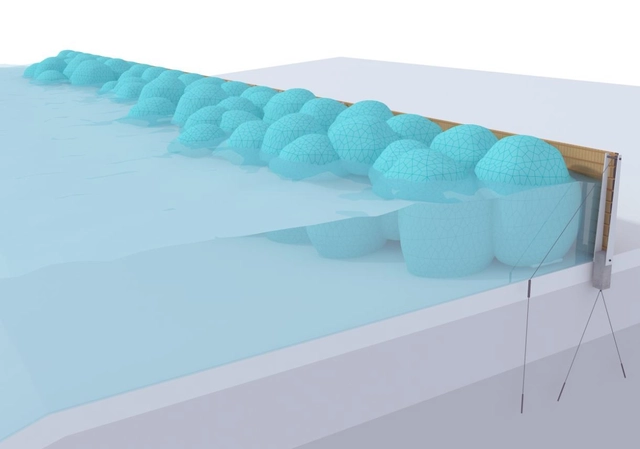
In response to the MOMA PS1 Rockaway Call for Ideas, ‘The Water Dyke’ proposal, which was one of the selected entries, focused not only on rebuilding the boardwalk, but on creating the boardwalk as a community gathering place and a functional infrastructure to protect the shoreline. Designed by Sorg Architects, their concept of the Water Dyke is to harness water itself to retain a storm surge and thereby the shoreline from damaging floods. More images and architects’ description after the break.
Taking place at the Center for Architecture July 11-October 26, the 'Colombia: Transformed/Architecture=Politics' exhibition traces significant new projects that exemplify innovative architectural forms and spaces while serving as conduits for social inclusion. With measurable results, Colombia's largest cities—most visibly Medellin—have demonstrated how visionary approaches to urban planning and architecture can improve circumstances for the lower classes, enhance the quality of life for all, and attract business and tourism. A brief review of significant recent projects reveals an overarching commitment to design as well as a sensitivity to the role of context and the immediate needs of a population. More information on the exhibition after the break.
One of the selected entries in the MOMA PS1 Rockaway Call for Ideas, the 'Occupy Infrastructure' proposal by Barkow Leibinger Architects is three-fold. The main idea is to construct a network of retaining berms based on priority and need with local materials and by the communities that they protect. These berms are not continuous (like a wall) but overlap to allow beach access, gateways, and to maintain visual and spatial openness and continuity between beaches and neighborhoods. More images and architects' description after the break.