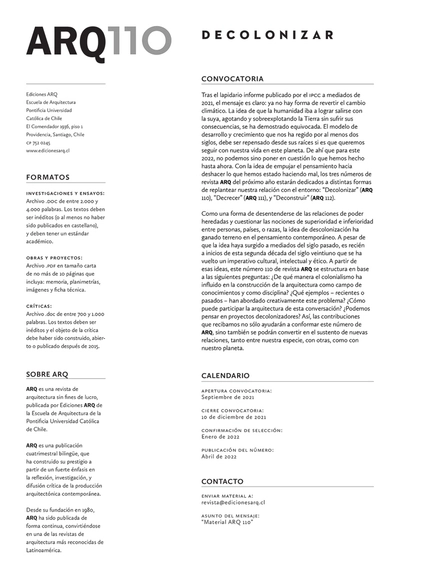
Following the damning report published by the IPCC in mid-2021, the message is clear: there is no longer a way to reverse climate change. The notion that humanity would manage to get away with it—depleting and overexploiting the Earth without suffering the consequences—has proven to be mistaken. The model of development and growth that has governed us for at least two centuries must be rethought from its roots if we are to continue our life on this planet. Therefore, in 2022, we have no choice but to question our actions to date. With the goal of pushing thought toward undoing what we have been doing wrong, the three issues of ARQ magazine next year will be dedicated to different ways of rethinking our relationship with the environment: "Decolonize" (ARQ 110), "Degrow" (ARQ 111), and "Deconstruct" (ARQ 112).
Videos
Iform, San Sebastián University School of Architecture, Concepción campus, and Francisco González.
The UPC Alumni IForm Club - Forma Moderna Internacional, the Vice-Rectorate for Research and Doctorates of the Universidad San Sebastián, the Faculty of Art and Design, and the School of Architecture at the Universidad San Sebastián (Concepción campus) are pleased to invite you to the presentation of the book "Documentos de Arquitectura Moderna. Volumen I. Templos de la Modernidad" (Edicions UPC. Iniciativa Digital Politècnica).
In times of change, AOA proposes an optimistic approach to the challenges facing cities and their citizens within both local and global contexts. We aim to highlight existing opportunities for positive change during and after crisis situations, thereby promoting more resilient cities in both the short and long term.
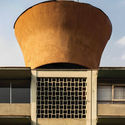
School of Architecture, Cerrillos Campus Core (ca. 1960-1970). Photographic Archive Collection, Andrés Bello Central Archive. Vice-Presidency of Extension and Communications, University of Chile.
From Wednesday, September 1st, and throughout the month, the Archivo Núcleo Cerrillos exhibition will be open to the public. Organized by the CNAC and curated by Cristián Gómez-Moya, a researcher at the Faculty of Architecture and Urbanism of the University of Chile, the exhibition is defined as a research and creation laboratory. It examines the archives, documents, and aesthetic experiences surrounding the Faculty, which was located in the Cerrillos commune from 1957 to 1976.
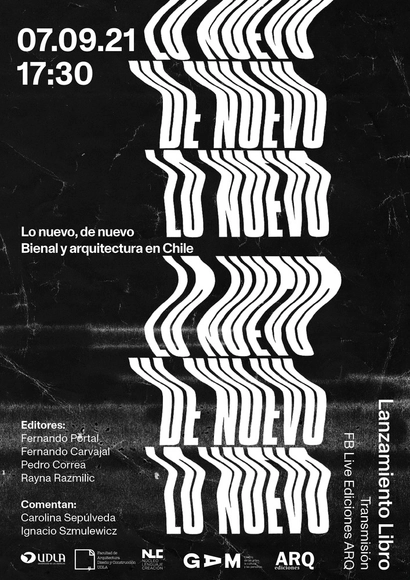
The launch of the latest book, Lo nuevo de nuevo. Bienal y arquitectura en Chile, by editors Fernando Portal, Fernando Carvajal, Pedro Correa, and Rayna Razmilic, will take place on September 7 at 5:30 PM via the Ediciones ARQ Facebook Live page.
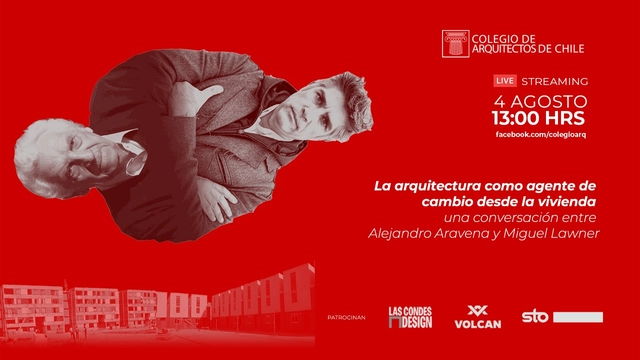
Organized by OTEC Cultura y territorio / Universidad San Sebastián, this event is a conversation with Miguel Lawner, winner of the 2019 National Architecture Prize, on "Core Guidelines for Teaching Social Housing."
This seminar aims to create a space to listen to and make visible various local and international initiatives that allow us to reflect on our disciplines' impact on society. We also seek to hear projects that invite us to rethink the processes that reproduce class, race, or gender inequality to face the social challenges of our times from our creative vocation.
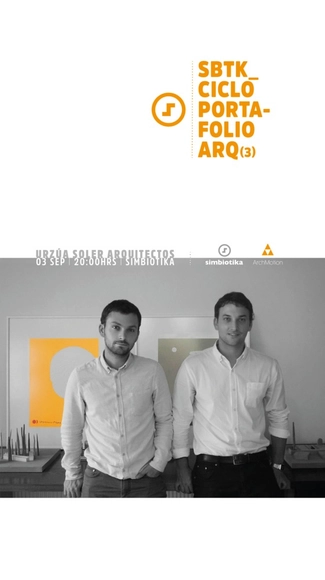
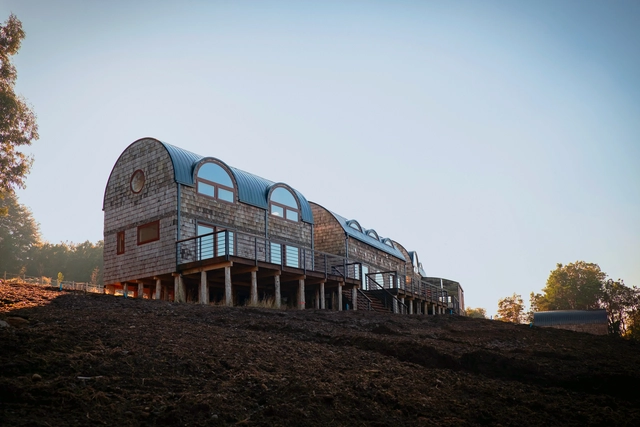
Simbiotika and Archmotion present the Portfolio Cycle featuring Urzúa Soler Arquitectos, a firm that seeks to enhance the spatial experience through design and construction. Their approach focuses on material development, structural modulation, the construction of intermediate spaces, and the pursuit of an architectural form that expands the possibilities of each commission, always considering its use, program, expression, and context to develop a habitable piece that resonates with its user.
The Colegio de Arquitectos de Chile is celebrating another anniversary with a series of free, fully online activities. This milestone began on Wednesday, August 4—the 79th anniversary of the enactment of Law 7.211, which established the Colegio de Arquitectos in 1942—marking the start of the Month of Architecture.
The Colegio de Arquitectos de Chile is celebrating another anniversary with a series of free, fully online activities. The milestone begins on Wednesday, August 4—marking 79 years since the enactment of Law 7.211, which established the College in 1942—and kicks off Architecture Month.
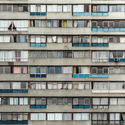
The Unidad Vecinal Providencia (Providencia Neighborhood Unit) is one of the many residential complexes generated in Chile as a result of a housing and urban development public policy promoted through the CORVI (Housing Corporation) between 1953 and 1973.
Commissioned by the Caja de Empleados Particulares (Private Employees Fund) to be built on a site where previously the National Children's House was based, the Unidad Vecinal Providencia was designed as a complex capable of becoming an urban piece, promoting spatial integration and social cohesion in Santiago.