On November 20, the 2020 Panamerican Architecture Biennial of Quito (BAQ 2020) announced the winners of the present edition. Every other year, the BAQ "invites to discuss contemporary production of the built environment, aiming to improve the practice of our profession" in the Americas.
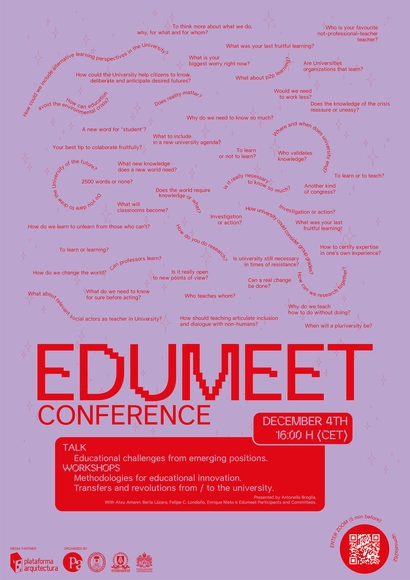
Edumeet launches next Friday, December 4, at 4:00 PM CET. This shared space centered on education aims to transform the traditional academic conference into a hybrid, interactive, playful, and enriching experience.
“Empty Spain, Full Spain. Conciliation Strategies” is the proposal by Anna Bach, Eugeni Bach, and Óscar Miguel Ares that secured the curatorship of the upcoming XV Spanish Biennial of Architecture and Urbanism (BEAU).
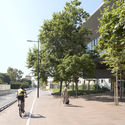
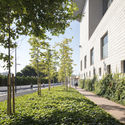
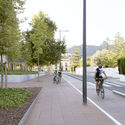
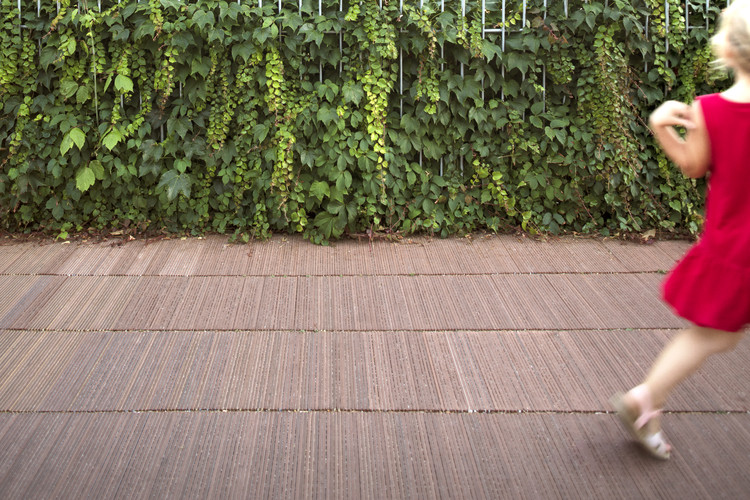
LIFE CERSUDS (which stands for Ceramic Sustainable Urban Drainage System) is a proposal developed within the framework of the LIFE program—the European Union's funding instrument for the environment and climate action. It is a sustainable urban drainage system (SUDS) that utilizes low commercial value ceramic material as a filtering paving system to improve cities' adaptive capacity to the climate crisis.
This initiative was implemented as a demonstrator project in the town of Benicàssim, Spain, by architects Eduardo de Miguel and Enrique Fernández-Vivancos of the Valencia Ceramic Chair. They present the project in detail below.
"What Are We Talking About When We Talk about Contemporary Cuban Architecture?" is the title of the article written by Fernando Martirena in Rialta Magazine that delves into the reality of architecture within Cuban society. Essentially, it receives so little attention that it might as well not exist. This prompted the birth of the Cuban Architecture Studios Group (Grupo de Estudios Cubanos de Arquitectura), of which Martirena is a member, a collective that aims to give modern Cuban architecture a platform and a voice.
ArchDaily sat down with Martirena to talk about the group and the state of architecture today in his native Cuba.
"Las Tres Esperanzas [The Three Hopes] are three constructive actions that make up the educational space where not only children and adolescents were and are shaped, but where we also formed ourselves as architects." These engaging opening words already reveal a journey which, as the result of a sequence, demonstrates that the threads of events are too complex to weave and understand from a single point of view.
For this reason, the sequence of diverse perspectives organized in this new book presented by Al Borde is so significant. It highlights not only a process—and a series of parallel events—but the singularity of a construction. It stands as testament to both the complexity, timeline, and unforeseen events, and the collaborative efforts, learning, and lessons that come with creating a work of architecture.
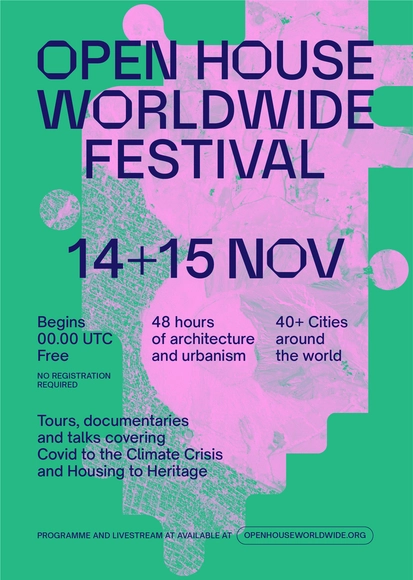
Today, Open House Worldwide (OHWW) will stage its first collaborative event: a free 48-hour non-stop streamed festival of events, discussions, tours and more. As media partners, ArchDaily will be broadcasting the entire event.
Image: Phineas Harper. Image Courtesy of Open House Worldwide
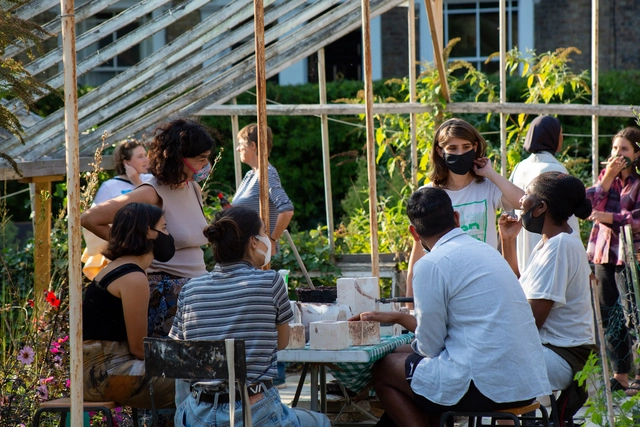
More than the buildings we visit, or the cities in which we see them, the core of Open House is, and always have been, its volunteers. Since the Open House concept was brought to life in London in 1992, Open House volunteers have been at the centre of the annual festivals which today take place on every corner of the globe.
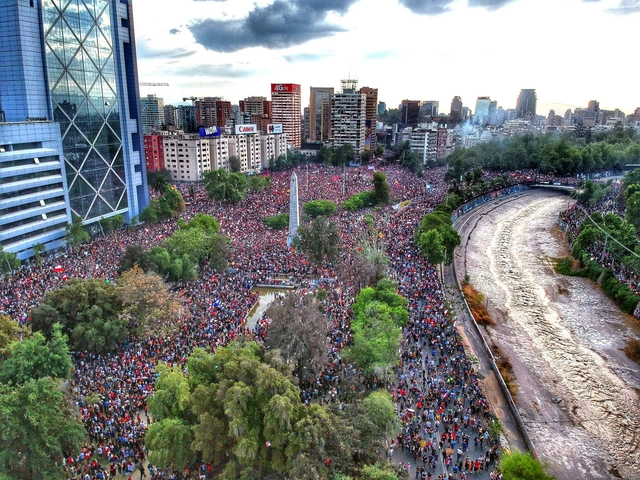
After a year of dramatic protests and demonstrations on the streets of the city, the future of Santiago, Chile, will be debated as part of Open House Worldwide Festival on the weekend of 14-15 November.
On Thursday, November 19, 2020, at 7:00 PM Buenos Aires time, a conversation took place between Nader Tehrani (founding partner of NADAAA) and Gabriel Feld, as part of the "Dialogues on the Teaching of Architecture, Design, and Urbanism" organized by the Antonio Díaz Chair at FADU - UBA.
Open House Worldwide (OHWW) is pleased to announce the full programme of the network’s first collaborative event on its relaunched and redesigned website and visual identity.
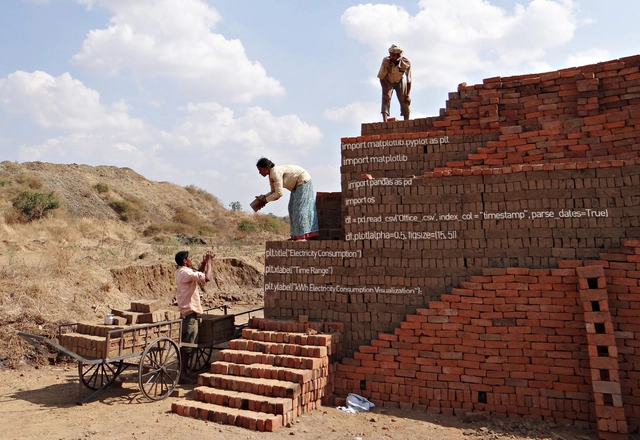
Clayton Miller is an Assistant Professor at NUS, part of BUDS Lab, a scientific research group that leverages data sources from built and urban environments to improve energy efficiency and conservation, comfort, safety, and satisfaction of humans. He holds a Doctor of Sciences from the ETH Zürich, an MSc. (Building) from the National University of Singapore (NUS), and a BSc. Masters of Architectural Engineering (MAE) from the University of Nebraska - Lincoln (UNL).
ArchDaily had the chance to interview Miller and find out his point of view on how programming and data science can help in improving architecture and construction.
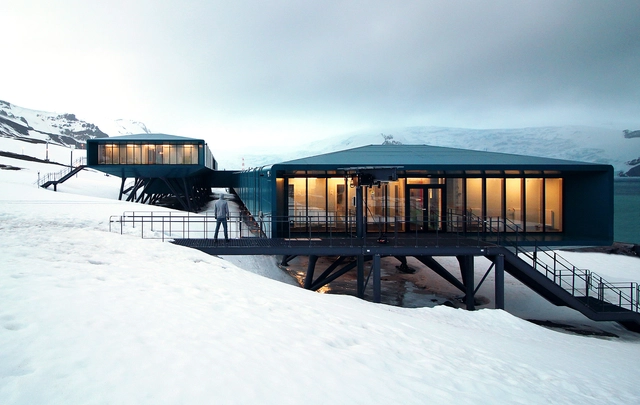
The judges for the Oscar Niemeyer Award, one of the most prestigious of its kind in the realm of Latin American architecture, have announced the 20 finalists for the competition's third edition.
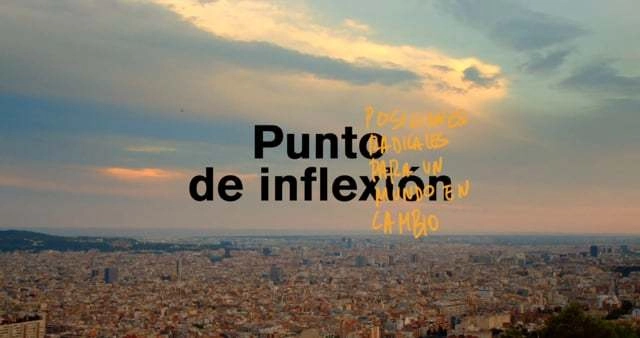
"We are at a historic moment. Everything is changing—the way we relate, work, and build. The boundaries between the physical and the digital, the local and the global, are blurring as we move toward an uncertain horizon shaped by the climate emergency and social inequalities. In this context, the role of architecture, design, and urban planning is fundamental."
These are the opening words of a new documentary produced by the Arquia Foundation—the first in a series profiling different Spanish cities—directed by Javier Peña. The film explores Barcelona's most radical architecture through the lens of a generation of architects who emerged in 2008 in the midst of the financial crisis. It features contributions from Anna and Eugeni Bach, Maio, David Steegmann, Adrià Escolano, Vora Arquitectura, Bonell + Dòriga, Raúl Sánchez, Arquitectura G, FLEXO Arquitectura, Carles Enrich, La Col: cooperativa de arquitectos, and Harquitectes.
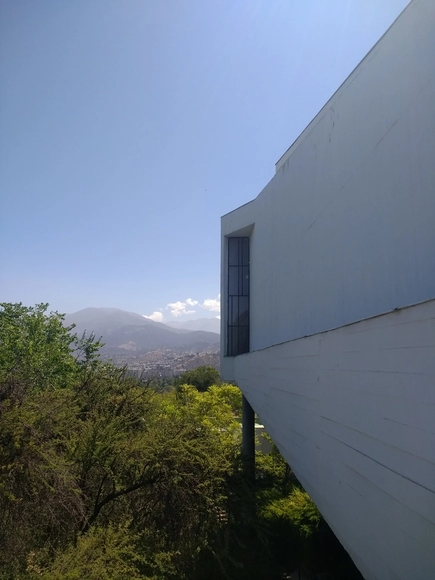
The Chilean historian, monk, and architect Gabriel Guarda, co-author of the Benedictine Monastery Chapel alongside Martín Correa in Santiago, Chile, passed away today at the age of 92.