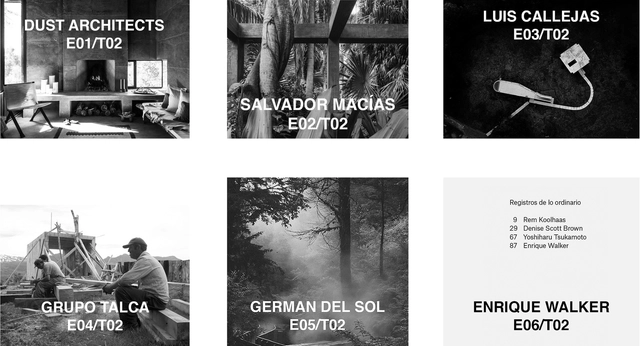
Nicolas Norero presents a new season of his podcast, continuing his conversations on identity, memory, and ways of life. In this edition, the featured guests are Dust Architects, Salvador Macías, Luis Callejas, Grupo Talca, Germán del Sol, and Enrique Walker.
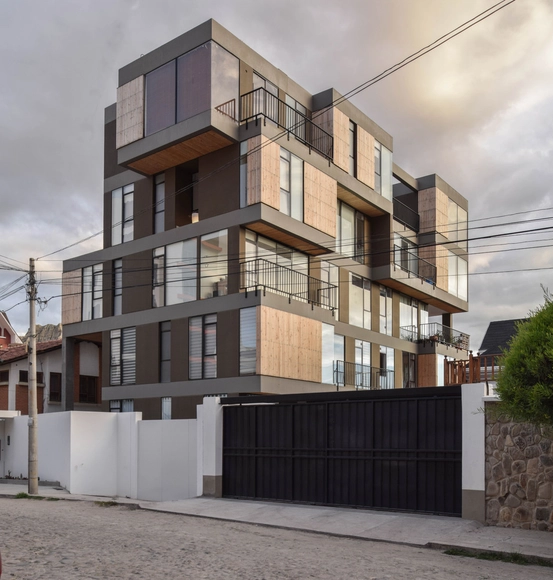
Edificio Isabel - arquitecto Christian Dávila. Image Cortesía de Bienal Internacional de Arquitectura de Santa Cruz
From July 20 to 27, the first virtual edition of the 7th Santa Cruz International Biennial of Architecture (BASC) took place. Organized by the Santa Cruz Association of Architects, the event was an effort to reflect on the “Return to Origins”; that is, bringing to the table the importance of an introspective review of the essence of space and cities from a global perspective, yet connected to local knowledge.
On the final day of the event, the first-place winners and honorable mentions for each of the five BASC 2020 categories were announced. Discover all the winners below.
The 2020 FAD Awards, one of the most important architecture accolades on the Iberian Peninsula, have announced the winning projects of their latest edition.
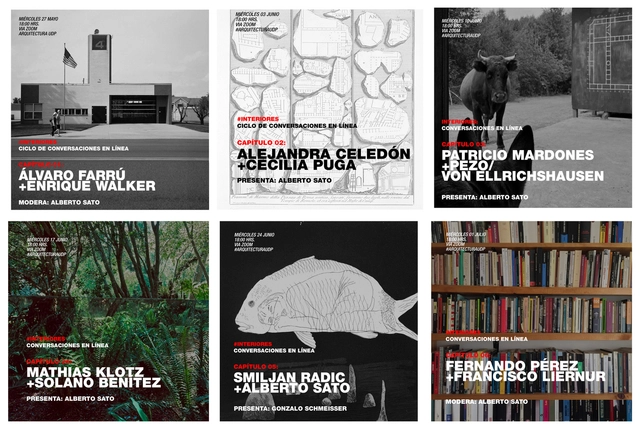
“Interiores: Conversaciones en línea” is the title of the series of virtual encounters organized by the Faculty of Architecture, Art, and Design at Universidad Diego Portales (UDP). In this first season, Professor Alberto Sato hosts meetings between renowned architects, including Álvaro Farrú and Enrique Walker, Alejandra Celedón with Cecilia Puga; Mardones with Pezo von Ellrichshausen; Solano Benítez with Mathias Klotz; Smiljan Radic with Alberto Sato; and Fernando Perez with Francisco Liernur.
Courtesy of Seoul Biennale of Architecture and Urbanism 2021
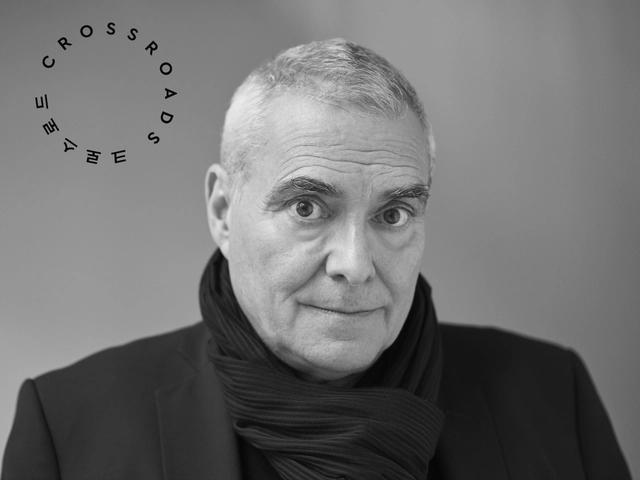
Exploring the evolution of the world’s cities and metropolises, the third edition of the Seoul Biennale of Architecture and Urbanism (SBAU 2021) entitled "CROSSROADS Building the Resilient City" will be led by French architect and urban planner Dominique Perrault.
ArchDaily had the chance to speak to Perrault to find out what will be different in this particular biennale.
Luca Tranchinois a production designer well known for his participation as an art director in Martin Scorsese’s Gangs of New York, the Aviator, Hugo Cabret, and Disney’s Prince of Persia, among many other productions. His work is designed to take us to magical and historical worlds. We recently interviewed Tranchino to look behind the scenes and uncover connections between film and architecture.
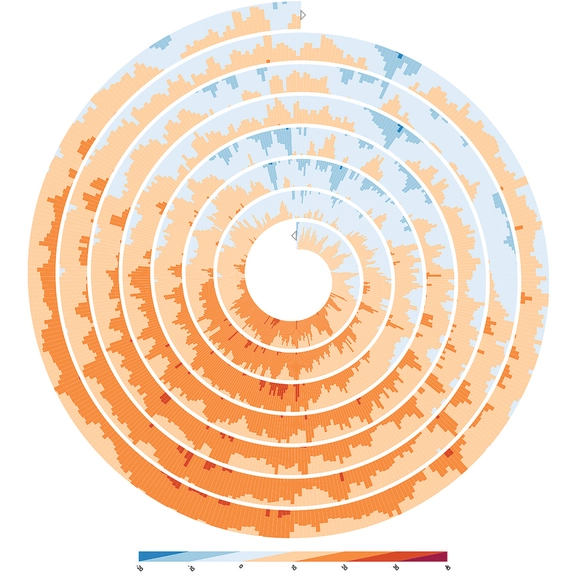
Manuel Lima is a designer, researcher and author well known for his work on visualizing and mapping complex networks. A Fellow of the Royal Society of Arts, he was named one of the "50 Most Creative and Influential Minds" by Creativity magazine, and is both the founder of VisualComplexity.com and a Senior UX Manager at Google.
We talked with Lima to find out his thoughts on the connection between data visualization and architecture. The following conversation explores his inspirations and process, as well as his views on how data visualization can help improve the quality of our cities.
Montage. Sculpture profiles via Wikipedia user: Anna Frodesiak. Licensed under Public Domain CC0 1.0
Scattered throughout cities and standing as landmarks in the landscape, what do these statues represent, having driven humanity around the world to pay such singular attention to their size?
Many times I have not been able to decipher whether the video or the image I was looking at was real. In the same way, I had to convince friends or relatives —namely, people unfamiliar to the idea of the architectural render— several times that a building featured in a storefront advertisement or in a printed magazine was not real. There is no longer a gap —or limits— between hyper-realistic, computer generated visualization and reality itself. Are we reaching the limits of visualization of our spaces? Do our architectural visualizations meet our architectural expectations?
Black Mirror's 'Striking Vipers' episode (2019), available on Netflix. Image Courtesy of Annie Beauchamp
Production designer Annie Beauchamp contacted me shortly after reading an article about Black Mirror series and what it can teach us about the future of architecture —something exciting for me since she was in charge of the visual look in Striking Vipers, the first episode of the dystopian series' fifth season. Beauchamp who has extensive experience working on major productions such as Sleeping Beauty, The Yellow Birds, Adoration, Top of the Lake China Girl, LEGO's Ninjago Movie, also served as an art director in nothing less than Moulin Rouge.
We've talked with Beauchamp to get to know her thoughts on the connection between films and architecture. The following conversation explores her beginnings and inspirations, her work process, as well as her views on the era of computer visualizations. In addition, we concluded the conversation with a couple of recommendations for a new generation interested in production design.
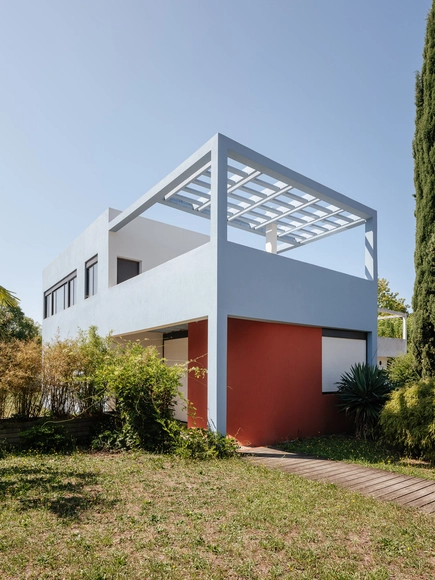
In the 1920s, work was completed on the Cité Frugès housing complex in Pessac, France. The project, meant to house Pessac's industrial workers, would be one of seventeen Le Corbusier works on UNESCO's list of World Heritage Sites.
Chilean architect and urban planner Germán Bannen, renowned for his work in the municipality of Providencia, is thoroughly examined in a new documentary by visual artist Gabriel Del Favero and journalist Ana Rodríguez. La ciudad de Germán Bannen traces the key milestones of his projects—such as the design and construction of Nueva Providencia Avenue—through a compilation of photographs, plans, archival footage, lectures, architectural drawings, and a dozen interviews.
How does architecture contribute to the current climate crisis?
We invited our readers to weigh in on this issue and were overwhelmed by the number of responses that we got. After reading through and compiling the replies from industry professionals, architectural students, and architecture aficionados, we were struck by a common theme: there are few resources when it comes to researching howmaterials and products used in construction are sourced and produced.
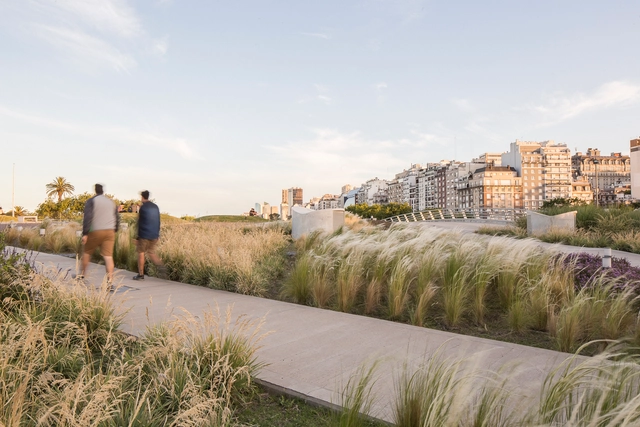
Bulla is an Argentine landscape design, urban, and territorial planning studio that has dedicated over a decade to "inserting a landscape agenda into the public and intellectual scene." To explore their beginnings, purpose, methods of working, reflecting, and exploring, as well as their vision for the future of landscape architecture in Argentina, we interviewed Ignacio Fleurquin, founding partner.
What is architecture's share of the blame for climate change?
It was with this very serious question that we decided to open the debate with our readers, and the volume of responses received was impressive. After reading and compiling the comments sent by construction industry professionals, students, and interested individuals, we concluded that architecture schools rarely discuss the physical properties and characteristics of materials, let alone their embodied energy.
La Parleta is a project by the Ecuadorian architecture and construction collective EseColectivo, which gathers "highly valuable reflections, anecdotes, and experiences surrounding the profession." Below, we share some of their thoughts alongside their fourth episode, "Post-Apocalyptic Architecture."



.jpg?1591629903&format=webp&width=640&height=580)