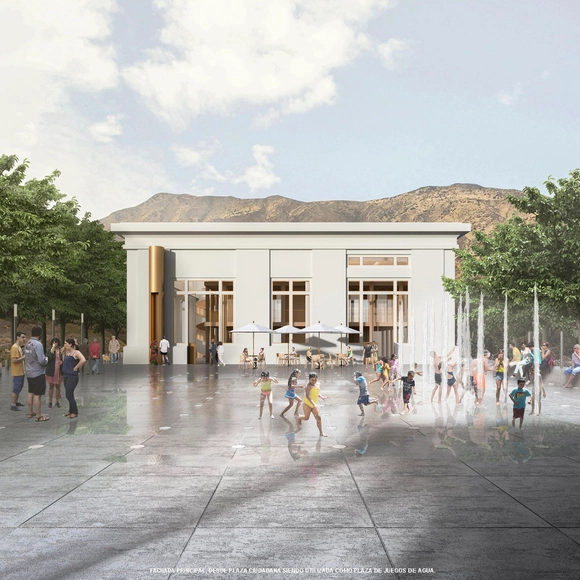
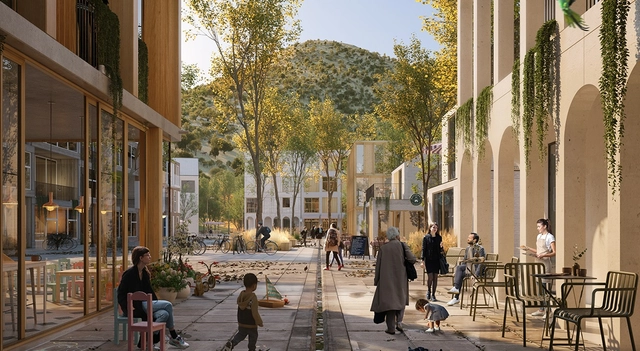
Primer Lugar Rungue. Image Cortesía de Red Trenzando
Trenzando is a territorial cooperation platform based on the reuse of the railway system. It seeks to create greater development opportunities in non-metropolitan areas, strengthening local identities and decentralizing access to knowledge and technologies. To this end, they invited architects, students, and interdisciplinary teams to participate in the architectural ideas competition "Rehabilitation of Railway Stations / Trenzando Network," which aimed to promote the recovery of the architectural heritage of railways in four Chilean localities: Rungue (Metropolitan Region), Ocoa (Valparaíso Region), Yumbel, and San Rosendo (Biobío Region).
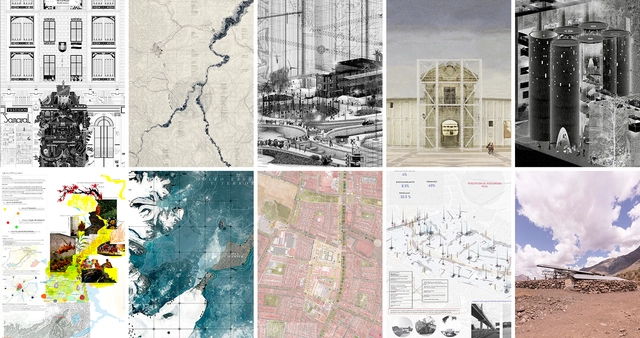
The 10 Best Student Projects in Latin America and Spain
To showcase the valuable academic production of Latin American and Spanish universities, we launched an open call this year, inviting architecture students to submit their thesis projects completed in 2020.
Following a thorough review of 305 submissions, our editorial team selected and highlighted 10 projects that demonstrate rigorous critical thinking in response to their chosen issues. The selection process not only valued projects that delivered the best possible architecture through efficient design suited to their context, program, and users, but also those demonstrating significant attention to human scale, experimentation, and novel ways of approaching architecture in cities. Additionally, we recognize 10 honorable mentions whose immense dedication and academic quality made them impossible to overlook.
Peripheria Films has shared the first episode of its documentary series "Se vende" (For Sale), a production that examines the impact of tourism and real estate development on the Costa del Sol (Málaga).
Chilean architect Miguel Eyquem, co-founder of the Institute of Architecture of the Pontifical Catholic University of Valparaíso and founding member of the Open City of Ritoque, passed away early this morning, according to social media updates from the Amereida Cultural Corporation - Open City.
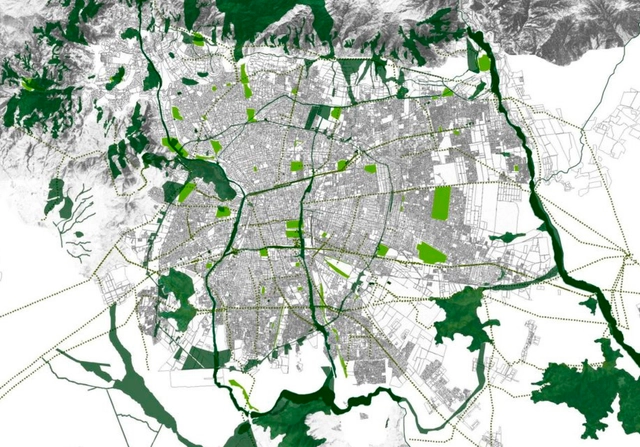
Green infrastructure is an approach centered on territorial planning and environmental sustainability. Moreover, it is one of the primary strategies being adopted by communities, municipalities, and governments in cities worldwide to address the climate crisis, improve public health, reduce social segregation, and protect biodiversity. Specifically, it consists of an interconnected system of diverse green spaces that support a range of functions and benefits.
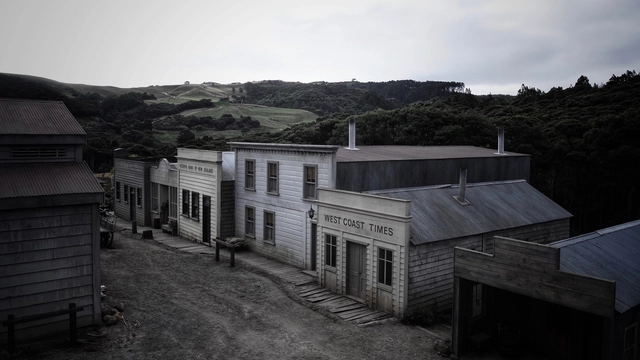
Production designer Felicity Abbott is behind the great staging of The Luminaries, a mini-series that takes place in New Zealand during the 1860s West Coast Gold Rush. In the below interview, she tells us her thoughts on the connection between films and architecture, addressing her work process and the main challenges on this set.
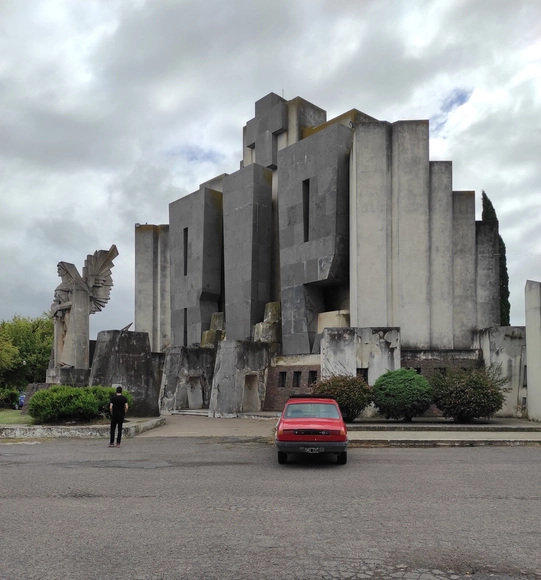
In only a few years, Italian-Argentine architect and engineer Francisco Salamone developed more than 60 buildings throughout the small towns of Buenos Aires Province as a part of the conservative government's push to develop the province's municipal buildings.
The following publication by Gehl titled 'Masterplan Framework with ecology at its heart' is an interesting case study in Huechuraba, Chile. In it, the team consisting of David Sim, Esben Neander Kristensen, Alexander Spitzer, and Tamara Kalantajevska showcase their work in the region through the creation of a specific framework for an urban master plan that puts ecology at its heart:
The Colón Towers in Madrid, designed by Spanish architect Antonio Lamela, will be renovated with four new floors and a new skin by 2022.
luis vidal + arquitectos, who are responsible for the intervention on behalf of the owner Mutua Madrileña, propose removing the "plug" structure created in the 1990s, aiming to relocate spaces while staying ahead of sustainability and accessibility legislation.
In the following interview, Luis Vidal discusses the project in detail.
UMWELT is an architecture and territorial design practice and research office founded by Ignacio García Partarrieu and Arturo Scheidegger. Based in Chile, they have successfully expanded their interests across multiple scales and formats without drawing a distinction between design and research. The result is a diverse body of work, explorations, books, classes, and exhibitions that serve as different facets of the single project called UMWELT.
In the following interview, we delve deep into their current interests and concerns, their creative process when approaching a project, the numerous accolades of their rising career, and their upcoming projects and outlook on the future of architecture in Chile.
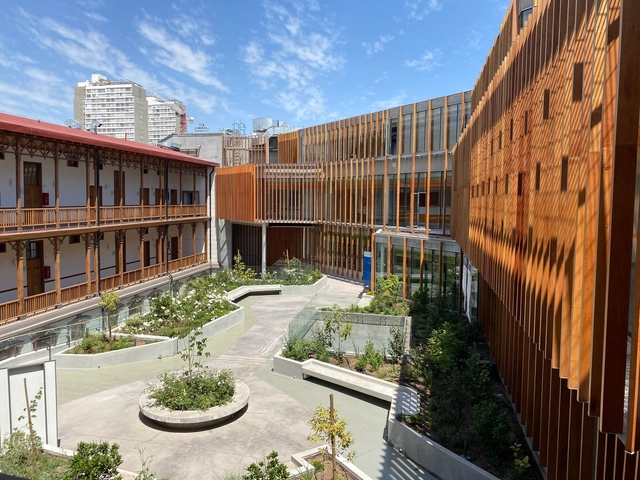
International studio luis vidal + arquitectos, which has operated in Chile for six years, was responsible for the development and execution of the new Matta Sur community center + CESFAM in Santiago. The project focuses on the preservation and value of heritage architecture while reviving and promoting community spirit through a public plaza that connects both buildings.
A brief preview of Uncertainty, the Spanish Pavilion for the 17th International Architecture Exhibition at the Venice Biennale, which will take place from May 22 to November 21.
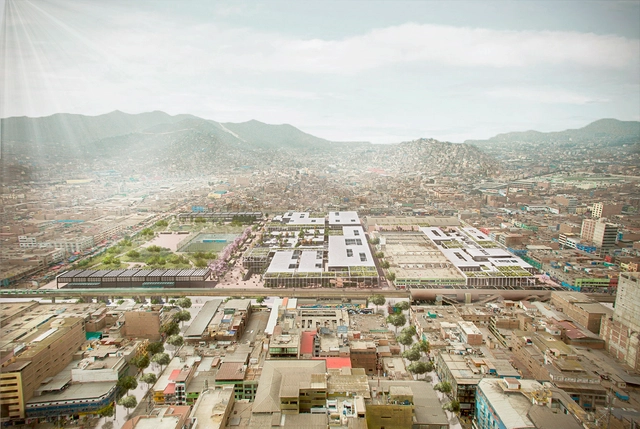
Primer Puesto. Image Cortesía de Equipo de Proyecto
Shaped by the pandemic, how can we address a challenge as complex as the proper functioning of supply markets and street vending? We all know that, in one way or another, we need to reinvent them.
This year's Biennial of Latin American Architecture (BAL 2021) has chosen the top emerging works of architecture in Latin America, which will be presented during the second installment of the event in September 2021 in Pamplona, Spain.
The Official Associations of Architects of Castilla y León (COACYLE - COAL)have announced the winners of their 11th Architecture and Urbanism Awards, aiming to recognize and showcase the innovative, imaginative, and cutting-edge work produced each year in the region.
Ad Urbis is a Cuban collective that navigates the unique challenges of integrating contemporary architecture into highly valuable heritage contexts—such as the capital city of Havana—by promoting architectural research, theory, and practice at the intersection of design and education.
We interviewed the group to discuss their reflections, design workflows, the relationship between professional practice and academia, their upcoming projects, and their outlook on the future of Cuban architecture.


_luis_vidal___arquitectos_1_gsur_002_.jpg?1613562327&format=webp&width=640&height=580)



.jpg?1611837720&format=webp&width=640&height=580)
.jpg?1611837712 "Pedro e María Hostel / Ad Urbis Arquitectos. Image © Nestor Kim Enríquez")
.jpg?1611837666 "Pedro e María Hostel / Ad Urbis Arquitectos. Image © Nestor Kim Enríquez")
.jpg?1611837729 "Pedro e María Hostel / Ad Urbis Arquitectos. Image © Nestor Kim Enríquez")
.jpg?1611837689 "Pedro e María Hostel / Ad Urbis Arquitectos. Image © Nestor Kim Enríquez")
.jpg?1611837720)