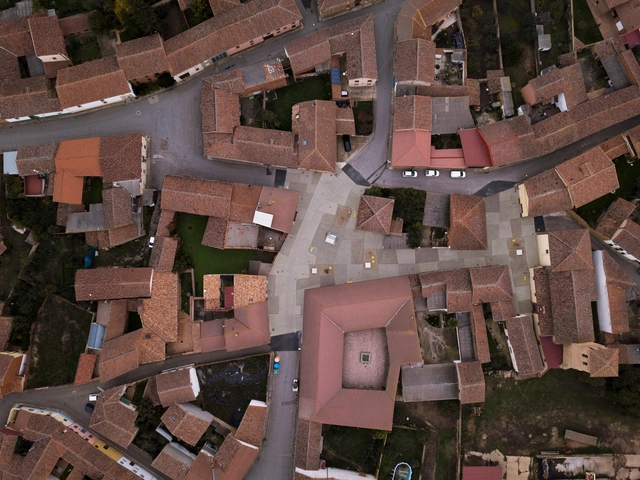
Disponible. Autor Pol Viladoms Claverol. Image Cortesía de BEAU 2021
The Spanish Biennial of Architecture and Urbanism BEAU 2021 has announced the finalists for its 'Research Exhibition', 'Thesis Projects Exhibition', and 'Photography Exhibition' categories. The winners will be announced on July 2, coinciding with the opening of the event at the Patio Herreriano in Valladolid.
Ad Urbis is a Cuban collective that navigates the unique challenges of integrating contemporary architecture into highly valuable heritage contexts—such as the capital city of Havana—by promoting architectural research, theory, and practice at the intersection of design and education.
We interviewed the group to discuss their reflections, design workflows, the relationship between professional practice and academia, their upcoming projects, and their outlook on the future of Cuban architecture.
Archivo de Ideas Recibidas is an interdisciplinary research and dissemination project that seeks to document and connect the ideas of individuals contributing to the contemporary creative ecosystem from the fields of art, design, and architecture. It is built on conversations between the team and various creators, exploring themes related to memory, academia, cultural context, key influences, and working methodologies.
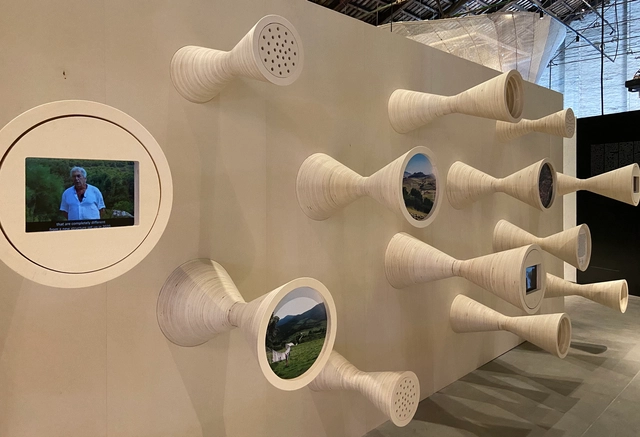
Arquitectura de ondas gravitacionales. Image Cortesía de El Equipo Mazzanti
The detection of gravitational waves is one of the most important recent discoveries. It is revolutionizing the way we observe and study the universe.
El Equipo Mazzanti in association with Lino Cabras, Fabrizio Pusceddu, Eugenio Coccia, Massimo Faiferri, and Michele Punturo, designed an installation that showcases the latest projects on the subject. Titled 'Gravitational Wave Architecture', the exhibition is housed within the Italian Pavilion, curated by Alessandro Melis, at the Venice Biennale 2021.
Archivo de Ideas Recibidas is an interdisciplinary research and dissemination project that aims to document and connect the ideas of people contributing to the contemporary creative ecosystem through art, design, and architecture. It is built on conversations between the team and various creators, exploring topics related to memory, academia, cultural context, key influences, and working methodologies. In this edition, they share an interview with Marta Morelli of the firm K+M Arquitectura y Urbanismo.
Ocamica Tudanca Arquitectos, led by Iñigo Tudanca and Iñigo Ocamica, has been named the winner of the 2021 Peña Ganchegui Prize — established to recognize young talent in Basque architecture and organized biennially by the Peña Ganchegui Archive in collaboration with the Directorate of Housing and Architecture of the Basque Government.
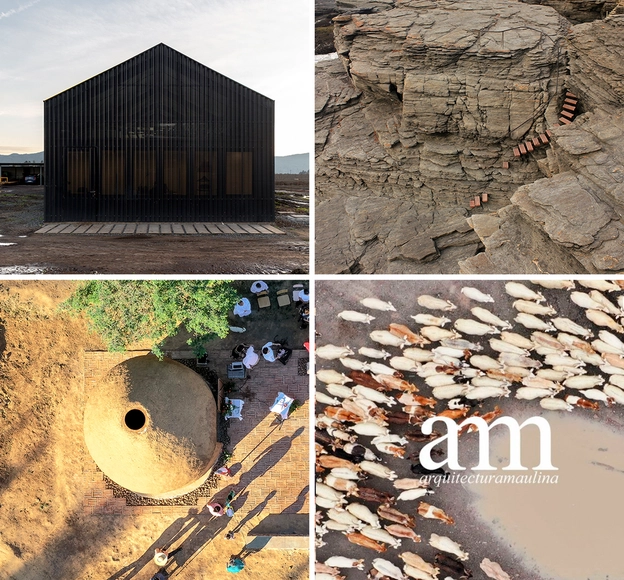
Equipamiento Agroindustrial PRISMA, proyecto de Urzúa Soler. Fotografía de Felipe Ugalde (arriba izquierda); Oratorio de la Peregrina, proyecto de Sebastián Mejías. Fotografía de Edgard Torres (abajo izquierda); Recorrido entre rocas, proyecto de Angélica Méndez (arriba derecha); Portada Arquitectura Maulina (abajo derecha). Image Cortesía de Arquitectura Maulina
For years, the Talca School of Architecture has played a major role in highlighting the architectural value of the Maule Region in south-central Chile. It is here that the new publishing project Arquitectura Maulina has chosen to continue this path, not only by showcasing some of its own productions but also by publishing articles by professionals, students, and photographers. Their goal is to foster dialogue, prompt questions, and document how we observe this territory and what we ought to do for its benefit.
In the following interview, they share their inspiration when approaching this topic, alongside reflections on academia and the discipline in the region.
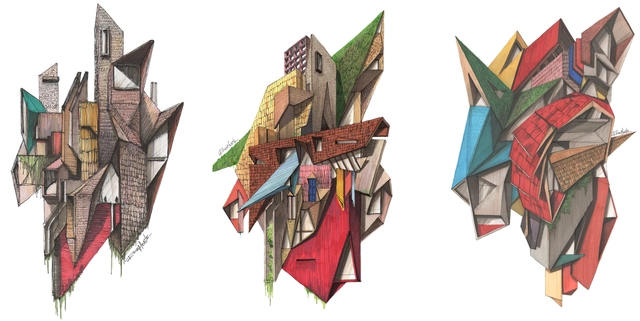
Following the release of "Architectural Classics," a series of iconic architectural classics depicted in axonometric views, Diego Inzunza—the Chilean architect and visual artist behind Rosamente—now shares a collection of 22 drawings created in 2021 in collaboration with 16 architects from five countries, including Cristian Danke, David Carcamo, Anita Catricura, Roberto Ibáñez, Rodrigo Ortiz, Charlotte Bazonnard, Javiera Muñoz, Sofía Montealegre, Juan Pablo Santamaría, Tom Gardner, Joel R, Sergio Pita, José Tello, Francisco Guerrero, José Tomás Infante, and Camilo Carrascal.
The title of this new series is “Abstract Architecture,” featuring conceptual drawings that revolve around architecture, nature, and alternative graphic narratives.
"Domingos Libro" is hosted by Carmelo of Enorme Studio, where every two weeks, he delves deeply into forgotten architectural publications, books, and magazines from the '60s, '70s, and '80s that have the most interesting stories behind them.
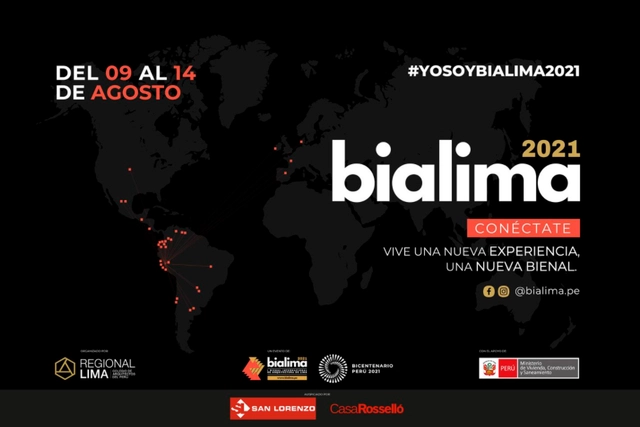
The Lima International Architecture Biennial (BIALIMA 2021) will take place from August 9 to 14. Part of Peru's Bicentennial agenda and supported by the Ministry of Housing, the event aims to create a space for collective architectural exhibitions and public outreach, while simultaneously fostering reflection and discussion on how we should conceive our cities and how architects design spaces for human beings.
The 14th Bolivian Architecture Biennial 2021 is a cultural and academic event organized by the La Paz Departmental College of Architects (CDALP) and the Bolivian College of Architects (CENA CAB) through their Organizing Committee. The goal of this gathering is to celebrate and disseminate built works, projects, and intellectual contributions related to the architectural and urban environment of recent years, both nationally and internationally.
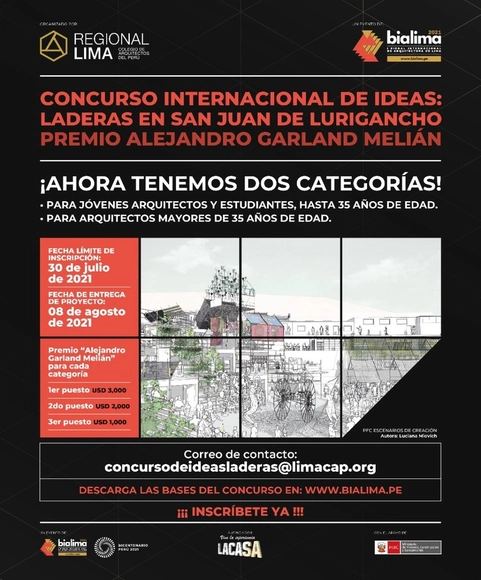
The CAP RL and BIALIMA, in partnership with the Municipality of San Juan de Lurigancho, are organizing the "International Ideas Competition: Hillsides in San Juan de Lurigancho." The competition aims to create infrastructure surrounding the staircases that connect local residents.
On Thursday, April 22, 2021, at 11:00 AM (Buenos Aires time), Zaida Muxí and Claudia Santaló will discuss gender perspectives in architectural education. This event is organized by the Cátedra Antonio Díaz at FADU - UBA.
The academic production of architecture in Ibero-America is vast and valuable; therefore, we believe it is necessary to launch an open call to showcase the best final degree projects resulting from this work.
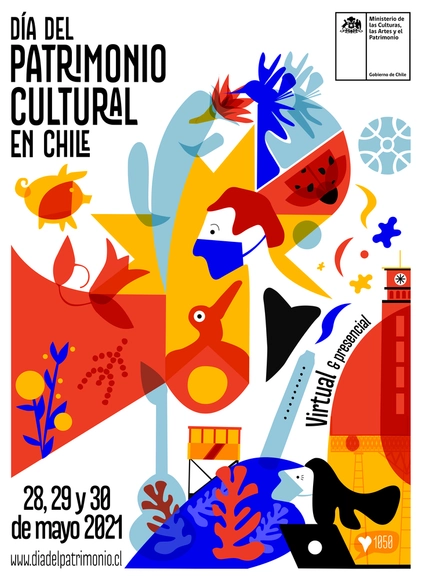
Celebrated annually since 1999, the event invites thousands of people to participate for free in a wide range of heritage-focused activities aimed at commemorating Chile's cultural legacy. The event is coordinated by the Ministry of Cultures, Arts, and Heritage in collaboration with hundreds of public, private, and civil society organizations.
When we speak of a field, we necessarily establish a measure. Today, that reference to and of the field appears shaped by the historical events we are experiencing and the various phenomena that keep us on edge regarding the uncertainty of what is to come.
When we speak of a field, we necessarily establish a measure. Today, that reference of and about that field appears shaped by the historical events we are experiencing and the various phenomena that keep us on edge regarding the uncertainty of what is to come.
.jpg?1611837720&format=webp&width=640&height=580)
.jpg?1611837712 "Pedro e María Hostel / Ad Urbis Arquitectos. Image © Nestor Kim Enríquez")
.jpg?1611837666 "Pedro e María Hostel / Ad Urbis Arquitectos. Image © Nestor Kim Enríquez")
.jpg?1611837729 "Pedro e María Hostel / Ad Urbis Arquitectos. Image © Nestor Kim Enríquez")
.jpg?1611837689 "Pedro e María Hostel / Ad Urbis Arquitectos. Image © Nestor Kim Enríquez")
.jpg?1611837720)