On May 11, the Disseny Hub Barcelona will bring together various figures rooted in the world of architecture to discuss the multiple roles of cities in the 21st century, the state of architecture and urbanism in contemporary society, and to present the Barcelona Protocol—a document developed throughout the day via the contributions of twenty-six international voices.
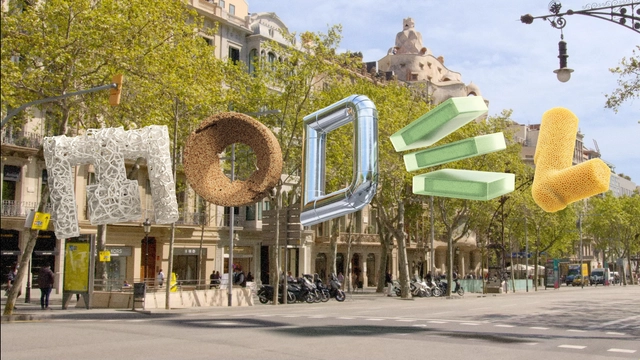
“Libros Model” is presented in Barcelona's Plaza Reial, hosted by its curator, Ethel Baraona. Joined by Santiago Bogani, they speak with curious visitors who stop to ask about the wooden wall and table filled with architectural publications.
The installation features a selection of 90 books from various international publishers promoting and disseminating work and ideas within the architectural field—inviting reflection on the central theme of the Model. Barcelona Architectures Festival: Re-Grow.
As part of “Libros Model,” a network of bookstores and libraries across Barcelona will also present special collections reflecting on the five themes of this inaugural edition of the festival: Between-Classes, Between-Cultures, Between-Species, Between-Generations, and Between-Materials.
From 'A Bestiary of the Anthropocene' to 'Icebergs, Zombies, and the Ultra-Thin', the complete selection of books curated by Baraona is presented below.
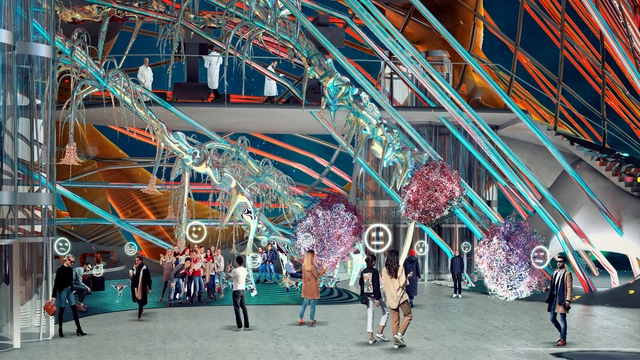
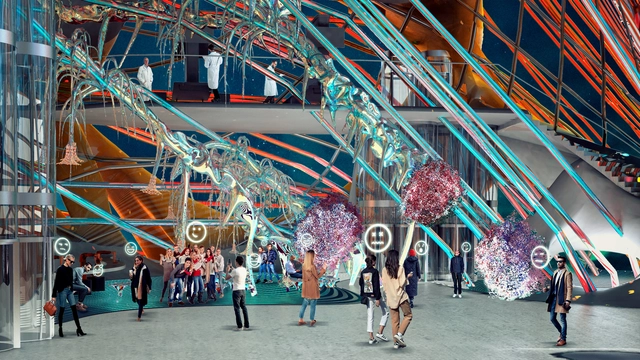
El poder de la Data - Render interior conceptual. . Image Cortesia de Online Lab of Architecture (OLA)
From NFTs to the metaverse and the benefits of real-time rendering, this is an opportune moment to discuss the latest trends in architectural visualization.
With this in mind, we want to open the debate and hear your thoughts on the subject. What can we learn from other related industries, such as cinema, video games, and industrial design? How can architecture contribute to and advance the world of visualization?
From May 5 to 15, the first edition of Model. Barcelona Architectural Festival will take place. Co-organized by the Barcelona City Council and the Architects' Association of Catalonia (COAC), the event will serve as an open, plural, and multidisciplinary space for reflection, addressing key debates in architecture and urbanism to confront the social, political, and climate challenges of the 21st century.
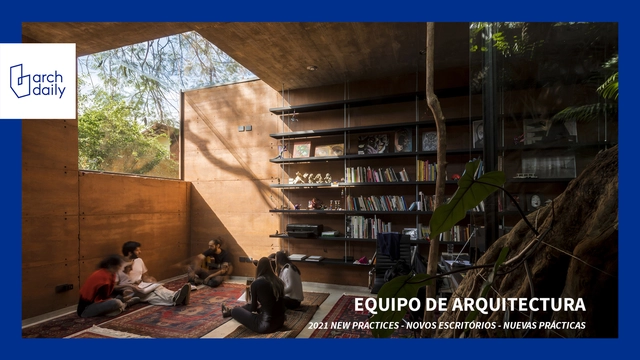
Equipo de Arquitectura was founded by Horacio Cherniavsky and Viviana Pozzoli in 2017. From Paraguay, their works such as Earth Box or Intermediate House translate the vision of an architecture that deals with the primitive and essential. One that constantly seeks to integrate the existing natural environment with the artifice, the built. In particular, bringing material sincerity as a design ethic.
Selected by ArchDaily as one of the Best New Practices of 2021, we conducted the following interview to tell us more in detail about all their inspirations, motivations and ways of working.
It is well known that the construction industry is one of the world's largest producers of CO2. While significant progress has been made in technology and design and construction processes, a long road remains to minimize or virtually eliminate carbon emissions in the development of the built environment.
Pablo Jordán, the new president of the Association of Architects' Offices of Chile (AOA). Image via AOA
The Association of Architectural Offices (AOA) has partially renewed its board of directors, electing urban planner Pablo Jordán as its new president for the 2022–2023 term. Meanwhile, architect Marisol Rojas has been selected as vice president.
The Turba Tol Hol-Hol TolPavilion is a collective project led by curator Camila Marambio that proposes an experimental path towards the conservation and visibility of peatlands, a type of wetland considered to be the most efficient natural ecosystem for accumulating carbon in the atmosphere and yet one of the least researched.
Presented by the Ministry of Cultures, Arts and Heritage and the Ministry of Foreign Affairs of the Government of Chile at the 59th International Art Exhibition - La Biennale di Venezia, which will have its official opening on the 23rd of April, was a collaborative work between art, science and traditional knowledge, promoting research and ecological transition from the environmental humanities. In this sense, a diverse multidisciplinary team was brought together: sound artist, Ariel Bustamante; art historian, Carla Macchiavello; filmmaker, Dominga Sotomayor; and architect, Alfredo Thiermann.
The new Maestranza Ukamau Neighborhood, an example addressing access to public housing in Santiago, Chile. Image
"Every person has the right to decent and adequate housing that allows for the free development of personal, family, and community life," states the provision that advanced to the draft of Chile's new Constitution. The draft is being prepared by the Constitutional Convention—a 155-member political body tasked with drafting and approving the proposal for a new agreement for the Republic, which was enabled by the October 2020 plebiscite and driven by the social protests that took place in the country in October 2019.
Albor Arquitectos is a Cuban architecture studio founded in 2016 by Carlos Manuel González Baute, Alain Rodríguez Sosa, Camilo José Cabrera Pérez and Merlyn González García. They say that building in Cuba is a complex task, a growing challenge due to the lack of materials, high costs and restrictions on the independent practice of the profession.
Even in this context, their work, such as Casa Soporte, Casa Casita and El Apartamento, stands out for the continuity of the inherited city, the rediscovery of construction techniques and an architecture based on proximity to the people and the prevailing social reality.
Selected by ArchDaily as one of the New Practices of 2021 and recently winner of second place in the Building of the Year Award 2022 for their project Casa Torre, we conducted the following interview to tell us more in detail about all their inspirations, motivations and ways of working from Cuba.
It is well known that the construction industry is one of the largest producers of CO2. Although significant progress has been made in technology and in design and construction processes, there is still a long way to go to minimize or nearly eliminate carbon emissions in the development of the built environment.
Indeed, as revolutionary as the construction industry may seem today, it remains responsible for nearly 40% of global carbon dioxide emissions, 11% of which result from the manufacturing of building materials such as steel, cement, and glass.
What are the latest trends in reducing emissions in both design and material manufacturing? How should the industry transition toward net-zero architecture? These are some of the questions we want you to help us answer.
El poder de la Data - Render interior conceptual. . Image Cortesía de Online Lab of Architecture (OLA)
From NFTs and the Metaverse to the productivity benefits of real-time rendering, this year presents a prime opportunity to discuss the latest trends in visualization.
With this in mind, we want to open the debate and hear your thoughts on the following questions: How much can we learn from other related industries such as cinema, video games, and industrial design? How can architecture contribute to and advance the world of visualization?
EseColectivo is an architecture studio formed by Belén Argudo, José de la Torre, Santiago Granda and Pablo Silva based in Quito, Ecuador. Their interests are focused on experimentation with alternative building materials, with an emphasis on technologies and logic. In their design process, they seek to reconcile low-impact sustainable strategies with the specific needs and constraints of each project, so that their results are heterogeneous and differ in the type of methodological and technical approach.
The experience of this team has not only been built from their works such as The Endemic House and House in a Corridor, but also through collaborative practices with architecture studios, cultural managers and related projects at local and international level, leading to the development of initiatives closer to architectural documentation, research and dissemination. Consequently, they created "La Parleta" - the first architecture podcast in Ecuador.
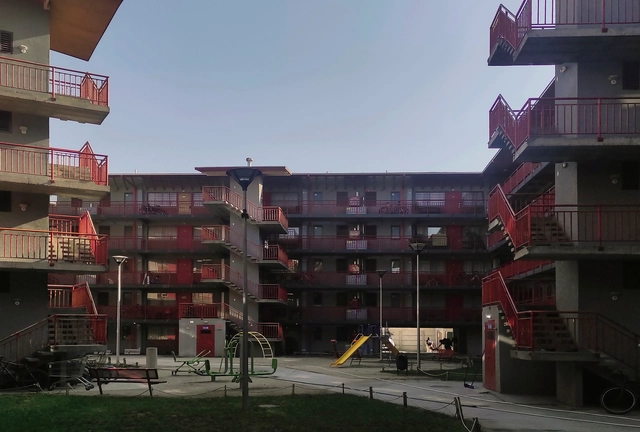
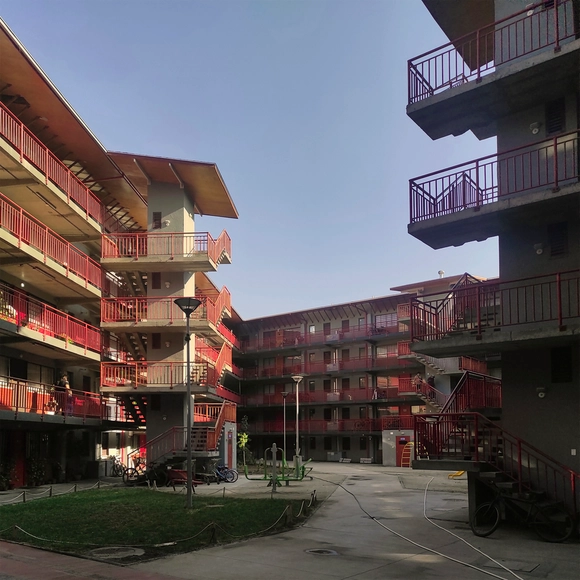
"The city is conflict, just as society is conflict, but the types of conflict that take shape and express themselves in each city reveal what each is like," says urban anthropology specialist María Cristina Cravino regarding the right to the city in Latin America. In a growing context of cities undergoing gentrification, where high land and housing prices displace working-class residents, the new Barrio Maestranza Ukamau offers a compelling example that has much to say about potential pathways to public-interest housing in Santiago, Chile.
Located on the grounds of the former San Eugenio railway workshops in central Santiago, between Santiago Watt and Exposición streets in the Estación Central district, the project was not only designed by architect Fernando Castillo Velasco in his final years and continued by his son Cristián Castillo alongside Elías Becerra and Pamela González, but also by the community of families organized through the assemblies of the Ukamau Social and Popular Movement, where they deliberated and discussed their future homes step by step. The project spans nearly 3 hectares and comprises 424 apartments.
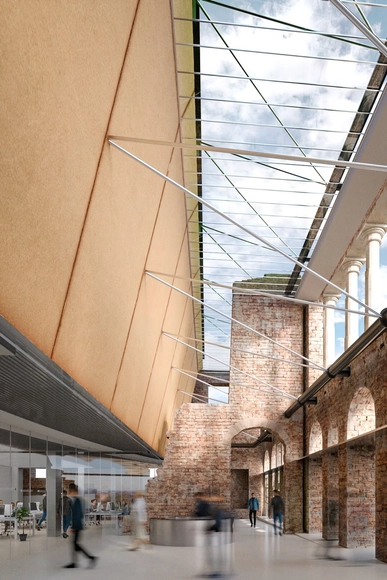
Proyecto ganador del Concurso para el Nuevo Archivo Regional Valparaíso. Image Cortesía de Cecilia Puga y Paula Velasco
Earlier this year, the Ministry of Cultures, Arts, and Heritage, through the National Cultural Heritage Service (SNPC), launched the bidding process for the design of the Valparaíso Regional Archive. The future building not only aims to preserve historical documents and collections and promote research and access to information, but also represents a major opportunity to value and reactivate the ruins of the historic Palacio Subercaseaux in Valparaíso's Barrio Puerto, Chile.
Following an evaluation of the 13 accepted bids, the winning proposal was submitted by architects Cecilia Puga, Paula Velasco, and their team. Their design defends and protects the urban profile, showing us how to connect the new with the old. Below, discover the winning project in detail, along with the other awarded entries.
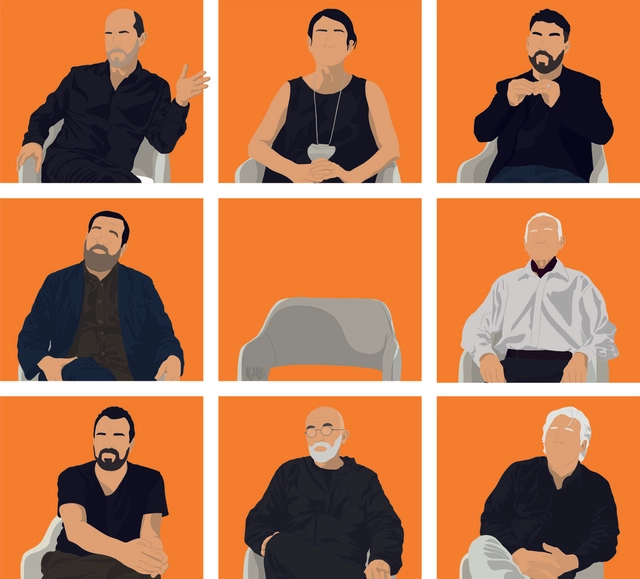
Desde la periferia is an audiovisual project directed by José Luis Uribe, PhD in architecture and professor at the School of Architecture of the University of Talca, Chile. The project consists of three documentaries to be released progressively over the next two years, exploring various aspects associated with contemporary Latin American architecture. The first installment, Volume I: Ugly, Dirty & Bad: A Contemporary Architecture in Latin America, is an audiovisual essay that gathers some of the initial thoughts on its current state through the oral accounts of a group of architects in a hotel room in Asunción, Paraguay.
The event featured two main award categories for built works and projects—national and international—with a selection jury composed of Ivo Renato Giroto (Brazil), Martin Padrón (Venezuela), Fabián Dejtiar (Argentina/Chile), Roberto Ameneiro (Spain), and Carlos Álvarez (Costa Rica). On the final day of the event, the winners were announced; you can view them below.