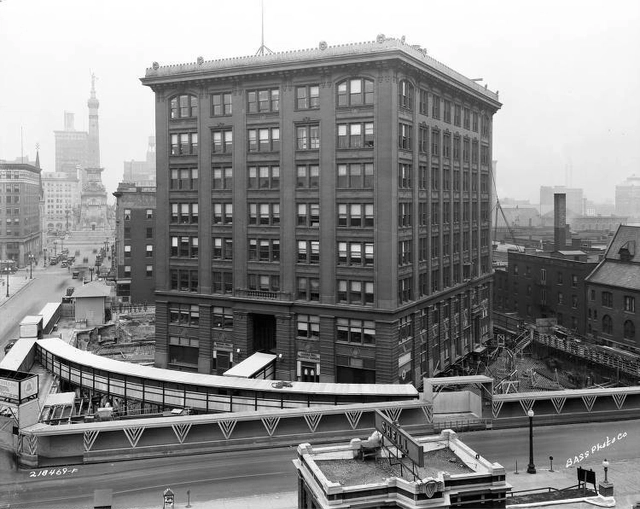
via Bass Photo Co Collection, Indiana Historical Society. Image of the Indiana Bell Building in the process of being rotated.
In November 1930, in Indiana, a monumental feat of modern engineering was completed: an engineering team moved an 11,000-ton (22-million-pound) telephone headquarters building without interrupting its operations or suspending essential utility services for the 600 employees working inside.
Summer in the Southern Hemisphere, particularly in the region between the tropics and the Equator, is marked by high humidity, heavy rainfall, and high temperatures. Alongside these summer storms, Brazil also contends with a series of severe events such as flooding, landslides, and dam failures. Over the years, the concentration of these events between November and March has become increasingly common. Their occurrence is directly linked to seasonal summer rains, but also to the country's ongoing economic activities.
This article by Jheisson Joseph Lasso Imbachi was originally published under the title "Habitar tras el destierro: Desplazamiento forzado y retorno como configurador de nuevos hábitats en el Putumayo" in the 30th issue of Dearq journal on May 1, 2021 (DOI: https://doi.org/10.18389/dearq30.2021.05).
It explores migration processes in the south of the country, a consequence of extractive economies that have shaped territorial organization and caused exile, forced displacement, and two lesser-studied phenomena: the settlement and permanence of the population in a host territory and the return to their place of origin. To this end, documentary and testimonial sources were studied, analyzed, and interpreted, allowing a direct approach to the community displaced by violence, in order to analyze the diverse ways of living after displacement and conclude with some considerations for future rural housing proposals that are easily accessible to the victim population.
Below, we present it as part of a joint collaboration to contribute to the dissemination of research, analysis, and opinions developed by the national and international academic community on architecture, urban issues, and related fields.
https://www.archdaily.com/1132361/inhabiting-after-exile-new-habitats-in-putumayo-colombiaJheisson Joseph Lasso Imbachi
In these unprecedented times, uncertainty about the future runs deep. The Covid-19 pandemic is not over, the effects of climate change are already being felt everywhere, and many around the world continue to suffer from inequality. And this is just the big picture, to say nothing of how these issues interconnect. In a rapidly changing world, with stories emerging and evolving daily, which ones will have the greatest impact on people and the planet?
https://www.archdaily.com/1132642/from-discourse-to-action-6-sustainability-themes-to-watch-around-the-world-in-2022Sadof Alexander
PARKROYAL COLLECTION Pickering, designed by WOHA and Tierra Design. Image
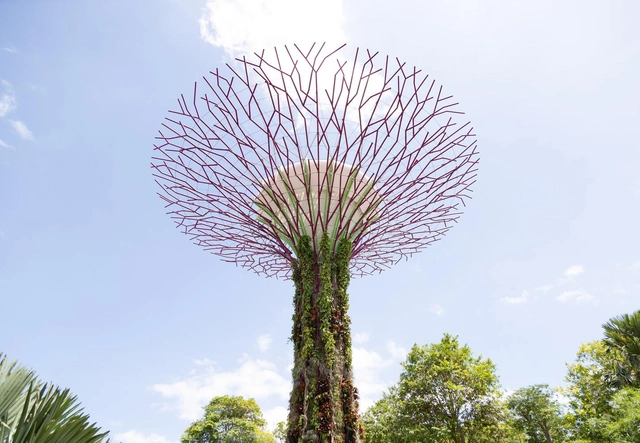
Singapore as of late is continually building its reputation as a City in Nature, with Singaporean design long having a strong consciousness to acknowledge that green spaces matter. Urban planners and architects alike have taken a conscientious decision to weave in nature throughout the city as it continues to uproot new buildings and developments, incorporating the implementation of plant life in any form, whether it be through green roofs, cascading vertical gardens, or verdant walls.
This article will explore the pioneering actions taking place in Singapore to create a more biodiverse city and nation, and how this provides a view of how other major cities can adopt similar initiatives over the next decade to provide a blueprint for the future.
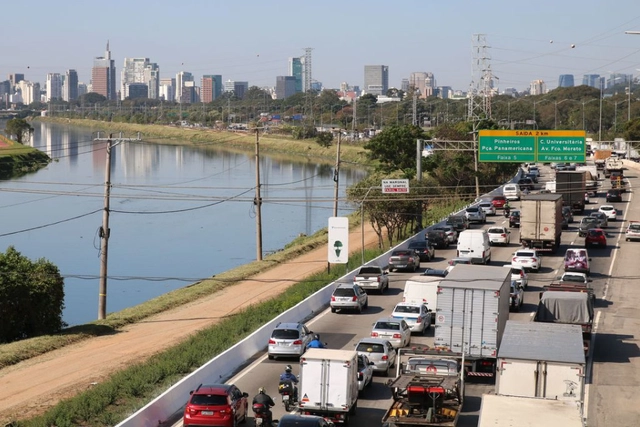
Using a car is an individual choice that causes significant collective harm. Photo: Nelson Antoine/Shutterstock
For decades, cars have been associated with a promise of convenience, autonomy, and comfort. Individually, this may well be true. However, prioritizing the automobile in city design makes urban mobility inefficient and fuels inequality by depriving a large portion of the population of access to opportunities. Using a car is an individual choice that imposes heavy collective costs. Charging for the social costs of this choice is a promising way to discourage it while simultaneously generating funding for sustainable mobility.
https://www.archdaily.com/1131971/why-charging-for-car-use-is-a-fair-and-smart-solution-for-sustainable-mobilityLuis Antonio Lindau, Cristina Albuquerque, Guillermo Petzhold e Fernando Corrêa
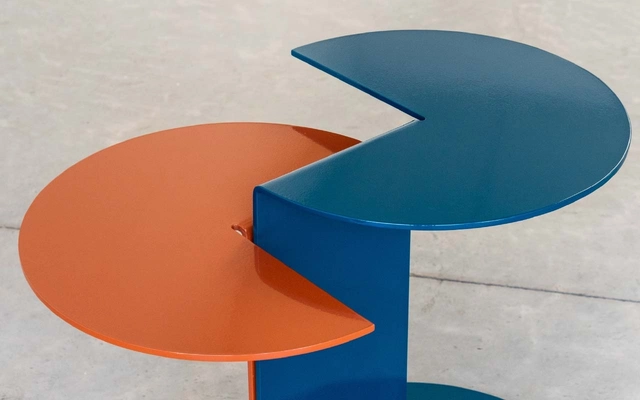
As part of the programming for Mexico City Art Week, CAPITALES presents its fifth exhibition, titled "Objetos Arquitectónicos" ("Architectural Objects"), from February 8 to 13, 2022, at Frontera 88, Roma Norte. Produced in collaboration with Manada Architectural Boundaries, the exhibition features 27 studios, including Alejandro Tapia, Ariel Rojo, Blanca Arcos, Carlos Bedoya, Carlos Candia, Carlos Torre Hütt, Chuen Mx, Déjate Querer, Dosa Studio, EDAA, Enrique Rosas, Estudio Atemporal, Fernando Polidura, Jimena Hogrebe, Julia Reyes Retana C, Lanza Atelier, Lupe Toys, María Santibáñez, Martacarmela, Onnis Luque, PRODUCTORA, PLECA, Rafael Rodríguez, Roberto Michelsen, Unidad de Protocolos, and Vera Primavera.
Michael Sorkin used to regard criticism as "a service profession", highlighting the field's ability to shape public opinion and the direction of architecture at large. Intellectually expansive architecture criticism not only evaluates the merits and shortcomings of a project but reveals how buildings are situated in relation to history and theory and how they contribute to current economic, social and environmental dilemmas. The following explores the field of architecture criticism, highlighting some of its key figures while reflecting on how this role has changed with the emergence of digital media.
In a tour of the layout of Buenos Aires, around 500 passages are distributed throughout the city. Regardless of the neighbourhood in which they are located, they represent postcards of contemporary urban architecture with a tinge of improvisation. However, they bear witness to the organisation of Buenos Aires, which aspired to a checkerboard regularity.
On many occasions, it is difficult to tell the difference between the passage, the cut-off and the dead-end street, but they are all part of the urban space, that place of exchange, of encounter, of signs, symbols and words where people live, play and learn at the same time.
The choice to use private cars is understandable, extending far beyond the so-called "car culture." The convenience of point-to-point transit, flexible scheduling, and a sense of personal security justifies its use, especially where sustainable transportation networks do not adequately serve the entire population. But do drivers actually pay for the impacts they generate?
https://www.archdaily.com/1132385/understand-why-you-pay-for-cars-even-if-you-dont-use-themITDP Brasil
There is a group of young Chinese architects that define themselves in their own unique way and inform the public about the "new generation" of architects. They do not adhere to the definition and break the regulations. They think what they think and do in accordance with their beliefs. Besides from just being architects, they are also artists, painters, sculptors, and researchers. Identity is no longer unique among the new generation; the way they work is determined by what they pursue; and remaining on the route they choose will lead them to a new direction and a new life.
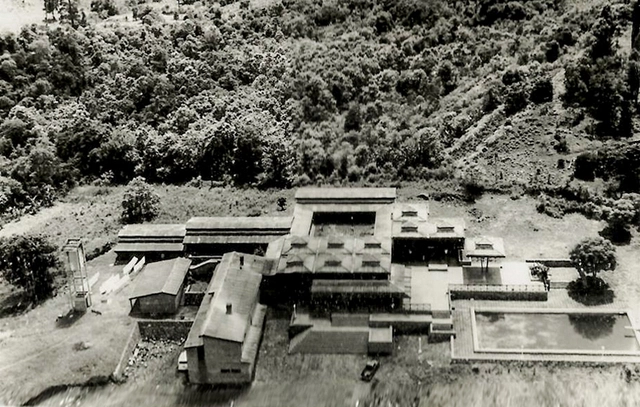
Cortesía de Museo Cooperativo de la ciudad de Eldorado
For several years, the global context of energy and ecological crises has resonated across various disciplines, and architecture has been no exception. Consequently, a crucial question arises: how do our buildings help mitigate these issues? In this context, the global architectural scene has been flooded with buildings addressing these challenges through heavy technological dependence. In their bid to tackle environmental problems, some have forgotten that architecture can offer a synthetic response through an understanding of place and the deliberate manipulation of form, matter, and energy.
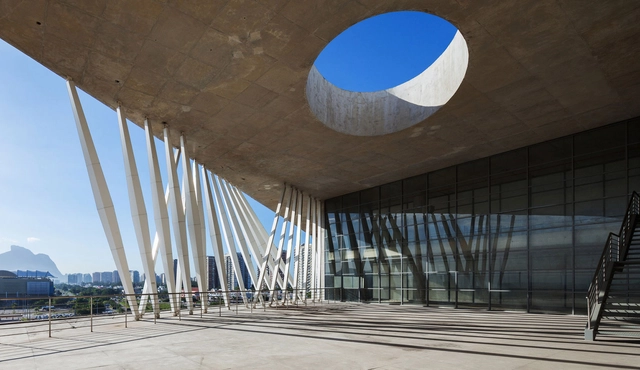
Few cultural events bring the world together like the Olympics. Today, athletes from around the world continue to participate in a variety of competitions after the covid-19 pandemic. The Olympic Games are considered the world's foremost sports competition with more than 200 nations participating. In turn, they bring to question the role of architecture and design in each host city's urban evolution.
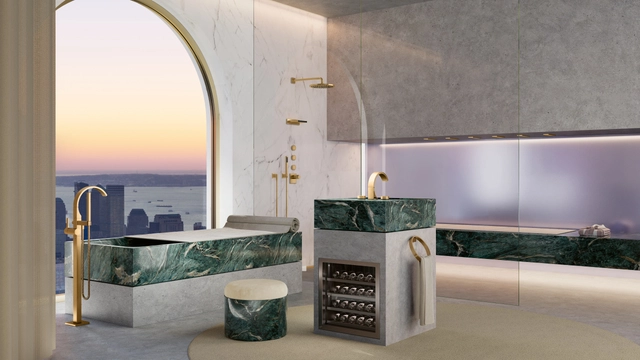
CYO Metropolitan bathroom. Image Courtesy of Dornbracht
As cities become denser and the pandemic continues to shape living and working patterns, people have become well aware that the space they inhabit greatly influences their physical and mental well-being. As a result, the interior design of homes has focused on promoting sensitivity, comfort and calmness as a way of escaping the uncertain outside world. As a safe space where we practically start and end each day, the modern bathroom has also adapted accordingly, taking on a key role as an environment dedicated to relaxation and self-care. Hence, what used to be a purely functional zone is now perceived as an energizing personal retreat and flexible living space that can even adopt other functions – from a gym to a private spa.
During their university years, architects acquire a wide range of skills apart from learning to design buildings. Some of these include creative problem solving, project management, high attention to detail, coordinating teams and accurately responding to consumer needs. Therefore, a degree often provides the necessary tools to design at any scale – from urban to product design – and to explore other creative fields, such as art, photography, journalism or industrial design. Of the many possibilities that open up, it is especially common for many to make the leap towards furniture design, particularly chair design, instead of following the traditional route.
Metropolitans take pride in their storied cultural venues, the chroniclers of intellectual acumen and architectural achievement. While these icons revel in their ornate design, immersive grandiosity, and dramatic acoustics, the pandemic has introduced numerous challenges to the rules of assembly.
Recognizing changes in the rituals of attending a show—from procession and gathering to engagement—architects and cultural leaders are designing the next generation of performance venues while asking the question: How does architecture solve issues raised by a building’s inherent purpose? Is it possible to maintain the essence of a venue through gentle yet effective changes in people’s habits? The answers seem to rely on updating the auditorium culture (which dates as far back as the Colosseum) with contemporary design solutions rooted in new technologies.
https://www.archdaily.com/976581/what-will-post-pandemic-performance-venues-look-likeOsman Can Yerebakan
For designers and architects, ugliness has historically not been something to strive for. Culturally, however, we are increasingly weary of perfection.
Following decades of designs that behaved in similarly simple and orderly ways—particularly during the twentieth century, with the rationalism and purity of Modernism—we now long for expressions that are less sanitized and, at the same time, more human.
On February 8, at Torre Glorieta Cibeles and as part of Mexico City Art Week, MASA Inc. presented an exhibition showcasing pieces by Manuel Bañó, Hollie Bowden, Frida Escobedo, Héctor Esrawe, Mario García Torres, Adeline de Monseignat, Marrow, Brian Thoreen, Joe Sweeney, ROOMS Studio, EWE Studio, and VISSIO.
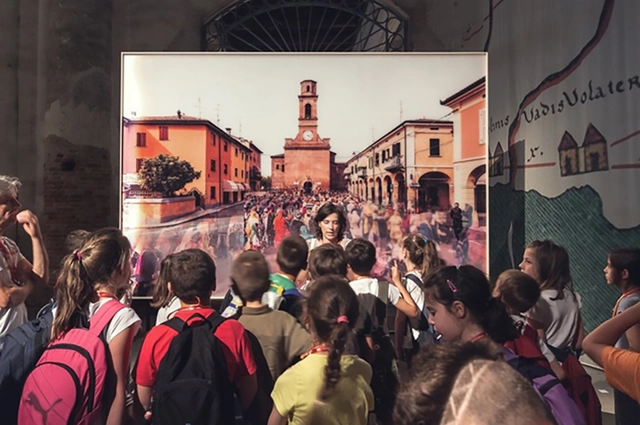
Figure 6. Matilde Cassani, Countryside worship/A celebration Day, 2014 — XIV Venice Biennale. Source: http://www.matildecassani.com/. Image via VAD
Italian law never explicitly denied women access to university. Nevertheless, their minimal presence in the 19th century—only 224 women graduated in Italy between 1867 and 1900—demonstrates how a double discrimination, based on both gender and social class, operated through an inherently elitist and dualistic educational system.
Broadly speaking, the performing arts are all those disciplines that take place on a stage, although the main ones are dance, theatre and music. However, parades, religious processions, holiday celebrations and carnivals also have a clear scenic quality. That is why the stage space is so important not only for the presentations of these disciplines but also for carrying out a whole bodily and spatial process that is supported by the architecture.
It is fascinating to think how Scandinavia - such a small geographic region - has had such a strong influence on design, starting in the middle of the 20th century and continuing into the present day, globally. Scandinavian design is known for combining simplicity, craftsmanship, elegant functionality and quality materials. Sophistication is present in its details and its furniture is characterized by well-studied dimensions, economy of materials and the lack of information overload. In fact, there is even a Danish and Swedish term that defines this philosophy: “hygge” refers to the coziness that provides a feeling of well being and contentment. But how can we incorporate some lessons from Scandinavian design so that our interior projects can become more cozy and comfortable?
The elaboration of an architectural project is a complex process that involves different scales, from structure to small refinements, such as the choice of coatings, paint colors, baseboards, metals, ware and, of course, lighting.
In addition to the issues of power and shade of lamps, the design of the luminaires is also essential in the project process. It can contribute to the appreciation of spaces and the comfort of the inhabitants.
In the early twentieth century, artist Luigi Russolo presented his work “Dinamismo di une Automobile” (Dynamism of an Automobile), which depicted the power and force of automotive speed. Russolo was an enthusiast of the future and a leading voice of Futurism, an artistic avant-garde that celebrated technological development and innovation.
https://www.archdaily.com/1131875/reducing-vehicle-speeds-can-improve-trafficRuan Victor Amaral






..jpg?1644514229&format=webp&width=640&height=580)

._1.jpg?1644514203 "Oasia Hotel Downtown, designed by WOHA and STX Landscape Architects. Image")

.jpg?1644514319 "Kampung Admiralty, designed by Ramboll Studio Dreiseitl and WOHA. Image")
..jpg?1644514229)
















”(2).jpg?1644348981&format=webp&width=640&height=580)
”(1).jpg?1644349308 "Brian Thoreen, “Red Ribbon Circle (2022).” Image © Alejandro Ramírez")
”(3).jpg?1644349027 "Manuel Bañó, “OBJ-02 (2022).” Image © Alejandro Ramírez")

”.jpg?1644348676 "Frida Escobedo, “Creek Bench (2021).” Image © Alejandro Ramírez")
”(2).jpg?1644348981)

.jpg?1643867734&format=webp&width=640&height=580)


.jpg?1643867734)