1. ArchDaily
  2. Articles

Articles

2022 'Best!' Buildings

Subscriber Access | 

With the rise of social media, we have entered an era of a multimedia "society of the spectacle," where the influence of images on the public grows year by year. Visually-driven media platforms are increasingly dominating the market, serving as an alternative form of travel that allows people to experience breathtaking scenes from around the world without leaving home. Dedicated to bringing design inspiration to the public, ArchDaily established its presence on Instagram years ago. In 2022, we expanded onto China’s Xiaohongshu (RED), hoping to share exceptional projects with a broader audience. As expected, the influence of star architects remains strong, while playfulness, aesthetics, and relevance emerge as key terms guiding reader interest. Here, we present the top 20 most-liked architectural projects of 2022 on ArchDaily’s official Xiaohongshu and Instagram accounts. Read on to discover the public's architectural preferences.

Colombian Houses: Examples of Floor Plans, Design, and Materials

Subscriber Access | 

For much of the world, this past year was spent within the confines of our homes, undoubtedly blurring the lines between our public, professional, and private lives and transforming our living spaces into places of work and productivity. This transformation of spaces and how they are used is nothing new in the world of architecture as countless spaces take on various roles beyond what they were originally designed for--a fact reflected in their layout, design, and the materials used within them.

Making the Imaginary Visible: Futuristic Cities in Cinema

Subscriber Access | 

Through set design, cinema reveals a vast array of cities, becoming a compelling medium for discussing their transformations. This art form allows directors to push the boundaries of their imaginative universes through constructed sets, visual and special effects, and the overall composition of the frame. In many films, directors present futuristic cities inhabited by their characters, environments that often appear entirely unprecedented to us. It is through the spectator's effort to understand and appropriate these scenographic spaces that the city truly reveals itself on screen.

Making the Imaginary Visible: Futuristic Cities in Cinema - Image 1 of 4Making the Imaginary Visible: Futuristic Cities in Cinema - Image 2 of 4Making the Imaginary Visible: Futuristic Cities in Cinema - Image 3 of 4Making the Imaginary Visible: Futuristic Cities in Cinema - Image 4 of 4Making the Imaginary Visible: Futuristic Cities in Cinema - More Images+ 4

The History of Peru at the Venice Biennale: From Inhabiting the Desert to the Amazon

Subscriber Access | 

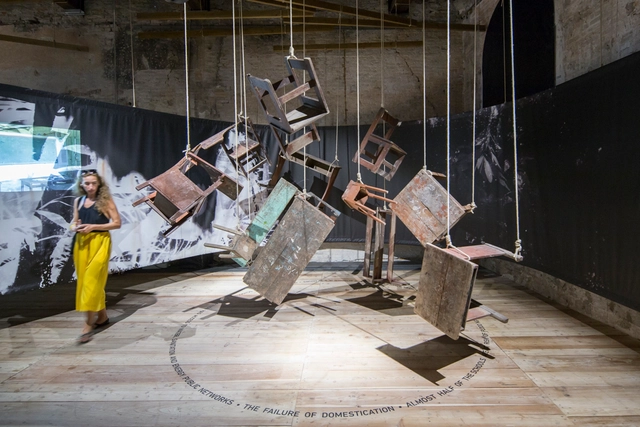
Since 2016, the Patronato Cultural del Perú has been responsible for producing and organizing the Peruvian Pavilion at the Venice Architecture Biennale, promoting and representing the works and projects that reflect the country's architectural landscape.

The Doors of the Coast: From Zanzibar to Oman

Subscriber Access | 

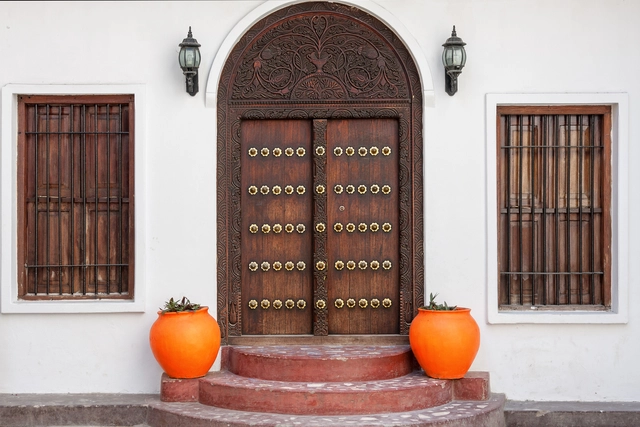
A defining feature of the architecture of the Swahili Coast—apart from its coral stone buildings and mangrove poles used to elaborate those structures—is undoubtedly the ornamented door so commonly found across this coastal area. Richly decorated, and historically often layered with meaning, these doors, apart from serving the more utilitarian function of an entrance, were also signifiers of status and wealth. From this Swahili Coast to the Arabian Peninsula, these doors of the coast are very much markers of their location, representative of trade and migration.

The Doors of the Coast: From Zanzibar to Oman - Image 1 of 4The Doors of the Coast: From Zanzibar to Oman - Image 2 of 4The Doors of the Coast: From Zanzibar to Oman - Image 3 of 4The Doors of the Coast: From Zanzibar to Oman - Image 4 of 4The Doors of the Coast: From Zanzibar to Oman - More Images+ 6

In Barranquilla, Colombia, urban parks revitalized a declining city

Subscriber Access | 

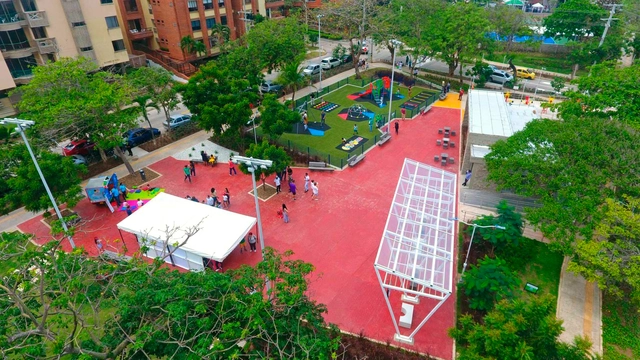
Samira Perez, a longtime resident of Barranquilla, Colombia, used to spend time and money on taxis to take her children to local shopping malls after school and on weekends. There, they would pass the time window-shopping at high-end stores, watching shows, and eating at restaurants.

The central role of the shopping mall in the lives of the Perez family is common in rapidly urbanizing Latin American cities, where, in the absence of accessible outdoor alternatives, malls often provide safe, clean social spaces. In Barranquilla, where malls are ubiquitous, a 2009 perception survey showed that 90% of residents were dissatisfied with the city's green and public spaces.

The Voice of Women in Chinese Architecture

Women's studies officially began in China in the early 1980s. Women awoke and started to take bigger roles in society as it grew. Women had been working as architects for a century, but Lin Huiyin was not recognized as the country's first female architect until the 1920s due to the profession's tardy development in China. But nowadays, more and more female architects are filling crucial positions.

The Voice of Women in Chinese Architecture - Image 1 of 4The Voice of Women in Chinese Architecture - Image 2 of 4The Voice of Women in Chinese Architecture - Image 3 of 4The Voice of Women in Chinese Architecture - Image 4 of 4The Voice of Women in Chinese Architecture - More Images+ 8

Different Types of Windows and How to Use Them

Subscriber Access | 

An indispensable item, windows are fundamental to bringing more comfort to a room. Besides the desired connection between the interior and exterior, it is through their openings that it is possible to provide natural lighting and ventilation to the rooms.

Different Types of Windows and How to Use Them - Image 1 of 4Different Types of Windows and How to Use Them - Image 2 of 4Different Types of Windows and How to Use Them - Image 3 of 4Different Types of Windows and How to Use Them - Image 4 of 4Different Types of Windows and How to Use Them - More Images+ 8

Negative Past: The Construction Process of the Monument Against Racism

Subscriber Access | 

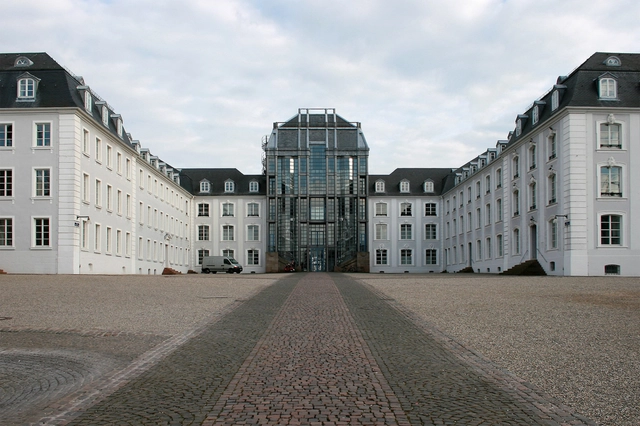
The counter-monument 2146 Stones – Monument Against Racism / The Invisible Monument is an intervention carried out in 1993 on the square in Saarbrücken by Jochen Gerz and students from his class at the Hochschule der Künste Saar, in Saarbrücken, Germany. Executed in accordance with Gerz's constant practice of vigilance [1], the work is the result of a period of unrest in German artistic production that questioned the representational art of a post-war generation, as well as the search of those who lived through the events of World War II and the rise and fall of the Berlin Wall, amidst a national effort to evade the memories of the Holocaust.

How forests benefit people living in cities

Subscriber Access | 

A resident of Vitória might not think of the Jucu River Basin forests when pouring a glass of water. Uruguayans likely do not think of the Amazon Rainforest when they watch rain fall on city parks. And residents of Addis Ababa are probably not thinking of the Congo Basin when they eat injera, a traditional Ethiopian staple made from teff grain.

Yet, forests near and far affect the daily lives of these people more than they realize.

Engineers should not be the only ones designing streets

Subscriber Access | 

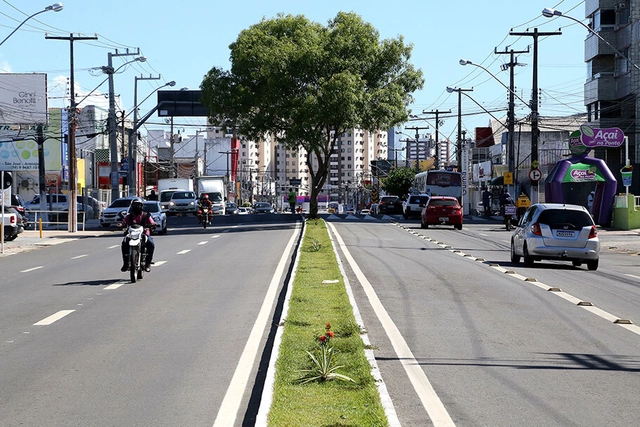
I am a software engineer (commonly called a programmer). Creating software involves many different roles. Different companies have different roles and different names for them, but it typically involves software engineers, product managers, and UX (user experience) designers.

Each role has its own strengths and its own responsibilities. Product managers identify user needs and dictate what we should build. UX designers determine the look and feel of the product — the layout, different screens, copy, images, branding, etc. Software engineers handle the actual implementation: they solve the technical problems required to build the product.

Engineers should not be the only ones designing streets - Imagen 1 de 4Engineers should not be the only ones designing streets - Imagen 2 de 4Engineers should not be the only ones designing streets - Imagen 3 de 4Engineers should not be the only ones designing streets - Imagen 4 de 4Engineers should not be the only ones designing streets - More Images+ 15

Open Question: How can cities transition toward a circular economy?

Subscriber Access | 

The concept of the circular economy is increasingly prominent in discussions on architecture and urbanism—especially as cities are home to around 55% of the world's population and continue to grow. The goal of circularity is to reduce the environmental impact of current production and consumption models through the efficient use of material resources and waste reduction. But how can this idea actually be implemented in cities?

What are Branded Environments?

Subscriber Access | 

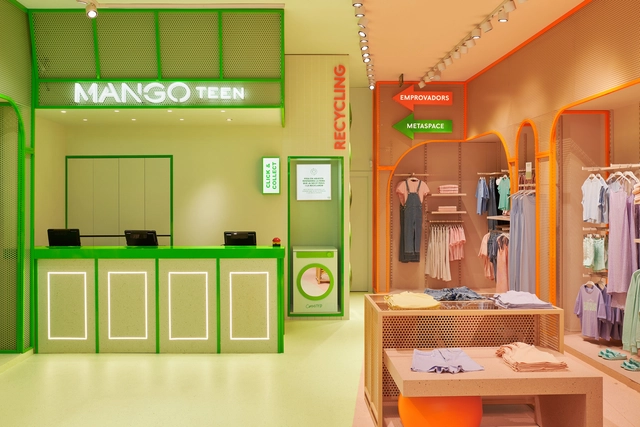
When one steps into a Starbucks, they almost instantly know they are in the famed coffeehouse, and not at a McDonald's. Apart from the uniformed staff and a giant sign at the door, there are countless other factors that make a Starbucks look like a Starbucks. Textures, materials, shapes, colors, layouts, furniture, and lighting all contribute to the experience of being in a branded environment. These elements are replicated globally to create an identifiable image. As economic patterns change, brands are looking at extending their identities into spatial experiences in order to better engage with their customers in their daily lives. 

What are Branded Environments?  - Image 1 of 4What are Branded Environments?  - Image 2 of 4What are Branded Environments?  - Image 3 of 4What are Branded Environments?  - Image 4 of 4What are Branded Environments?  - More Images+ 3

Inhoaíba: The Augusta Park for Rio de Janeiro to Call Its Own

Subscriber Access | 

For architects and urban planners, perhaps the most difficult part of the city development process is dealing with the political strategies used in issues that, to us, should be purely a matter of urban planning. In the past, we imagined that cities were created and transformed solely through the architect's design, even though we knew that multiple forces have always been at play. In the case of Inhoaíba, located in the West Zone of Rio de Janeiro, the forces beyond architects and urban planners are, unfortunately, far more present than we would like, which has prompted me to write this piece.

School of the Art Institute of Chicago Featured in Newest Episode of ByDesign

 | Sponsored Content

The most recent season of ByDesign –a television series that explores design, featuring the designers who bring ideas to life– returns with its sights set on the architecture of the United States. America ByDesign: Architecture will feature six of the US’s most significant architectural accomplishments, competing toward a finale to determine the ultimate winning design. Past ByDesign seasons have focused on New York, California, and Australia—and now, the series will zoom in on the Windy City and the School of the Art Institute of Chicago (SAIC).

From Frameless to Pivot: 20 Types of Windows for Architectural Design

Subscriber Access | 

When children first learn to draw a house, there are four basic components they illustrate: a wall, a pitched roof, a door and one or more windows. Along with the common structural elements, windows have always been considered to be indispensable architectural features for their multiple functions. While providing views, daylight and natural ventilation, these insulate from cold and heat, protect from external threats and enhance a facade’s appearance. They are also associated with a strong poetic or symbolic value; it is through them that we are able to connect with and enjoy our surroundings, be it a beautiful natural landscape or a dense urban environment. An expressive part of any building, windows serve as a visual bridge between the inside and outside, acting somewhat as a refreshing escape from our everyday routine.

From Frameless to Pivot: 20 Types of Windows for Architectural Design - Image 1 of 4From Frameless to Pivot: 20 Types of Windows for Architectural Design - Image 2 of 4From Frameless to Pivot: 20 Types of Windows for Architectural Design - Image 3 of 4From Frameless to Pivot: 20 Types of Windows for Architectural Design - Image 4 of 4From Frameless to Pivot: 20 Types of Windows for Architectural Design - More Images+ 17

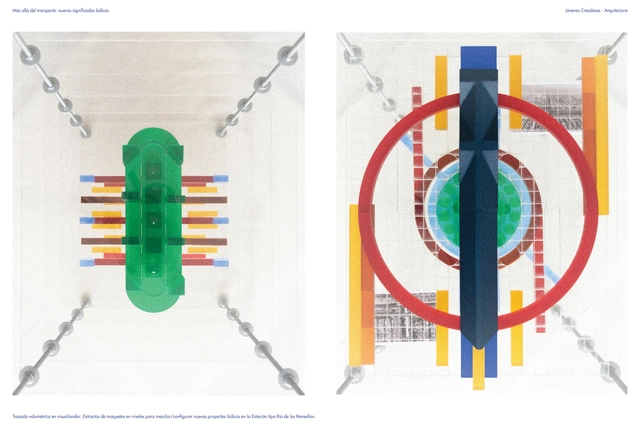
These are the architectural design projects from the "Jóvenes Creadores 2021-2022" program for FONCA.

Subscriber Access | 

Each year, the National Fund for Culture and the Arts (FONCA), through the National System of Art Creators (SNCA), honors key figures of excellence in national culture through the Young Creators Program. By providing grants, the program supports the creative and educational development of young Mexican artists, fostering favorable conditions for the execution of original, meaningful, and positive creative projects. For this edition, the grant recipients in the “Architectural Design” category were Ruy Berumen, Diego González, Juan José Kochen, Ignacio Pérez, Elsa Ponce, Luca Salas, and Tania Tovar, who worked under the mentorship of tutors Elena Tudela Rivadeneyra, Rafael Ponce Ortiz, and Patricia Ivonne Álvarez De Anda.

Six Tips for Creating Compelling Design Proposals

 | Sponsored Content

Most architects are looking to win more work; not just higher-paying projects but those that allow them to unleash their creativity and passion. These opportunities can be won or lost on a professional's ability to communicate their design vision — so the proposal has to be on point. These tips from leaders in the design field can help architects win bids and create their dream projects. 

Northwest Native: Homes of the Salish Sea

Subscriber Access | 

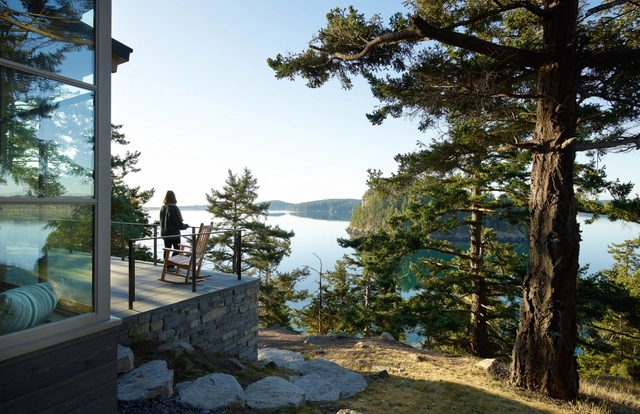
The Pacific Northwest is synonymous with rainy mountains, expansive coastlines and dense forests. Known for its majestic landscapes, the region has innate connections to the waterfront. Over time, these channels were referred to as the Salish Sea. Encompassing the Strait of Georgia, the Strait of Juan de Fuca, and Puget Sound, the intricate network of bays and inlets is bounded by British Columbia and Washington. Dotted with a number of major port cities, including Bellingham, Vancouver, and Seattle, the Salish Sea has also been home to many indigenous peoples.

Northwest Native: Homes of the Salish Sea - Imagen 1 de 4Northwest Native: Homes of the Salish Sea - Imagen 2 de 4Northwest Native: Homes of the Salish Sea - Imagen 3 de 4Northwest Native: Homes of the Salish Sea - Imagen 4 de 4Northwest Native: Homes of the Salish Sea - More Images+ 6

10 Ways to Make Struggling Downtowns Thrive

This article was originally published on Common Edge.

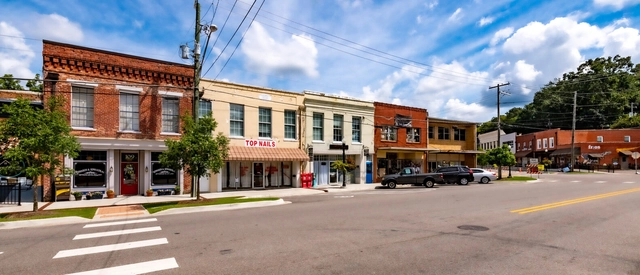
There are countless good bones in American downtowns across the country, but they’re seldom connected to enough good tissue to be filled with life. This post is on the 10 things needed to make downtowns thrive. And none are the usual suspects. I’ve omitted stuff everyone else talks about because many of you already know those things. 

10 Ways to Make Struggling Downtowns Thrive - Image 1 of 410 Ways to Make Struggling Downtowns Thrive - Image 2 of 410 Ways to Make Struggling Downtowns Thrive - Image 3 of 410 Ways to Make Struggling Downtowns Thrive - Image 4 of 410 Ways to Make Struggling Downtowns Thrive - More Images+ 6

Architecture and Ecology: On Restoring (and Creating) Wetlands

Subscriber Access | 

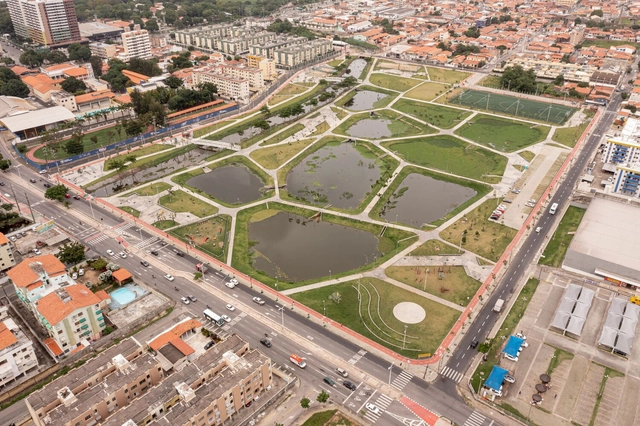
This February 2 marks another World Wetlands Day, held under the theme revitalize and restore degraded wetlands. The 2023 theme highlights that "if done correctly, these sites can offer the same benefits as the original natural wetland."

Circular Economy, Indigenous Innovations, and Architecture: Discover the Lecture Series from 'What Design Can Do Live Amsterdam'

Subscriber Access | 

As part of the agenda of What Design Can Do (WDCD)—an international organization that seeks to accelerate the transition to a sustainable and just society using the power of design—a series of events and conferences took place in Amsterdam during 2022, bringing together speakers from all over the world to present their projects and perspectives on the current challenges facing the design community today.

2023, Embarking on a Promising Journey | ArchDaily's New Year Plan

Subscriber Access | 

December 2019 marked the first COVID-19 case. By December 2022, the era of strict "Class A control for Category B infectious diseases" officially drew to a close.

Over the past year, stripping away our professional titles, we were simply individuals in endless PCR testing lines, participants in digital group-buying threads, and residents confined behind barricades and seals. We endured scorching heatwaves, grappled with political depression and existential dread, relied on ibuprofen to get by, and ultimately stood as witnesses to a turbulent, fast-shifting chapter of history.

In the world of architecture, this past year was defined by adversity: a generation of pioneering elders passed away during the harsh winter; outstanding design fees went uncollected; architects faced widespread unemployment; firms went bankrupt and dissolved; and university architecture programs struggled to fill their enrollment quotas. Day after day, we oscillated between burning out and checking out, caught in a perpetual cycle of anxiety.

Though some wounds remain unhealed, no one ever promised us an easy era. At this chaotic threshold, all we can do is persist in doing what we believe is right. Every architect is striving to address the challenges of our time through design—pioneering more open spatial concepts, mitigating climate change through sustainable architecture, and leveraging professional expertise to instill spaces with a sense of hope.

Over the past year, ArchDaily has published 4,669 built projects, 2,160 thematic articles, 323 competition announcements, and 258 exhibition listings. Focusing on platform expansion and fresh content, we also embarked on a series of historic firsts:

Thus, ArchDaily’s keywords for 2023 are: Embarking on a Grand Journey, Scaling New Heights

We aim to foster more dialogue, gathering the insights and collective strength of global designers to make our voices heard!


01 Designing Better Architecture, Telling the Stories Behind the Scenes

For too long, the focus has lingered solely on the spectacular “moments” of completed buildings, overlooking the countless days and nights poured into them by architects, contractors, and material suppliers. From the initial conceptual sketches to the final working drawings, and from selecting the perfect materials to the meticulous coordination on-site to ensure flawless execution—ArchDaily takes you behind the scenes of today's most successful architectural projects.

The Story Behind Ascent, the World's Tallest Mass Timber Building
Who Does Architecture Serve Today?
What Defines a Children’s Museum?
Challenging the Impossible: How Architectural Design Drives Technological Innovation
Foster + Partners on DJI Sky City: 8 High-Tech Metrics Revealing the Construction Process
The World's Largest Hybrid Timber Structure: Construction Report on the Swatch & Omega Campus
Step Inside the 'Golden Leaf' Hall with Sou Fujimoto | ArchDaily on the Road
More is More: When the Barcelona Pavilion Meets Timber
More Than Just Tallest Skyscrapers: Dubai's Ultimate Construction Museum


02 Solving Design Challenges

As a responsible design medium, we strive to be more than a mere showcase of projects. Through deliberate curation and thoughtful editorial planning, we voice our stance, prompting architects, industry practitioners, and society at large to reflect on systemic challenges in order to foster a healthier, more progressive industry.

What Challenges is Architectural Design Facing Today?
What Defines Good Interior Design?
In the Era of Urban Regeneration, How Do Pritzker Laureates Respond?
What are the Criteria for Architectural Awards?
22 Projects, 11 Interior Design Styles
Stop Demolition, Start Deconstruction
The Past and Future of Floating Cities
The First 'Disrupt' Architecture Business Symposium: A Gathering of Industry Giants
Winners Announced: 2022 ArchDaily Best New Practices
Best Architectural Collaborations of 2021
What is the Real Purpose of Architectural Biennials?
How Can Educational Spaces Express Equality?
How to Design Gender-Neutral Restrooms


03 Crafting a Better Living Environment

As the world adapts to living alongside COVID-19 and combating urban heatwaves, our dwelling patterns are undergoing a profound evolution. Today's homes must seamlessly balance living, working, and leisure. Consequently, designing greener, healthier, and more human-centric residences and lifestyles remains our enduring focus.

How to Cool Down Our Cities?
Chinese Housing and Lifestyles
Is Modularity the Future of Healthcare? OMA Reveals 'Al Daayan' in Qatar
Living on High: Why Are We Drawn to Altitudes and Rooftops?
Has the Garden Become a Privilege?
How to Design Housing on Complex, Constrained Urban Lots?
Can Everyday Workers Enjoy Green Spaces?
Working from Home: How to Design Transition Spaces?
9 Strategies for Healthier Living in Buildings and Cities
How to Design a Sustainable Home Life
Toward Green Capitalism
How Are World Cup Stadiums Cooled?
Can 3D Printing Reshape the Residential Construction Market?
How Real Estate Giants Shape the Development of New York City
Is Co-Living the Future of Real Estate?
What is the Future of the House?

Building History: German Museums Revealing Culture and Place

Subscriber Access | 

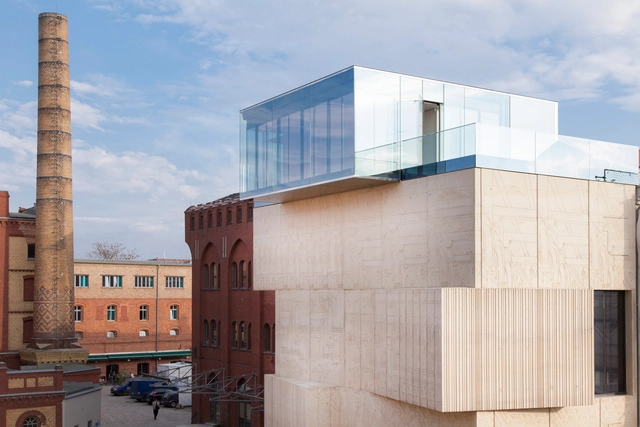
Museums reveal local and shared heritage. As cultural institutions embedded in the fabric of modern life, each museum serves as a window into history and human exchange. Made to promote understanding and provoke new ideas, these monumental buildings are inspired by spatial exploration. With some of the most influential museum projects in the world, Germany is home to a range of diverse institutions showcasing unique approaches to curating, taxonomy and spatial organization.

Building History: German Museums Revealing Culture and Place - Image 1 of 4Building History: German Museums Revealing Culture and Place - Image 2 of 4Building History: German Museums Revealing Culture and Place - Image 3 of 4Building History: German Museums Revealing Culture and Place - Image 4 of 4Building History: German Museums Revealing Culture and Place - More Images+ 10

You've started following your first account!

Did you know?

You'll now receive updates based on what you follow! Personalize your stream and start following your favorite authors, offices and users.