The works are presented through interventions in common spaces—such as bars, cafés, and community centers—located in various cities across Chile, with the goal of bringing the discipline to a wider audience.
The architects invited to participate in this first touring cycle hail from Concepción, Castro, Valdivia, and Santiago. Each is challenged to intervene in a space located in a city other than their own.
When a university opens its doors to the general public to showcase its work in detail, it is a luxury that should be taken advantage of. This is especially true when this opening features thesis projects and final degree projects, which require a great deal of reflection, effort, and originality, with a significant dose of realism as students near the end of their architectural training.
The collection of ideas that characterizes the graduates of the University of Lima is reflected in this diverse exhibition of their architectural projects. ‘Ideario’ is an exhibition organized by the Faculty of Engineering and Architecture in conjunction with the University of Lima Cultural Center. Nine thesis projects and 19 final degree projects will be on display until May 5 at the Cultural Center Gallery of the university. It is a must-see, as there is much to see and reflect upon.
The projects on display show the current concerns of graduates to address critical problems throughout Peru, and their commitment to finding solutions beyond the limits of a discipline that needs to be rethought from the specificity of society and the national territory.
There is always a lingering feeling or fear that a project might remain just a dream upon presentation. This sentiment is heightened in a final degree project, where one might view it as the last opportunity to experiment, yet simultaneously the first opportunity to make it as realistic as possible. In what sense? Even as part of an academic exercise that allows for imagination and exploration, it can be developed with the challenge of addressing a real problem that benefits society and the country. In this way, students can finish their degree by opting for buildable dreams that go beyond the purely architectural.
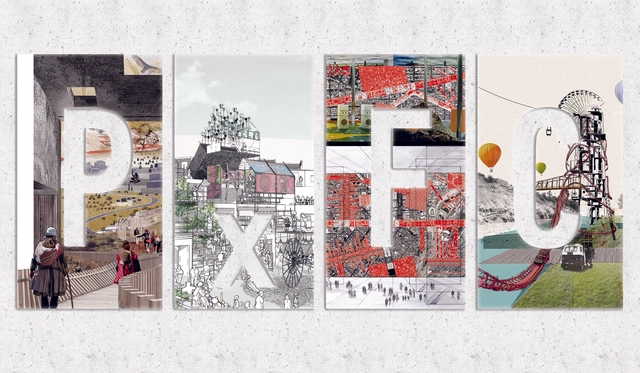
This remarkable ambition and social consciousness are present in each of these diverse Experimental Final Degree Projects (PxFC) by graduates of the PUCP. These proposals explore the theoretical-practical limits of architecture and integrate with other fields—such as engineering, agriculture, sociology, politics, and art—resulting in projects that are not necessarily limited to specific building programs. We hope that many, regardless of their academic background, will attend, reflect, and incorporate these critical perspectives into our professional practice. The exhibition runs until May 11 at the university's Cultural Center gallery.
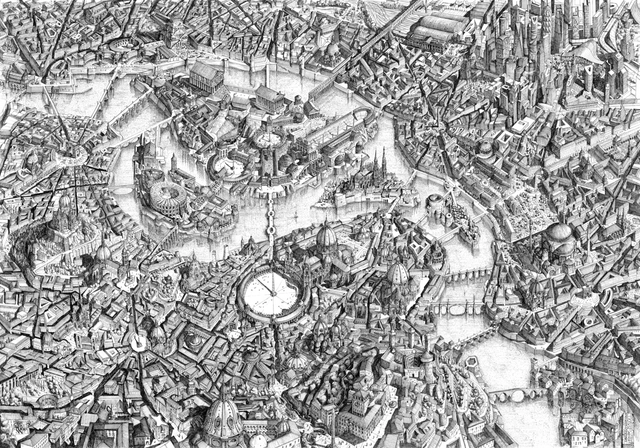
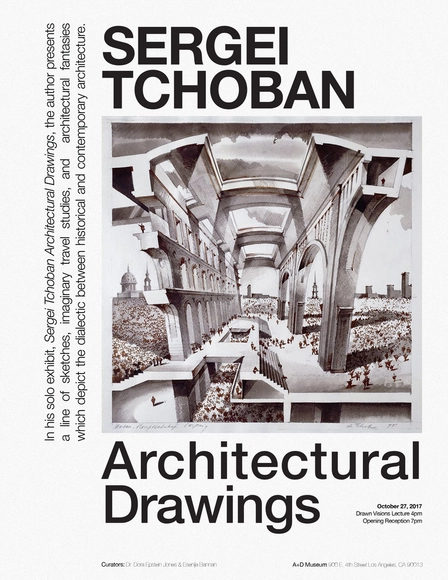
The exhibition project Dreams of Frozen Music at the Tokyo Art Museum in Sengawa will present about 30 drawings from the last couple of years from the architect. These works are not meant to be “the typical drafts” for architectural projects. No building is ever being built according to them, they rather can be seen as “free architectural fantasies.” Tchoban’s esthetic approach, his visual language and his artistic means seem not to be contemporary but rather timeless. Classical orders of columns, domes of baroque churches and e pre-modernist architecture are being blended into surreal vedutas. A technically brilliant draughtsman, Tchoban employs all kind of materials including ink, water color, red chalk, charcoal and pastel chalk.
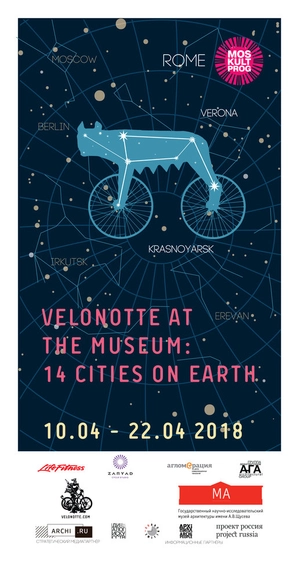
VeloNotte, international urban history startup on two wheels, celebrates its 10th anniversary of their nocturnal tours with an exhibition-workout in the Schusev Museum of Architecture in Moscow. Just a few steps from Kremlin, Velonotte converts the room of the 18th-century mansion into a cycling studio. Once you start to pedal the journey will bring you to one of the cities that the project explored so far with speakers like Richard Rogers, David Adjaye, Richard Burdett, Peter Ackroyd, Vladimir Paperny, Jean-Louis Cohen. The exhibition will feature amateur videos selected by curators from the posts of the more than 100,000 participants of Velonotte night tours all over the world. On display are also original documents and artifacts from the Velonotte history – such as a piece of the memorial plaque that Velonotte had unveiled in Moscow at Petrovka street 27/16 - where architect Konstantin Melnikov lived during his happiest 1920s (the tablet was destroyed by vandals soon after installation). A new format of the educational program -lecture-workout - is proposed to enrich the visitors' experience. Velonotte's founder, Dr. Sergey Nikitin is going to tour people "virtually" through the places that Velonotte couldn't do due to bureaucratic reasons - in cities like Vienna, Yerevan, Kazan.
After being on display at the Cité de l’Architecture et du Patrimoine in Paris in 2016, the exhibition "The Universalists – 50 Years of Portuguese Architecture" will be presented for the first time in Portugal at the Nave Expositiva of the Casa da Arquitectura in Matosinhos, from April 13 to August 19.
The opening will take place on the 13th at 9:00 PM, featuring a guided tour by the exhibition curator, architect Nuno Grande. This will be followed at 10:00 PM by the debate "Portugal, an 'Other' Universalism," featuring testimony from Eduardo Lourenço and the participation of Alexandre Alves Costa, João Belo Rodeia, and Nuno Grande (moderator).
Modernity certainly does not have to be characterized by ugliness, but we may well have to make some revisions in our standards of beauty. — Edward J. Logue
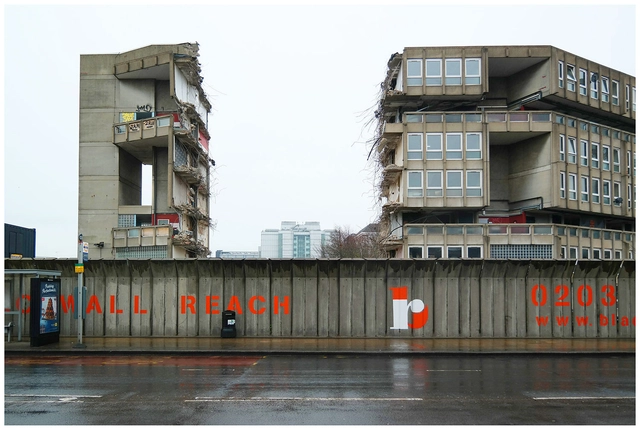
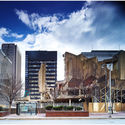
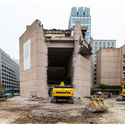
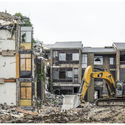
pinkcomma gallery is proud to present Brutal Destruction, photographs of concrete architecture at the moment of its demise. The exhibit is curated by Chris Grimley of the architecture office over,under. The exhibit opens 12 April, 2018 from 6–9 p.m., and the will be on display through May 03, 2018.
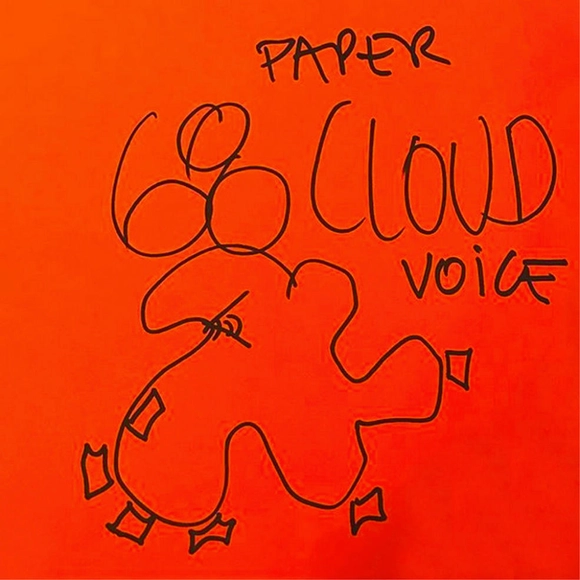
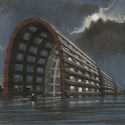
CLOUD ’68—PAPER VOICE Smiljan Radić’s Collection of Radical Architecture With recordings of interviews by Hans Ulrich Obrist Co-curated by Patricio Mardones
Ubaldo Occhinegro (commended, Hand-Drawn category): Utopia. Image Courtesy of Sir John Soane's Museum
The Architecture Drawing Prize received 166 entries from 26 different countries, offering a fascinating cross-section of approaches to and uses of architectural drawing today: from highly sophisticated design drawings to lyrical hand-drawn sketches, and everything in between. The exhibition retains a sense of this variety so along with the three category winners, it was decided to showcase the ten entries that received commendations from the judges.
The Bibliothèque nationale de France has given its architect Dominique Perrault ‘carte blanche’ to develop an exhibition dedicated to the building he designed in 1989 : with an original ‘mise en abyme’, a large-scale scenography presents the story of the conception and construction of the BnF, one of the most important contemporary public buildings in France.
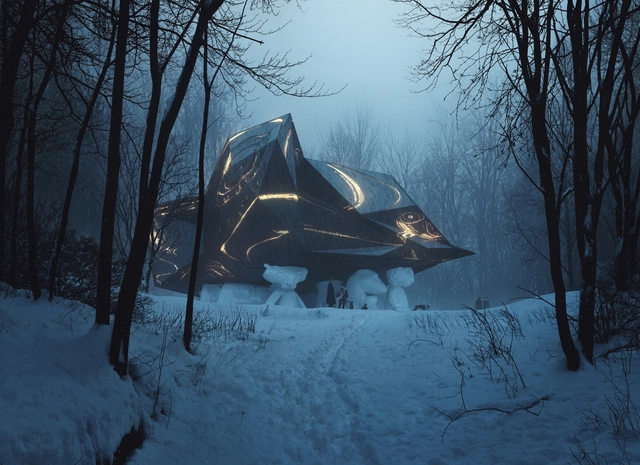
The result of an 8 year collaborative process between Snøhetta and Norwegian artist Bjarne Melgaard, “A House to Die In,” is now on display at a new exhibition Tjuvholmen in Oslo, Norway.
Organized by the architects and artist with Selvaag Art Collection, the exhibition shows the artistic process of designing the unique home and studio that is currently seeking approval for its construction. To be located on the grounds of painter Edward Munch’s former house and workshop in western Oslo, the sculptural proposal has prompted discussion over how it honors the legacy of one of Norway’s most famous artists.
Videos
Sex and the So-Called City. Office for Political Innovation. Storefront for Art and Architecture, 2018.. Image Courtesy of Imagen Subliminal
Storefront for Art and Architecture in 97 Kenmare St, New York, opened yesterday “Sex and the So-Called City,” an alternative version of Sex and the City (SATC) made by the architect Andrés Jaque / Office for Political Innovation with Miguel de Guzmán (Imagen Subliminal) on occasion of the show’s 20th anniversary.
Capilla de Palmira (Chapel of Palmira) Lomas de Cuernavaca, Morelos, Mexico, 1958 – 1959
Curator: Alexander Eisenschmidt Originator: Juan Ignacio del Cueto
This exhibition roots Félix Candela (1910-1997) as one of the most prolific architects of the 20th century in his advanced geometric designs and lasting influence in contemporary architecture. It originated through the research of scholar Juan Ignacio del Cueto and is curated by the architectural theorist and designer Alexander Eisenschmidt. The exhibition spotlights Félix Candela’s Concrete Shells through photographs, architectural models, and plans, as well as archival material from his time as a professor at the School of Architecture at the University of Illinois at Chicago from 1971 to 1978.
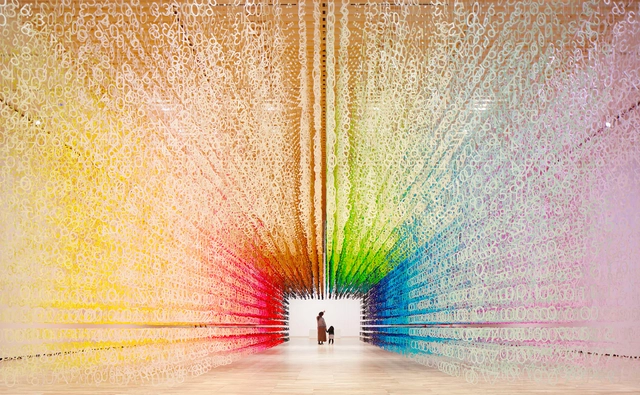
Architect Emmanuelle Moureaux’s latest art experience, “COLOR OF TIME,” allows observers to experience the passage of time through color. Moureaux’s installation is one of a series called, “Art and Design, dialogue with materials,” for Toyama Prefectural Museum of Art & Design’s opening ceremonies. Throughout the series artists played with different materials, showing their varying potentials and characteristics.
Moureaux chose paper; layering over 100,000 number cutouts into a 3D grid. From sunrise at 6:30 to 19:49, the numbers turn over 100 shades of color, ending in black. A color changing experience totaling 799 minutes.
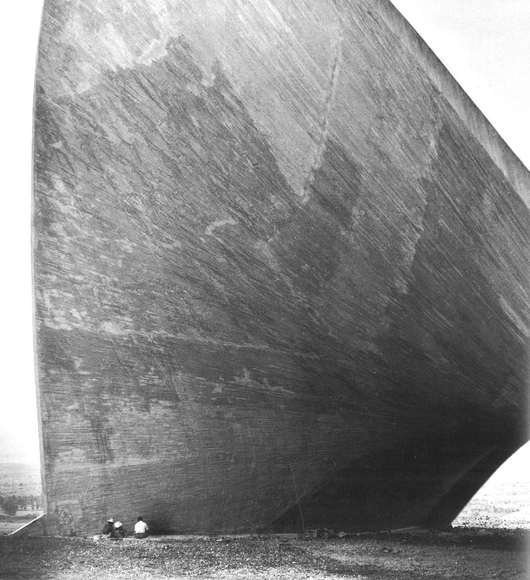
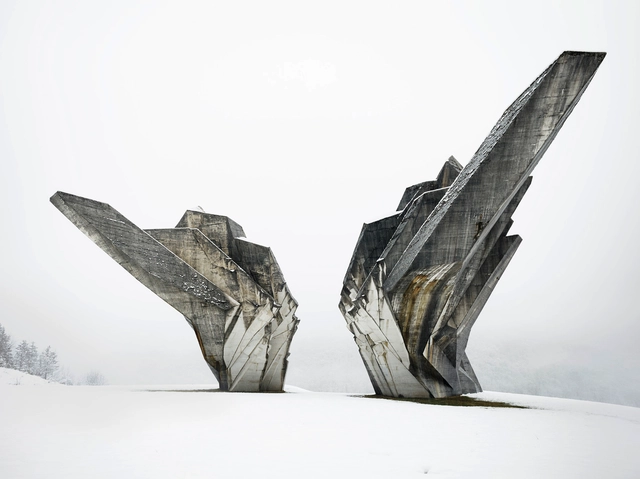
Miodrag Živković, Monument to the Battle of Sutjeska, 1965-71, Tjentište, Bosnia and Herzegovina. View of the western exposure. Photo: Valentin Jeck, commissioned by The Museum of Modern Art, New York, 2017.
The Museum of Modern Art will explore the architecture of the former Yugoslavia with Toward a Concrete Utopia: Architecture in Yugoslavia, 1948–1980, the first major US exhibition to study the remarkable body of work that sparked international interest during the 45 years of the country’s existence. The exhibition will include more than 400 drawings, models, photographs, and film reels culled from an array of municipal archives, family-held collections, and museums across the region, introducing the exceptional built work of socialist Yugoslavia’s leading architects to an international audience for the first time.
In his first solo exhibition in the United States, Sergei's 18 works on paper reveal his memories in Russia. The themes span monuments, fantastical scenes of Berlin, cities under water, exceptional sections and compositions of historical and contemporary architecture.
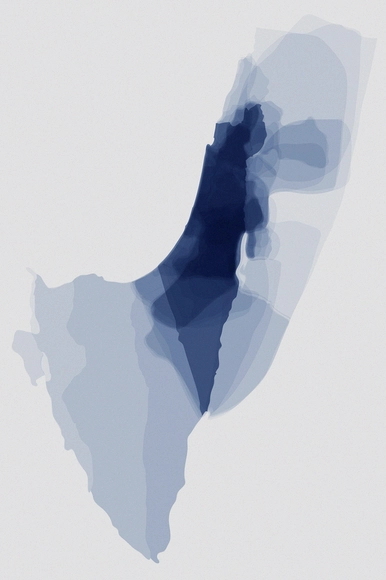
Overlapping border fluctuations Israel, Palestine from 1040 BCE to present day from Atlas of the Conflict. Israel-Palestine by Malkit Shoshan.
Borders shape and consolidate relations between states, people, jurisdictions, political entities, and territories. While some borders are stable, others are in a constant flow. The demarcation of borders is a body politic. It regulates economic relations and people’s access to places, resources, and rights. Borders are powerful instruments that determine the way our surroundings are organized, inhabited and controlled, and the ways communities relate to one another—while some break through borders to survive, others fence themselves off.
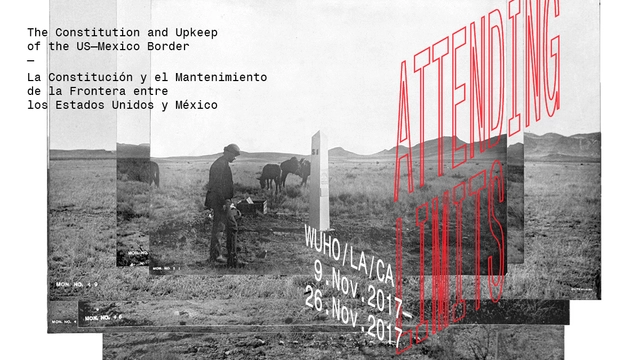
277 obelisk monuments mark the US–Mexico boundary line. Constructed in three distinct phases (1849–1856, 1891–1912, and 1964–1968), these monuments were the product of territorial negotiations, disputes that were settled ranging from the violent expansion of sovereign limits to the shifting course of a historic boundary river. Commissioned, inscribed, and placed by both the United States and Mexico, they served as unique bilateral artifacts that operated across and reflected on separate territories, forms of settlement, and philosophies of nationhood. Attending Limits: The Constitution and Upkeep of the US–Mexico Border presents the international boundary through a history of its material artifacts and the modes of representation they have motivated. Through the display of original text, animation, photographs, scale models, and maps, the exhibition theoretically frames an evolution of the US–Mexico border from single line to geopolitical territory.