While the next edition of the Venice Biennale for Architecture is still more than a year away, the Art Biennale sister event is right around the corner. Ghana, for whom this will be their first ever foray into the major art event, has announced their pavilion lineup and designer - none other than Sir David Adjaye.
https://www.archdaily.com/912301/david-adjaye-to-design-ghanas-first-ever-pavilion-at-the-2019-venice-art-biennaleKatherine Allen
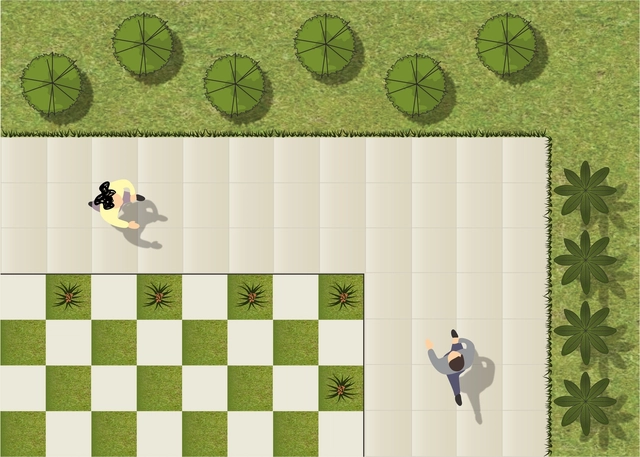
Just like the architectural elements that make up built space - floor, walls and ceilings - natural elements are also capable of creating spaces in large-, medium- and small-scale areas, in places like public and residential gardens.
According to Brazilian landscape architect Benedito Abbud, "Landscaping is the only artistic expression in which the five senses of the human being participate. While architecture, painting, sculpture and other visual arts use and abuse only the vision, landscaping also involves smell, hearing, taste and touch, providing a rich sensory experience by adding the most diverse and complete perceptual experiences. The more a garden can sharpen all the senses, the better it fulfills its role. " [1]
Below we list some of the key elements of landscape planning and design. See the principles and learn why you should never randomize the placement trees!
It seems almost impossible to imagine that a single public initiative could have spawned most of the national highways we have today in Argentina, established tourism as an economic driver for the country, consolidated the national oil company YPF against foreign competition, and driven a large part of the development of Argentine modern architecture.
Yet it is entirely plausible when we look at one of the largest territorial interventions in the country's history—a vanguard of modernity that established the automobile as a mass means of transportation in our region.
When we think of energy from renewable sources, the first that probably come to mind are solar and wind. And decentralizing power generation is something that has inspired engineers and inventors from all over the world.
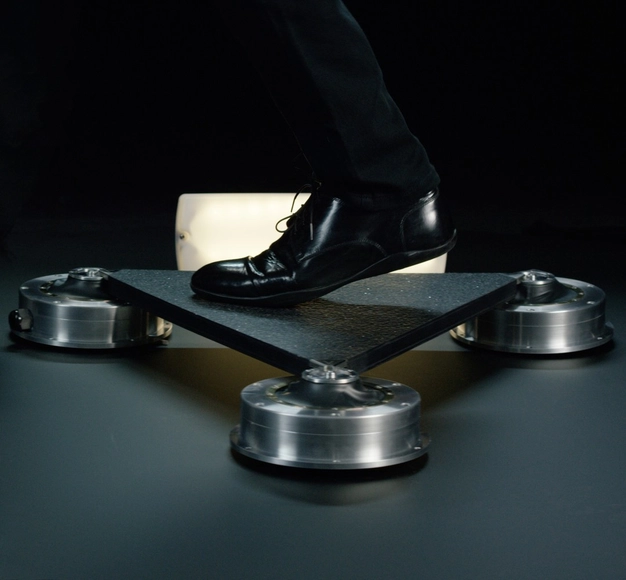
So what about turning the mechanical energy generated when people walk into electrical energy? It can be done thanks to technology developed by Laurence Kemball-Cook,founder of Pavegen. Using platforms inserted within sidewalks Pavegen converts steps into electric power (while also generating data and even rewards). But before you go out there feeling like Michael Jackson in Billie Jean, you should understand how this system works.
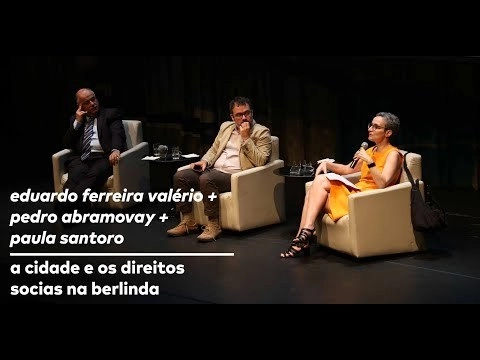
Through its Seminar on Culture and Contemporary Reality, Escola da Cidade invited Pedro Abramovay, Eduardo Ferreira Valério, and Paula Santoro to discuss social rights and the city. This topic has become increasingly urgent and sensitive when discussing any possibility of a democratic and empathetic city. In this video, the panel discusses some of the historical roots and contemporary issues surrounding this theme.
https://www.archdaily.com/1121356/the-city-and-social-rights-under-scrutinyPedro Vada
In a profession as complex as architecture, resistance to change is common. Adopting new technology brings new challenges. Nevertheless, as technology moves forward, architecture practices keep pace with it to stay relevant.
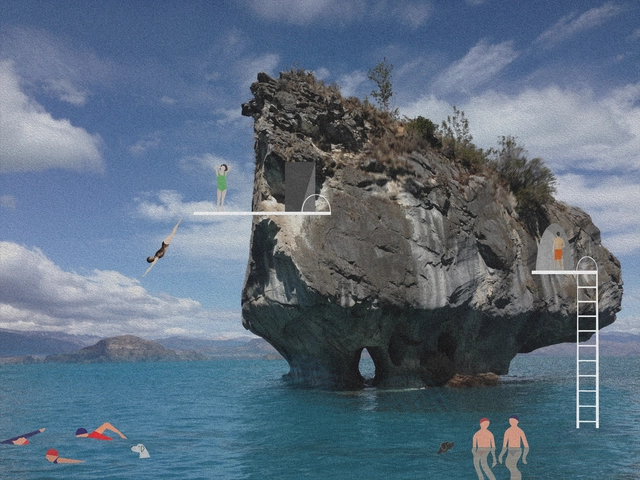
Global Warming is causing a series of changes in our climate, and as a result, in our landscape. Successful and exemplary Landscape Architecture delivers proposals that tackle these environmental changes in two areas of development: Design and Architectural Representation.
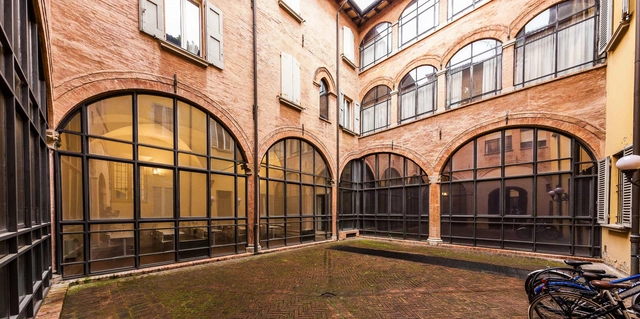
As industry has shifted over the past century, in format, location, and type, the manufacturing and industrial spaces scattered across the western world have been repurposed. You have no doubt seen these structures, though perhaps without realizing. The large windows, high ceilings, and open floor plans optimized for factory work now mark the territory of the “creative class”. Such spaces have been disproportionately appropriated by creative industries such as arts and architecture; think of Herzog + de Meuron’s renovation of the Tate Modern (from a former power station) or the recent collaborative transformation of a locomotive yard into a library in the Netherlands.
https://www.archdaily.com/911719/lacaton-and-vassals-frac-dunkerque-is-an-architectural-echo-both-in-form-and-in-conceptKatherine Allen
The future of architecture is urban; there is no longer any doubt about it. Projections indicate that by 2050—that is, in just over 30 years—75% of the world's population will live in cities, while in Brazil this figure will exceed 90%. However, our discipline must concern itself with the quality of life for everyone; therefore, projects in rural contexts will continue to be on the agenda of architects worldwide.
Below, we present a selection of residential projects built in the countryside. These Brazilian houses, nestled in rural and pastoral landscapes, are designed for the daily lives of their inhabitants or as temporary retreats to decompress from urban life. One way or another, they all share a single objective: to open themselves up to their bucolic surroundings.
“On Growth and Form”, written by biologist and mathematician D’Arcy Wentworth Thompson [1860-1948], is considered the greatest work of prose in twentieth-century science, highlighting the role of physics and mechanics in determining the form and structure of organisms. The book immediately became a classic for exploring natural geometries in the dynamics of growth and physical processes. Thompson reveals himself to be a great scientist, sensitive to the fascination and beauty of the natural world, writing in a style that led the specialized press to call his work “as much good literature as science; a discourse on science as if it were a matter of humanity.”
Jardim Lapenna, São Miguel Paulista. Photo: Eduardo Silva/32xSP
Residents of Jardim Lapenna, in São Miguel Paulista, in São Paulo's East Zone, have created a participatory neighborhood plan in the state capital. Out of 32 urban actions planned in areas such as lighting, security, and paving, seven were selected as priorities and are currently being incorporated into the annual budget bill (PLOA) for 2019.
Starting this month, ArchDaily has introduced monthly themes that we’ll explore in our stories, posts and projects. We began this month with Architectural Representation: from Archigram to Instagram; from napkins sketching to real-time-sync VR models; from academic lectures to storytellers.
It isn’t particularly novel or groundbreaking to say that the internet, social media, and design apps have challeged the relation between representation and building. A year ago we predicted that "this is just the beginning of a new stage of negotiation between the cold precision of technology and the expressive quality inherent in architecture". But, is it? Would you say digital tools are betraying creativity? This is an older dilemma than you think.
In this new edition of our Editor's Talk, four editors and curators at ArchDaily discuss drawings as pieces of art, posit why nobody cares about telephone poles on renders and explore how the building itself is becoming a type of representation.
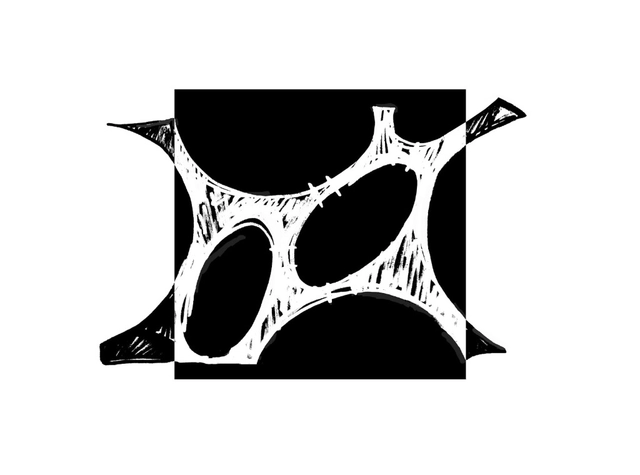
Internationally renowned for her avant-garde search for architectural proposals that reflect modern living, Zaha Hadid made abstract topographical studies for many of her projects, intervening with fluid, flexible and expressive works that evoke the dynamism of contemporary urban life.
In order to further knowledge of her creative process and the development of her professional projects, here we have made a historic selection of her paintings which expand the field of architectural exploration through abstract exercises in three dimensions. These artistic works propose a new and different world view, questioning the physical constraints of design, and showing the creative underpinnings of her career.
YACademy launches the second edition of Architecture for Heritage, a high-level training course offering 8 scholarships and internships for internationally-renowned architectural firms.
106 hours of lessons, a 32-hour workshop and internships/lectures held by internationally-renowned architectural firms like OMA, Mccullough Mulvin Architects, Aires Mateus E Associados, Claudio Nardi Architects, and Carrilho Da Graça Arquitectos.
https://www.archdaily.com/912077/architecture-for-heritage-yacademys-course-offers-8-scholarships-and-internships-in-internationally-renowned-firmsSponsored Post
Courtesy Nicholas Calcott, via Metropolis Magazine
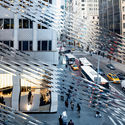
Nike's New York flagship store, primely located on Fifth Avenue, is perhaps the closest thing to a temple in the digital age. At a massive 68,000 square feet, it commands attention and symbolically dwarfs even its skyscraper surroundings. The exterior facade features a grid of undulating glass that casts glimmering shadows both inside and out. Inside, a tractor-beam type installation hangs from the ceiling, giving the space-age flavor. There's no set ritual or tradition like in the temples of old, but sneakerheads might certainly feel they've found their heaven on earth.
Le Corbusier - Ronchamp. Image Courtesy of Atelier RZLBD
The history of architectural drawings is as old as architecture itself and has been developed through the architectural timeline. Once diagrams, they were as big as Ziggurats and Pyramids and drawn at the scale of one to one on site. Now in contrast, drawings are practically nonexistent as tangible objects. They only exist as digital data saved in virtual space. Regardless of their old history and drastic evolution, one single fact about them has never changed; they were and still are a medium: an intermediate device that visualizes an idea and goes through a journey of adventures before being realized. And yet, there is always a risk that the same set of drawings by an architect may be translated into different architectural interpretations.
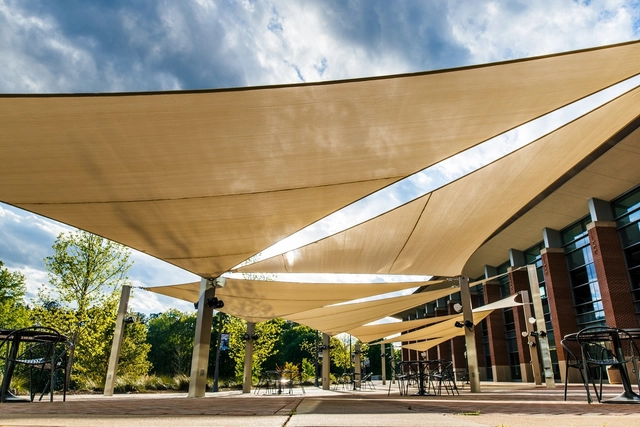
Superior Shade at University of West Georgia. Image Courtesy of Superior Recreational Products
In any successful architectural project, it is essential to provide users with a comfortable outdoor space. At any time of the year, modular shade structures can create spaces that protect from wind, dust, sun, rain, snow, and noise in a light, flexible and aesthetically pleasing way.
With this in mind, what should we look for when choosing shade structures for outdoor spaces? Below, we've provided you with Superior Recreational Products's top recommendations.
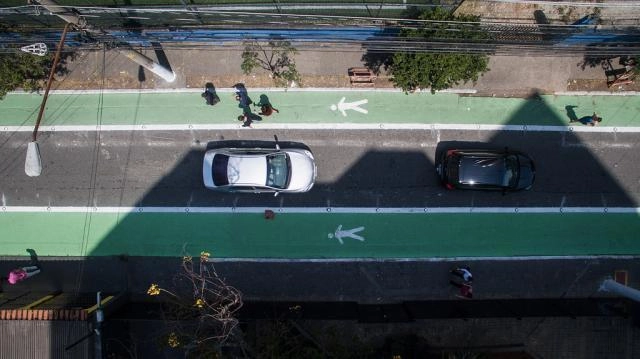
Joel Carlos Borges Street, in São Paulo. Photo: Pedro Mascaro/WRI Brasil
The latest Global Status Report on Road Safety from the World Health Organization (WHO) showed that over the last 15 years, the traffic mortality rate has remained stable relative to the world's population. While the fact that these numbers have not increased might sound positive, it is important to remember that this still represents the death of 1.35 million people annually, alongside 50 million injuries.
https://www.archdaily.com/1121788/traffic-deaths-are-not-decreasing-complete-streets-can-helpWRI Brasil


.jpg?1550747759 "Cortesia de Pavegen")


_11.45.04.jpg?1550328316&format=webp&width=640&height=580)

.jpg?1550610722 "Landscapes of Cohabitation")


_7061.jpg?1550506965&format=webp&width=640&height=580)
.jpg?1551105554&format=webp&width=640&height=580)


.jpg?1550605438&format=webp&width=640&height=580)


.jpg?1550605438)


_PA_01.jpg?1472565216 "The World (89 Degrees) - 1983. Image Cortesía de Zaha Hadid")