Cortesía de Angie Milena Espinel para Arquitectas Colombianas. Image Cortesía de Arquitectas Colombianas
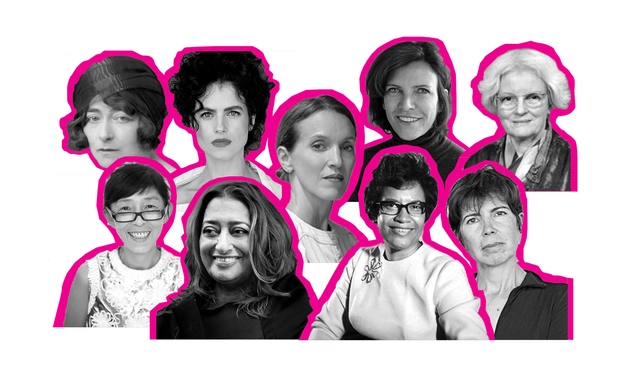
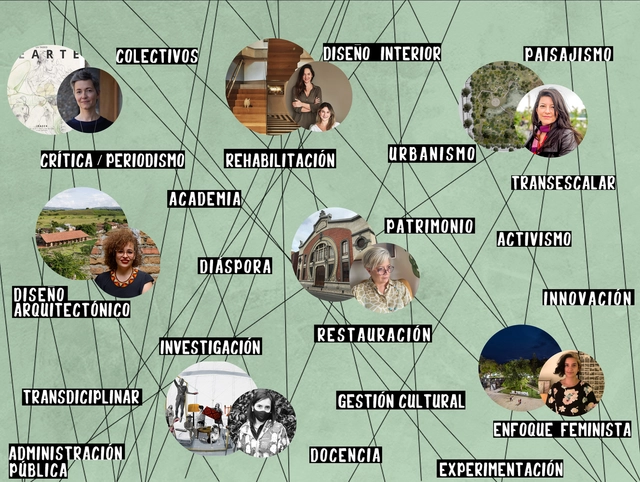
The following article is the result of a collaboration with Arquitectas Colombianas, an initiative that seeks to promote the legacy, contributions, and activities of women in architecture and design in Colombia and around the world. Below, explore their vision and the presence of women in the local scene, accompanied by quotes from the architects behind this work.
https://www.archdaily.com/1128420/women-architects-across-the-spectrum-of-colombian-architectureAna María Pinzón
In recent years, several movements in Brazil and around the world have contributed significantly to society by emphasizing the need to occupy public spaces in the cities to claim quality and freedom of use for the community. The Ocupe Estelita movement in Recife, Brazil, for example, confronted the growing real estate speculation in the region and challenged the aggressive commercial urban planning on the banks of the Capibaribe River. Based on cases like this one, professor, critic, and curator Guilherme Wisnik, in an interview with Fora, addressed the issue of public space as a place of conflict.
There’s a bright world just beyond the COVID-19 pandemic, and Waterfront Toronto, the organization tasked with revitalizing the city’s waterfront, is working to deliver on that future with its vision for the Quayside Project—a 12-acre mixed-use development poised to transform the industrial lands at the foot of Parliament Street.
What elements and qualities does space need for a well-balanced physical and spiritual recovery? How to design spaces that are healthy for both our minds and our bodies? What makes an environment livable and sustainable in the long term?
These are the questions we need to address in the era of the rapidly developing real estate market. Why do we tend to inhabit more and more high-density residential towers? Are we necessarily more mentally secure? If not, what are the spatial solutions or cures for the current urbanites’ anxiety? In this article, we will explore ways of unwinding and finding cures in space.
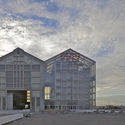
Anne Lacaton and Jean-Philippe Vassal founded their architectural studio Lacaton & Vassal in 1987, years after studying and working together at the École Nationale Supérieure d’Architecture et de Paysage de Bordeaux. The practice established in Paris has been awarded this year’s prestigious 2021 Pritzker Prize. Their built work leaves strong evidence of what they believe is relevant: sustainability, wellbeing, social responsibility, and the readaptation and the respect of the existing built environment.
https://www.archdaily.com/958569/lacaton-and-vassal-get-to-know-2021-pritzker-winners-built-workPaula Pintos & Clara Ott
In many cases, I haven't been able to decide whether a building full of trees fits into the "sustainable" category. In fact, I've often had to make the argument that such a building is far from it.
It seems that the vast majority of contemporary marketing for sustainable architecture operates under the guise of greenwashing. What's more, the line between what truly creates healthier and more sustainable living spaces and what doesn't is often a blurred one.
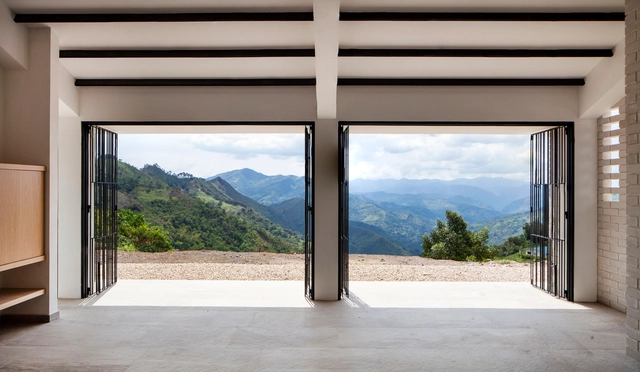
For houses throughout the world, the barriers between the inside and outside of houses are solid and well-defined, allowing the spaces within the home to be protected from the weather conditions outside and made comfortable for the inhabitants inside. In countries like Colombia, which sit close to the equator and enjoy a warm, subtropical climate, temperatures average just above ideal thermal comfort.
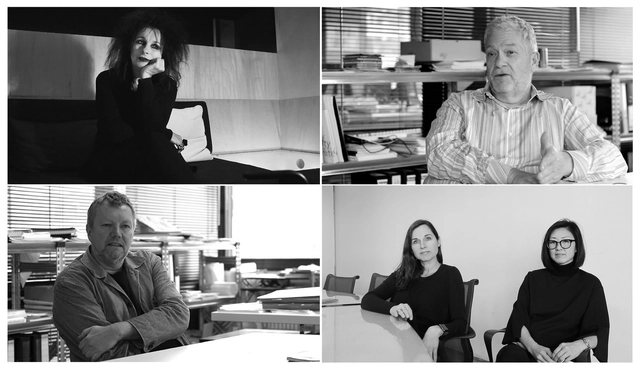
Simple in form but complex in substance, “What is Architecture?” remains an existential question for a lot of architecture students and young professionals. In an attempt to define this ever-changing interrogation and expose the different visions out there, the interview series: WIA – What is architecture? asks four, straightforward, questions to world-leading architectural designers and thinkers. Seeking to uncover their opinion on what architecture is and what it can do, these short videos reveal responses to “What is architecture? What can architecture do? What is your architectural position? and What is your design method?”.
ArchDaily has collaborated with WIA to release every week, 4 of these conversations, and to invite you to take on the challenge and answer these questions. This second article of the series highlights the ideas and visions of Odile Decq from Studio Decq, Kjetil Thorsen from Snøhetta, Florencia Pita & Jackilin Hah Bloom from Pita & Bloom, an architectural design collaborative based in Los Angeles, and Jeffrey Kipnis, an American architectural critic and theorist.
International Women's Day has been celebrated worldwide since it was officially recognized by the UN in the 1970s. Broadly speaking, this date symbolizes our historical struggle as women to achieve equality with men.
In the spirit of these celebrations, as a woman and an architect, I wanted to present an overview of women's professional trajectory in architecture—particularly in Brazil—highlighting the discrepancies that persist in the field to reinforce the struggle that International Women's Day represents. This is both a call to action and a personal reflection, as well as an appeal for collaboration, urging everyone to recognize their own position and, above all, our place as women in shaping our country's architectural landscape.
Two months and eleven days after the start of 2020, the World Health Organization (WHO) declared Covid-19 a pandemic. To contain the spreading threat, citizens and authorities had to devise collective strategies and alter their behavior. This battle between virus and humanity also called into question the very existence and preservation of one of humanity's most important creations: cities.
As the symbol of an environment defined by casual encounters among different people and diverse experiences, those governing urban areas were challenged to convince—and, in some cases, force—their populations to stay home as the primary measure to contain transmission.
https://www.archdaily.com/1128408/can-the-pandemic-scenario-lead-to-walkable-citiesLeticia Sabino e Louise Uchôa
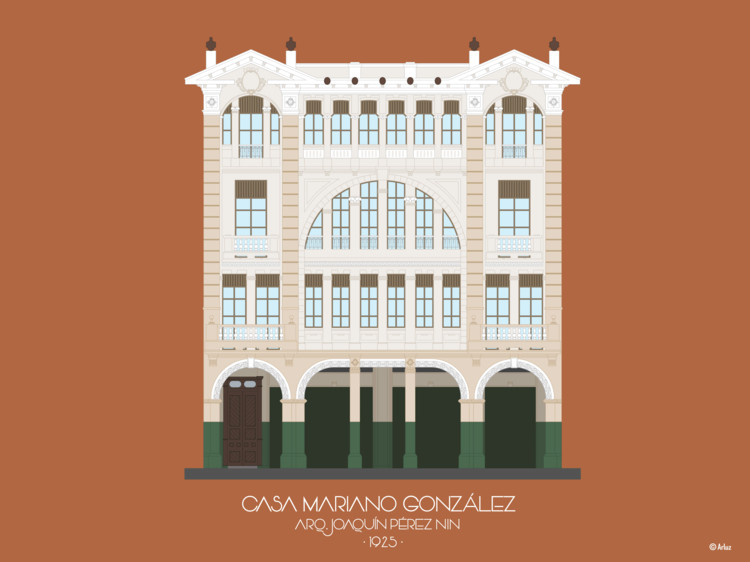
Ecuadorian illustrator and architecture student Ariel Triana Ayarza (Arluz Ilustraciones) has created a series that explores Guayaquil's architecture through digital illustrations. The graphic collection aims to highlight the beauty of heritage landmarks, colonial buildings, and all the representative works that shape the city's identity.
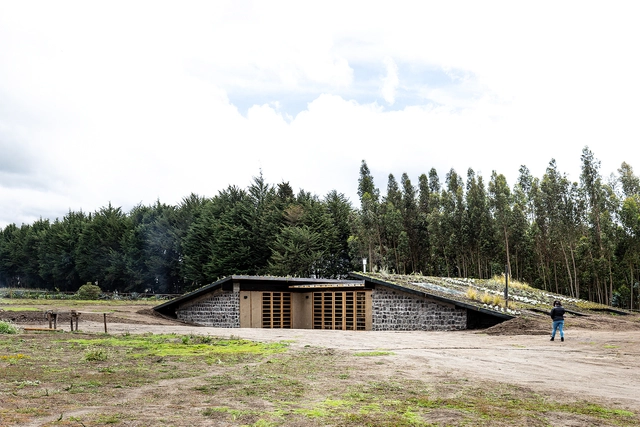
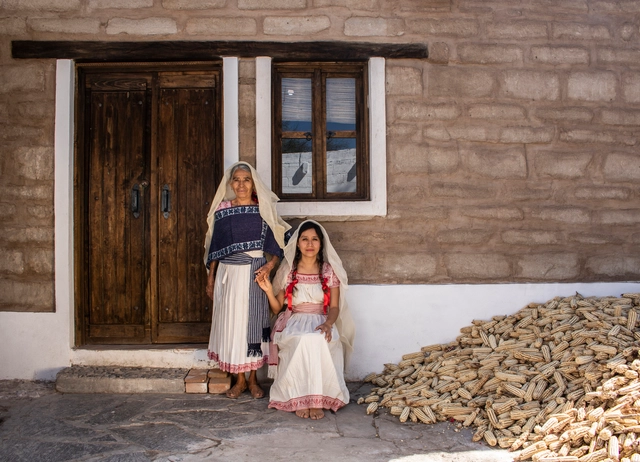
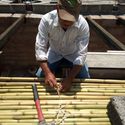
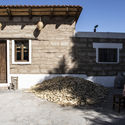
The Cocina Mendoza project is located in the municipality of Ixmiquilpan, in the heart of the Mezquital Valley in central Hidalgo, Mexico. This is home to the community of San Nicolás de Tolentino and the Mendoza family, who belong to the Otomí people and held the *mayordomía* (stewardship) during 2019 and 2020.
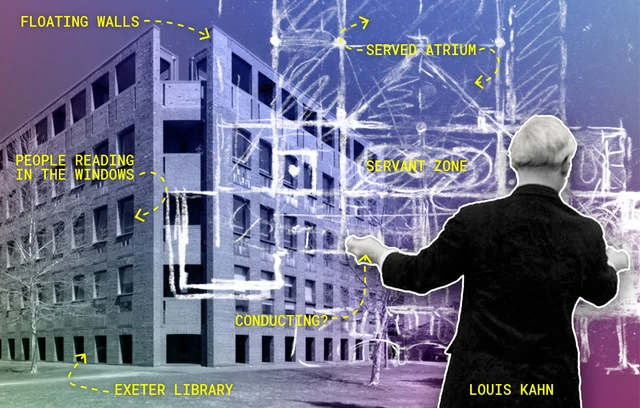
In this video, Architecture with Stewart breaks down the floor plan strategies of Louis Kahn (1901-1974) for how they treat and arrange rooms in servant/served configurations. After World War II showed us the dark underbelly of technology, the architecture that gave us “machines for living in'' seemed misguided and dehumanizing. In contrast to pre-war open and free plans, Louis Kahn considered new possibilities for rooms; believing their privacy and enclosures could work together in a ‘society of rooms.’ Beginning with a close look at the Trenton Bath House, the video includes computer animations, sketches, photographs, and historical narratives to trace the evolution of the room through buildings like the Adler House, Esherick House, and the Exeter library — a monumental room of cultural memory.
If you attended architecture or design school, there’s probably something you noticed about your fellow classmates- a majority of them were female. And if you have been working in the world of design for a few years, there’s probably something else you’ve noticed as well- that there are fewer women in leadership positions than men. There’s a crisis that architecture has been facing ever since the profession has existed, and it’s that women in leave architecture in high numbers. But what is causing this, and what steps are being taken to ensure that some of design’s best champions positioned to become future industry leaders?
There was a time when people appreciated self-contained architecture, in which the building envelope would not function as a moderator between the climate outside and the interior environment but rather as an inert and independent barrier. Countless mechanical devices and electrical ventilation, heating, and cooling equipment. A real machine.
Today, architects are increasingly concerned with the interaction between architecture and the environment in which it is inserted, thus assuming responsibility for the thermal comfort of interior spaces, using design strategies for natural climate control.
The Shing Mun River in Sha Tin, a residential town in Hong Kong, has struggled with plastic waste pollution for years. Household waste that is not properly recycled will either end up in landfills or floating in the river. In 2018 almost 17 million plastic items, or 40,000 items daily, were found to be drained into the ocean via the Shing Mun River, mostly being food packaging, cutleries, and household plastic bottles. This quantity of plastic pollution in the river and surrounding environment could eventually jeopardize the natural ecosystem irreversibly.
.jpg?1615817314&format=webp&width=640&height=580)
.jpg?1615817428 "© Laurian Ghinitoiu")
.jpg?1615817448 "© Laurian Ghinitoiu")
.jpg?1615817463 "© Laurian Ghinitoiu")
.jpg?1615817414 "© Laurian Ghinitoiu")
.jpg?1615817314)
.jpg?1615390051&format=webp&width=640&height=580)
.jpg?1541081334 "Praça das Artes. © Nelson Kon")
.jpg?1541081352 "Image Cortesia de USINA CTAH. ImageVista do Mutirão Paulo Freire")

.jpg?1615390051)


.jpg?1615841061&format=webp&width=640&height=580)



.jpg?1615841061)