Clipping from the newspaper “Tribuna da Mulher”, issue 748, 1952. Source: Hemeroteca Digital Brasileira, free use in the public domain
Gender inequality in the practice of architecture is the result of a multifaceted process, within which the role of narratives woven daily by journalism remains understudied. Here, we present how two female architects were portrayed by Rio de Janeiro's daily press in the 1950s, aiming to examine how their professional image was constructed in a way that was inseparable from their personal lives.
For centuries and centuries we’ve built – and the diversity in our global built environment is a testament to that. The many different cultures around the globe have had different ways of building throughout history, adapting locally found materials to construct their structures. Today, in our globalized present, building materials are transported across the globe far from their origins, a situation that means two buildings on completely opposites sides of the world can be more or less identical.
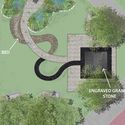
Tragedy, protest, insurrection, and political turmoil have led to a renewed awareness of racial injustice and democratic instability. These issues create new challenges for users and designers of public spaces in America. Cultural spasms have resulted in contested public spaces — sites of killings, protests in streets and parks, and forgotten burial grounds. These spaces need a new form of environmental justice.
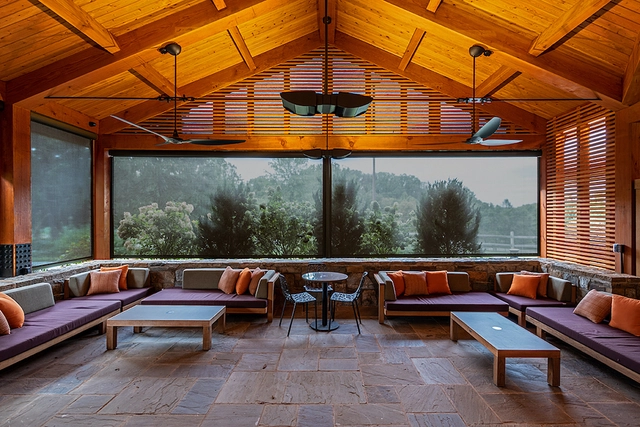
Wolf Trap National Park for the Performing Arts – Vienna, Virginia | FlexShade® ZIP | Dealer: Goodwin Bros. Shades and Specialties | Photographer: Alan Wycheck – alanwycheckphoto.com. Image Cortesia de Draper
Comfortable outdoor spaces are more desirable than ever. Over the past couple of years, people have been spending more time at home, connecting with nature from the relative comfort of covered balconies, patios, and pergolas. But even with pleasant views, cooling breezes, and the warmth of the sun, covered outdoor spaces can be uncomfortable. Temperature variations, glare, rain, and wind quickly create an unpleasant experience. In warmer climates, insects can be an additional a nightmare.
Clay walls have a high thermal inertia. This means that they act as a climate buffer that creates a thermal delay in the flow of heat from the outside to the inside, absorbing it during the day and releasing it overnight. The material is especially suitable for hot and dry climates, such as that of Gando, where Francis Kéré built his first school. After years of studying abroad, Kéré returned to his home community with the intention of building this school with the same materials historically used by locals, which many originally viewed as strange, as he said in this lecture. Despite the initial prejudice, it was the combination of local materials and techniques with Kéré’s acquired knowledge that ultimately gave strength to the project.
https://www.archdaily.com/978851/how-does-francis-kere-use-materials-to-respond-to-local-climate-conditionsValeria Montjoy and Eduardo Souza
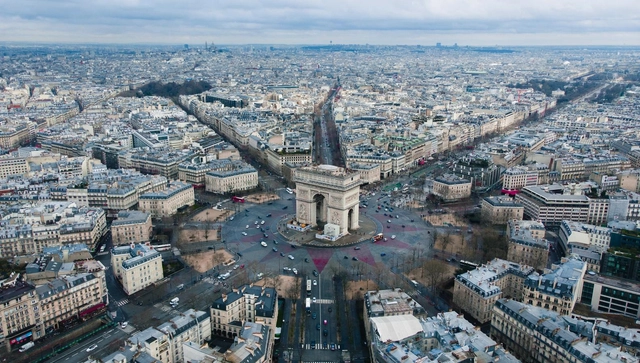
Paris has been making headlines for years with its aggressive steps to anti-car, pro-pedestrian urban improvements. Faced with increasing issues around air pollution and an attempt to reclaim streets for alternate modes of transit, as outlined in their proposed plan for a 15-minute city, the French capital is seen as a leader in future-forward urbanist strategies. Recently, their department of transportation set a deadline for their lofty goals of eliminating traffic from its roads. In just two years from now, in time for the French capital to host the Olympics, Paris plans to ban non-essential traffic from its city center, effectively eliminating around 50% of vehicular mobility. What does this plan look like? And how might other cities use this strategy to eliminate their own urban issues?
With a history that dates all the way back to 1834, manufacturer of luxury cases and safes WOLF knows all about the importance of protecting not only treasured possessions, but legacy, too.
The election of Kéré is not only symbolic in a time of identity demands, where the institutions that make up the mainstream are required to more faithfully represent the social, cultural, and sexual realities that make up our societies, but it also confirms the recent approach of the Pritzker Prize jury.
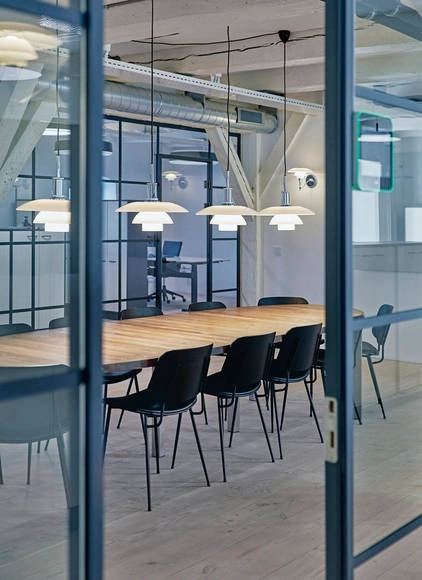
In recent years, there has been an increased focus on indoor lighting, especially in the context of the growing numbers of open-plan offices. In large parts of the world—and especially in Nordic countries—people can spend up to 80-90% of their time indoors. The light we are surrounded by affects both our circadian rhythm and hormones, making our indoor environment and its light an important factor of our well-being. Opinions on the optimal indoor lighting solution—and if one exists at all—are numerous and divided. To gain some more insight into this, the Danish lighting manufacturer Louis Poulsen set out to test the effects of various artificial lighting conditions in their own head office in Copenhagen.
Based in São Paulo, Atelier Marko Brajovic was founded in 2006 by architect Marko Brajovic. With a multidisciplinary practice, the idea of the hybrid manifests itself as the conceptual north of the office that operates on several fronts: architecture, scenography, expography, creative direction, interior and product design. With a vast language that explores different areas, formats and aesthetics, its projects are, above all, recognized for breaking with the modern canon and seeking solutions in nature.
Balconies provide residents with great views while literally and figuratively looking down on the neighbors, but they also offer numerous other advantages.
When we think of healthcare, we think of doctors, nurses, surgeons, radiologists, and anesthesiologists – the people who treat illnesses and save lives.
Yet we often overlook a large group of people who make saving lives possible – medical coding specialists, healthcare service managers, hospital architects and engineers, and others working behind the scenes to deliver positive health outcomes.
Videos
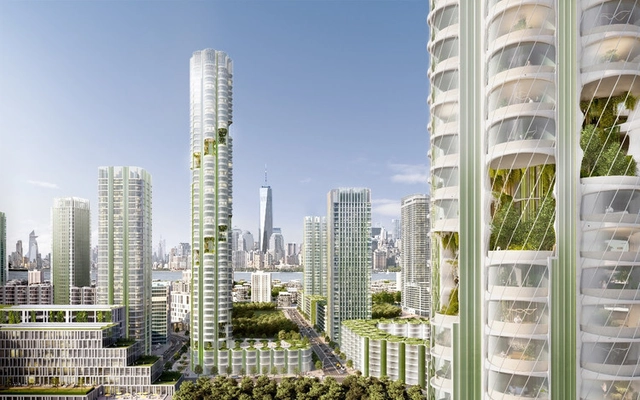
Urban Sequoia Forests of Buildings Isolating Carbon & Producing Biomaterials . Image Courtesy of SOM / Miysis
With the magnitude and urgency of the immediate Covid-19 crisis worldwide, efforts have been concentrated on saving lives, rather than focusing on concerns related to the road to Net-zero carbon. Net Zero carbon in regards to construction is defined as when the amount of carbon emissions associated with the construction of a building and its completion is zero. A zero-energy building will have an overall zero net energy consumption; the total amount of energy used by the building annually is equal to the amount of renewable energy generated on-site.
As the climate emergency presents itself as a severe and existential threat, it is crucial that the road to net-zero carbon is resumed large-scale in both an architectural and commercial sense. Around the globe, efforts have been renewed in an attempt to tackle the almost inconceivable. According to the 2019 global status report for buildings and construction, the buildings and construction sector accounted for 36% of final energy use and process-related carbon emissions in 2018. Although carbon emissions were temporarily reduced during the peak of the pandemic, they are set to swiftly return to previous figures.
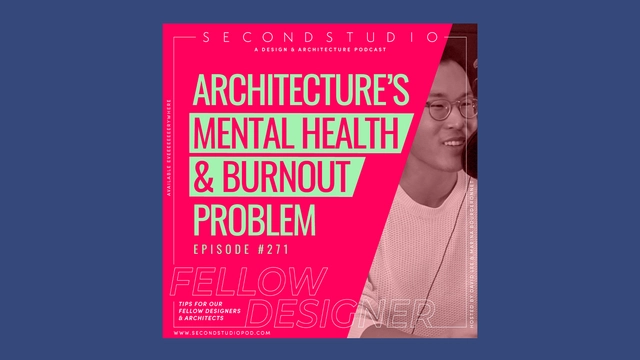
The Second Studio (formerly The Midnight Charette) is an explicit podcast about design, architecture, and the everyday. Hosted by Architects David Lee and Marina Bourderonnet, it features different creative professionals in unscripted conversations that allow for thoughtful takes and personal discussions.
A variety of subjects are covered with honesty and humor: some episodes are interviews, while others are tips for fellow designers, reviews of buildings and other projects, or casual explorations of everyday life and design. The Second Studio is also available on iTunes, Spotify, and YouTube.
This week David and Marina discuss mental health and burnout in architecture, covering how the issue is perceived by different generations, why looking to other colleagues and professions can be helpful but also not helpful, passion as a solution and problem, the inherent complexity of architecture, architects being undervalued, whether or not architecture school should change, the instability of a project-based practice, and the main reasons for poor mental health and burnout exist in architecture and how they can be addressed.
https://www.archdaily.com/978731/the-second-studio-podcast-architectures-mental-health-and-burnout-problemThe Second Studio Podcast
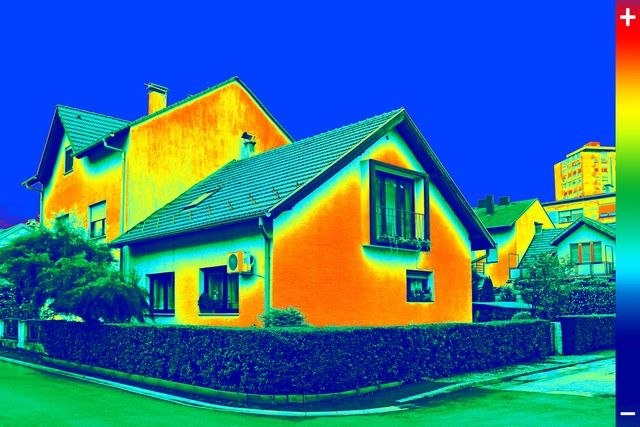
Infrared thermography image showing a home's lack of thermal insulation. Image by Ivan Smuk. Image via Shutterstock
How can we analyze the environmental impact of buildings? What strategies could be developed to improve people's quality of life and achieve a harmonious relationship with the environment? Year after year, more questions are added to the design decision-making process of thousands of architects around the world. They seek to take action and implement policies that improve the environmental performance of their buildings, reducing energy and resource consumption while also lowering greenhouse gas emissions and waste production.
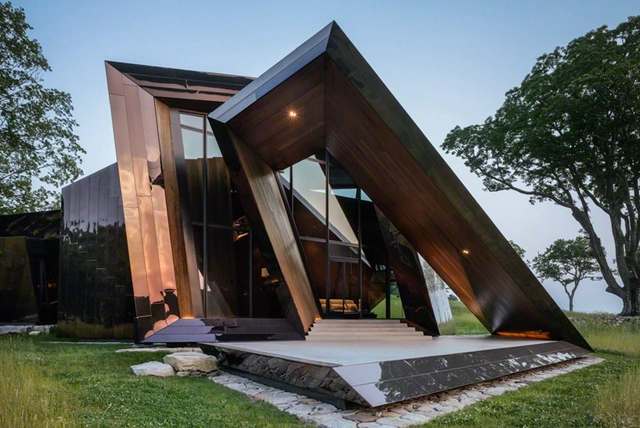
18.36.54 House, Connecticut. Image Courtesy of Nikolas Koenig
Polish-American architect, artist, professor, and set designer, Daniel Libeskind, founder of Studio Libeskind in 1989, believes that buildings are crafted with perceptible human energy, constructed with the intention to address the greater cultural context in which they are built. His commitment to expanding the scope of architecture reflects his profound interest and involvement in philosophy, art, literature, and music.
He addresses the notion of drawings being akin to a score, a piece of music that is interpreted by a like-minded community. Proportions, light, and materiality are all implicated in the drawing, and in this same way, buildings are also called to present space, atmosphere, and illuminate the practice.
For the first time in history, the global urban population has surpassed the rural population. Today, 55% of people live in urban areas, and projections indicate this figure will reach nearly 70% by 2050—an increase of 2.5 billion urban dwellers. This prompts us to ask: what model of urbanization do we want for the coming decades? The answer depends on understanding rising urbanization rates as a challenge not only for cities but also for rural and peri-urban territories, whether productive or natural.
Architecture education was never designed to prepare you for the entrepreneurial side of running a practice. In the minds of the creators that constructed the system which stands for what you now know to be the path to getting licensed, you were never meant to start a business in architecture prematurely. There is a code, a set of rules that drives you to obey and follow a one-sided vision of success.

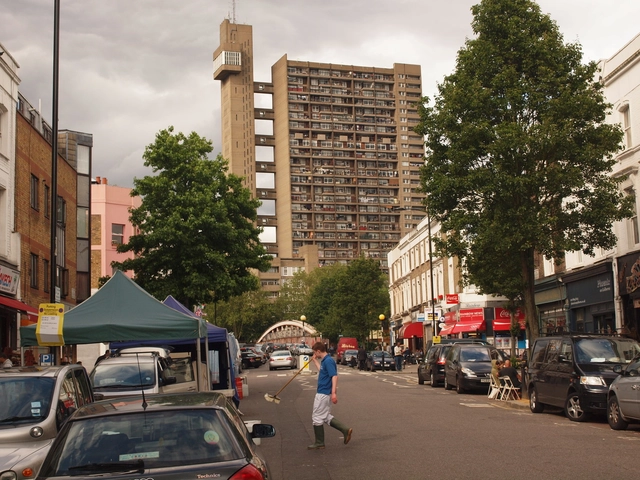








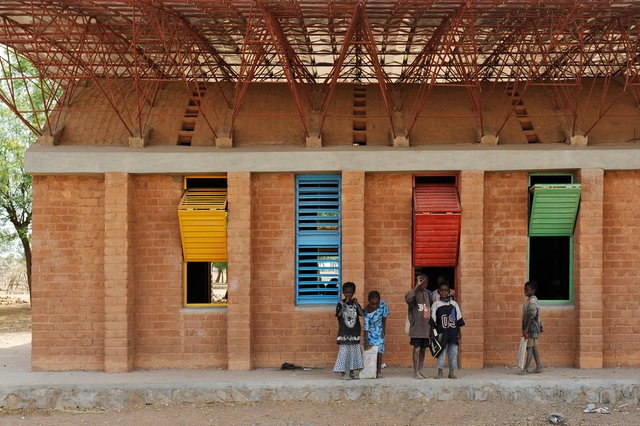


.jpg?1647823485 "Gando Primary School Extension / Kéré Architecture. Image © Erik Jan Ouwerkerk")
.jpg?1647822667 "Serpentine Pavilion / Kéré Architecture. Image")
.jpg?1647822697 "Startup Lions Campus / Kéré Architecture. Image")
.jpg?1647823274)




.jpg?1645559930&format=webp&width=640&height=580)