1. ArchDaily
  2. Articles

Articles

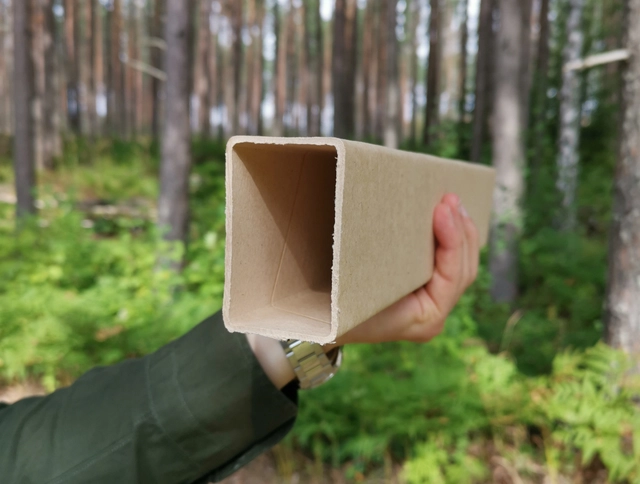
Climate-Smart Studs Made of Paper: Wood Tube

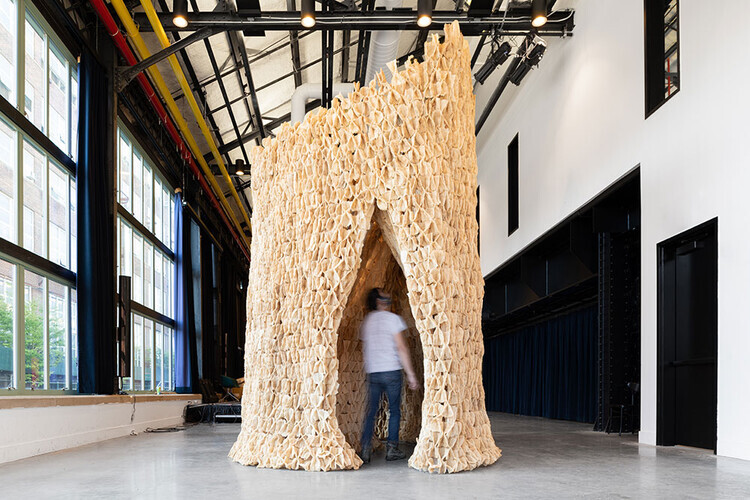
Among the many difficulties that the construction industry currently faces, confronting the climate emergency continues to be one of the main challenges. In fact, considering that the sector is responsible for around 40% of global greenhouse gas emissions, aiming towards net-zero, carbon-neutral architecture should and must be the top priority. Although there is a long way to go for most buildings to cancel out the amount of carbon dioxide they produce, the concept is quickly gaining traction and will certainly become the new norm as we look into the not-too-distant future. As a result, the following question arises: how can architects, designers and other actors involved in the industry contribute to sustainable design and net-zero architecture?
The Use of Artificial Intelligence as a Strategy to Analyse Urban Informality

Subscriber Access | 

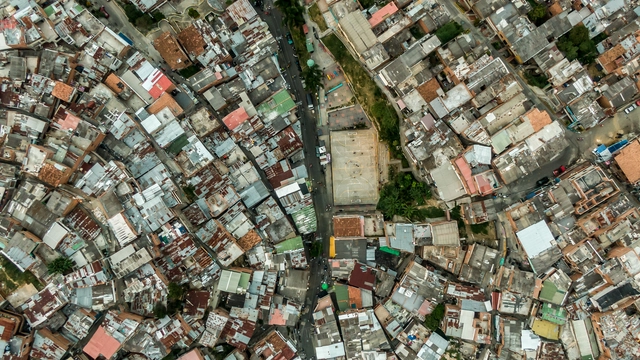
Within the Latin American and Caribbean region, it has been recorded that at least 25% of the population lives in informal settlements. Given that their expansion is one of the major problems afflicting these cities, a project is presented, supported by the IDB, which proposes how new technologies are capable of contributing to the identification and detection of these areas in order to intervene in them and help reduce urban informality.

Handcrafted Elements: Materials and Textures to Enhance Home Environments

Subscriber Access | 

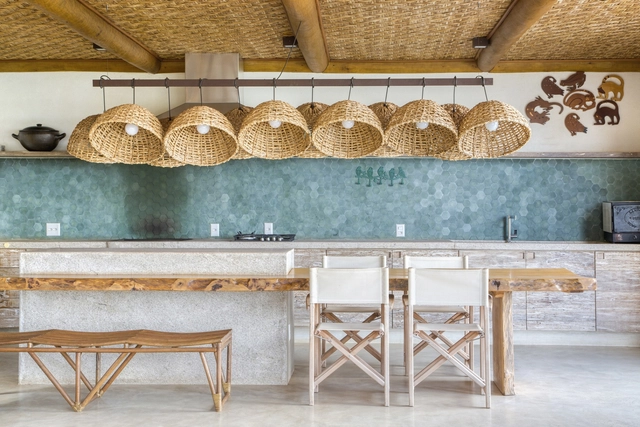
Handicraft translate the culture of a people and, therefore, carry a strong presence when placed in residential spaces. Through the most varied techniques, it represents traditional methods and acts in the memory of each person who crosses it. Therefore, regardless of the scale at which it is presented - from small art objects to large furniture, or even as a component of architecture itself -, thinking about handcrafted elements can be an important step in improving the aesthetic language of a project.

Handcrafted Elements: Materials and Textures to Enhance Home Environments - 1 的图像 4Handcrafted Elements: Materials and Textures to Enhance Home Environments - 2 的图像 4Handcrafted Elements: Materials and Textures to Enhance Home Environments - 3 的图像 4Handcrafted Elements: Materials and Textures to Enhance Home Environments - 4 的图像 4Handcrafted Elements: Materials and Textures to Enhance Home Environments - More Images+ 22

Designing for Community: Ayers Saint Gross on Inclusive Planning and Shared Ownership

Subscriber Access | 

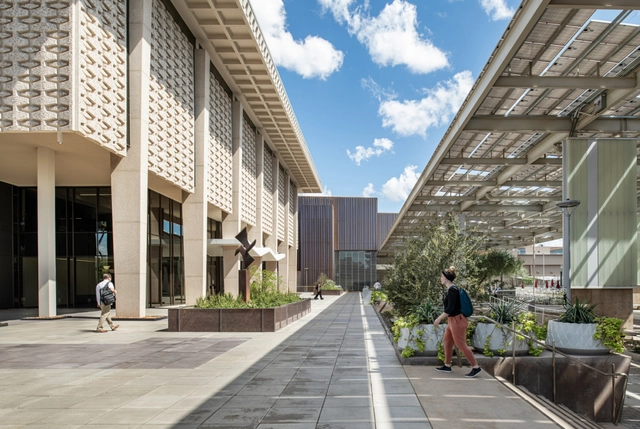
Architecture and planning centers on human experience and bringing people together. Few firms have structured their office around these ideas like Ayers Saint Gross. Founded in 1912, the firm has over a century of experience, including a majority of their work in support of colleges, universities, and cultural facilities. Today, the 185-person firm has offices around the country, including in Baltimore, Washington, D.C., and Tempe, AZ.

Designing for Community: Ayers Saint Gross on Inclusive Planning and Shared Ownership - Image 1 of 4Designing for Community: Ayers Saint Gross on Inclusive Planning and Shared Ownership - Image 2 of 4Designing for Community: Ayers Saint Gross on Inclusive Planning and Shared Ownership - Image 3 of 4Designing for Community: Ayers Saint Gross on Inclusive Planning and Shared Ownership - Image 4 of 4Designing for Community: Ayers Saint Gross on Inclusive Planning and Shared Ownership - More Images+ 17

The City in Space: A Utopia by Ricardo Bofill

Subscriber Access | 

It was 1968 when Ricardo Bofill Architecture Workshop's published a kind of manifesto in reaction to the pressing demands of a society in constant transformation. The idea of the City in Space saw the light of day for the first time and was proclaimed as an absolute architecture, capable of resolving all the complexities of its contemporaneity through a unique open, flexible and three-dimensional model.

The City in Space: A Utopia by Ricardo Bofill - Image 1 of 4The City in Space: A Utopia by Ricardo Bofill - Image 2 of 4The City in Space: A Utopia by Ricardo Bofill - Image 3 of 4The City in Space: A Utopia by Ricardo Bofill - Image 4 of 4The City in Space: A Utopia by Ricardo Bofill - More Images+ 19

How to Bring Walls to Life With Three-Dimensional Solutions

Subscriber Access | 

Statement interiors leave a lasting impression on both frequent and infrequent users, whether with striking pieces of furniture, oversized lighting, or even a bold feature wall. The very best creations, however, don’t need to beg for attention to be recounted afterward, they let praise come to them with a peacocking presence so extravagant, it’s impossible not to take notice.

Sustainability: The Space Debate

In the architectural conversations taking place today, sustainability is a key topic of interest. Architecture firms embrace the term as a key part of their design ethos, and architecture schools globally have integrated designing “green” architecture as a core component of their curriculums. This sustainability conversation has also filtered down into more individual actions one can take within their immediate context. Online, for instance, guides abound on how you can make your home more eco-friendly and energy-efficient.

Sustainability: The Space Debate - Image 1 of 4Sustainability: The Space Debate - Image 2 of 4Sustainability: The Space Debate - Image 3 of 4Sustainability: The Space Debate - Image 4 of 4Sustainability: The Space Debate - More Images+ 11

The Future of Sustainability in Japan: Paving the Way to Net Zero Energy Housing

The tech industry in Japan has continued to serve as a pivotal driving force in Japan, with the whole country being well known for its technological innovations in various industries. As of late, most industries and companies have begun to shift their focus to the topic of sustainable development, with the inclusion of using these very technologies to work towards zero energy goals.

In April 2014, the Japanese government approved an energy policy to encourage Zero Net Energy Houses (ZEH) to become the standard for new house construction by 2030. Zero energy housing is designed to consume as much energy as it can create using renewable energy on-site.

The Future of Sustainability in Japan: Paving the Way to Net Zero Energy Housing - Image 1 of 4The Future of Sustainability in Japan: Paving the Way to Net Zero Energy Housing - Image 2 of 4The Future of Sustainability in Japan: Paving the Way to Net Zero Energy Housing - Image 3 of 4The Future of Sustainability in Japan: Paving the Way to Net Zero Energy Housing - Image 4 of 4The Future of Sustainability in Japan: Paving the Way to Net Zero Energy Housing - More Images+ 18

Building of the Year 2022: The award for the best architecture in Spanish

Subscriber Access | 

This year we celebrate the fourteenth edition of the Obra del Año 2022 award—the highest recognition in the Spanish-speaking architectural world, where the winners are chosen by popular vote. Starting today, Tuesday, March 8, our readers will be responsible for determining which projects inspired us during 2021, faithfully representing the identity of our local contexts while shaping the way architecture is practiced around the world.

Over the next three weeks, the entire ArchDaily en Español network (Plataforma Arquitectura, ArchDaily México, ArchDaily Colombia and ArchDaily Perú) will serve as the platform to celebrate the best built architecture in Spanish-speaking America and Spain.

With nearly a thousand projects published in 2021, you can easily find your favorites by browsing through each category and using the search engine to filter projects by country and architecture firm. 

The 2022 Obra del Año Award is brought to you by Dornbracht, renowned for its design leadership in architecture, which can be found internationally in bathrooms and kitchens.


How Can Data and AI Improve the Health of Our Cities?

Subscriber Access | 

Artificial intelligence systems endeavor to replicate or mimic human intelligence by combining datasets with iterative processing algorithms to learn from patterns and experience. From Siri, Alexa and other smart assistants to conversational bots and email spam filters, what once seemed like a technology pulled from science fiction has become ubiquitous in our daily lives.

Sustainable urban development in the UN 2030 Agenda

Subscriber Access | 

In its most widely accepted definition, sustainable development is understood as meeting the needs of the present generation without compromising the ability of future generations to meet their own. While often associated with environmental and natural resource issues, sustainable development goes further, encompassing social and economic aspects such as justice, inclusion, and poverty eradication.

Compact Bigness: How Safdie Architects Realize Megaprojects Without a Mega Office

Subscriber Access | 

Safdie Architects is a research-oriented architecture and urban design studio active in a wide variety of project types, scales, and sectors. Safdie Architects’ global practice is directed from its headquarters in Boston, Massachusetts, with satellite offices in Jerusalem, Shanghai, and Singapore. Projects are designed, managed, and executed by a global team that hovers around 65 people! The practice is organized as a partnership and operates in the model of an intimate design studio environment. The firm's partners – many of whom joined Safdie shortly after graduation – have been working together for decades.

Tainá de Paula talks about the body, territorialities, and the non-city

Subscriber Access | 

The postgraduate course Cidades em Disputa – pesquisa, história e processos sociais, at Escola da Cidade, hosted Tainá de Paula, who delivered the open lecture “Body and Territorialities: The Necessary Debate on the Non-City.” Raised in one of the favelas of Praça Seca, in the West Zone of Rio de Janeiro, the architect and urban planner defines herself as a Black woman, mother, and activist for urban struggles, particularly in the peripheries and favelas. During her talk, Tainá—who has also served as a city councilor since 2020—discussed subalternized territories and the “non-city,” which excludes and segregates, while stressing the urgent need to build an agenda to break away from these conditions through racial, class, and gender emancipation.

Biotechnology and Green Tech: A New Material World for Sustainable Architecture

Subscriber Access | 
Biotechnology and Green Tech: A New Material World for Sustainable Architecture - Featured Image
Courtesy of The Living. ImageAlive: A New Spatial Contract for Multispecies Architecture by The Living

Advances in biotechnology and material science are opening new material opportunities, with the potential of fundamentally changing the connection between the built environment and the natural world. Building materials and construction account for 11% of greenhouse gas emissions. The AEC industry can contribute to curbing climate change in the following years, and the re-evaluation of commonplace building materials is one of the most critical steps. Bioengineered materials, which grow, produce energy, self-heal, are the next frontier in biology and material science and potentially a path towards a new kind of architecture. Although innovation in these fields is still far away from mainstream commercial use, it promises to dramatically change the image of the built environment.

Biotechnology and Green Tech: A New Material World for Sustainable Architecture - Image 1 of 4Biotechnology and Green Tech: A New Material World for Sustainable Architecture - Image 2 of 4Biotechnology and Green Tech: A New Material World for Sustainable Architecture - Image 3 of 4Biotechnology and Green Tech: A New Material World for Sustainable Architecture - Image 4 of 4Biotechnology and Green Tech: A New Material World for Sustainable Architecture - More Images

5 Regenerative Strategies to Activate the Dead Edges in our Cities Post-Pandemic

Subscriber Access | 

As the city continues to evolve and transform, dead edges in the cityscape begin to emerge, subsequently reducing the level of activity in our built environment. These 'dead edges' refer to the areas that lack active engagement, they remain empty and deprived of people, since they no longer present themselves as useful or appealing. As the Covid-19 pandemic draws to an ultimate close, the first issue we may face post-pandemic is to revive our urban environment. A kiss of life into a tired and outdated cityscape...

The focal element in creating an active and healthy urban environment is by increasing vitality through placemaking. Creating diverse and interesting places to reside, thrive, and work. Here are five regenerative strategies that animate the cityscape and ultimately produce resilient, attractive, and flexible environments.

5 Regenerative Strategies to Activate the Dead Edges in our Cities Post-Pandemic  - Image 1 of 45 Regenerative Strategies to Activate the Dead Edges in our Cities Post-Pandemic  - Image 2 of 45 Regenerative Strategies to Activate the Dead Edges in our Cities Post-Pandemic  - Image 3 of 45 Regenerative Strategies to Activate the Dead Edges in our Cities Post-Pandemic  - Image 4 of 45 Regenerative Strategies to Activate the Dead Edges in our Cities Post-Pandemic  - More Images+ 13

In Praise of 5-Over-1 Buildings

Subscriber Access | 
In Praise of 5-Over-1 Buildings - Featured Image
Titan Court, Eugene, OR., photo by Christian Columbres Photography, courtesy of Robertson/Sherwood/Architects pc.

This article was originally published on Common Edge.

Although it was originally published in 2019, this essay by Randy Nishimura, lightly updated, serves as a rebuttal of sorts to Duo Dickinson’s recent Common Edge piece, “The Architectural Pandemic of the ‘Stick Frame Over Podium’ Building.” Dickinson likens the building type to a plague; Nishimura offers a contrarian’s perspective.

A recent spate of articles bemoaning the proliferation of 5-over-1 apartment buildings caught my attention. Outlets such as Bloomberg, Common Edge, Crosscut, and Curbed have all commented on the building type, the common thread being a reproach for their ubiquity, sameness, and inexpensive construction. Some of the critiques rightfully point to the confluence of multiple factors—evolving building codes, a lack of developable land, rising construction costs, and an acute lack of affordable housing—that have given rise to countless examples of the type across the country. The same dynamics are in play here in my hometown of Eugene, Oregon, so we naturally have our share of 5-over-1 developments.

It's time to democratize architectural knowledge (according to our readers)

Subscriber Access | 

"I'm an architect... now what?" must be one of the most common questions for any recent graduate with an architecture degree in hand. Over the years, many will find jobs in different industries that do not necessarily involve working in an office designing and constructing buildings.

"Childhood in Brazil is urban": Ursula Troncoso talks about the city, children, and mobility

Subscriber Access | 

Escola da Cidade, through the Architecture, Education, and Society and Mobility and Contemporary City courses of its Graduate Program, in partnership with the Alana Institute's Child and Nature program, invited Ursula Troncoso to deliver two lectures. Aiming to foster an agenda for creating greener, more accessible, and child-friendly cities that places childhood at the center of the urban debate, the initiative recognizes the need to build a collaborative network between universities, public officials, and civil society to promote actions centered on urban innovation, quality of life, sustainability, and well-being for both children and the planet.