This guide covers a workflow that moves from project parameters to generated floor plans, 3D perspective views, exterior design exploration, and site context visualization, using AI tools in place of preliminary CAD and rendering work.
This guide covers a workflow that moves from project parameters to generated floor plans, 3D perspective views, exterior design exploration, and site context visualization, using AI tools in place of preliminary CAD and rendering work.
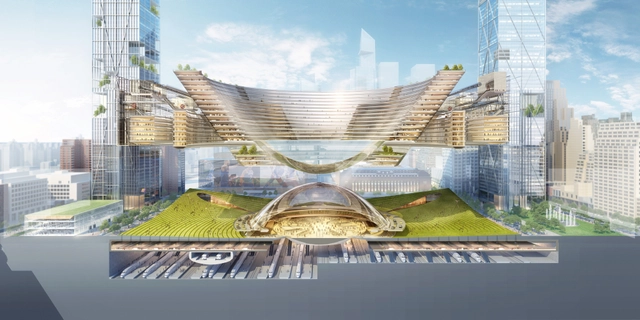
This morning, four architectural firms, invited by the Metropolitan Art Society(MAS), displayed how they would transform New York's darkest & dingiest hub - Penn Station - into a space worthy of its site in the heart of the city.
New Yorkers have been up in arms about Penn Station ever since its Beaux-Arts predecessor, designed by McKim, Mead & White, was demolished in 1963. Its replacement is a dark, cramped station that lacks both the operational and security features it needs to sustain the hundreds of thousands of travelers who use it daily. As Michael Kimmelman put it in his inaugural piece as architecture editor for The New York Times: "To pass through Grand Central Terminal, one of New York’s exalted public spaces, is an ennobling experience, a gift. To commute via the bowels of Penn Station, just a few blocks away, is a humiliation."
As we reported last month,Madison Square Garden’s (MSG) 50-year permit expires this year, and it will be either renewed without limit, or extended 10-15 years, by The New York City Council in the coming months. The problem, according to MAS, is that "MSG happens to sit on top of the busiest train station in North America [a.k.a, Penn Station] and constrains its ability to serve over half a million people every day. [...] 2013 presents New York City with a truly unique opportunity and together we need to seize this moment."
And so MAS invited Diller, Sofidio, & Renfro; H3 Hardy Collaboration Architecture; SHoP; Skidmore, Owings, & Merrill, to do just that. See their visions, after the break...

In an effort to address the changing priorities of sustainable development, a group of international scientists at the UN identified six goals that achieve a holistic view of the development and nourishment Earth's life support systems. The Sustainable Development Goals (SDG) were launched with the intention of addressing problems of environmental sustainability as it pertains to poverty eradication, citing that these two problems need to be addressed in unison as they will "increasingly become serious barriers to further human development", says Professor David Griggs of Monash University (AU) according to the International Council of Scientists.
More after the break.
As cited by the research of scientists at the UN and supported by the International Council of Scientists, current trends indicate that humans are altering the natural balances that exist in the atmosphere, oceans, waterways, forests, ice sheets and biodiversity. These changes undermine the stability of Earth systems that allow for continued human development. Climate scientists have already made it clear that changes in the atmosphere have contributed to the unpredictable and severe weather systems that have caused damage all over the world. These scenarios are escalating in their damage and their frequency thereby uprooting stable cities and making future development more challenging.

Which cities are embracing the green revolution? This infographic compares the efforts of six leading cities - New York, Vancouver, Copenhagen, London, Amsterdam and Stockholm - in the race to drastically reduce global C02 emissions. Based predominantly on 2009 statistics, Stockholm seems to be leading the way in carbon reduction. Continue reading after the break to see who claims the blue ribbon for renewable energy, efficient water consumption and rigorous recycling.

Recovery efforts are underway in the Oklahoma City suburb of Moore after a deadly, 1.3-mile-wide tornado carved a 20-mile-long swath of destruction through neighborhoods and schools on Monday afternoon. With winds up to 210 miles per hour and a death count that currently stands at 24, President Obama has declared this tornado to be “one of the most destructive in history,” ranking it at a Category 5.
In an effort to help, Architecture for Humanity and the American Institute of Architects (AIA) have mobilized their teams to provide instant assistance and aid in long term reconstruction efforts. Although professional design and construction volunteers from both organizations are already on the ground, the community needs your help. Find out how you can help the residents of Moore after the break.

Among the extensive discussion of Feilden Clegg Bradley's scheme to redesign the Southbank Centre in London, one issue which has sometimes been ignored by the architectural media has been the proposal to relocate the skate park in the under-croft of the Queen Elizabeth Hall to a space beneath the nearby Hungerford bridge.
Unsurprisingly, this decision has sparked a petition which has collected nearly 40,000 signatures to save one of the UK's most famous skating hotspots. We’ve talked about how skaters can teach architects about understanding space before; however, in this instance I would like to examine how skaters as a (sub)cultural entity interact with the city, and how the city can cater to their needs. Though many architects are already in favor of accepting skaters, I hope to explore why the wider community tends to see skating as a problem to be solved, and what this can reveal about the proposal at the Southbank Centre.
Read on to find out more about the peculiar way skaters experience cities
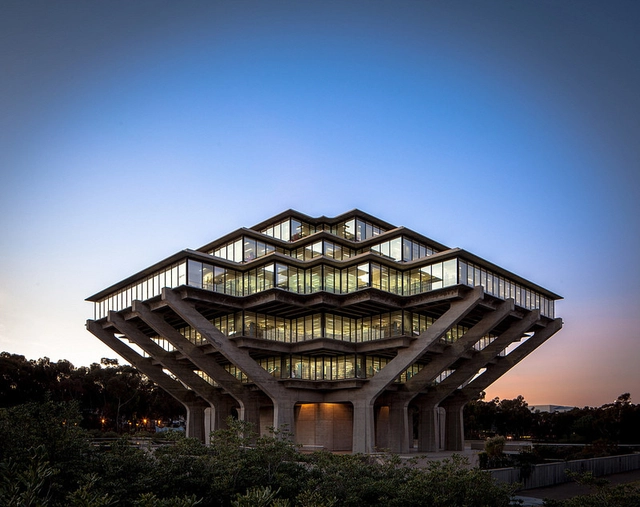
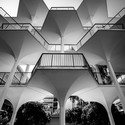
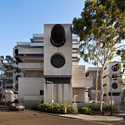
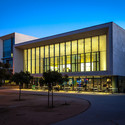
At just a little over 50 years old, the University of California San Diego is one of the younger college campuses in the United States, but despite this it is one of the most architecturally fascinating universities around. In the official UCSD campus guide, Dirk Sutro emphasizes that "UCSD does not have a single example of the historical-revival styles prevalent at other University of California campuses... and at San Diego's two other major universities". The history of UCSD architecture is one of ambition, which has made the campus a display case of modernism in all of its forms from the last half a century.
Thanks to photographer Darren Bradley, we can now share this history and a selection of the exciting structures it has produced.
Find out more about the UCSD campus after the break
August Kekulé discovered the structure of the benzene ring after having a daydream of the Ouroboros, a famous mythological snake depicted as biting its own tail. Francis Crick figured out the complimentary replication system of DNA when he remembered the process of replicating a sculpture by making an impression of it in plaster, and using it as a mold to make copies. Johannes Keppler attributes his laws of planetary motion to an inspiration from religion: the sun, the stars, and the dark space around them represent the Father, Son, and Holy Ghost respectively.
What’s the point? According to Arthur Koestler, “all decisive events in the history of scientific thought can be described in terms of mental cross-fertilization between different disciplines.” Great discoveries arise not from the isolated hermit working without interference, but from tireless work enlightened by unintentional collisions with an unfamiliar subject. For Kekulé, it was ancient mythology, for Crick, sculpture, and for Keppler, religion.
Creativity and innovation, then, thrive where disciplines collide. And this is true not only for science, but for all subjects. We all have something to learn from one another, and what better place to encourage this cross-fertilization than school?
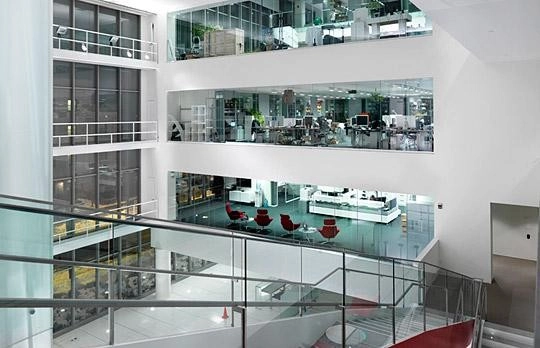
Keep reading to find out more about how interdisciplinary architecture can foster creativity and collaboration in schools…
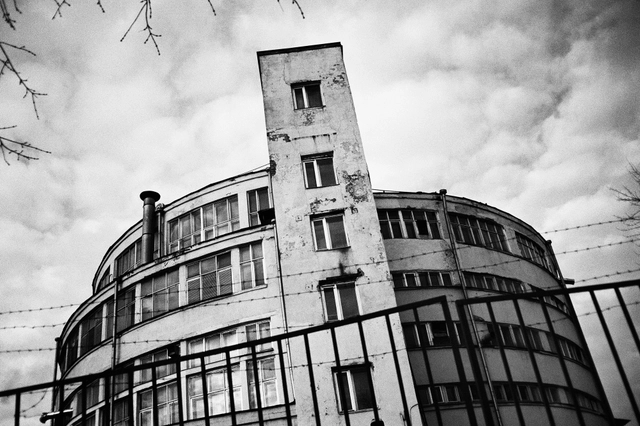
In Russia, hundreds upon hundreds of buildings are endangered. The work of making sure they don't become extinct? That's in the hands of a tireless few.
One of these crusaders is Natalia Melikova, the author of The Constructivist Project, an on-line web site that seeks to preserve the memory - and hopefully inspire the protection of - Russia's avant-garde architecture. Although it began as her thesis project, it's steadily become one of her life passions. In Melikova's words, "By sharing photographs (my own and others), articles, events, exhibitions, and other resources on the topic of the avant-garde, The Constructivist Project unites common interest and appreciation of Russian art and history and makes it accessible to an international English-speaking audience. This is a way to initiate discussion not only of the perilous situation of Russian avant-garde architecture but also of cultural preservation and urban development in general."
See 10 of Melikova's images, snapshots into a part of Russian history quickly being forgotten, with her descriptions, after the break.

“We don’t live in nature any more – we put boxes around it. But now we can actually engineer nature to sustain our needs. All we have to do is design the code and it will self-create. Our visions today – if we can encapsulate them in a seed – [will] grow to actually fulfill that vision." - Andrew Hessel in a recent ArchDaily interview
"Engineering nature to sustain our needs" is exactly what the Glowing Plant Project aims to do. Synthetic biologist Omri Amirav-Drory, plant scientist Kyle Taylor and project leader Antony Evans are working together to engineer "a glow-in-the-dark plant using synthetic biology techniques that could possibly replace traditional lighting" - and perhaps even create glow-in-the-dark trees that would supplant (pun intended) the common street light.
How is this possible? Read on to find out.
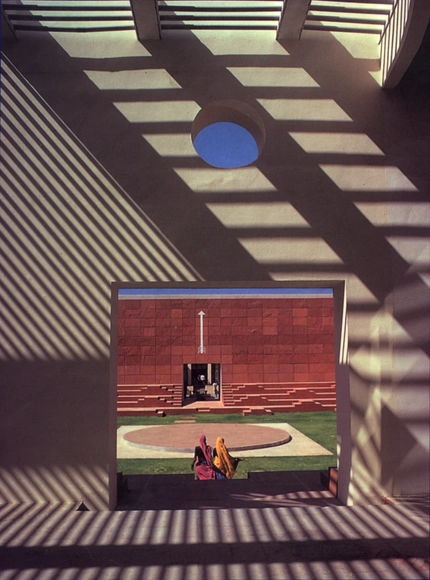
The Royal Institute of British Architects (RIBA) presents the first major UK exhibition showcasing the work of renowned Indian architect Charles Correa (born in 1930). Rooted both in modernism and the rich traditions of people, place and climate, Correa has played a pivotal role in the creation of an architecture and urbanism for post-war India. He has designed some of the most outstanding buildings in India and has received many of the world’s most important architecture awards including the RIBA Royal Gold Medal (1984), Aga Khan Award for Architecture (1988) and Japan’s Praemium Imperiale (1994), and is still working today.
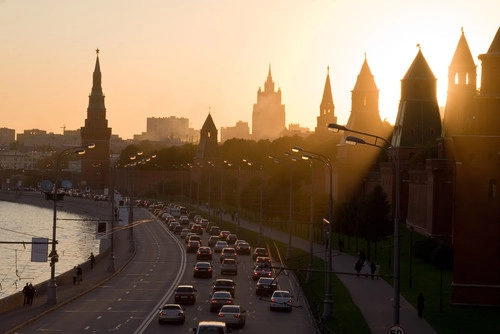
Russia has madly, passionately (and not a little blindly) fallen in love. And, as with any love affair worth its salt, this one will have its fair share of consequences when the honeymoon ends.
The object of Russia’s affection? The good, old-fashioned automobile.
It started fast and has only gotten faster. In 2005, Russia’s auto industry grew 14%; in 2006, 36%; and, in 2007, a whopping 67% - an exponential growth that attracted foreign investors, particularly after 2009, when the country welcomed companies like GM & Ford with open arms. Today, the ninth largest economy in the world is the seventh-largest car market, positioned to surpass Germany as the largest in Europe by 2014.
Nowhere is this love affair more evident, more woven into the city itself, than in Moscow. The city has a reputation (perhaps rivaled only by Beijing’s) for traffic, pollution, and downright hostility to pedestrians. And, ironically, because of its epic congestion, the city continues to expand its highways and parking spaces.
We’ve heard that story before, and we know how it ends - for that matter, so does Moscow. But passion, by nature, is blind - and stopping a love affair in its tracks is far from easy.

Jane Jacobs revered the West Village. It was a bustling neighborhood enlivened by its social, spatial, and functional diversity. It had different building types and functions, which meant that people were always in places for different purposes; it had short blocks, which have the greatest variety of foot traffic. It had plenty of old buildings with low rent which “permit individualized and creative uses;” and, most importantly, it had all different kinds of people. As a result, West Villagers could establish casual and informal relationships with people that they might not have had the opportunity to otherwise.
Without these necessary characteristics, Jacobs felt “there is no public acquaintanceship, no foundation of public trust, no cross-connections with the necessary people – and no practice or ease in applying the most ordinary techniques of city public life at lowly levels.”
By simply changing a few words, it’s not hard to imagine Jacobs’ writing describing offices instead of cities. Buildings are different internal spaces, like individual offices or gathering spaces; desks are homes; sidewalks are hallways or circulation space; etc.
If the office is a small microcosmic city, then suburbia is the cubicle-strewn office, and Google might be the West Village. And ‘people analytics,’ the statistical and spatial analysis of interpersonal interaction, is the office’s urban planning.
To find out what creative work environments can learn from the composition of cities, keep reading after the break...

Now in its 14th year, the Cooper-Hewitt National Design Museum Design Awards recognizing outstanding achievement across a variety of disciplines in the design community. The awards were established to "promote design as a vital humanistic tool in shaping the world". This year the recipients will be honored at a gala in October during National Design Week in New York City. The goal of recognizing this achievements is to reinforce the idea that "everything around us is designed" and the potential for innovation and creation is present across all types of development. The winners of this year's design awards were selected based on excellence, innovation and public impact.
Join us after the break for a look at the 2013 Winners.
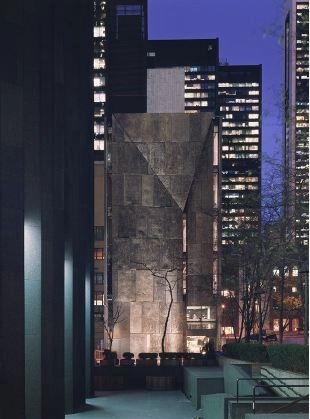
The Museum of Modern Art has commissioned Diller Scofidio + Renfro (DS+R) to design its controversial expansion that will overtake the former American Folk Art Museum in New York. This news comes after an intense backlash from prominent architects, preservationists and critics worldwide pressured MoMA to reconsider its decision to raze the iconic, Tod Williams and Billie Tsien-design museum in order to make way for its new expansion.
In response, DS+R has requested that MoMA gives them the “time and latitude to carefully consider the entirety of the site, including the former American Folk Art Museum building, in devising an architectural solution to the inherent challenges of the project,” as stated by Glenn D. Lowry, MoMA’s director, in a memo sent on Thursday to his trustees and staff. He added, “We readily agreed to consider a range of options, and look forward to seeing their results.”
More on the DS+R’s commission and the fate of the Folk Museum after the break...

Merete Ahnfeldt-Mollerup is associate Professor at The Royal Danish Academy of Fine Arts. This article originally appeared on GRASP.
This is where one has to quote William Gibson:”The future is already here — it’s just not very evenly distributed.”
Within architecture (and design and planning), there are always several simultaneous realities. One very pragmatic reason is that architecture is a very slow form of communication: it may take several decades from the moment a concept arises somewhere to the point where it becomes mainstream knowledge within the industry, and then even more time before it reaches the general public.
Take the “Modern Movement” in architecture. Basically, its theories and formal language were fully developed from 1919 through 1924. And when we read the history books, we get this distorted version that the great modernist pioneers were only stopped by the evil dictatorships in the Soviet Union and Germany. This is as far from the reality of the era as it can possibly be.
Keep reading Ahnfeldt-Mollerup's crash course to architecture, after the break...

Adrian Smith and Gordon Gill Architecture has unveiled a competition-winning prototype in which they hope will become Mumbai’s tallest skyscraper. Standing 400-meters about the crowded city streets, the 116-story Imperial Tower’s curvilinear form is aerodynamically shaped to “confuse the wind.” Its 132 “spacious and luxurious” residential units are punctuated by north- and south-facing sky gardens, which break up wind currents around the tower and provide unprecedented access to natural light and views of the Arabian sea.

Anders Møller is the co-founder of GRASP Magazine, where this article was originally published.
What has the internationally awarded Bjarke Ingels Group (BIG) to do with Friederich Nietzsche and Charles Darwin? Quite a lot, according to founder Bjarke Ingels, who has created a powerful mixture of Nietzsche and Darwin as the philosophical foundation of BIG’s architecture.
Read Anders Møller's fascinating article on BIG's unusual philosophy, after the break...