

-
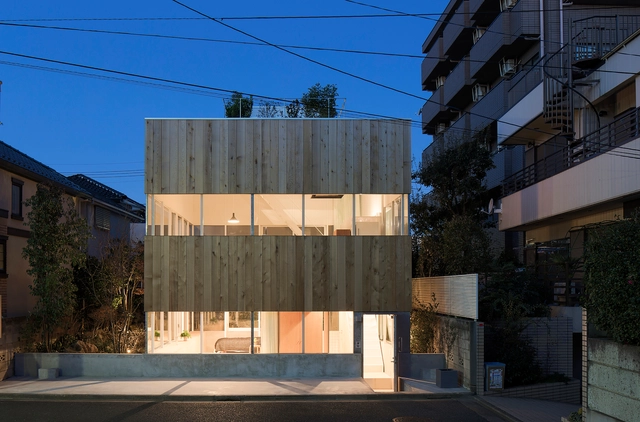
Architects: G architects studio
- Area: 60 m²
- Year: 2017
-
Manufacturers: Grohe, Catalano, Jimbo



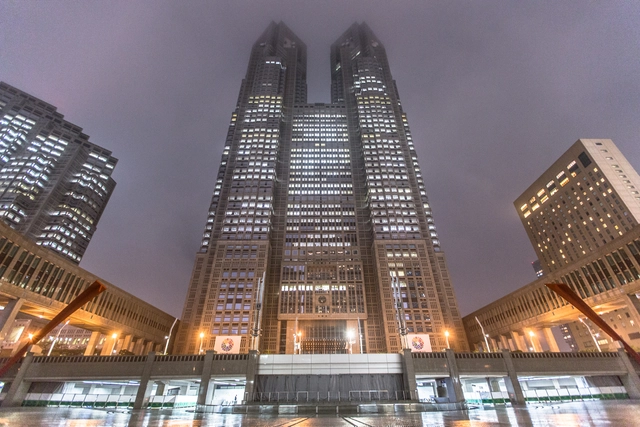
The career of Japanese architect Kenzō Tange features a curious anomaly: he received the same commission twice. In 1952, during the early stages of his career, Tange designed an administrative building in Yūrakuchō, Tokyo, for the city's metropolitan government. Over thirty years later, when the government relocated to Shinjuku, Tokyo, he again won the commission to design its administrative building. Completed in 1991, this would be one of his last, and most ambitious, projects. The second incarnation now dominates the city’s skyline, its highly distinctive design guaranteeing it landmark status. Nicknamed Tochō (an abbreviation of its Japanese name Tōkyō-to Chōsha), its architectural references to both tradition and modernity act as a visual metaphor for the eclectic city over which its inhabitants govern.
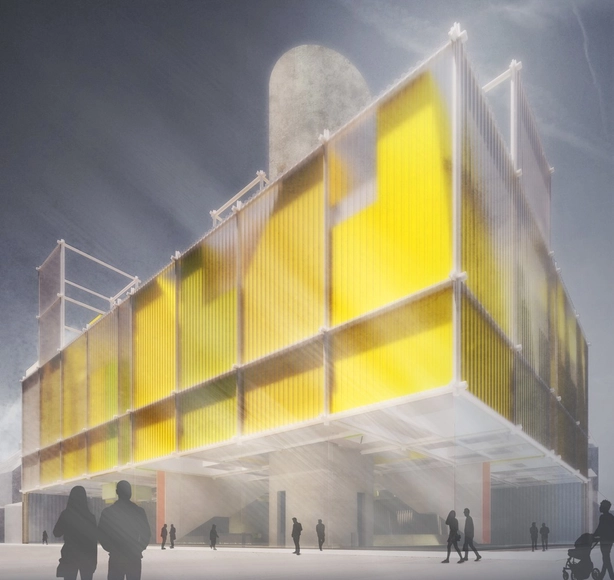
The team of Peter Bus, Tomas Vlasak, Vaclav Petrus, and Petr Bouril has received an honorable mention for their proposal for the Tokyo Pop Lab Competition, which recently announced its winners. The proposal, entitled "At The Crossroads of Ideas," is designed as a “three-dimensional representation of history and development of pop culture.”
Separated into three parts, one below ground, one above ground, and one in-between, the design is interconnected via cylindrical concrete towers, which act as the main structural support of the building.
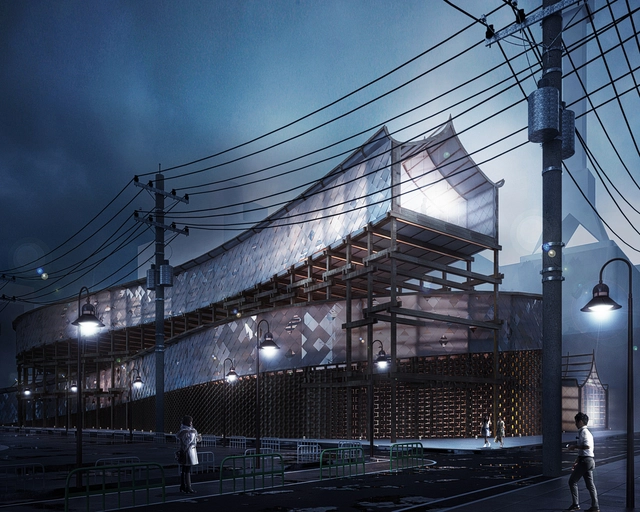
SO/AP Architectes has released its proposal for the Tokyo Pop Lab competition, which recently announced its winners. Based on the duality of environmental vulnerability and the omnipresence of numeric technology, the 3,500 square meter design focuses on the battle between mankind and nature.

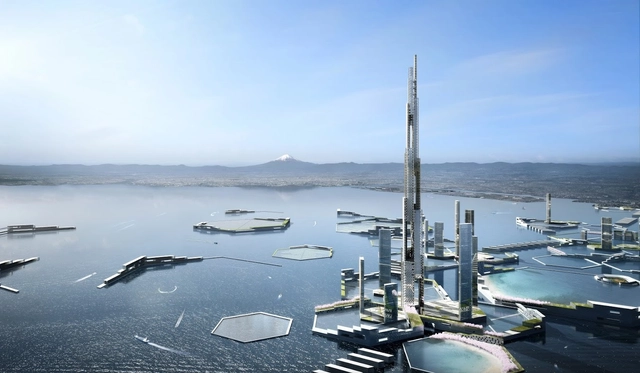
Kohn Pedersen Fox Associates and Leslie E. Robertson Associates have joined forces to propose a vision for a new city in Tokyo Bay. “Next Tokyo” imagines a mega-city that is adapted to climate change in the year 2045. Rising sea levels, seismic activity, and the threat of typhoons have drawn attention to the vulnerability of low-elevation coastal zones in the bay. This design proposes a development strategy that improves the bay’s preparedness for these natural disasters, while also creating a mile-high residential tower and a new transit-oriented district.