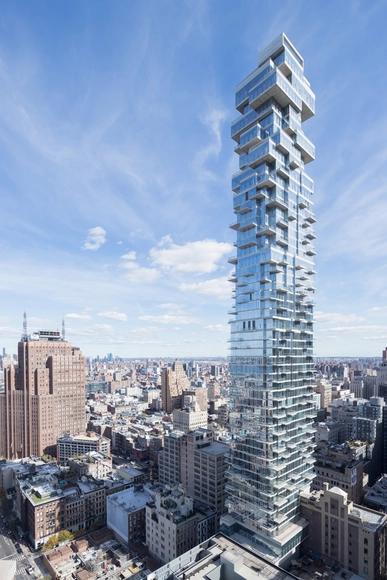
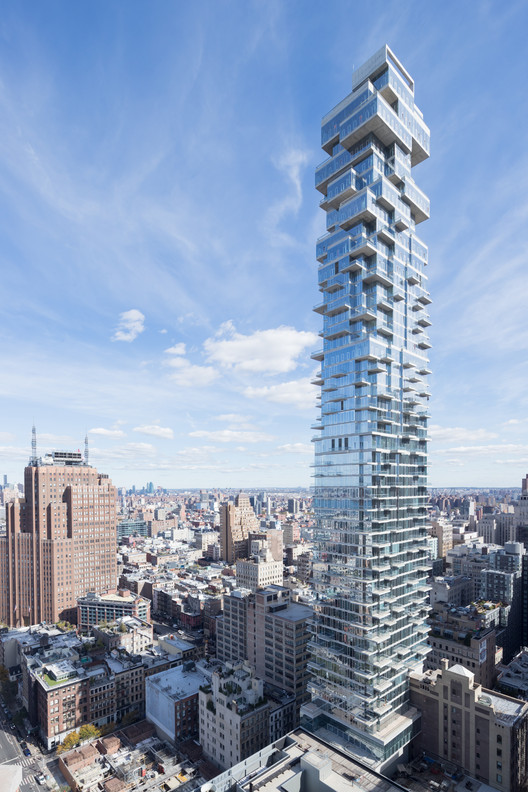
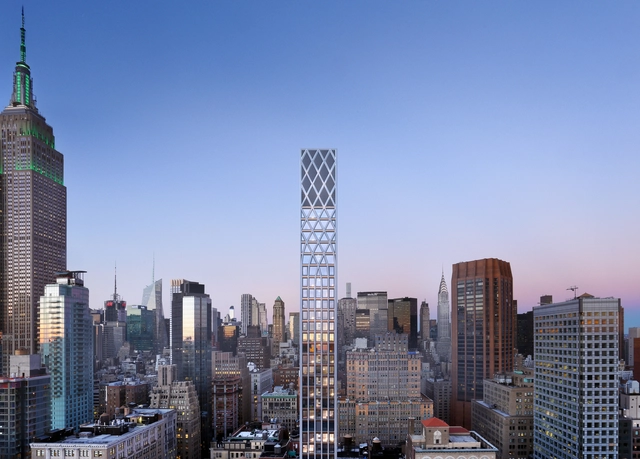
New York City’s latest full-floor luxury apartments are officially for sale in Morris Adjmi Architects’ first ever residential tower, 30 E 31. At 500 feet tall and 40 stories, this building will feature 42 one- and two-bedroom homes with a duplex penthouse—with prices ranging anywhere from $1.65 to $12 mil. Located in Manhattan’s NoMad neighborhood, the building's design draws from its Gothic context. On the facade, 6 columns emphasize the skyscraper's verticality and at the top of the building turn into a diagrid pattern reminiscent of a barrel-vaulted ceiling.
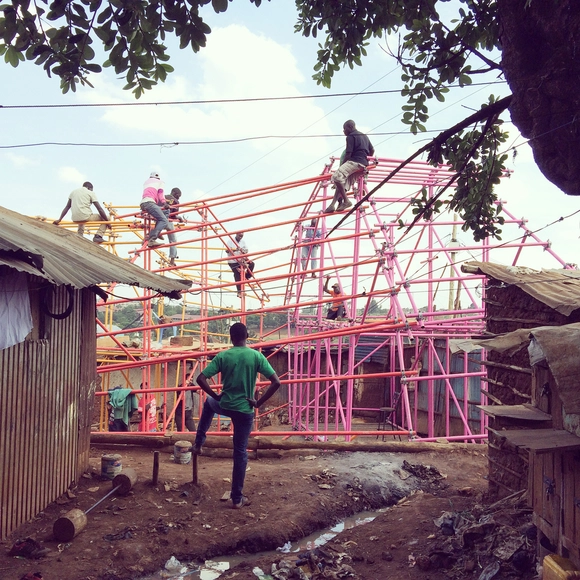
Image: Kibera Hamlets School by SelgasCano, Helloeverything, and studio.14, photo credit: helloeverything
Scaffolding curated by Greg Barton, examines the extraordinary applications of scaffolding as a kit-of-parts technology to provide novel forms of inhabitation and access. Through an installation designed by Shohei Shigematsu and OMA New York with graphic design by MTWTF, Scaffolding will disrupt the architectural space of the Center for Architecture, instilling a new appreciation of scaffolding and its transformative potential.
Of particular interest to our local New York City audience, scaffolding is a flexible and accessible system hiding in plain sight. Despite its indispensable link to architecture, scaffolding is too often maligned as a necessary nuisance. The exhibition demonstrates how this
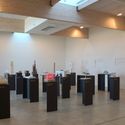
Architecture Exhibition5x5 Participatory Provocations opened its doors at the New York Center for Architecture on July 11, featuring 25 models by 25 young American architecture firms. The exhibition engages its participants to take clear stances on a series of provocative issues facing architecture today, with their models “producing a physical expression or provocation that is then made available to the public.” Curated by Kevin Erickson, Julia van den Hout, and Kyle May, the exhibition argues for “participatory criticism” covering growing income gaps, immigration, globalization, technology’s impact on our lives, surveillance, and power.
Four teams have been selected as finalists in the “Driverless Future Challenge.” Organized by Blank Space with the City of New York and NY Tech Meetup, the competition asked teams to envision future strategies for implementation of autonomous transit in New York City.
Participants were tasked with evaluating the future of autonomous transportation through the four principles outlined by Mayor Bill de Blasio’s OneNYC initiative:
Equity - Making sure all citizens benefit from autonomous technology, focusing on accessibility, focusing on transit deserts, creating new jobs.
Sustainability - Reduce need for parking, curbing emissions, increase carpooling, introducing micro-transit, new green spaces and bike lanes, renewable energy sources.
Resilience - A more durable and safer transit system, reducing drunk driving, “Vision Zero,” pedestrian-first, faster emergency services.
Entries were received from more than 25 countries, proposing ideas for everything from driverless food carts and a fully-autonomous MTA transit system, to enhanced use of NYC’s 311 system as a driverless dispatching center, to Link NYC Wifi stations that become stops for autonomous micro-buses. The four finalist teams were selected by a multidisciplinary jury featuring top architects including Jeffrey Inaba (Inaba Williams), Odile Decq (Studio Odile Decq) and Jürgen Mayer H. (J. MAYER H.).
Momoyo Kajima, co-founder of Atelier Bow-Wow. Photo courtesy of Atelier Bow-Wow.
“I came to the conclusion that recovery from Great East Japan Earthquake should be compared to Japan’s recovery from the World War II.” —Yoshiharu Tsukamoto, Co-founder, Atelier Bow-Wow and member of ArchiAid
Architects Momoyo Kaijima and Yoshiharu Tsukamoto, co-founders of the highly regarded architectural firm Atelier Bow-Wow in Tokyo, discuss the architect's role in post-disaster revitalization, and their findings from their work in Tohoku for the last six years.
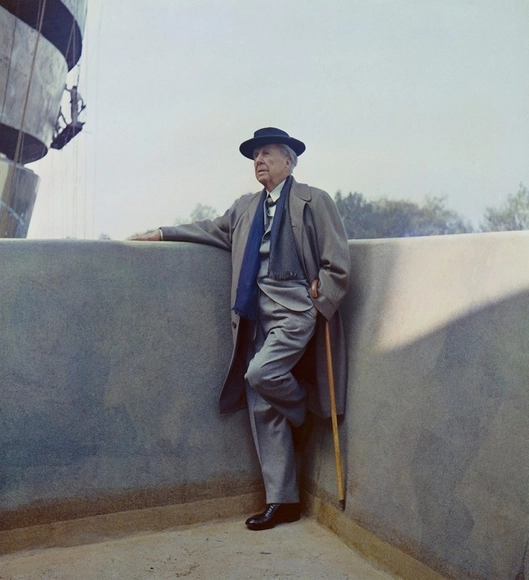
The Guggenheim celebrates Frank Lloyd Wright’s 150th birth year kicking off on Thursday, June 8, Wright’s 150th birthday, with a special reduced admission of $1.50. Visitors will be treated to free birthday cupcakes in the Guggenheim’s newly renovated Cafe 3, which will feature large-scale, rarely seen photographs of the museum during its construction. An actor-historian portraying Frank Lloyd Wright will be on-site engaging with visitors between 9 am and 1 pm.
Moderator: Louise Braverman, FAIA Panel: Cynthia Davidson, James Biber, FAIA, Max Levy, FAIA Often the first reaction to Venice is one of feeling overwhelmed by the astonishing beauty of her existence. Yet if we dig a bit deeper inherent contradictions begin to appear. How do we make rational sense of a city that floats on water? What are the features that contribute to our incredulity, and what can we learn from them? From the original muddy wilderness of the 5th century to a beguiling built environment, Venice remains 1,500 years later, a provocative paradox of visceral and visual inspiration.
What is the place of the museum in the modern city? What role does architecture play? How can these buildings be effectively interpreted?
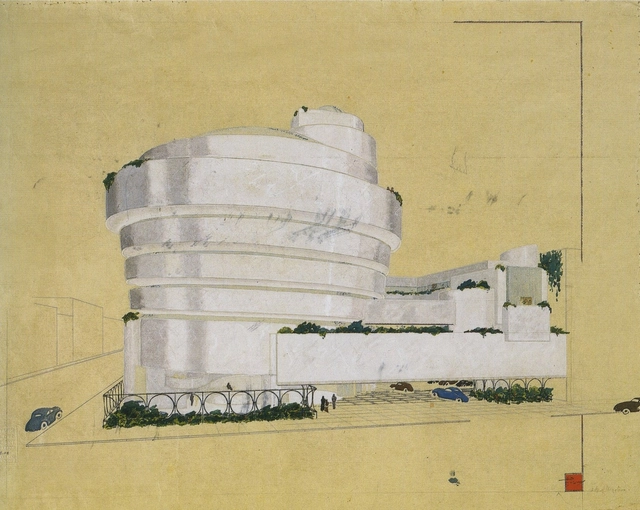
Frank Lloyd Wright’s design for the Guggenheim Museum in Manhattan broke with all existing conventions, setting a new standard for the postwar art museum and, together with the Museum of Modern Art, firmly establishing the city of New York as the cultural capital of the 20th century.




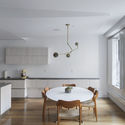
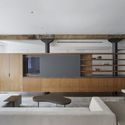


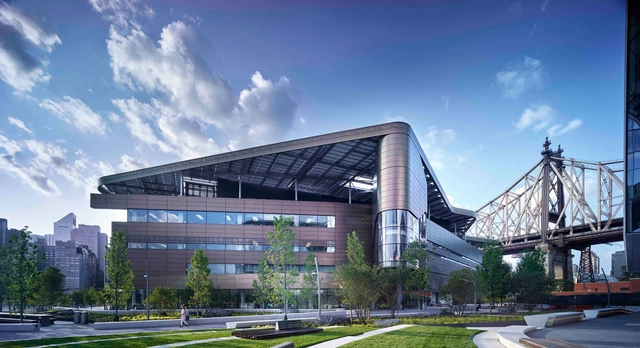

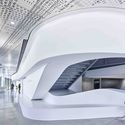







_Frank_Oudeman_3.jpg?1497946037&format=webp&width=640&height=580)
_Frank_Oudeman_11.jpg?1497946385 "© Frank Oudeman")
_Frank_Oudeman_4.jpg?1497946144 "© Frank Oudeman")
_Frank_Oudeman_14.jpg?1497946430 "© Frank Oudeman")
_Frank_Oudeman_17.jpg?1497946478 "© Frank Oudeman")
_Frank_Oudeman_3.jpg?1497946037)