On Monday (March 11), the City of Conde launched the call for entries for a National Public Competition to select the architectural design for a Basic Health Unit (UBS) in the Gurugi quilombola community. Registration is open from March 11 to April 12 on the City of Conde’s website (conde.pb.gov.br/concursos) or by clicking the banner on the homepage.
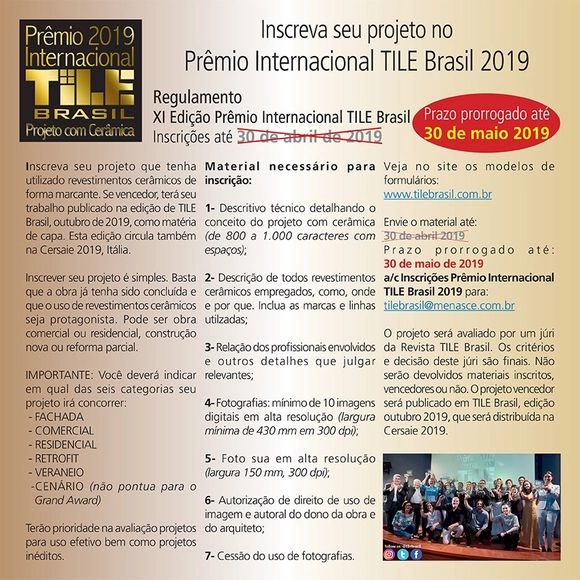
Submit your project that features ceramic tiles in a significant way. If selected as the winner, your work will be featured as the cover story in the October 2019 issue of TILE Brasil. This issue will also be distributed at Cersaie 2019 in Italy.
The competition "Evolution is part of history: Reinventing the stalls of the POA Book Fair," promoted by Minimum, is open to students and recent graduates in Architecture and Urbanism, Graphic Design, and Product Design.
First edition of the competition awards 2019 projects (Image: Minimum/press release)
Architecture students submitting their final thesis projects in the second semester of 2019, as well as recent graduates who submitted theirs in the second semester of 2018 or the first semester of 2019, now have the opportunity to win awards for their work. They are eligible to participate in the inaugural Jovem Talento da Arquitetura competition, hosted by Minimum.
The call for entries is now open for independent professionals, teams, collectives, or architecture and urbanism firms to develop a temporary intervention project in the vicinity of Praça Santo Eduardo, Vila Maria – North Zone of São Paulo.
The "Ruas Vivas" project, developed by the Institute of Architects of Brazil – São Paulo Department (IABsp) in partnership with the São Paulo Commercial Association (ACSP), aims to implement temporary interventions on three different streets in São Paulo to transform public space in response to the COVID-19 pandemic.
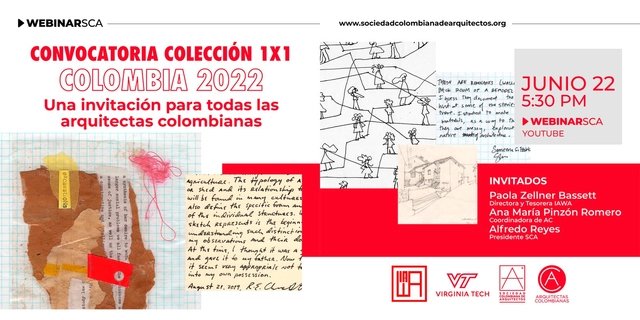
On Wednesday, June 22, at 5:30 PM, the International Archive of Women in Architecture (IAWA), the Colombian Society of Architects National Presidency (SCA-PN), and the Colombian Architects (AC) initiative invite all architects in the country and their colleagues to learn about the "1x1 Colombia 2022 Collection" Open Call.
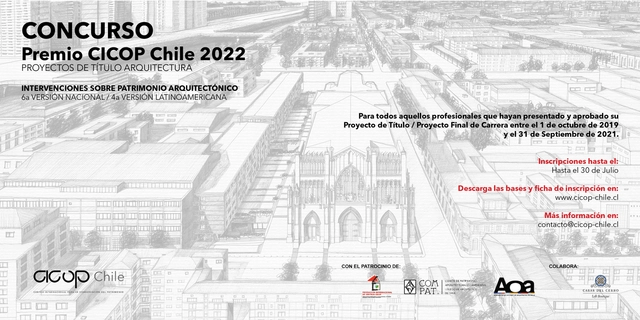
The image used in the poster corresponds to the proposal "La animita de nuestra memoria ciudadana, una rehabilitación desde los cimientos" (The roadside shrine of our civic memory, a rehabilitation from the foundations) by architect Santiago Rodríguez González, Chile. Winning project of the CICOP Chile 2020 Award.
CICOP Chile invites architects who graduated between October 1, 2019, and September 30, 2021, from any architecture school in the Latin American countries where the International Federation of CICOP Centers has national chapters—Argentina, Bolivia, Brazil, Costa Rica, Chile, Guatemala, Mexico, Paraguay, Peru, and Uruguay—to participate in the CICOP Chile 2022 Award. Entrants must submit final degree or thesis projects developed with a focus on the intervention of buildings, building complexes, or areas of heritage value, regardless of whether they are protected by national regulations.
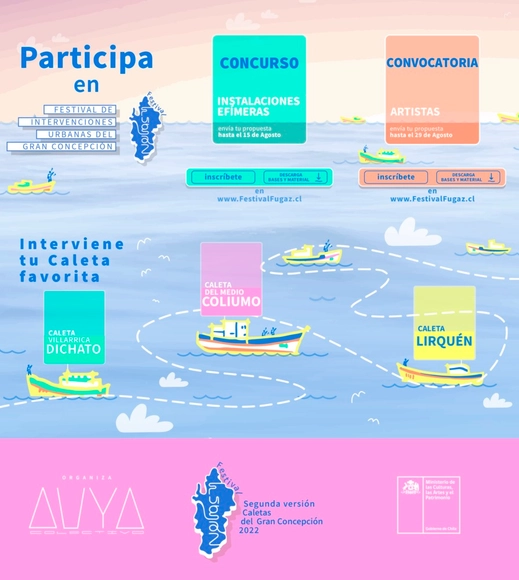
Festival Fugaz, an urban intervention festival in Greater Concepción, seeks to recognize the territory as a space of diverse cultural expression and identity. Through a series of artistic activities, it promotes community occupation of public space, aiming to foster citizen participation in open cultural events and revalue the physical heritage of Greater Concepción as essential settings for urban life.
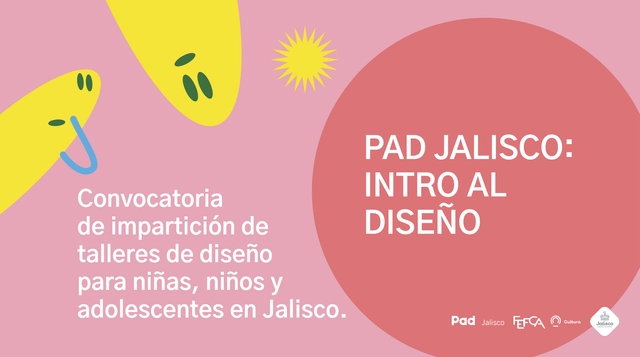
Pad Jalisco: Intro al Diseño is awarding 10 grants of MXN$30,000.00 each for the development of a design workshop aimed at children and adolescents. The workshop must be held in a municipality in Jalisco, outside the Guadalajara Metropolitan Area.
The Bachelor of Architecture program at the Universidad Intercontinental (UIC) invites entries for the 21st Academic Competition for Schools of Architecture, open to fifth and sixth-semester students from national and international universities.
Event organized by AMPIMM and Expo MEM Industrial with the support of the Di-Integra Association and ArchDaily.
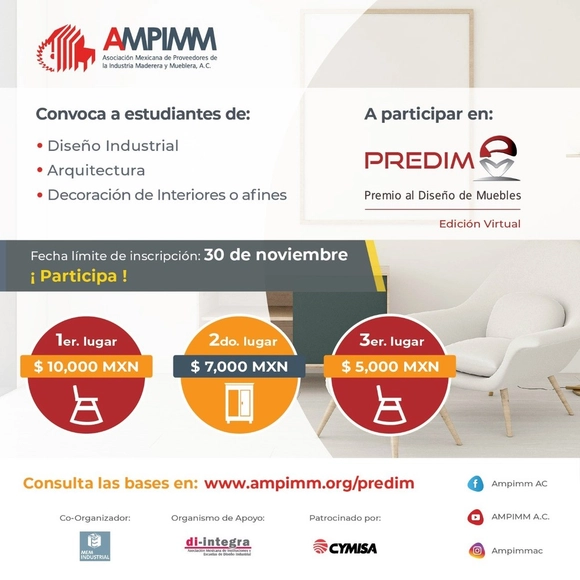
The 8th edition of the Furniture Design Award (PREDIM) is an honor organized by the Mexican Association of Suppliers for the Wood and Furniture Industry (AMPIMM, A.C.) and the MEM Industrial expo, with the support of DI-INTEGRA and ArchDaily. The award is presented by industry specialists to students of industrial design, interior design, or architecture. It seeks to foster innovation and strengthen the connection between the student community and furniture manufacturing companies, contributing to both the development of the industry and the improvement of furniture quality nationwide.
Videos
Open Call for the 5th edition of the Living Places - Simon Architecture Prize 2024
The Living Places – Simon Architecture Prize is an initiative by the firm Simon, curated by the Fundació Mies van der Rohe since its inception in 2016 to commemorate Simon's centenary. Since then, architecture firms from over 23 countries—including Mexico, Poland, France, Germany, the United Kingdom, Italy, Portugal, and Spain—have participated in the competition, reaffirming its international relevance. In the previous edition, the prize received 220 nominated projects.
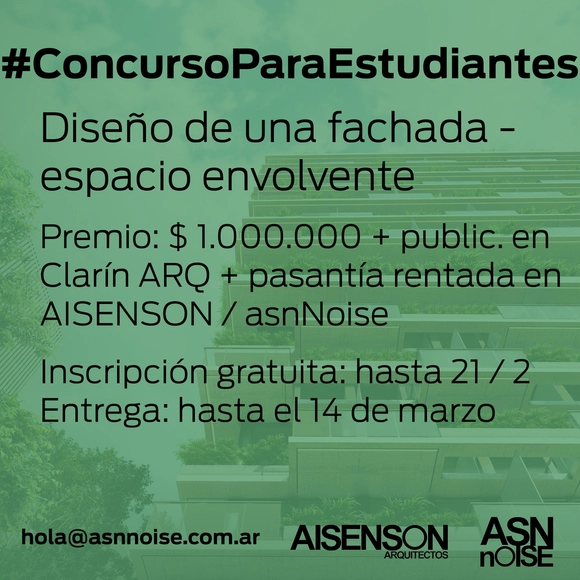
The objective of this competition is to design a facade of variable thickness for a site in the Autonomous City of Buenos Aires. The project must address the facade's relationship with both interior and exterior spaces, its materiality, the connection between architecture and the urban environment, its habitability in relation to its uses, orientation, and environmental integration, as well as any other elements proposed by the participants.