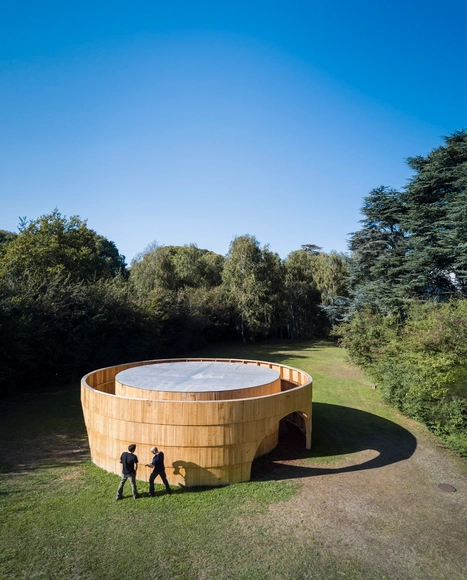
There are numerous intersections between art and architecture, including aesthetic enjoyment, formal element composition, the relationship with the environment, and abstraction. The unique combinations of these aspects distinguish each architecture office or artist in their practice and language. Diogo Aguiar Studio is an architecture office that actively explores these intersections, pushing the boundaries that traditionally separate art from architecture.
Each project is built on the dynamic interaction between architecture and art, serving as its foundation and driving force. This approach yields work that addresses functional requirements and ventures into uncharted territories of spatial research. Notably, materials exploration and sensory aspects in both architectural and immersive artistic spaces stand out as a significant aspects of their endeavors.
Amidst the immense possibility of constructive solutions, all have advantages and disadvantages, gains and limitations. Whether for economic reasons, deadlines, material availability, or spatial performance, each type of material responds to the project in a certain way and gives it a specific visual and environmental aspect. In general, multiple construction systems are required, enabling the offsetting of any shortcomings in one material through the performance of another. This approach ensures a balanced and effective implementation of diverse materials to address specific project requirements. Drywall panels, or drywall, are on this threshold between rejection and preference.
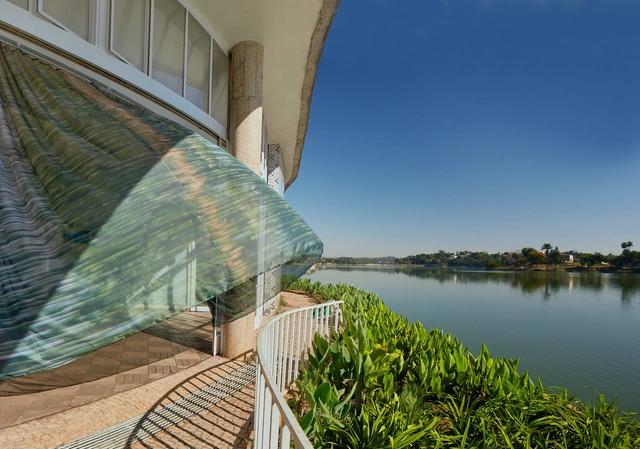
A mirage can refer to an optical phenomenon caused by the refraction of light on certain surfaces, creating the illusion of a liquefied appearance. It can also represent an illusion, where something appears to be different from what it actually is. Paul Clemence capitalizes on this dual interpretation in his photographic essay, Modern Mirage, which features Casa do Baile (now the Reference Center for Architecture, Urbanism, and Design), the Art Museum, and the Church of Pampulha. He captures these iconic structures as they are reflected in the water mirrors of the modern complex designed by Oscar Niemeyer in Belo Horizonte, MG.
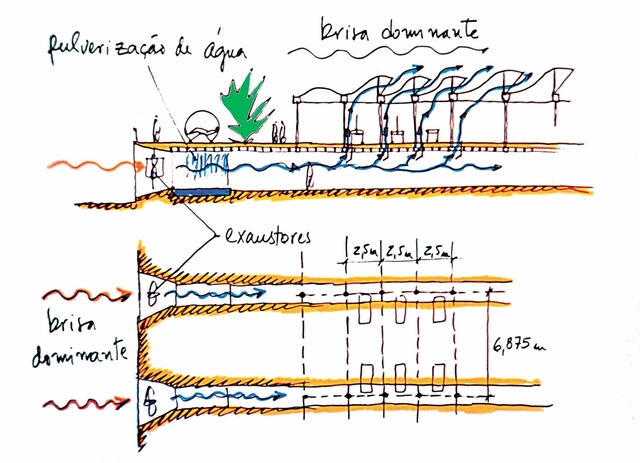
Design of the ventilation system at the Sarah hospital / João Filgueiras Lima (Lelé). Image via Concrete
Architecture is a transdisciplinary field. It incorporates principles and knowledge from several other disciplines to ensure a built structure functions as intended. This fundamentally involves considering the context in which a building is placed, including its immediate surroundings, such as neighboring structures, local biodiversity, and climate. Essentially, architecture only exists within a particular context. When we expand this context to a broader scale, it becomes what we commonly refer to as the "environment."
The experience of a space depends on various factors, including its size, lighting, views, temperature, and uniqueness. In essence, multiple architectural elements evoke emotions in individuals, both intentional and unintentional. For architects, alongside considerations like client preferences and project proposals, there exists a formal intention, an aesthetic aspect that aligns with the artistic dimension of their discipline. Striking the right balance between these aspects forms the foundation of architectural thinking. This commitment to balance guides the work of spaceworkers, a firm founded by Carla Duarte, who serves as the financial director, and creative directors Henrique Marques and Rui Dinis.
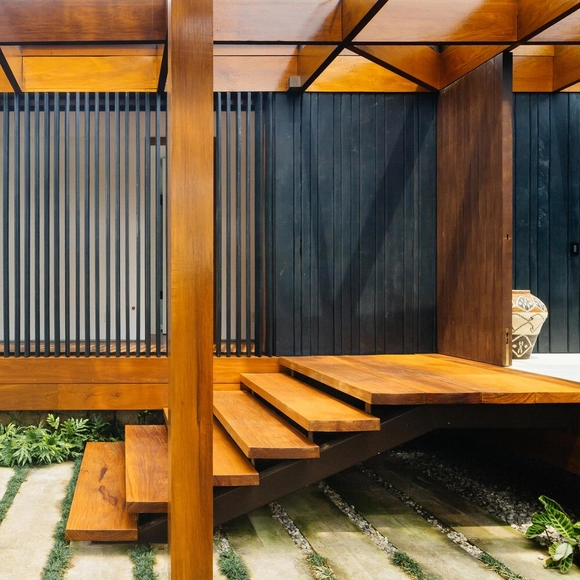
Wood in contemporary construction is often associated with coziness, simplicity, and a certain sense of nobility. Despite requiring more frequent maintenance compared to materials like concrete, wood is increasingly considered a viable option within the concept of regenerative design, owing to its place in the natural organic cycle of our planet. While wood has been a staple in architectural design, carbonized wood, known as yakisugi, is gaining significant attention as a finishing choice.
Housing is a fundamental aspect of architecture, providing shelter, which is essential for everyone. In urban environments, addressing the housing challenge is both urgent and complex. Social housing initiatives aim to provide a substantial portion of the population with access to this fundamental architectural concept: a home.
The history of architecture is marked by a rich array of styles and expressions, each of which reflects the specific environment it was created in. Numerous unique narratives have emerged, giving rise to various architectural traditions. The notion of a single, universal tradition is quickly debunked when one explores the pages of any architectural history book.
While contemporary architectural movements may share common principles, it's important to note that this doesn't necessarily result in a uniform appearance. However, when we consider the diversity of historical architectural styles and traditions, it becomes evident that specific regions have distinct architectural identities. Portugal has a well-defined architecture, and Carlos Castanheira is one of its notable representatives.
Modernity and globalization have significantly reduced geographical distances, transformed social interactions, and accelerated the flow of information across nations, which has, in a sense, made the world more accessible to people everywhere. However, it's important to note that when we say "everyone," we refer to a vast and diverse population. Modernity and globalization had an impact on noticeable inequalities in both social and technological realms, as more advanced and privileged nations have established benchmarks and norms for leisure, culture, and consumption. As a result, certain cultures have established a dominant influence, promoting the notion that there is a "correct" way to live and build cities. This unchecked pursuit of development comes at a significant cost to the Earth's ecosystems and biomes.
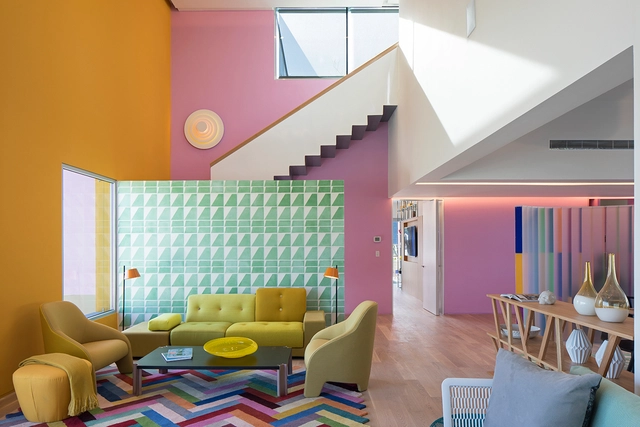
Color plays a significant role in the world. Partly because of the significance attached to each hue, the use of color in architecture – especially in interiors – changes the ambiance of each project. In commercial establishments, color has a considerable influence on highlighting a given brand, and in homes, it can reflect the resident’s personality and complement the language adopted in the project. This exploration can take place directly in the tectonic object (architecture) through the surfaces that constitute the building, or it can take advantage of mobile elements, easily changeable.
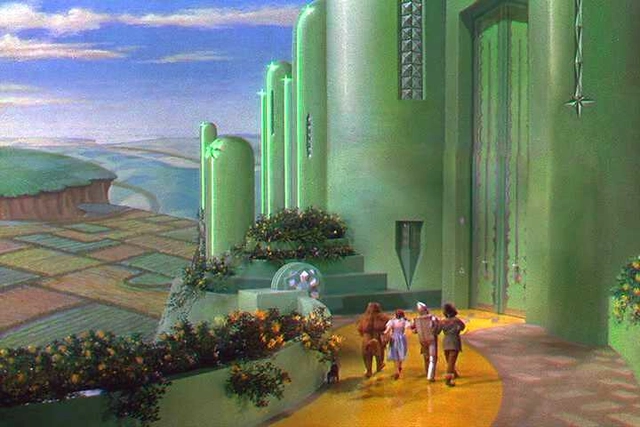
The Wizard of Oz (director Victor Fleming, cinematography Harold Rosson, 1939). Print Screen
Colors evoke specific feelings; therefore, they are used to elicit particular effects on the surface they appear on or in the minds of observers contemplating them. In architecture, color plays a fundamental role in defining shape. Materials in their natural state already possess inherent coloration, which is perceived in a specific manner. However, when dyed, the observer's perception is altered, giving rise to associations between different sensations related to the same object. This transformation brought about by color occurs in various visual mediums, spanning from three-dimensional contexts like architecture to static and mobile two-dimensional forms such as engravings, photographs, paintings, and films.
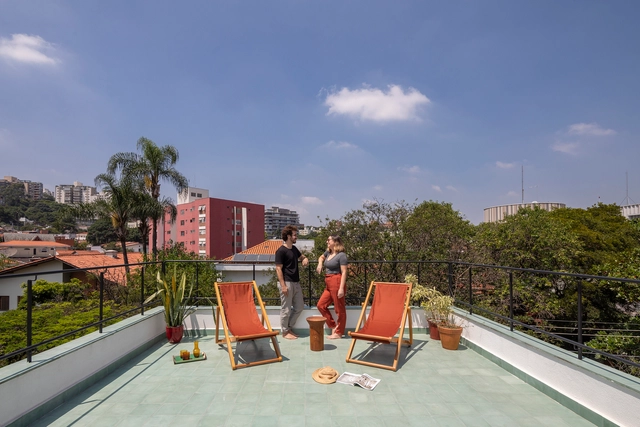
The tradition of modern architecture confirms that building roofs are usable spaces as significant as indoor areas. After all, the garden terrace is one of the five points of new architecture, according to Le Corbusier. Although he popularized the concept, the use of rooftops dates back even earlier, encompassing various roles across time, from lookouts for ancestral astronomical studies to more contemporary cultivation areas, passing through the bureaucratic accommodation of electrical and sanitary installations. By offering open space and direct sky access, building roofs have evolved. In dense urban landscapes, converting this space into a leisure area is a logical choice.
Housing has always been a significant issue in metropolises. It accommodates the city's population and can impact other urban concerns, such as the necessary commute between home and work or school.
Broadly, urban densification enjoys widespread acceptance in urban planning. In today's context, the correlation between densification and housing is addressed by designing high-rise buildings with smaller floor areas. This approach yields apartments with minimal functionalities, known in Brazil as kitchenettes. As with any architectural type, these compact residences have advantages and disadvantages, serving either as a model of efficiency or as an illustration of housing instability.
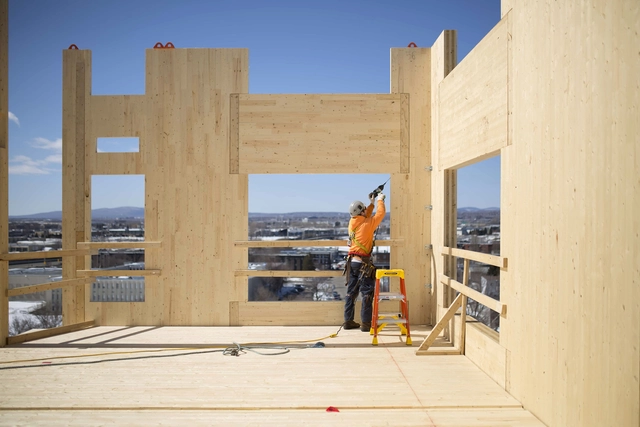
In the face of a climate emergency, various fields are under pressure to reformulate their operations and actions, and architecture is no exception. After all, the built environment and the construction industry are responsible for a considerable percentage of carbon gas emissions into the atmosphere. Rethinking and restructuring the construction chain - from design to execution - is the order of the day for construction professionals.
When it comes to architecture, scale is inevitably mentioned for graphic and two-dimensional representation of the built area, land size, and city extension. Architecture is a grand discipline with robust constructions and large areas, but the field of action is vast, encompassing "smaller" scales: essential housing, restricted land, and small cities.
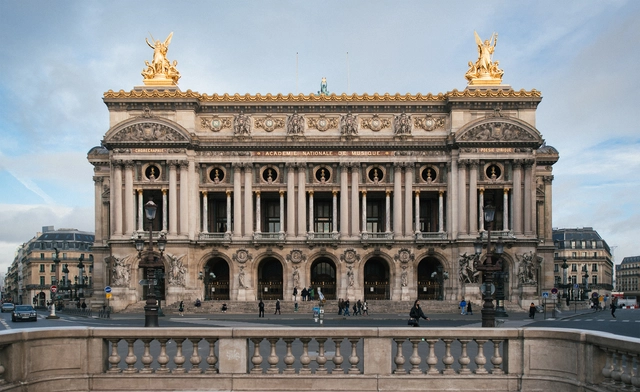
Paris Opera by Charles Garnier. Photo by Francesco Zivoli, via Unsplash
Architectural styles have fallen out of favor throughout history. Generally, the peak of one movement means the decline of another. Over time, the situation may reverse, as in the case of postmodernism, which has divided opinions since its emergence, but experienced a revival in the first decades of the 2000s (or maybe not). Temporal distance contributes to the revision of certain styles' relevance and evaluation of their qualities - or problems.
There are many ways to define architecture, from the most technical to the most poetic. It uses many aspects within its context: space, program, tectonics, and gesture, which refers to the stroke, the drawing, and the design. Perhaps the quick sketch that comes to mind when talking about gesture is that of shelter: a cut or elevation, with human scale, of vertical enclosures and coverings.
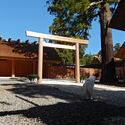
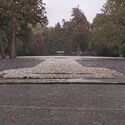
The conception of architecture, understood since modernity, emphasizes permanence. The durability of tectonic construction can be manifested in various ways. However, what does it mean to associate architecture with ephemerality? And what happens when the idea of permanence is connected to transience? The Shikinen Sengu ceremony in Japan may help provide answers to these questions.