Helena Tourinho

BROWSE ALL FROM THIS AUTHOR HERE
↓
Subscriber Access

The Chthulucene Call to Architecture

Audio available

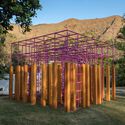
Climate issues have been the main topic of discussions about the future of cities, but they are certainly not new. The warning about human irreversibility on the planet has been part of scientific discourse since the 1980s. Faced with increasingly frequent environmental urgencies, Donna Haraway, in her book Staying with the Trouble: Making Kin in the Chthulucene, suggests a change in attitude on the part of humans to ensure not only partial environmental recovery but the species' survival.

The Chthulucene Call to Architecture - 1 的图像 4The Chthulucene Call to Architecture - 2 的图像 4The Chthulucene Call to Architecture - 3 的图像 4The Chthulucene Call to Architecture - 4 的图像 4The Chthulucene Call to Architecture - More Images+ 2

Subscriber Access

Learning From Manaus: Getting to Know the Work of Laurent Troost Architecture

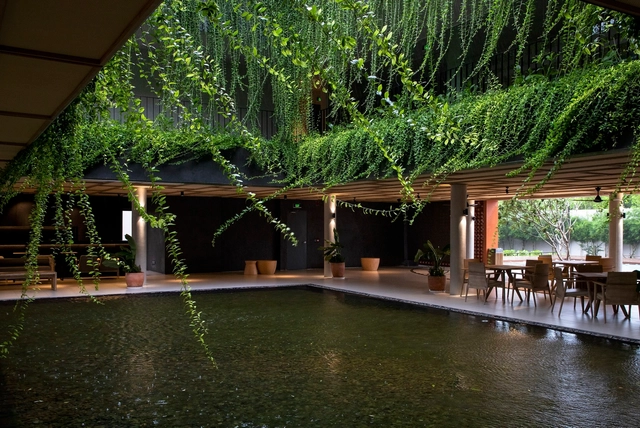
Architecture involves mobilizing several aspects of the environment where the building is located: the socio-cultural, political and economic context, aesthetics, legislation, and functionality. Functionality includes use efficiency, occupancy, and comfort. Laurent Troost's work has shown the articulation between these various factors, with particular attention to comfort, especially thermal comfort. His projects prioritize natural ventilation over artificial air conditioning, which has become almost mandatory in current city models.

Learning From Manaus: Getting to Know the Work of Laurent Troost Architecture - Image 1 of 4Learning From Manaus: Getting to Know the Work of Laurent Troost Architecture - Image 2 of 4Learning From Manaus: Getting to Know the Work of Laurent Troost Architecture - Image 3 of 4Learning From Manaus: Getting to Know the Work of Laurent Troost Architecture - Image 4 of 4Learning From Manaus: Getting to Know the Work of Laurent Troost Architecture - More Images+ 5

The Story of the World's Largest Floating Plastic Island (and What to Do With It)

Environmental issues urgency and increasing temperatures on the planet are nothing new. There are many factors contributing to environmental degradation. However, two can be viewed as representative of critical points in the current world system: plastic and waste disposal, better known as garbage.

The environmental crisis cannot be attributed solely to these two examples. They are used here as examples to mobilize issues involving multiple agents, materials, and diverse methods. These issues lead to devastating consequences, increasingly irreversible.

Subscriber Access

Uninhabited and Promising: Exploring the Work of Vazio S/A

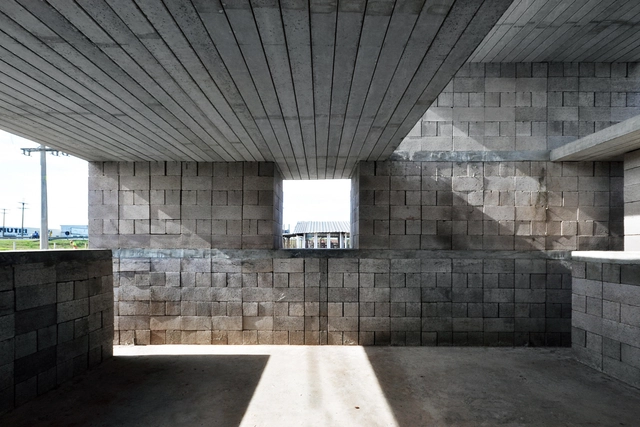
Unoccupied spaces within the city are typically viewed as conditions lying somewhere between problem and potential. It is partly the role of architecture and urbanism to thoughtfully mobilize these spaces within the urban context. With these issues in mind, the firm Vazio S/A proposes the activation of spaces deemed residual in the urban landscape or in specific contexts, drawing on the potential that vacant spaces offer.
Uninhabited and Promising: Exploring the Work of Vazio S/A - Imagen 1 de 4Uninhabited and Promising: Exploring the Work of Vazio S/A - Imagen 2 de 4Uninhabited and Promising: Exploring the Work of Vazio S/A - Imagen 3 de 4Uninhabited and Promising: Exploring the Work of Vazio S/A - Imagen 4 de 4Uninhabited and Promising: Exploring the Work of Vazio S/A - More Images+ 17

Interstitial Spaces: Getting to Know the Work of Vão

In theory, architecture is separate from art. Some even argue that there is a hierarchy between the two. Fortunately, Vão is an example of how this separation doesn't need to exist and how having a hierarchy between them is unproductive for both sides. Founded in 2013 by Anna Juni, Enk te Winkel, and Gustavo Delonero in São Paulo, the office develops architectural projects fueled by artistic thought. It also develops artistic works on an architectural scale.

Interstitial Spaces: Getting to Know the Work of Vão - Image 1 of 4Interstitial Spaces: Getting to Know the Work of Vão - Image 2 of 4Interstitial Spaces: Getting to Know the Work of Vão - Image 3 of 4Interstitial Spaces: Getting to Know the Work of Vão - Image 4 of 4Interstitial Spaces: Getting to Know the Work of Vão - More Images+ 13

Subscriber Access

Uncoated: 11 Apartments With Visible Structure

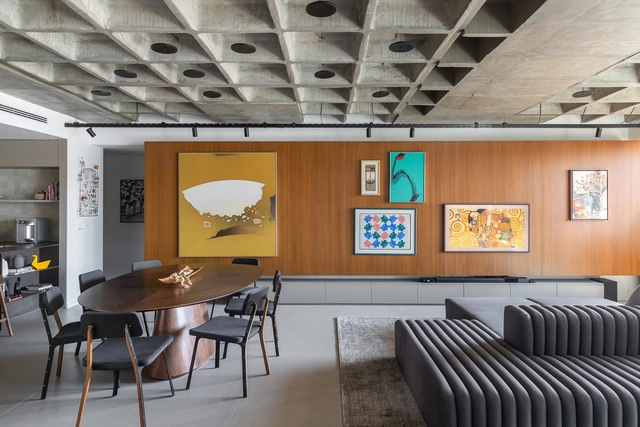
Housing is one of the primary aspects of the architecture profession. There are many ways to explore it, from a subordinate program such as a religious cloister to the splendor of a single-family home. Luis Fernández-Galiano is torn between the "waste" of a low-density area in this type of housing and its seductive formal charm. He reminds us that high-density collective housing, such as apartments, makes more sense in an urban context.

Uncoated: 11 Apartments With Visible Structure - Imagen 1 de 4Uncoated: 11 Apartments With Visible Structure - Imagen 2 de 4Uncoated: 11 Apartments With Visible Structure - Imagen 3 de 4Uncoated: 11 Apartments With Visible Structure - Imagen 4 de 4Uncoated: 11 Apartments With Visible Structure - More Images+ 22

Subscriber Access

A Brief History of Brasília’s Satellite Cities

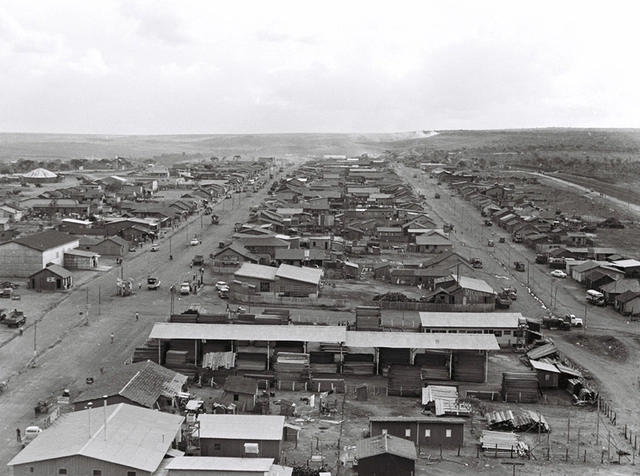
The construction of Brasília is a significant achievement in history and architecture. The Brazilian modernist movement definitively established Lucio Costa and Oscar Niemeyer as their representatives. It led the modernist city to be tested as the new urban order. Nevertheless, the city did not emerge alone, nor was it completely utopic, modern, or modernizing. Alongside the new capital, planned and organic neighboring cities were built.

A Brief History of Brasília’s Satellite Cities - Imagem 1 de 4A Brief History of Brasília’s Satellite Cities - Imagem 2 de 4A Brief History of Brasília’s Satellite Cities - Imagem 3 de 4A Brief History of Brasília’s Satellite Cities - Imagem 4 de 4A Brief History of Brasília’s Satellite Cities - More Images+ 4

Between Light and Shadow: Exploring Lighting to Create Atmospheres in Architecture

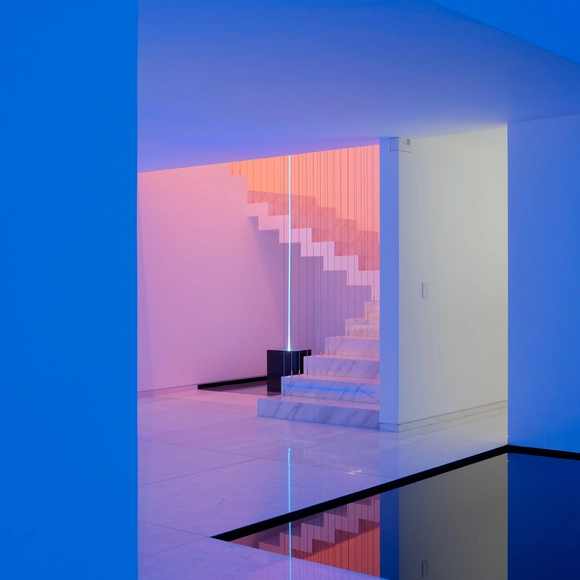
Light is part of various disciplines, shaping the world as we know it. In physics, it serves as a measure of speed and makes vision, and the recording of images by the eye and camera lens possible. Throughout art history, the representation of light - or its absence - has guided secular movements in various manifestations with equally different techniques and supports. This means that light - and its derivative shadow - can create environments, atmospheres and sensations, which can be perceived in objects and spaces. Light is also a part of architecture.

Between Light and Shadow: Exploring Lighting to Create Atmospheres in Architecture - Image 1 of 4Between Light and Shadow: Exploring Lighting to Create Atmospheres in Architecture - Image 2 of 4Between Light and Shadow: Exploring Lighting to Create Atmospheres in Architecture - Image 3 of 4Between Light and Shadow: Exploring Lighting to Create Atmospheres in Architecture - Image 4 of 4Between Light and Shadow: Exploring Lighting to Create Atmospheres in Architecture - More Images+ 11

Subscriber Access

Melancholy and Architecture: Interpretations of Aldo Rossi and the San Cataldo Cemetery

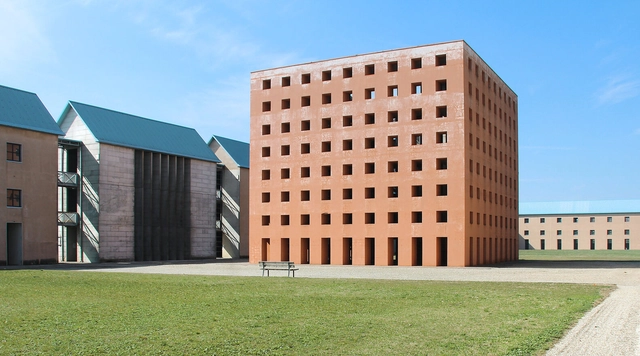
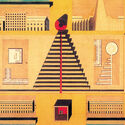
Cemeteries are among the architectural programs with the greatest symbolic value. They suggest rituals, rigor and solemnity while offering some comfort or hospitality, if not for those who bid farewell to their loved ones, at least to "guarantee" a dignified afterlife for those who have passed away. The San Cataldo Cemetery, designed by Aldo Rossi and Gianni Braghieri, fulfills the first part of the previous statement. Partly because the project was not entirely built, austerity and empty spaces predominate. But when considering the proposed project, perhaps the aridity would remain, and the harshness would be felt more forcefully. Composed of buildings with almost abstract, pure shapes, without noble details or cladding, the cemetery project is a good example of Aldo Rossi's production at the time of its conception, around 1970.

Melancholy and Architecture: Interpretations of Aldo Rossi and the San Cataldo Cemetery - Imagem 1 de 4Melancholy and Architecture: Interpretations of Aldo Rossi and the San Cataldo Cemetery - Imagem 2 de 4Melancholy and Architecture: Interpretations of Aldo Rossi and the San Cataldo Cemetery - Imagem 3 de 4Melancholy and Architecture: Interpretations of Aldo Rossi and the San Cataldo Cemetery - Imagem 4 de 4Melancholy and Architecture: Interpretations of Aldo Rossi and the San Cataldo Cemetery - More Images+ 3

Subscriber Access

Bathrooms That Innovate in Materials, Layout, and Openings

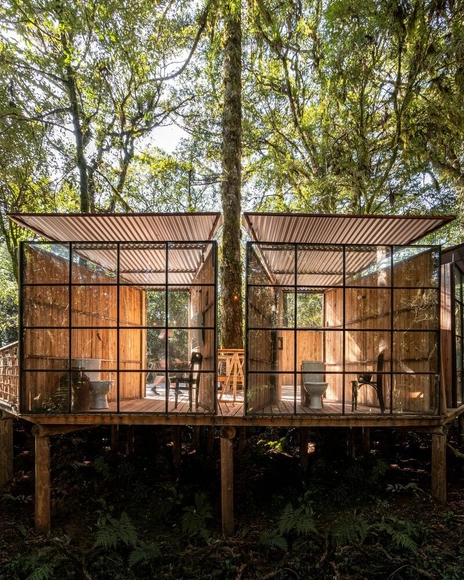
Within various - if not all - architectural programs, there is a function that is an essential and common requirement: the bathroom. A residence, office, commercial space, theater, museum, religious space, park, or school can only be designed with it. In some countries, public toilets are part of urban infrastructure like public transport or waste collection. A fundamental human right, although denied to a considerable portion of the global population, the toilet follows a historical evolution. Modernity brought with it the separation between public and private, and the room became increasingly reserved in Western society.

Bathrooms That Innovate in Materials, Layout, and Openings - Image 1 of 4Bathrooms That Innovate in Materials, Layout, and Openings - Image 2 of 4Bathrooms That Innovate in Materials, Layout, and Openings - Image 3 of 4Bathrooms That Innovate in Materials, Layout, and Openings - Image 4 of 4Bathrooms That Innovate in Materials, Layout, and Openings - More Images+ 10