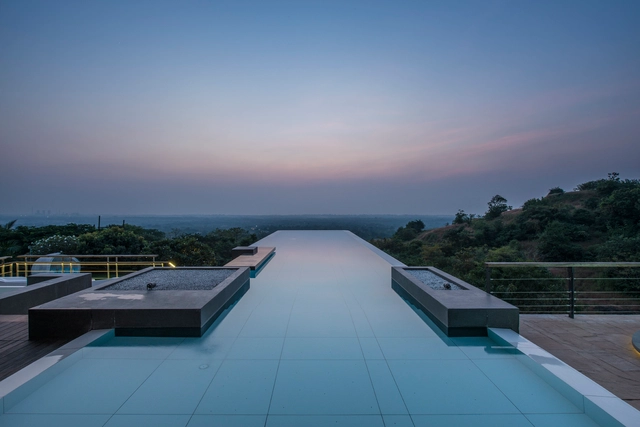
There are few things that fascinate us more than the sea. Its contemplation arouses a sense of peace, while its colors, textures, movements and amplitude provide a scientifically proven effect of relaxation in our nervous system. Above all, it makes us realize how small we are in the universe. It is not by chance that a house facing the sea is a dream of consumption for many, let alone with a pool right in front of it. Infinity pools play with this feeling of infinite sea and sky. Through a well-elaborated set of levels and plans, they create an optical illusion that leaves everyone speechless, making pool water appear as if merged with the horizon, overflowing at one or more edges. But before you plan your photo on Instagram with a glass of sparkling wine in your hand, let's take a look at how these pools are built.
This renovation project by Peter Ebner and friends ZT GmbH is about the history of a place and changing tastes and times. It is about not needing a large scale to radically improve the space around. It is about the beauty and character of the city with its reflected sparkling life, gloomy evening sky, raindrops and lights of passing cars. It is about people who are mostly in a hurry, but who still sometimes stop for a few seconds to take note of a special, glittering room.
Perhaps the most renowned 'skylight' ever built is the Pantheon of Rome commissioned by Marco Vipsanius Agrippa during the reign of Emperor Augustus (27 BC-14 AD) and rebuilt by Hadrian (117-118) around 126 AD. At the highest point of its dome (in this case, the oculus) the sunlight shines, casting its beams over the various statues of planetary deities that occupy the niches on the walls. The light that enters the space symbolizes a cosmic, sacred dimension. In projects around the world, natural light continues to fulfill this scenic role, especially in religious projects.
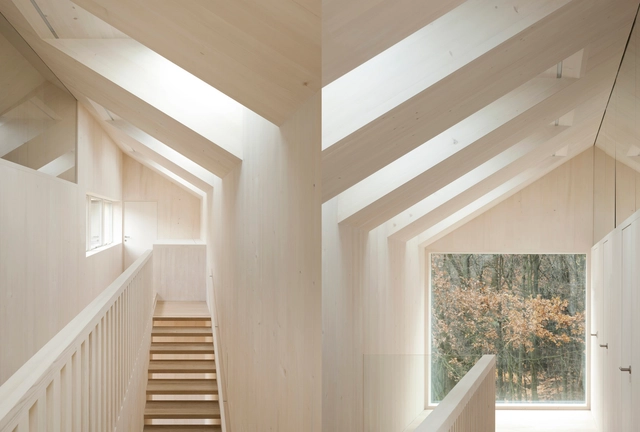
It is characterized as zenithal illumination as that which comes from above, from the sky (zenith). Very useful for large spaces that can not be adequately lit by windows, skylights are a widely used device for providing a pleasant, diffuse light. Generally, care is taken to prevent direct entry of sunlight; the openings must be well designed so that they do not overheat the space of allow water infiltration. Below is a collection of projects that make good use of this technique.
The increasing use of air conditioning is causing many cities to hit record energy consumption levels during brutally hot summer months. In populous countries like India, China, Indonesia, Brazil, and Mexico, large urban centers function like ovens: buildings absorb heat that is re-released back into the environment, further increasing the local temperature. More heat outside means more air conditioning inside, which not only raises energy consumption, but also increases the levels of carbon dioxide in the atmosphere.
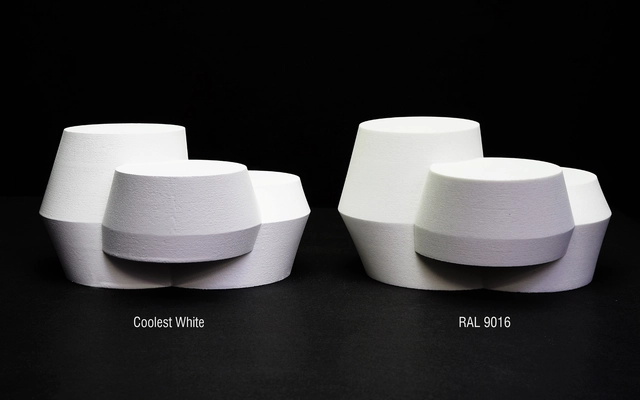
With this vicious cycle in mind, a paint was created to protect buildings and urban structures from excessive solar radiation, diminishing the effect of the urban heat island. The innovation came from the partnership of UNStudio, a Dutch architectural firm, and Monopol Color, a Swiss paint specialist. The dark-colored materials that are used to construct the buildings in our cities are one of the main causes of heat accumulation in urban areas. While darker materials absorb up to 95% of the sun’s rays and release them straight back into the atmosphere, this value can be reduced to 25% with a normal white surface. Now, with ‘The Coolest White’, it is possible to reduce absorption and emission to 12%.
When we think of energy from renewable sources, the first that probably come to mind are solar and wind. And decentralizing power generation is something that has inspired engineers and inventors from all over the world.
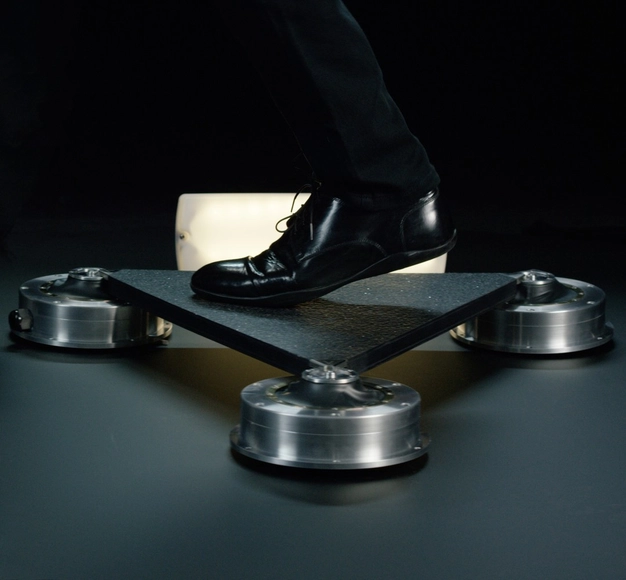
So what about turning the mechanical energy generated when people walk into electrical energy? It can be done thanks to technology developed by Laurence Kemball-Cook,founder of Pavegen. Using platforms inserted within sidewalks Pavegen converts steps into electric power (while also generating data and even rewards). But before you go out there feeling like Michael Jackson in Billie Jean, you should understand how this system works.
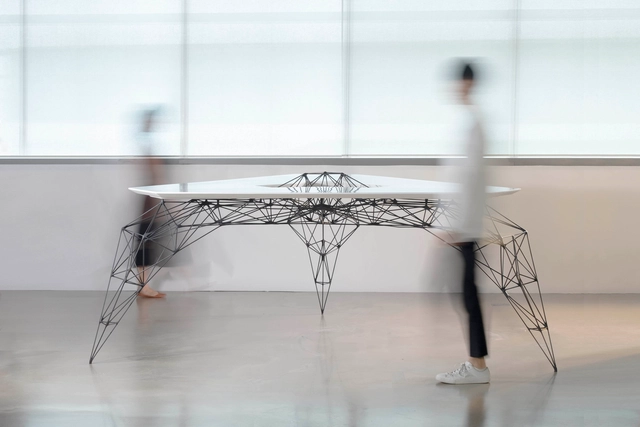
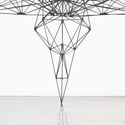
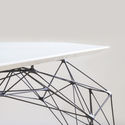
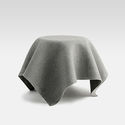
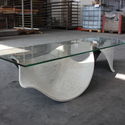
A sturdy featherweight table? Sounds... contrary to reason. But this contradiction was the very impetus for the design. Created for a research center that’s pushing the boundaries of design and manufacturing using technology and science, the designers--AIRLab, in collaboration with DManD-- sought to dematerialise the typical structure of a table, creating a sense of instability with the visual counterpoint of a solid surface.
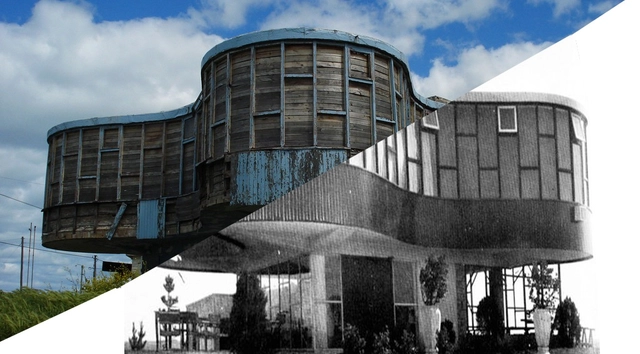
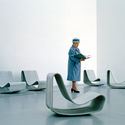
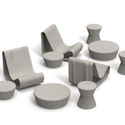
Historical photo: Courtesy of Retrieve the Ariston, Flickr user: ladyandrux. ImageArador Ariston / Marcel Breuer
When the work finally comes to an end, the cleaning is done and preparations for the opening are underway, everything looks perfect. Coatings are all in their proper place, shining and with the intended color; wood surfaces are as yet unmarked and there is even a feeling of freshness and new life. Photographs mean that, for many, this vision of perfection is all that will ever be seen.
But this perfection can be superficial. Failing to consider the damaging power of time during design and specification stages means can hasten the appearance of inevitable imperfections. Small fissures, stains, and scuffs among many other problems (that we have all dealt with at some point) begin to appear. The beautiful wood frame, so lovingly chosen, starts to look greyish. The paint fades where the sun hits the strongest. Boards begin to warp and fall from the facade.
Videos
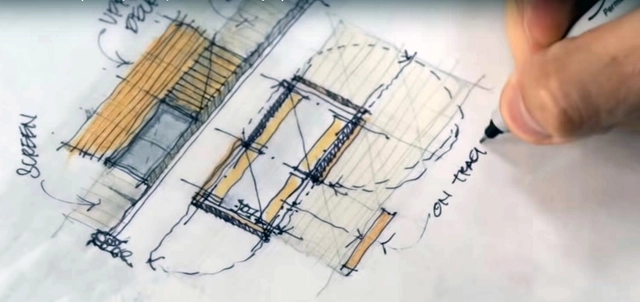
Screenshot do vídeo "Sketch like an Architect (Techniques + Tips from a Real Project)", de 30X40 Design Workshop
The slightly trembling linework, the distinctive crossed corners, the parallel hatching, and the uppercase letters: it is undeniable that architects have developed a style of drawing over time. And though free-hand perspectives are no longer the only (or even primary) form of representation for architectural projects, they still have enormous importance during the design process. They are a design tool rather than a form of representation.
A line that is too thick, an ill-chosen color, a disproportionate scale figure – these are all elements that can draw attention away from the things we actually want to show. Even for an unpretentious and quick sketch, some rules are very important. Some tips help turn an ordinary sketch into something you take pride in and want to show to others. Taking advantage of the huge collection of youtube videos, we have selected some content creators who dedicate themselves to sharing their expertise with the masses.
The idea of turning cold, raw materials into elegant shapes has always fascinated artists, architects, and designers. In the Carrara marble sculptures of Lorenzo Berdini and Michelangelo, human forms were carved from heavy blocks of stones with great detail and precision. There is no difference in architecture: from taking a light volume off the floor, to leaving a small indentation between a structure and a fence, to altering the lining of a block, there are several devices to make buildings visually lighter.
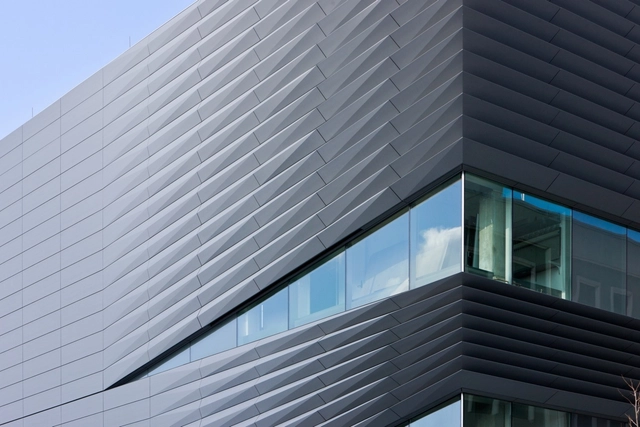
Zinc is a natural element extracted from ores. Its symbol, which appears in the dreaded Periodic Table, is Zn. Through a metallurgical process of burning its impurities (reducing zinc oxide and refining), it assumes a much more friendly appearance, and later becomes the sheets, coils, and rollers used in construction. The main characteristic of this material is its malleability, which allows it to be worked easily, allowing to cover complex forms in facades and roofs of buildings.
Online courses have gained more and more recognition in the past couple of years. In addition to the flexibility and convenience of learning wherever and whenever you want, they provide access to content from well-respected professors and colleges. In the field of architecture and construction, online courses have grown exponentially. Last year, we compiled a list that focused mainly on constructive and material techniques. This time we selected 15 online courses covering a range of subjects. We hope this selection of courses can help you with your next project.
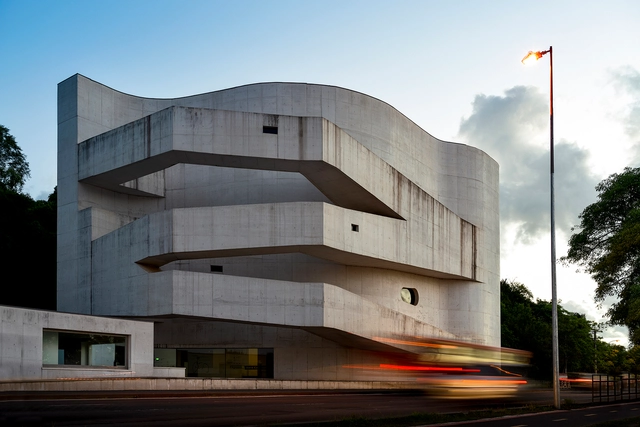
Alvaro Siza orchestrates, like no other, the experience of the visitor in his works. By means of compressions and decompression, openings and closings, volumes, voids and light, the Portuguese architect marks the paths, points of view, and perspective of the passage of time. In this photo essay, Ronaldo Azambuja photographed the Iberê Camargo Foundation ten years after its inauguration.
We all have that childhood memory of drawing a little house with a door and a window, a gabled roof, and a tree. But what sets architects apart from the rest of the population is that we continue to draw this after childhood, usually with a bit more technique. And just as our residential designs were becoming more complex and complete, the design of our trees needed to improve a bit as well (that broccoli-like shape would not please customers and teachers alike.) Although generally, trees are not the main focus of drawings, they play an important role in the composition of sketches, mainly to represent the scale, intended shading, or some intention of landscaping.
Metallic elements have been used in architecture and civil construction for hundreds of years, either as decorative elements, coverings or even to reinforce masonry structures. However, it is only in the second half of the eighteenth century that the first bridges emerge whose structure was entirely made of cast iron. A century later, iron was replaced by a more resistant and malleable alloy, still used today in architecture: steel.
Denser than concrete, the strength of steel subverts its weight and provides greater stiffness with less material - allowing for lighter and thinner structures than those made from other materials, such as wood or concrete. It is by no means the most used material in residential architecture, however, its use has made it possible to construct some interesting - and beautiful - examples of contemporary houses:
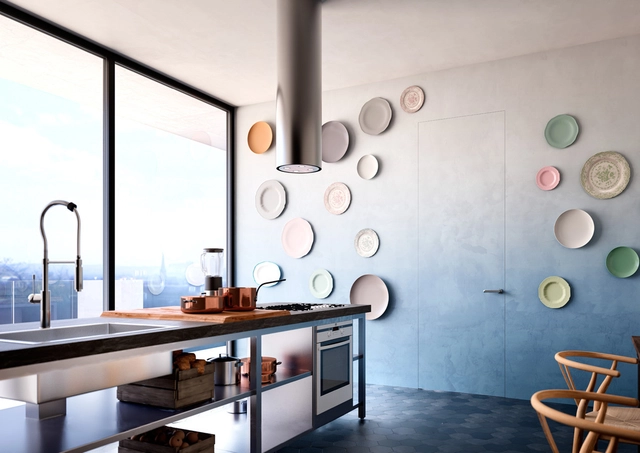
Sometimes a door can be a huge headache in a project. Think of a continuous, clean facade... having a door in the middle of it can ruin the clarity of the design. But a door need not be the traditional wood-paneled, brass-knobbed portal most of us are used to, much less an eyesore.
But what if they could disappear from sight entirely? We’ve all dreamed of hidden passages and secret rooms tucked away in our homes. But for these to work, the entry must be disguised or hidden itself.
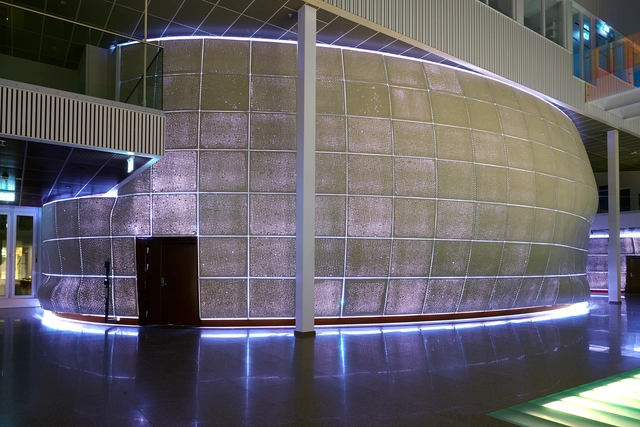
An installation at the Karolinska Institutet in Sweden is made entirely of translucent concrete panels. Composed of concrete and bubble wrap, the site blends both high and low technology processes. This high-tech lecture hall is an amorphous space with unique acoustic qualities.
The panels were created by compressing High-Performance Concrete between two layers of Bubble-Wrap. With 262,500 cavities and 1,000,000 membrane-perforations, the material creates a diffused echo-free ambiance.
As I left the streets of Zurich after attending a conference about the quality of life in urban environments, I came across a living example of the lecture I had just attended. I turned the corner and felt that I was inside an architectural rendering: the trees were pruned and green, there were no hanging electrical wires, cyclists drove elegantly along bike lanes, the tram moved quietly and punctually while bathers enjoyed their summer in rivers and lakes. To my surprise, I walked under an overpass and realized that even urban cities could be skilled and safe. After my stroll, I stopped for a cup of coffee and knew that the person that attended me received a fair salary and did not have to work three jobs to pay the bills (of course the coffee did not come cheap). However, these small, almost mundane observations for some, do provide a well-being and quality of life that may be difficult to measure.








.jpg?1550747759 "Cortesia de Pavegen")









.jpg?1532122558&format=webp&width=640&height=580)