

Produce personalized presentation boards that distill complex concepts into simple visual representations with a few helpful tools and effects.
Articles
How to Create Architectural Presentation Boards
| Sponsored Content
https://www.archdaily.comhttps://www.archdaily.com/catalog/us/products/37234/how-to-create-architectural-presentation-boards-lumion
The Indicator: Back Up and Throw Open the Doors
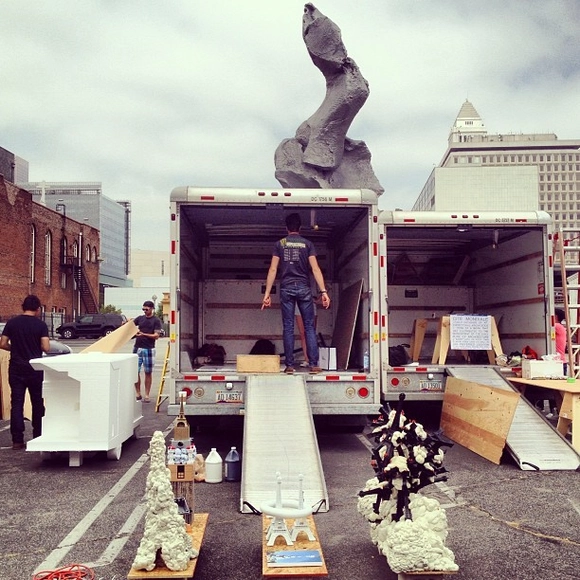
I see a convergence of sorts. It might be a coincidence but, then again, I think not. The wheels of “Pacific Standard Time”, the Getty’s juggernaut architectural assault on and about Los Angeles, have been turning for what seems like months now with exhibit after exhibit and symposium after symposium.
Is it just me or is “Pacific Standard Time” fatigue setting in? I’m not complaining. It gives me a lot of material to write about so I don’t have to just make stuff up. It corresponds with something called history, after all. But where is the self-reflexive, self-effacing, ha-haExit Through the Gift Shop wink about it all? It’s all so damn serious, isn’t it? It seems cooked up to be so monumental and deterministic. So Grand Narrative from the get-go, right out of the institutional blocks, like a marketing campaign.
https://www.archdaily.com/387691/the-indicator-back-up-and-throw-open-the-doorsSebastian Jordana
Invasive Aesthetics: A Manifesto for Reviving Architectural Identity in Developing Nations

We have entered an era of ‘modernization’, led by the Western world. In our times of unprecedented demographic expansion, infrastructural development is racing to meet demand with supply. As architects and designers, we have been pressured to embrace consumerism. Globalization has been adopted as a solution to the problem. Developing countries have equated economic prosperity and success to the adoption of ‘contemporary architecture’ in a bid to demonstrate leadership and innovation. And voila, we have a palette of sleek buildings to meet the population’s needs, as well as to “modernize” our landscape. Surely, mimicking the formula of technologically advanced countries will project us into the public eye.
Well it certainly does, but not necessarily in a positive way. It is creating a global architectural uniformity as designs promoted by Western ‘architectural gurus’ are being replicated around the world. We are neglecting vibrant contextual elements and hence constructing a generic world lacking humane facets of design. Would it not be a tragedy if Paris, Venice and Barcelona all looked similar? Would we not mourn the vibrancy of Parisian streets around the Eiffel Tower, the romanticism of Venetian waters and the monumental Sagrada Familia that dominates the skies of Barcelona? Do we really want a world that is basically a mirror image of the US?
More after the break...
https://www.archdaily.com/385904/invasive-aesthetics-a-manifesto-for-reviving-architectural-identity-in-developing-nationsZaheer Allam & Zarrin Allam
In Discussion: Peter Zumthor Speaks with Michael Govan About the LACMA Redesign
In a crowed auditorium in central Los Angeles on Sunday, Swiss architect Peter Zumthor sat down with the Los Angeles County Museum of Art (LACMA) director Michael Govan to kickstart the opening of The Presence of the Past: Peter Zumthor Reconsiders LACMA. The hour-long discussion, captured in the video above, began with an insightful overview of Zumthor’s most famous works before moving to an in-depth conversation about the underlying ideas that drive Zumthor’s design for the highly anticipated LACMA overhaul.
The project – already six years in the making and yet still in its schematic phase – plans to replace LACMA’s aging cluster of three pavilions with an elevated, 21st century facility. A detailed project summary, alongside images captured from Zumthor’s 6 ton, concrete exhibition model, is available for you to review here on ArchDaily. Enjoy!
https://www.archdaily.com/386661/in-discussion-peter-zumthor-speaks-with-michael-govan-about-the-lacma-redesignKarissa Rosenfield
CASE Wants Your Brain

CASE is working with HP to embark on the task of investigating the future of how the Architecture, Engineering, and Construction (AEC) industry manages information and they want YOU for their survey. Help them out by answering a few harmless questions on what tools you're using to help manage your building practices and feel free to forward this along to fellow building and design industry folk since you’re being so awesome about it. You will also have the option to sign up at the end of the survey to have our findings emailed to you.
https://www.archdaily.com/385859/case-wants-your-brainSebastian Jordana
Searching for a Job in Architecture? 10 Things You Need to Know...
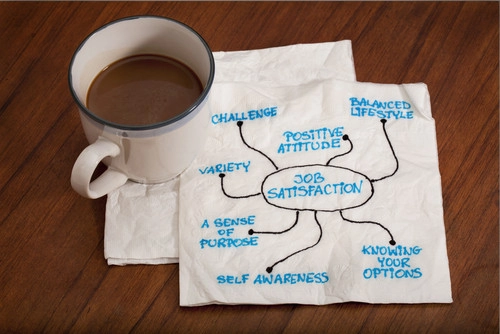
For me, university was about finding the confidence to explore creativity, the notion of self, and determining my own measurements of expectation. Last year I wrote an article entitled “10 things you don’t get taught in architecture school,” which provided advice on how to succeed in an academic setting. Having now graduated, the following article is reflective of my first 2 years working full time in architecture.
My experience in the office so far has required another round of self-configuring: repositioning the value of free thinking, redetermining the notion of self within the larger context of someone else's expectations, and managing my objectives with those of others. The measurement of success is no longer determined by me, but by various organisational objectives and requirements.
Essential to the journey of finding my current job, I have initiated substantial life changes that include establishing a career strategy, reevaluating how I position myself in the field of architecture, and questioning who I am as an individual and what I want to contribute to the profession.
After the break, the 10 things most responsible for my obtaining a job in architecture...
https://www.archdaily.com/386518/searching-for-a-job-in-architecture-10-things-you-need-to-knowLinda Bennett
The Indicator: No More Interns

The title “intern” should be banished from the profession of architecture. It’s about time. It has run its course. It’s outmoded and contributes to a culture of exploitation in the guise of opportunity. Frankly, it makes us look so nineteenth century.
More importantly, I’m tired of seeing articles decrying the state of interns every summer when “intern season” kicks in. Can we just be done with this? It’s depressing. Don’t exploit the interns! Pay the interns! No free labor! Class action lawsuit! Solidarity! FU pay me! All very well and good. However, if labor laws and ethics have not fixed the problem, maybe getting rid of the title will. It’s just a title, but it sets a bad precedent.
https://www.archdaily.com/385633/the-indicator-no-more-internsSebastian Jordana
The Traditional versus the Modern in Church Design
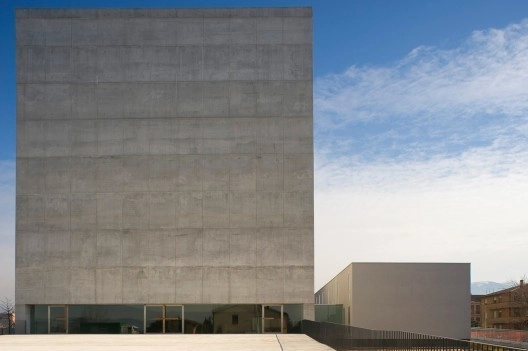
"Space, lines, light and sound" are the essential components of the experience of architecture and the most profound buildings have captured these moments through thoughtfully orchestrated design. Recently, architects that have designed churches with these primary elements in mind have come under criticism by the Vatican for diverting from the traditional form and iconography of churches. According to a recent article in The Telegraph, Massimiliano and Doriana Fuksas' design for a church in Foligno, Italy has been labeled as problematic by the parish and Cardinal Gianfranco Ravasi, head of the Vatican's Pontificial Council for Culture for its resemblance to a museum instead of a place of worship - based on traditional Catholic values placed on the altar and imagery. Regardless of the Vatican's criticism of the aesthetic approach of architects that break with tradition, this seems more of an issue of miscommunication between the architects and the congregations that have commissioned the projects that are being criticized.
More on this after the break.
https://www.archdaily.com/385013/the-traditional-versus-the-modern-in-church-designIrina Vinnitskaya
Are Renderings Bad for Architecture?
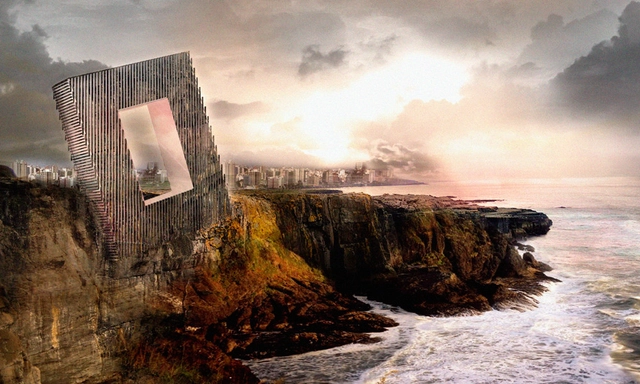
At the opening of his latest article for The Guardian, Olly Wainwright finds himself observing a slew of thesis projects produced by the best and brightest students of the UK. But Wainwright is most struck - not by the display of technical skill or imagination - but by the sheer lack of connection these projects had with actual, built, imperfect architecture: “Time and again, the projects seemed intent on fleeing the real world of people and places, scale and context; retreating instead into fantasy realms of convoluted forms with no seeming purpose.”
It’s a trap that many Architecture schools have fallen into, in the UK and around the world, but it’s not just a symptom of the misguided nature of architecture education. It’s also symptomatic of Architecture’s obsession with the image of architecture, an image completely detached from reality.
More after the break...
https://www.archdaily.com/383325/are-renderings-bad-for-architectureVanessa Quirk
Live Online Seminar: Introducing ArchiCAD 17
_17.52.49.jpg?1370555606&format=webp&width=640&height=580)
The latest BIM software from GRAPHISOFT was announced recently. ArchiCAD 17 will be shipping soon. The company has also announced an upcoming free online seminar that will familiarize you with all the new features and enhancements to the software.
Scheduled for June 18, the demonstration of ArchiCAD 17 will feature the actual model used to design one of Moscow's most prestigious buildings, the Mosfilmovskaya Street multi-purpose building complex.
All the information after the break.
https://www.archdaily.com/384282/live-online-seminar-introducing-archicad-17Sebastian Jordana
A Conversation with Academy Award Winning Set Designer Catherine Martin
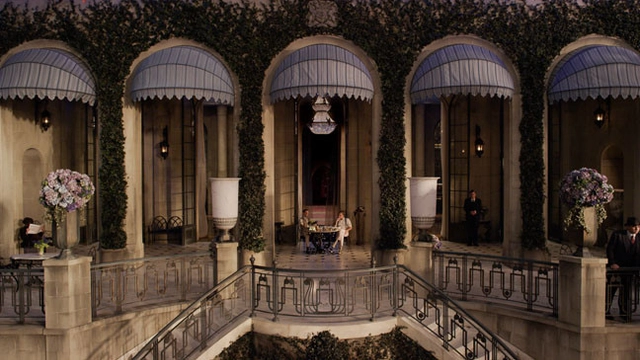
The work of a Production Designer has many parallels with that of an Architect. Both are tasked with bringing to life a conceptual environment, keeping true to that concept through budgets, time pressures, logistics and regulations. Both share a similar creative process, developing the ideas and then collaborating and coordinating with a team of professionals to give those ideas physical form. However, Production Designers are concerned with creating environments to be captured on film only for a matter of moments. Not something a standard Client is likely to request from an Architect.
While the freedom of not having to fully resolve building details – just making it look that way (not to mention the added bonus of avoiding the inevitable callbacks for defects), may seem appealing, consider having to dismantle everything you have created at the end of the process. Somewhat of an anticlimax you would think.
Not so, says Catherine Martin, veteran Production Designer, two time Academy Award winning Art Director, and the creative force behind the sets and costumes of Baz Lurhmann’s films.
https://www.archdaily.com/381007/a-conversation-with-academy-award-winning-set-designer-catherine-martinCharlotte Neilson
Films & Architecture: "The Fall"
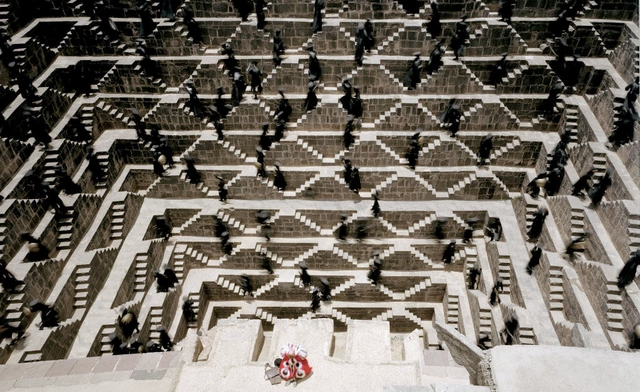
The Fall is a very visually powerful film. It is the result of a tremendous effort from its director Tarsem Singh, who travelled around the world in order to find the right locations for each scene. It is not only about the diversity of these spaces, but also the way that Singh is able to put all those elements together as part of a massive surrealistic world.
https://www.archdaily.com/381658/films-and-architecture-the-fallDaniel Portilla
Light Matters: Seeing the Light with James Turrell
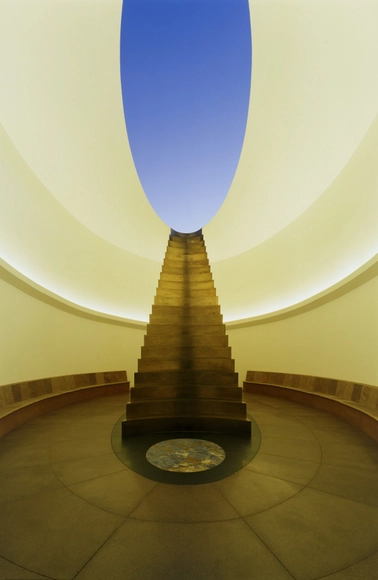
Light matters, a monthly column on light and space, is written by Thomas Schielke. Based in Germany, he is fascinated by architectural lighting, has published numerous articles and co-authored the book „Light Perspectives“.
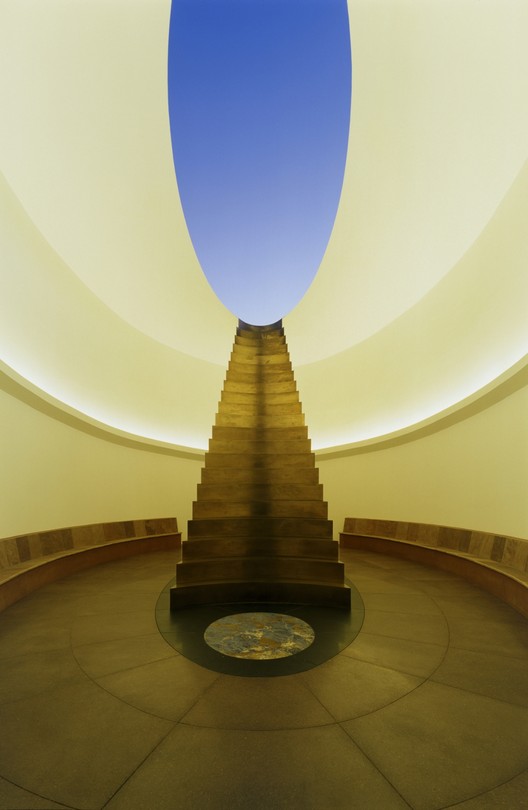
From early nocturnal studies in a lonely hotel room to transforming a volcano in the world’s biggest landscape art project to, most recently, lighting up the Guggenheim in New York, the American artist James Turrell is driven by his fascination with light. He explores perception for visual experiences where light is not a tool to enable vision but rather something to look at itself.
More Light Matters, after the break…



https://www.archdaily.com/380911/light-matters-seeing-the-light-with-james-turrellThomas Schielke
INTERIORS: David Fincher

Interiors is an online film and architecture journal, published by Mehruss Jon Ahi and Armen Karaoghlanian. Interiors will run an exclusive column for ArchDaily, analyzing and diagramming films in terms of space.
If cinema is a matter of what’s in the frame, David Fincher is an artist who is very much concerned about all four corners of his canvas. In his career, visual effects have always been at the forefront of his films, but his later works have also showcased his level of maturity as a storyteller. In Zodiac (2007), The Social Network (2010) and The Girl with the Dragon Tattoo (2011), visual effects play an integral role in the advancement of the story, as Fincher explores the relationship between visual effects and space.
The spaces we analyzed decrease in size with each film – an entire block in Zodiac, a business establishment in The Social Network and a single room in an apartment in The Girl with the Dragon Tattoo. In each instance, we are dealing with spaces that depend on an effect of some sort.
https://www.archdaily.com/380775/interiors-david-fincherINTERIORS Journal
The Mapdwell Project: Determining Optimal Solar Power on Rooftops
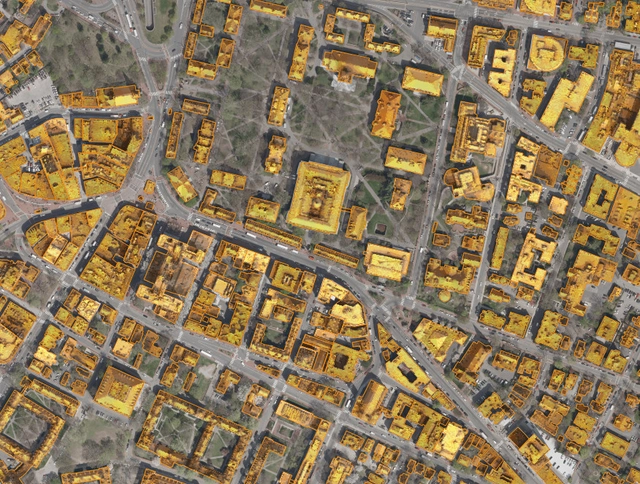
The Mapdwell Project is a collaborative effort of researchers, academics, and professionals from MIT from a range of fields - design, building technology, engineering, environmental sciences, finance, and computer sciences - to develop a community resource of research-driven and tested information of sustainable practices.
The Sustainable Design Lab at MIT collaborated with design studio MoDE (Modern Development Studio), which designed the online viewer.
The fundamental goal of Mapdwell is to deliver a tool that enables communities to make informed decisions about how to incorporate sustainable practices into their lifestyles through community awareness, and access to information about energy efficiency and smart development.
More details on this tool after the break.
https://www.archdaily.com/381813/the-mapdwell-project-determining-optimal-solar-power-on-rooftopsIrina Vinnitskaya
Lebbeus Woods, 1940 - 2012
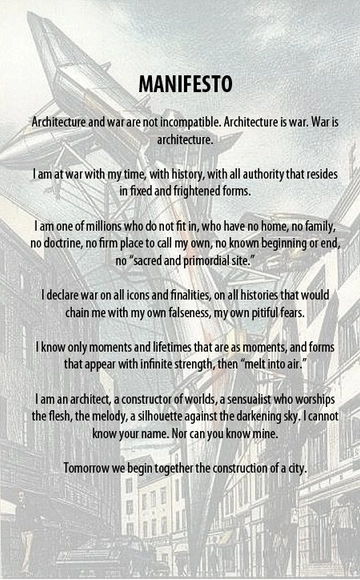
Lebbeus Woods envisaged a world at war. The visionary architect, artist, and educator - who would have turned 73 today - drew cities under duress, buildings in the face of destruction, and landscapes confronting catastrophe. He imagined an underground city connecting divided Berlin, buildings designed for seismic hot zones that could move during earthquakes, and a utopian city that looked like an insect. He didn’t depict the world as it was, he depicted what it might be.



https://www.archdaily.com/349556/lebbeus-woods-1940-2012Jonathan C. Molloy
Portland State University’s School of Architecture launches Center for Public Interest Design

Portland State University’s School of Architecture has announced the launch of its new Center for Public Interest Design, a research center that aims to investigate and utilize the power of design to make social, economic and environmental change in disadvantaged communities worldwide. The Center is the first of its kind in the nation.
https://www.archdaily.com/377749/portland-state-universitys-school-of-architecture-launches-center-for-public-interest-designKarissa Rosenfield
Films & Architecture: "Dogville"
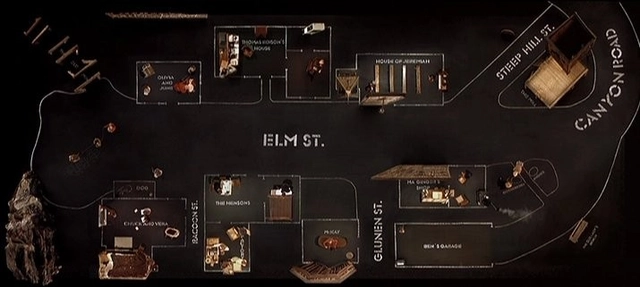
What if a movie is filmed in such a minimal way that your only reference is a plan view drawn on the floor. Then you would need to imagine all the missing information in a kind of mental extrusion of physicality. This is the way chosen by the Danish director Lars von Trier to represent a parable occurring in a fictional settlement in Colorado.
https://www.archdaily.com/375095/films-and-architecture-dogvilleDaniel Portilla
The Indicator: Pilgrimage, Experiencing the Eames House
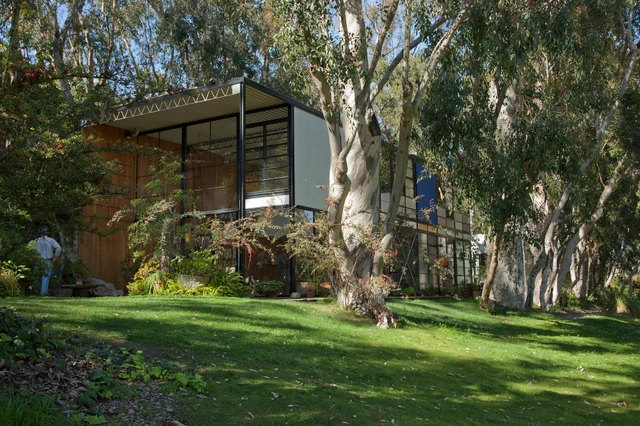
I pass by the Eames House almost every day at about 35 mph on my way down to PCH, the sand, the waves, the subterranean tunnels, and the tsunami zone, where LA coughs up its junk on the urban beach, where the Westside comes to its logical conclusion. Sometimes traffic is backed up so far up the hill—this is Los Angeles, after all—that I sit motionless and adjacent where the house should be, but can’t actually see it. I listen to the engine, the radio, the sound of helicopters and leaf blowers. The house is silent somewhere behind a wall of dense tropical flora.
My first actual visit to the house was when I was barely thinking about architecture. In a way it was my introduction to the possibility that someone could do architecture, that it was something one could succeed at. It was optimism on real estate once considered solidly middle class. Improbably light-weight and even painterly, like a Mondrian composition, it sits in a perfectly mundane American yard, like the delicate skeleton of a bird perched over the Pacific.
https://www.archdaily.com/377573/the-indicator-pilgrimage-experiencing-the-eames-houseSebastian Jordana
Strawscraper / Belatchew Arkitektur
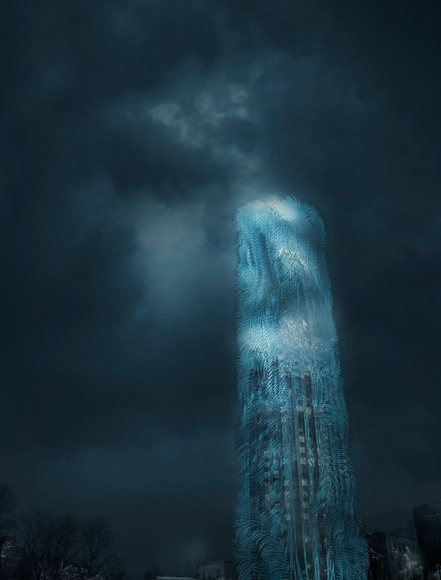
Belatchew Arkitekter has presented a concept for transforming high-rise towers into power-generating factories. The Swedish firm's proposal involves covering a Stockholm skyscraper with "electricity-generating bristles". The tower in question is Henning Larsen's Söder Torn tower on Södermalm in Stockholm. Belatchew has designed a wind farm that will top the existing building with a 16-story extension, covering the facade with "hairy-looking plastic straws designed to move with the wind".
Join us after the break for more details and images of this proposal.
https://www.archdaily.com/377414/straw-scraper-belatchew-arkitekturIrina Vinnitskaya
Zaha Hadid Wins European Museum of the Year Award for Riverside

Zaha Hadid Architects’ Riverside Museum in Glasgow, Scotland, has won the prestigious European Museum of the Year Award (EMYA) for it’s ability to “demonstrate brilliantly how a specialist transport collection can renew its relevance through active engagement with the wider social and universal issues.”
Out of 40 museums from across 21 European countries, the jury agreed unanimously that ZHA’s Riverside Museum fulfilled the EMYA criteria of ‘public quality’ at the highest level.
https://www.archdaily.com/376893/zaha-hadid-wins-european-museum-of-the-year-award-for-riversideKarissa Rosenfield
In Residence: Claudio Silvestrin
Free of clutter but filled with light, shadow and sculptural forms, filmmaker Matthew Donaldson takes you inside the minimalist masterpiece that Italian architect Claudio Silvestrin calls home. As part of NOWNESS’ In Residence series, this video sheds light Silvestrin’s “reductive, contemplative, near-ecclesiastical spaces” that can be found across the globe – from Moscow to Majorca, and soon-to-be in Miami, where Silvestrin is currently designing a home from Kanye West that will undoubtedly exhibit many of his signature components.
https://www.archdaily.com/376249/in-residence-claudio-silvestrinKarissa Rosenfield
Why Skaters Need the Southbank Centre

Among the extensive discussion of Feilden Clegg Bradley's scheme to redesign the Southbank Centre in London, one issue which has sometimes been ignored by the architectural media has been the proposal to relocate the skate park in the under-croft of the Queen Elizabeth Hall to a space beneath the nearby Hungerford bridge.
Unsurprisingly, this decision has sparked a petition which has collected nearly 40,000 signatures to save one of the UK's most famous skating hotspots. We’ve talked about how skaters can teach architects about understanding space before; however, in this instance I would like to examine how skaters as a (sub)cultural entity interact with the city, and how the city can cater to their needs. Though many architects are already in favor of accepting skaters, I hope to explore why the wider community tends to see skating as a problem to be solved, and what this can reveal about the proposal at the Southbank Centre.
Read on to find out more about the peculiar way skaters experience cities
https://www.archdaily.com/376231/why-skaters-need-the-southbank-centreRory Stott
Venice Biennale 2014: British Council Calls for Proposals

Responding to Director Rem Koolhaas’ theme “Absorbing Modernity: 1914-2014” for the 2014 Venice Architecture Biennale, titled “Fundamentals”, the British Council has launched an open call for exhibition proposals that investigate how an aspect of British architecture has adapted to the condition of modernity during this era.
https://www.archdaily.com/376066/venice-biennale-2014-british-council-calls-for-proposalsKarissa Rosenfield
Why LEED Doesn’t Work in Rural Africa and What Will

Originally published on Intercon, Ohioan and Africa-based architect Charles Newman, LEED AP discusses the pitfalls of LEED in rural Africa. Newman, who is currently working for the International Rescue Committee in Bukavu, Democratic Republic of Congo, is dedicated to the integration of sustainability in communities worldwide. Learn more about his work and travels on his blog Afritekt.
While in a small southern town of the Democratic Republic of Congo in mid-2012, a colleague of mine approached me for some guidance on a large health proposal he was putting together. A portion of the grant would be earmarked for the construction of hundreds of clinics across the DR Congo, and he mentioned that the donor would be very interested in “green” building standards. Knowing that I was a LEED Accredited Professional, he began asking how we might be able to incorporate such building standards into the designs for the pending projects. I rattled off some general guidelines such as using local materials – recycled ones if available, incorporating existing infrastructure, natural ventilation, etc. He jotted down a few notes, then began to pry a little deeper. “What about the LEED point system? Could we incorporate that into our strategy?”
My response was frank: “No, not really. LEED doesn’t work here in rural Africa.”
https://www.archdaily.com/375906/why-leed-doesnt-work-in-rural-africa-and-what-willKarissa Rosenfield