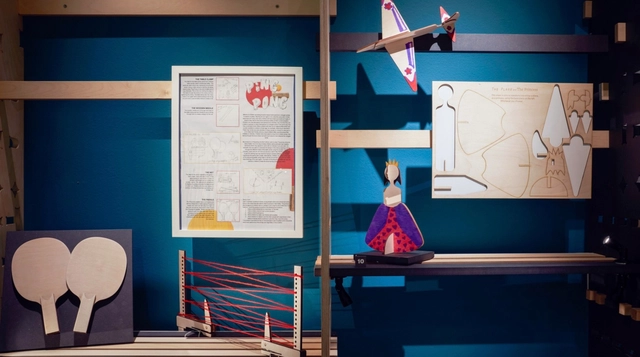
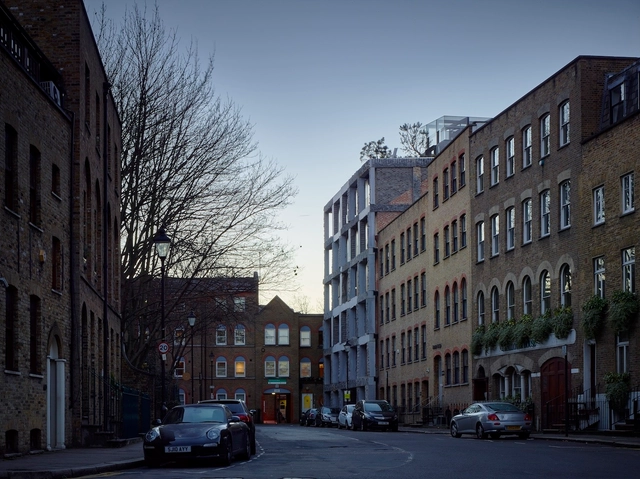
What does community architecture look like? Making It Happen tells the stories behind four very different examples of new or reimagined public areas. This immersive exhibition charts and celebrates the coming together of communities and architects to craft and create spaces that work for all.
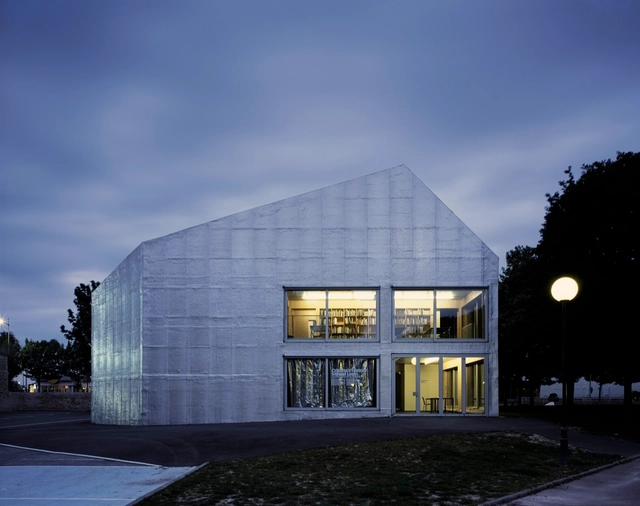
In recent years many public buildings in Britain have faced an uncertain future as a result of budget cuts or the withdrawal of funding. In response, communities have come together to keep public buildings open and functioning, campaigning and fundraising in the face of closure or catastrophe. Making It Happen: New Community Architecture features four recent
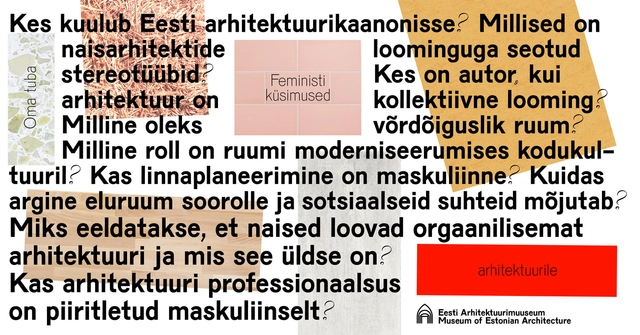
A room of one’s own: Feminist questions about architecture
A room and money of her own – these are two prerequisites for a woman’s self-fulfilment, so wrote Virginia Woolf almost 90 years ago. Despite this, Estonian architectural culture still seems to be completely unaware of the fact that space can also be a feminist issue. Yet feminism provides a methodology and approach that allows us to raise a wide range of questions and to see the history of Estonian architecture in the 20th century as well as contemporary practices and ways of using space in a completely different light. That
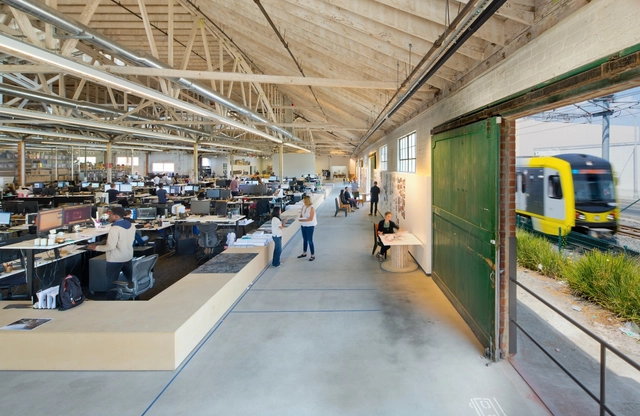
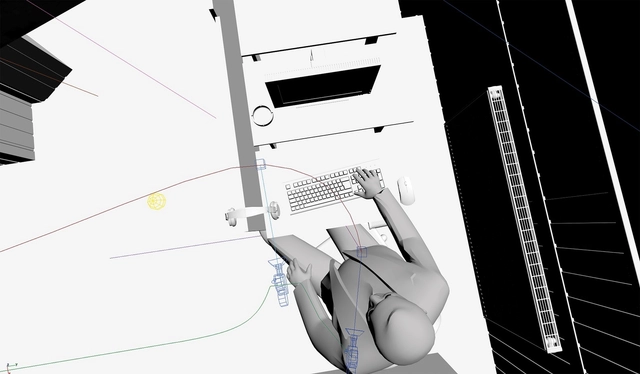
Join Rios Clementi Hale Studios and Cal Poly Tech for an investigation of virtual reality in architecture on Sunday, December 9 at the Rios Clementi Hale Studios offices.
A jury will judge final presentations from architecture students taught by Frank Clementi and other RCHS team members. The virtual reality projects all aim to evaluate the essential conventions of architectural spaces and adapt them to the reduced conditions of simulated environments. Attendees are invited to experience the students' plans firsthand followed by a roundtable discussion investigating the evolution of architecture and how it behaves.
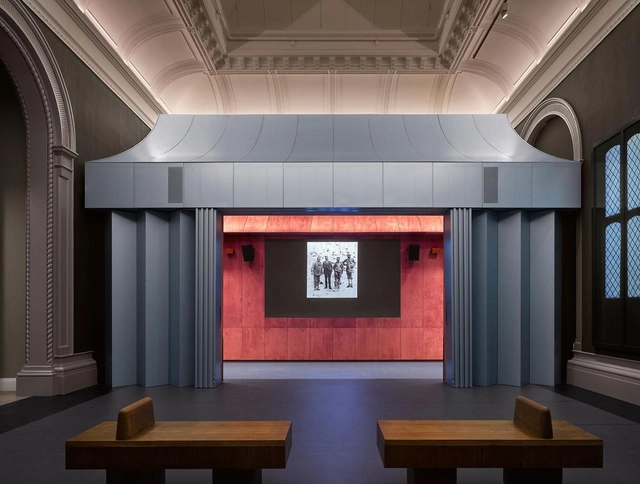
How does our built environment affect us? This major exhibition spanning two galleries examines the positive and negative influence buildings have on our health and wellbeing. From Dickensian London to the bold experiments of postwar urban planners, and from healing spaces for cancer patients to the role architecture can play in global healthcare provision, we look anew at the buildings that surround and shape us.
With this first comprehensive European exhibition the Aedes Architecture Forum presents the work of Kashef Chowdhury/URBANA from Bangladesh, who received the prestigious Aga Khan Award for Architecture in 2016 for the Friendship Centre on the flood plains of Gaibandha in northern Bangladesh. With further projects such as the Gulshan Society Mosque in Dhaka and the Cyclone Shelter in Kuakata, he gained widespread international acclaim. Careful arrangement of structures in areas marked by extreme climatic conditions, combined with local building techniques and materials, Kashef Chowdhury’s buildings are exemplary of an architecture that serves society with radical simplicity and poetry. With an
Presenting architects in conversation with creative figures, Architecture Foundation’s headline annual lecture in collaboration with the Barbican will see architect Sam Jacob in conversation with Dutch visual artist Madelon Vriesendorp.
https://www.archdaily.com/908394/architecture-on-stage-madelon-vriesendorp-and-sam-jacob-in-conversationKatherine Allen
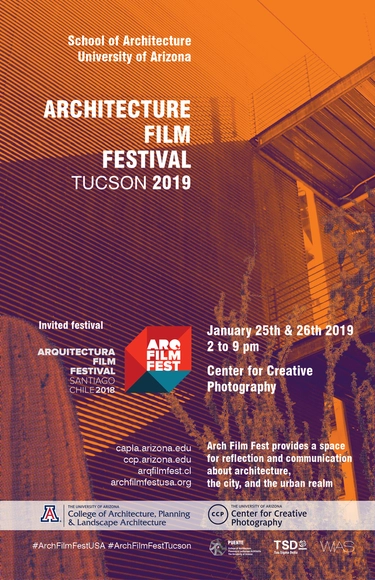
School of Architecture of the University of Arizona presents “Architecture Film Festival Tucson 2019” in conjunction with invited festival ArqFilmFest Santiago Chile 2018.
Film has the power to bring people together – or tear them apart, spur conversation, and transform ideas. It is in anticipation of this that the School of Architecture of the University of Arizona College of Architecture, Planning and Landscape Architecture presents “Architecture Film Festival Tucson 2019” in conjunction with invited festival Arquitectura Film Festival SANTIAGO 2018. Held at the Center for Creative Photography at the UA’s main campus, a festival of selected award-winning films shown in previous festivals held in Santiago, London, Venice, Lisbon, and Buenos Aires will take place over two days, January 25-26. Ranging in genre from documentary to experimental and hailing from some eleven countries, most of these films have never before been aired in the U.S.
The role of architecture is to create strong and sustainable identities for cities and their communities. With well-conceived design, we can help things run more fluidly, improve people’s well-being, and make life more enjoyable. Every project is a unique expression of the ethos of its users, climate, and context. A built environment can be seen as a point of departure: it is where the architecture starts to communicate, the point from where it starts to interact with the public and its users. Followed by a talk with Jette Hopp of SNØHETTA.
Eyal Weizman, director of Forensic Architecture, will lecture at the Barbican in cooperation with The Architecture Foundation discuss the group's practice combining architecture and digital forensics.
https://www.archdaily.com/908393/architecture-on-stage-forensic-architectureKatherine Allen
Videos
30 thumbs from the Murcutt Master Class - Architecture Foundation Australia
Commenced in 2001, this annual event has been attended by architects and academics from over 80 nations. The Glenn Murcutt Master Class is a two-week residential studio program held in Australia. Week one is held at ‘Riversdale’, the Arthur and Yvonne Boyd Education Centre, a magnificent rural retreat south of Sydney - an award-winning building designed by Murcutt in 1999 and described by Thomas J. Pritzker as a ‘Masterwork’. Glenn personally leads the Master Class, stays at ‘Riversdale’ with the participants and leads the program. Other tutors on the Master Class include seminal Australian architect and educator Richard Leplastrier, award winning and internationally published architect Peter Stutchbury, leading academic and practitioner Professor Brit Andresen, and Master Class Convener Lindsay Johnston, former Dean of Architecture, University of Newcastle, Australia. Week two of the 2018 Master Class will be held again in Sydney. The Master Class is open to practising architects, academics, postgraduates and some senior architecture students. There are only 32 places available.
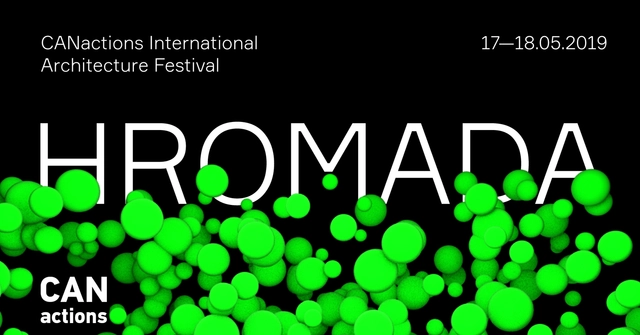
CANactions is an educational platform, aimed to enhance the creation of places and communities where people love to live and work. CANactions integrates the most relevant world experience in the sphere of architecture and urbanism to educate and inspire responsibility active change makers. CANactions is a member of Future Architecture Platform.
This year, the 12th CANactions International Architecture Festival will be focused on an exploration of a notion of "Hromada" — Ukrainian name for the Community.
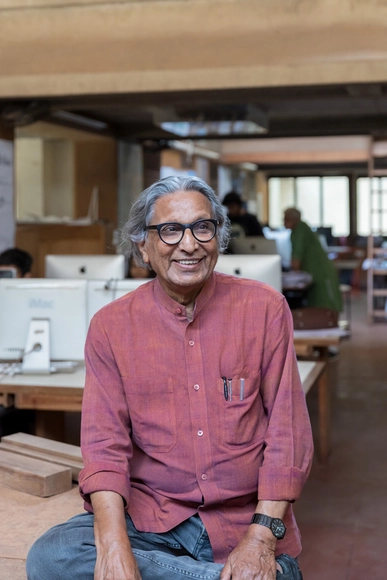
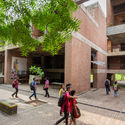
With the exhibition »Balkrishna Doshi: Architecture for the People« (30 March to 8 September 2019), Vitra Design Museum presents the first international retrospective about the 2018 Pritzker Prize laureate Balkrishna Doshi outside of Asia.
The renowned architect and urban planner is one of the few pioneers of modern architecture in his home country and the first Indian architect to receive the prestigious award. During over 60 years of practice, Doshi has realized a wide range of projects, adopting principles of modern architecture and adapting them to local culture, traditions, resources, and nature. The exhibition will present numerous significant projects
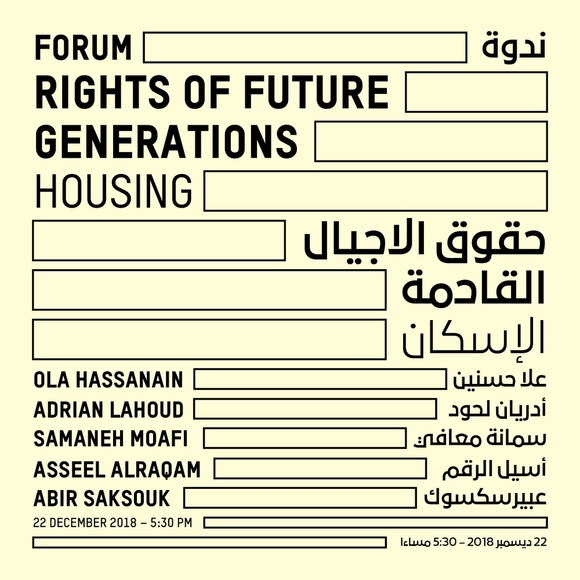
Using Sharjah as its primary field of research, the inaugural edition of Sharjah Architecture Triennial invites members of an emerging generation of architects, urban designers, planners, scholars and artists from across Middle East, North and East Africa, and South and Southeast Asia and their diaspora to respond to the unique challenges and opportunities faced by our generation.
Through the theme of Rights of Future Generations, curator Adrian Lahoud seeks to question how inheritance, legacy, and the state of the environment are passed from one generation to the next, how present decisions have long-term intergenerational consequences and how other expressions of
Havana has often been referred to as a time machine — a city that transports its visitors to a distant moment and time in history. The capital city’s colorful Spanish colonial-style architecture has made it a go-to destination for photographers, architects, and people seeking life in a bygone era. From classic cars to “its overall sense of architectural, historical and environmental continuity makes it the most impressive historical city center in the Caribbean and one of the most notable in the American continent as a whole,” remarks UNESCO.
https://www.archdaily.com/906621/street-photography-tour-of-havana-cuba-with-pratt-instituteSponsored Post
HOUSING: WHAT’S NEXT? FROM THINKING THE UNIT TO BUILDING THE CITY
During the twentieth century the world population increased at a higher rate than at any other period in time, from around 1.5 billion people in 1900 to nearly 7 billion today. Facing these figures, it is impossible not to think about what we have done to accommodate this population, or rather, what all these people have done to obtain housing. Figures indicate that although we have been able to build large quantities of houses, and have begun to cover the quantitative deficit, today the great challenge is to improve the quality of the existing housing stock. At a time in which this effervescent population growth persists–particularly in the geographical regions of the Global South and in emerging economies–the question is how do we change the paradigm and start thinking about housing in relation to the quality of the urban fabric to build better cities.