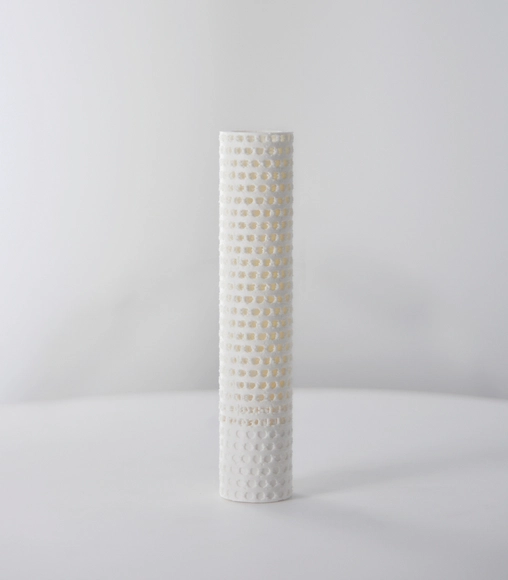
Attention to all visionary artists, architects, engineers, 3D designers and model makers: Wide Open Arts will host a curated booth of imaginary towers in our upcoming Outsider Art Fair | NYC (Jan 21-24 2016). Submissions are open to all. All received designs that adhere to the dimensional and structural criteria will be evaluated and the best designs will be 3D printed and displayed in the curated space at the Outsider Art Fair NY 2016. The project and space will be curated by independent artist and curator, Leah Gordon.
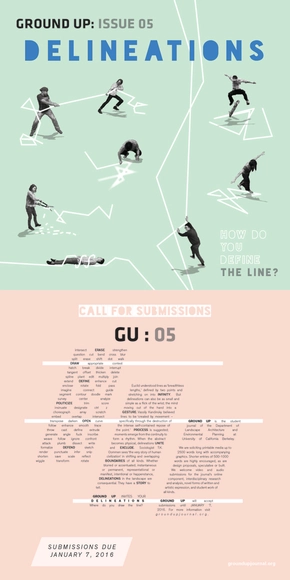
Euclid understood lines as ‘breadthless lengths,’ defined by two points and stretching on into infinity. But delineations can also be as small and simple as a flick of the wrist; the mind moving out of the hand into a gesture. Vassily Kandinsky believed lines to be ‘created by movement – specifically through the destruction of the intense self-contained repose of the point.’ Process is suggested; moments emerge from the continuity to form a rhythm. When the abstract becomes physical, delineations unite and exclude. Sociologist T.K. Oommen sees ‘the very story of human civilization’ in shifting and overlapping boundaries of all kinds. Whether blurred or accentuated, instantaneous or permanent, representational or manifest, intentional or happenstance, DELINEATIONS in the landscape are consequential. They have a story to tell.
Background image from October 19, 2015, when the competition was officially announced and the seminar From Border to home was held at the Museum of Finnish Architecture. Image: https://www.facebook.com/events/459376257575342/
The Museum of Finnish Architecture, in collaboration with the Finnish Association of Architects SAFA, organizes an open, anonymous architectural competition for the design of solutions to housing needs of refugees in northern Europe. The submissions will form the basis of an exhibition to be hosted in the Finnish Pavilion at the forthcoming Venice Architecture Biennale in 2016. The main exhibition at the Venice Biennale will be curated by the Chilean architect Alejandro Aravena. Its theme, Reporting from the front, is a call for proactive communal responsibility among architectural practitioners.
Mumbai, or erstwhile Bombay is the largest metropolis of India and an answer to the likes of Shanghai, London or New York. It is the financial capital and trade epicentre of the country, a city of lifestyles and narratives. The 'Maximum City' of Bombay is renowned all over the globe for the enormity and surrealism of BOLLYWOOD, which is the nickname given to the Hindi language Film Industry located in the city. The industry has come a long way and bloomed since its inception, to a multi-billion dollar industry, only second in capacity to its American cousin, Hollywood. Bollywood is a goliath in terms of revenue generation and employment, both direct and indirect, supporting a multitude of auxiliary industries like tourism, music, design and fashion. Bollywood's film production centre is a government-owned studio facility known as 'Film City' in the northern suburbs of Mumbai. It is an integrated film studio complex with several recording rooms, gardens, lakes, theatres and grounds that serve as the venue of many Bollywood film shootings. The aim of this competition is to design a 'Film City Tower' in Bombay and explore the possibility of a new vertical typology for a film city. The project resolves to put Bombay and Bollywood on the global map through a futuristic and contemporary landmark for the city. The participants are tasked with proposing a new holistic and integrated vision to inject a new sense of purpose in a Film City. The competition encourages participants to conceive and imagine additional innovative programming and integrate the functions of a film city with other auxiliary functions to increase the commercial, social and ethical viability of such facilities. The setting up of film cities require an enormous footprint on land, which is a scarce and vital resource in the case of Bombay. The proposal for the land intensive function of a film city is to be compacted and transformed into a vertical tower that would generate an exemplary urban form. The functions of a film city need to be optimised into vertical units through nesting, layering, stacking or overlapping onto one another in a legible fashion. The proposal should strive to create an iconic landmark representing Bollywood and its significant contribution to the cultural landscape of the subcontinent for over a hundred years. It should be styled according to the suitability of this enormous industry and transform the skyline of Bombay. The design for the tower should explore the insertion of alternative energy methods, responsive and adaptive design techniques and self regulatory systems to strike an equilibrium between the input-output energy cycle. The proposal should insert a variety of public functions in the tower that would greet the public with a panorama view of the city. The proposal should innovate and distribute the aspect of social and community spaces equally in a tower, which in most of the cases, is absent as the building rises up. The participants are asked to design a new island for the Film City tower in the 'Mahim Bay', across the Bandra-Worli Sea Link, in Mumbai. The site island is located at a distance of approximately 100 metres off the BWSL promenade in the Mahim Bay waters, adjoining the Western Express highway. It is bounded by the Bandra Reclamation area to its north and west, Mahim and Worli to the far east and south respectively.
ProjectNext communications agency and White Gardens business center announce an open international competition for architecture, structural-engineering, and design firms with the aim of finding the best concept for White Gardens Arcade.
The topic proposed for the second edition of Critic all is the autonomy of architecture, recollecting and reframing the reflections that over architecture’s specificity have been produced within the discipline itself. If there is an approach that argues that architecture cannot be an isolated medium, that is, autonomous – not only in regard to social culture but above all, the worldly social, political and economic environment in which it is immersed, – we also have to face those visions that, conversely, consider that architecture is strictly a self-referential discipline, and therefore, it employs a self-sufficient language whose verification is determined by a collection of predefined historical forms.
We’re commissioning an artist, or artist led team, to design and deliver a major public artwork – an Urban Oasis in the heart of one of Australia’s bustling tourist cities.
The Global Irish Design Challenge (a global competition) as part of Irish Design 2015 (ID2015), invites designers of Irish lineage, or those with a strong affiliation to Ireland, to present products, projects and concepts that have the potential to revolutionise the way we live. The challenge aims to celebrate and provide a platform for game-changing Irish design innovation, while activating and connecting a broad global network of design talent. It offers a unique opportunity to bring visibility to the exceptional levels of design and innovation taking place across the globe.
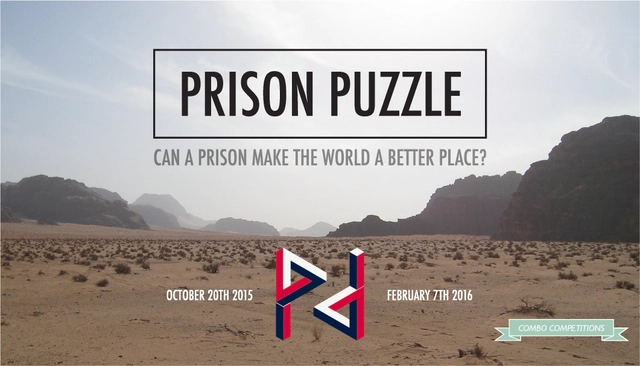
Prison Puzzle: can a prison make the world a better place? (Copyright Combo Competitions)
Is there such a thing as a perfect prison? Is it possible, even in theory, to satisfy needs as potentially contrasting as those of inmates, victims and society?
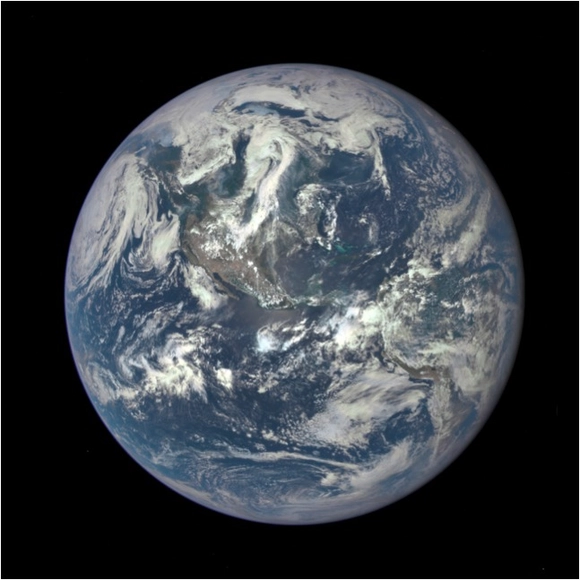
Earth as seen on July 6, from a distance of almost one million miles by a NASA scientific camera on board the Deep Space Climate Observatory spacecraft. Credit: NASA.
What do outer space capsules, submarines, and office buildings have in common? Each was conceived as a closed system: a self-sustaining physical environment demarcated from its surroundings by a boundary that does not allow for the transfer of matter or energy.
Community Lighting for the Urban Environment has set itself the goal of encouraging and challenging young designers such as students (University & Colleges) and emerging Professionals (<5 years in their profession) to develop innovative lighting concepts for interior and exterior spaces, stimulate challenging ideas and recognize the individuals creating those ideas.
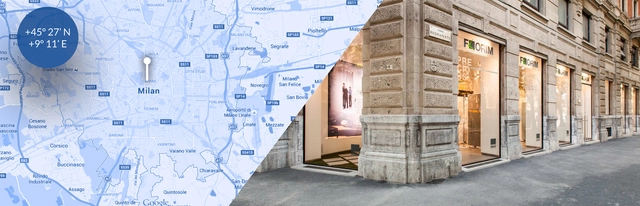
Florim has launched a competition to design a temporary architectural installation that showcases images from relevant architectural works built with ceramics. This event will take place during the International Furnishing Accessories Exhibition in the very centre of Milan and the competition is open to designers, architects and creative communities worldwide. Learn more about the competition after the break.
https://www.archdaily.com/774081/open-call-exhib-it-florim-architectural-installation-in-milanSponsored Post
The project in the architectural design competition is called “Islamic Revolution and the Holy Defense Museum.” This museum is a permanent, public and national institute and the aim in establishing it is providing required basis for deeper identification of Iranian Islamic Revolution and the period of the holy defense (the imposed 8-year war with Iraq), historical bases, the highlighted role of the Supreme Leader and Iranian people, events, realities, values and achievements of these two important eras in the contemporary history of Iran. This museum will be an official establishment and a comprehensive center for organizing and supplying the narrative of Islamic Revolution and the holy defense, as well as investigations and research about these periods. Hence, the works, remaining subjective and mental evidences of these periods are to be collected, kept, organized, renovated, supplied and exhibited and the facilities of research about the mentioned subjects shall be provided for the researchers. Regarding its applicability, Islamic Revolution and the Holy Defense Museum will be a cultural/research complex. This complex should be a dynamic place and attract a wide range of enthusiasts and tourists with multiple applications. Thus, in addition to the museum building and exhibition halls, residential facilities, proper entertainments with the identity of the complex should be considered in this complex.
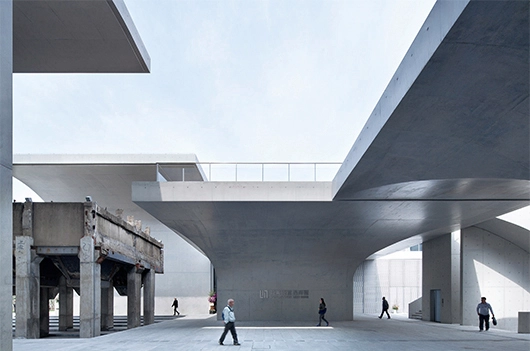
The Architectural Review is seeking the most exciting cultural buildings in the world completed in the last 5 years – from museums to performance spaces, galleries to libraries. This is your chance to be recognised on the global stage as a leading designer of cultural projects!