What elements and qualities does space need for a well-balanced physical and spiritual recovery? How to design spaces that are healthy for both our minds and our bodies? What makes an environment livable and sustainable in the long term?
These are the questions we need to address in the era of the rapidly developing real estate market. Why do we tend to inhabit more and more high-density residential towers? Are we necessarily more mentally secure? If not, what are the spatial solutions or cures for the current urbanites’ anxiety? In this article, we will explore ways of unwinding and finding cures in space.
Anne Lacaton and Jean-Philippe Vassal founded their architectural studio Lacaton & Vassal in 1987, years after studying and working together at the École Nationale Supérieure d’Architecture et de Paysage de Bordeaux. The practice established in Paris has been awarded this year’s prestigious 2021 Pritzker Prize. Their built work leaves strong evidence of what they believe is relevant: sustainability, wellbeing, social responsibility, and the readaptation and the respect of the existing built environment.
https://www.archdaily.com/958569/lacaton-and-vassal-get-to-know-2021-pritzker-winners-built-workPaula Pintos & Clara Ott
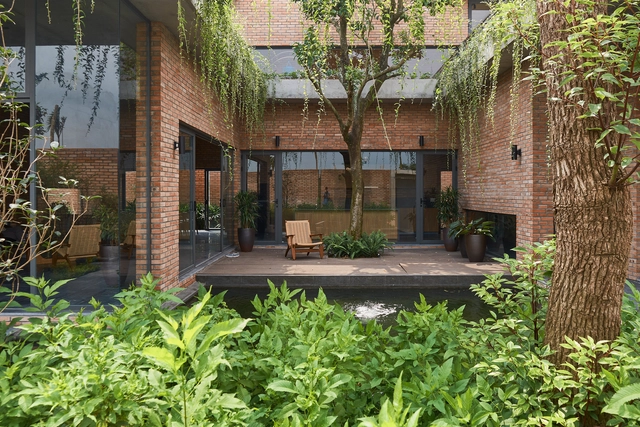
In many cases, I haven't been able to decide whether a building full of trees fits into the "sustainable" category. In fact, I've often had to make the argument that such a building is far from it.
It seems that the vast majority of contemporary marketing for sustainable architecture operates under the guise of greenwashing. What's more, the line between what truly creates healthier and more sustainable living spaces and what doesn't is often a blurred one.
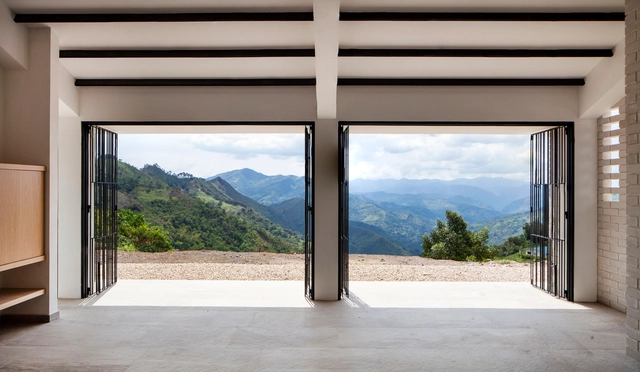
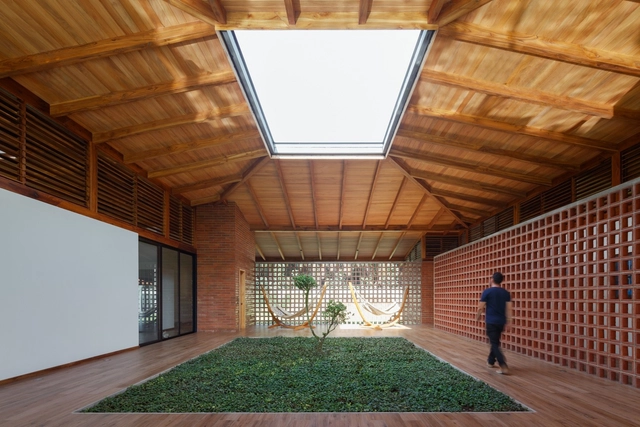
For houses throughout the world, the barriers between the inside and outside of houses are solid and well-defined, allowing the spaces within the home to be protected from the weather conditions outside and made comfortable for the inhabitants inside. In countries like Colombia, which sit close to the equator and enjoy a warm, subtropical climate, temperatures average just above ideal thermal comfort.
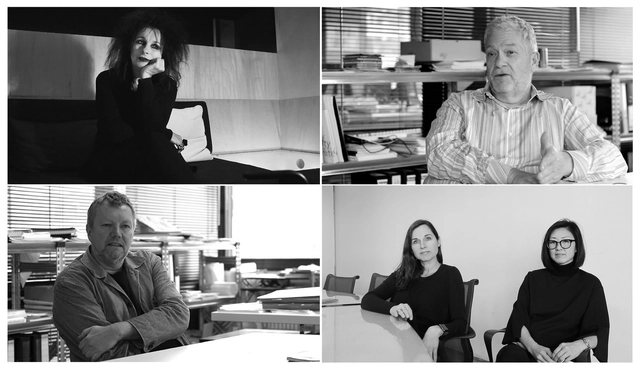
Simple in form but complex in substance, “What is Architecture?” remains an existential question for a lot of architecture students and young professionals. In an attempt to define this ever-changing interrogation and expose the different visions out there, the interview series: WIA – What is architecture? asks four, straightforward, questions to world-leading architectural designers and thinkers. Seeking to uncover their opinion on what architecture is and what it can do, these short videos reveal responses to “What is architecture? What can architecture do? What is your architectural position? and What is your design method?”.
ArchDaily has collaborated with WIA to release every week, 4 of these conversations, and to invite you to take on the challenge and answer these questions. This second article of the series highlights the ideas and visions of Odile Decq from Studio Decq, Kjetil Thorsen from Snøhetta, Florencia Pita & Jackilin Hah Bloom from Pita & Bloom, an architectural design collaborative based in Los Angeles, and Jeffrey Kipnis, an American architectural critic and theorist.
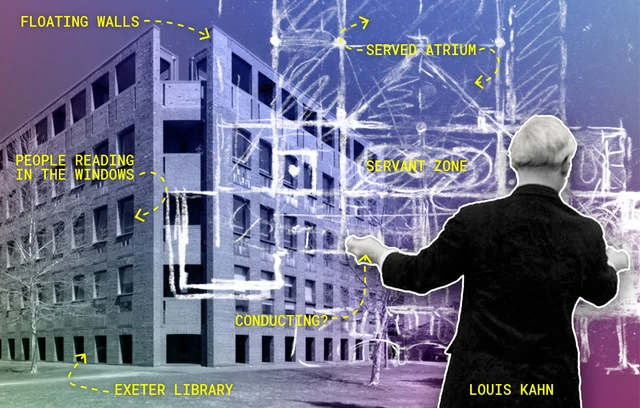
In this video, Architecture with Stewart breaks down the floor plan strategies of Louis Kahn (1901-1974) for how they treat and arrange rooms in servant/served configurations. After World War II showed us the dark underbelly of technology, the architecture that gave us “machines for living in'' seemed misguided and dehumanizing. In contrast to pre-war open and free plans, Louis Kahn considered new possibilities for rooms; believing their privacy and enclosures could work together in a ‘society of rooms.’ Beginning with a close look at the Trenton Bath House, the video includes computer animations, sketches, photographs, and historical narratives to trace the evolution of the room through buildings like the Adler House, Esherick House, and the Exeter library — a monumental room of cultural memory.
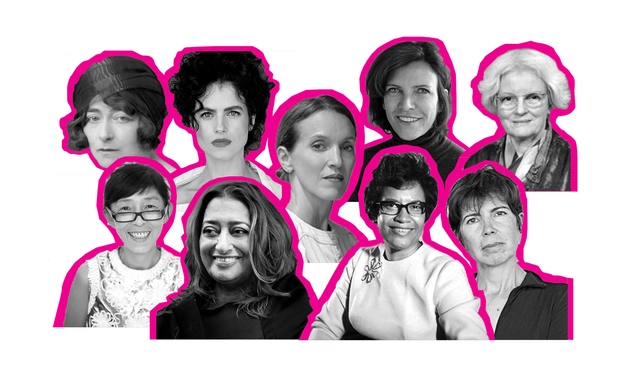
If you attended architecture or design school, there’s probably something you noticed about your fellow classmates- a majority of them were female. And if you have been working in the world of design for a few years, there’s probably something else you’ve noticed as well- that there are fewer women in leadership positions than men. There’s a crisis that architecture has been facing ever since the profession has existed, and it’s that women in leave architecture in high numbers. But what is causing this, and what steps are being taken to ensure that some of design’s best champions positioned to become future industry leaders?
There was a time when people appreciated self-contained architecture, in which the building envelope would not function as a moderator between the climate outside and the interior environment but rather as an inert and independent barrier. Countless mechanical devices and electrical ventilation, heating, and cooling equipment. A real machine.
Today, architects are increasingly concerned with the interaction between architecture and the environment in which it is inserted, thus assuming responsibility for the thermal comfort of interior spaces, using design strategies for natural climate control.
The Shing Mun River in Sha Tin, a residential town in Hong Kong, has struggled with plastic waste pollution for years. Household waste that is not properly recycled will either end up in landfills or floating in the river. In 2018 almost 17 million plastic items, or 40,000 items daily, were found to be drained into the ocean via the Shing Mun River, mostly being food packaging, cutleries, and household plastic bottles. This quantity of plastic pollution in the river and surrounding environment could eventually jeopardize the natural ecosystem irreversibly.
My mother is a psychologist, so our family talks a lot about emotion. More specifically, we discuss the experience of emotion, because, as she likes to remind me and my sisters, “We don’t think our feelings—we feel them, in our bodies.” According to my mother, it’s this experience of emotion that gives our lives a sense of meaning and vitality; as a result, her work isn’t about intellectual insight or abstract theories, but rather about giving her patients a new experience of themselves in the world.
Greater Accra Regional Hospital Accra Ghana, photo by Mark Herboth. Image Courtesy of Perkins&Will
For the architects and designers at Perkins&Will, the profession is full of women who deserve to be celebrated. While gender inequity in architecture remains a serious problem, in March 2019 the firm set out to shift the narrative. For the last three years over the course of Women’s History Month, they have highlighted the amazing designers, researchers, managers and professionals who are building a move inclusive world.
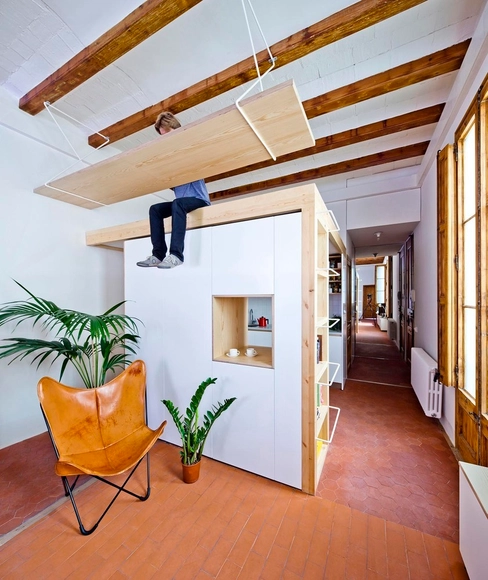
The height of the ceiling of a space heavily influences our perception of it. Generally, local building codes regulate the minimum dimensions for ceiling height, which are calculated to ensure adequate quality of life in the environment. But the exact height of the ceilings is often defined by the dimensions of other materials that make up the building, the height of the constitutive slabs, or even by rounding the dimensions of the stair steps. It is common, with the densification of cities aimed at increasing profitability, for entrepreneurs to design with minimum ceiling heights in houses and offices, reducing construction costs. On the other hand, in older structures, more generous ceilings can be observed, which generally enable a greater degree of design freedom. But how can architects make the most of these spaces?
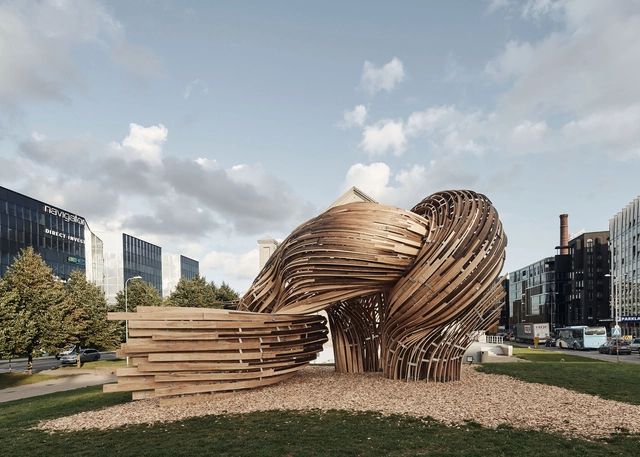
2020 Edition Winner: Steampunk Installation by SoomeenHahm Design Ltd. Igor Pantic Fologram. Image Courtesy of German Design Council
Today marks the start of the registration phase for the international ICONIC AWARDS 2021: Innovative Architecture. The awards recognise the best achievements in architecture, innovative interior and product design, as well as outstanding communication concepts and singularly innovative materials. The winners will be honoured at the awards ceremony on 11 October 2021 at the Pinakothek der Moderne, Munich, where they will have ample opportunity to network with other players on both the national and international scene.
HerCity is a platform that involves women in urban development, in order to make better cities for everyone. Turning the tables and putting girls in the expert position, the digital toolbox aims to create more inclusive, equal, and sustainable cities and communities. The initiative makes methods and tools available to urban actors globally, in order to support cities in integrating girls’ participation in their long-term strategies.
Launched on Women’s day 2021, the guide for urban planning and design is a collaborative effort between UN-Habitat and Global Utmaning, the Swedish independent think tank. ArchDaily had the chance to talk with the team behind this digital toolbox, discussing the narratives, the process, and inclusive planning on a worldwide level.
The climate crisis has revealed the poor planning of our cities and the spaces we inhabit. Both construction and projects contribute to high carbon gas emissions. Fortunately, there are several ways to intervene to bring change into this scenario, either through materials and techniques adopted in each initiative or through geographical and social impact. In this scenario, the only certainty is that: to think about the future we cannot ignore the "green" in all its recent meanings from nature to sustainability, and ecology.
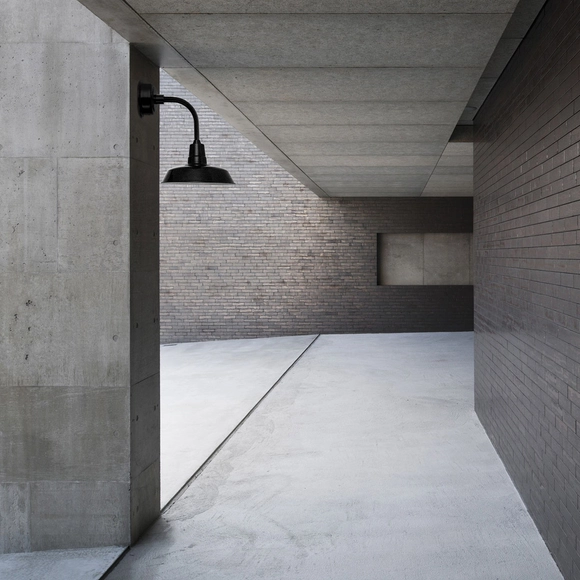
Because of their aesthetic forms, robust materials, and the nostalgic memories to which they refer, old objects often please many people and, from time to time, end up returning to fashion. In the construction industry this is no different. One object that has remained popular forever is the shed light, more specifically the Gooseneck Lamp. Its combination of a traditional look with newer technologies creates an extremely attractive product.
Many architects and designers have highlighted the importance of taking into account all five senses during the design process, in order to create a successful user experience. Fortunately, many strategies have been implemented to facilitate the experience of those who are physically impaired, however, little is being done to aid those who feel helpless and restricted due to mental illnesses and traumatic experiences.
Healing from these experiences is a journey that requires a lot of effort from both the individual and everything and everyone around him/her. Oftentimes, victims of trauma are advised to spend more time in the outdoors, embracing the restorative qualities of nature. But what about interiors? Since people are now spending almost 90% of their time indoors, it is only natural that these spaces contribute to the healing process as well. And while these spaces can look beautiful with an abundance of natural light and neutral color palettes, are they truly beneficial to their mental health?


.jpg?1615841061&format=webp&width=640&height=580)



.jpg?1615841061)






_1.jpg?1615434124&format=webp&width=640&height=580)



_1.jpg?1615434124)





.jpg?1615322008&format=webp&width=640&height=580)

.jpg?1614899251 "Courtesy of Charlie Hui, Viswerk. 2020.")
.jpg?1614898654 "© Juju Berzô")


