With a history that dates all the way back to 1834, manufacturer of luxury cases and safes WOLF knows all about the importance of protecting not only treasured possessions, but legacy, too.


With a history that dates all the way back to 1834, manufacturer of luxury cases and safes WOLF knows all about the importance of protecting not only treasured possessions, but legacy, too.

Last Tuesday, March 15, Francis Kéré became the first African architect to win the Pritzker Prize, the most important award in the architecture discipline.
The election of Kéré is not only symbolic in a time of identity demands, where the institutions that make up the mainstream are required to more faithfully represent the social, cultural, and sexual realities that make up our societies, but it also confirms the recent approach of the Pritzker Prize jury.
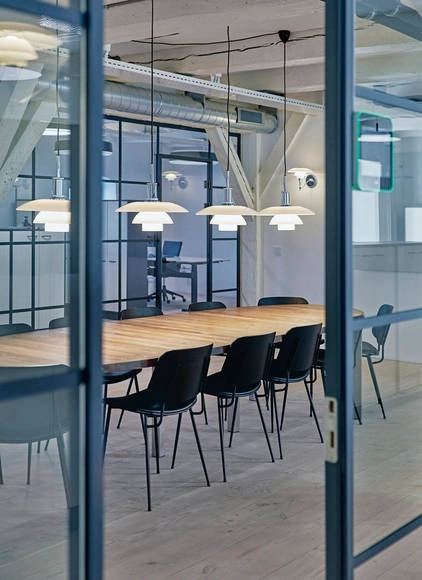
In recent years, there has been an increased focus on indoor lighting, especially in the context of the growing numbers of open-plan offices. In large parts of the world—and especially in Nordic countries—people can spend up to 80-90% of their time indoors. The light we are surrounded by affects both our circadian rhythm and hormones, making our indoor environment and its light an important factor of our well-being. Opinions on the optimal indoor lighting solution—and if one exists at all—are numerous and divided. To gain some more insight into this, the Danish lighting manufacturer Louis Poulsen set out to test the effects of various artificial lighting conditions in their own head office in Copenhagen.
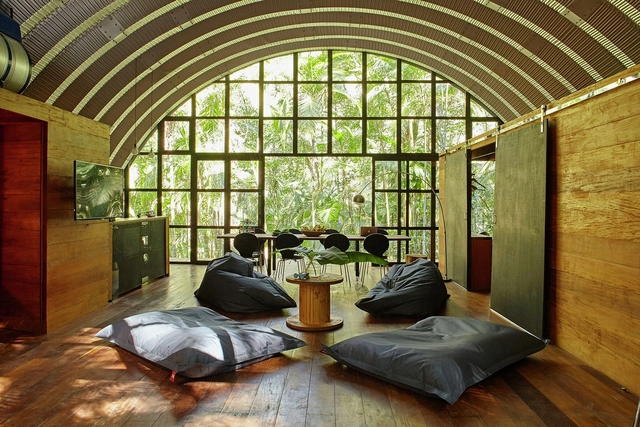
Based in São Paulo, Atelier Marko Brajovic was founded in 2006 by architect Marko Brajovic. With a multidisciplinary practice, the idea of the hybrid manifests itself as the conceptual north of the office that operates on several fronts: architecture, scenography, expography, creative direction, interior and product design. With a vast language that explores different areas, formats and aesthetics, its projects are, above all, recognized for breaking with the modern canon and seeking solutions in nature.
.jpg?1645559930&format=webp&width=640&height=580)
Balconies provide residents with great views while literally and figuratively looking down on the neighbors, but they also offer numerous other advantages.
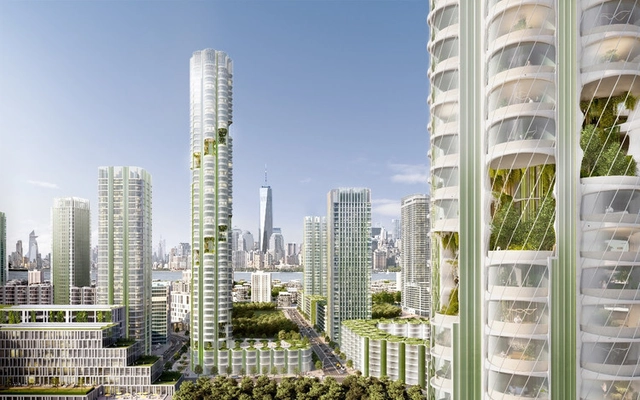
With the magnitude and urgency of the immediate Covid-19 crisis worldwide, efforts have been concentrated on saving lives, rather than focusing on concerns related to the road to Net-zero carbon. Net Zero carbon in regards to construction is defined as when the amount of carbon emissions associated with the construction of a building and its completion is zero. A zero-energy building will have an overall zero net energy consumption; the total amount of energy used by the building annually is equal to the amount of renewable energy generated on-site.
As the climate emergency presents itself as a severe and existential threat, it is crucial that the road to net-zero carbon is resumed large-scale in both an architectural and commercial sense. Around the globe, efforts have been renewed in an attempt to tackle the almost inconceivable. According to the 2019 global status report for buildings and construction, the buildings and construction sector accounted for 36% of final energy use and process-related carbon emissions in 2018. Although carbon emissions were temporarily reduced during the peak of the pandemic, they are set to swiftly return to previous figures.
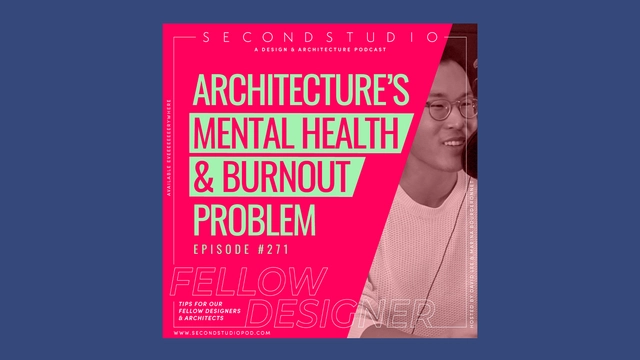
The Second Studio (formerly The Midnight Charette) is an explicit podcast about design, architecture, and the everyday. Hosted by Architects David Lee and Marina Bourderonnet, it features different creative professionals in unscripted conversations that allow for thoughtful takes and personal discussions.
A variety of subjects are covered with honesty and humor: some episodes are interviews, while others are tips for fellow designers, reviews of buildings and other projects, or casual explorations of everyday life and design. The Second Studio is also available on iTunes, Spotify, and YouTube.
This week David and Marina discuss mental health and burnout in architecture, covering how the issue is perceived by different generations, why looking to other colleagues and professions can be helpful but also not helpful, passion as a solution and problem, the inherent complexity of architecture, architects being undervalued, whether or not architecture school should change, the instability of a project-based practice, and the main reasons for poor mental health and burnout exist in architecture and how they can be addressed.

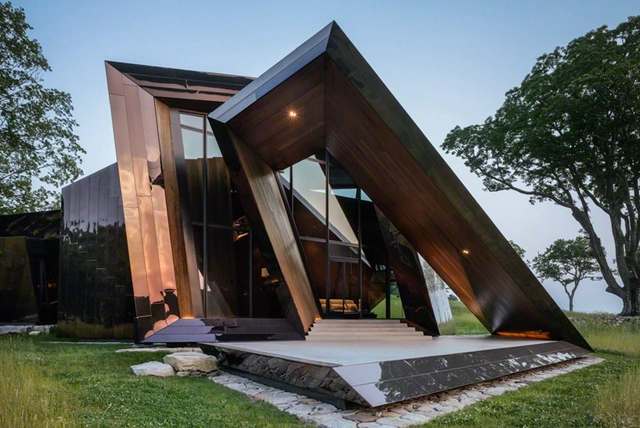
Polish-American architect, artist, professor, and set designer, Daniel Libeskind, founder of Studio Libeskind in 1989, believes that buildings are crafted with perceptible human energy, constructed with the intention to address the greater cultural context in which they are built. His commitment to expanding the scope of architecture reflects his profound interest and involvement in philosophy, art, literature, and music.
He addresses the notion of drawings being akin to a score, a piece of music that is interpreted by a like-minded community. Proportions, light, and materiality are all implicated in the drawing, and in this same way, buildings are also called to present space, atmosphere, and illuminate the practice.
Architecture education was never designed to prepare you for the entrepreneurial side of running a practice. In the minds of the creators that constructed the system which stands for what you now know to be the path to getting licensed, you were never meant to start a business in architecture prematurely. There is a code, a set of rules that drives you to obey and follow a one-sided vision of success.
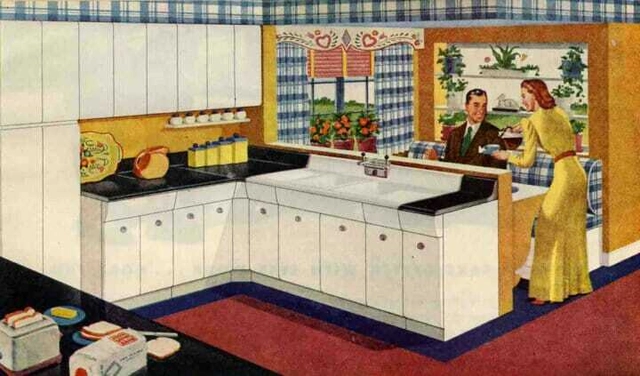
The discovery of fire was one of the great events that changed the social organization of human agglomerations, which gradually passed from nomadic to sedentary lifestyle. Fire, which in that context served to keep people warm and protect the group, was also being explored as a source for cooking food, which not only changed human eating habits, but also made it possible to conserve food, changing the social organization of communities. The preparation and meals were collective acts, which brought people together to feed, warm up and protect themselves. It is from this habit that we inherited the practice of large banquets and the appreciation of food and meal times. Food preparation, on the other hand, was gradually marginalized.
While the Egyptians, Assyrians, Phoenicians, Persians, Greeks and Romans shared the habit of holding large banquets, the preparation gained less and less prestige, losing its collective social dimension until it was physically segregated in a specific room: the kitchen.
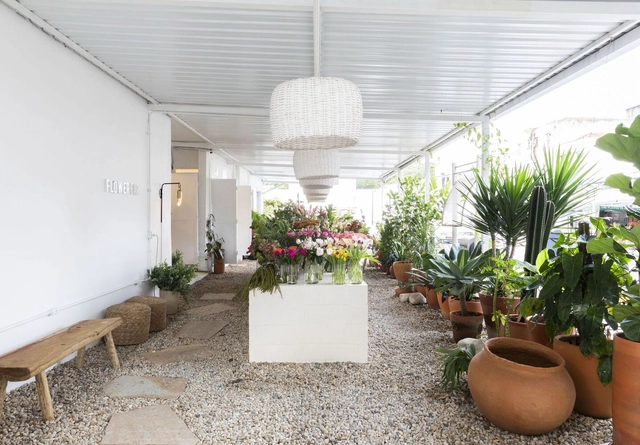
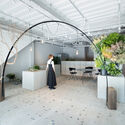
From celebrations of important conquests to expressions of wishes for someone who is sick to get better, the act of gifting someone (or oneself) with flowers is present at different stages of our lives and can carry numerous meanings. This kind of ritual materializes the expression of a feeling and, in many cultures, it is a delicate and sensitive choice, which usually takes into account the selection of specific species for each event.
For this reason, flower shops and stores specializing in flower arrangements are often places where the diversity of species is arranged in order to make it possible to choose the right arrangement or bouquet of flowers. In this sense, many florists take advantage of spatial organizations and design elements that seek to enhance the natural beauty of flowers. Some examples of this strategy are the use of more neutral tones on the surfaces, in contrast to the colors of the different species, and the use of innovative displays in dialogue with the arrangements.

This article was originally published on Common Edge.
What, exactly, is the point of architecture criticism? The word “criticism” is derived from the Greek term krinein, meaning to separate, to sift, to make distinctions, to discern, to examine, or to judge. According to Wayne Attoe, an architect and educator who writes about architecture criticism in his book Architecture and Critical Imagination (now sadly out of print), this does not necessarily mean to disapprove of, or to find fault with. It can be favorable or unfavorable; it can praise or condemn.

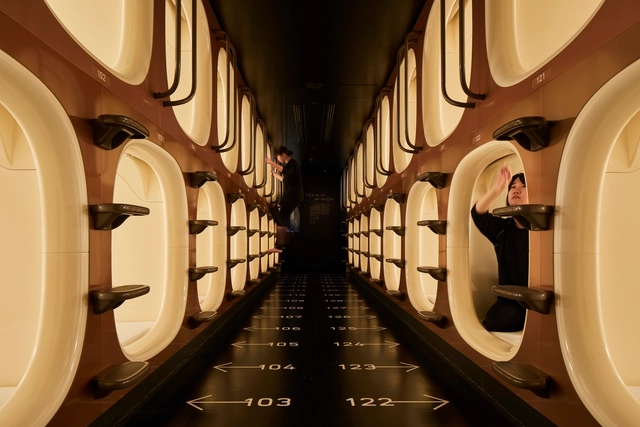
Hotels are a hub for commerce, transportation and culture. Today, interior designers are redefining hospitality spaces to accommodate new forms of travel, communication and rest. From historic renovations to contemporary ground-up hotels, these projects center around leisure and memorable guest experiences. In turn, they express brand identity to rethink what interior design and hospitality will be in the future.

Although computational design as a technique applied in the architectural field has been around for two decades, the infinite possibilities it presents are only just being discovered. The horizons of designing using programming software are expanding alongside the growing popularity of tools like Rhino 3D and Revit. What aspiring architects will hereon have to be mindful of as they train themselves for the industry is that computational design software is not to be treated as a ‘to-do item’ to be ticked off for only adding to one’s résumé. Rather, it’s an opportunity to delve deeper into one’s creative instincts.
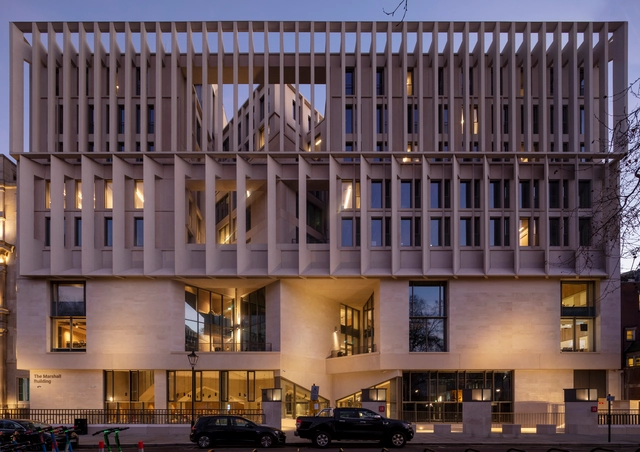
March is the month in which St Patrick's Day is celebrated, a tribute to the patron saint of Ireland who died on March 17, 461. In addition to the religious celebration, St Patrick's Day is marked by great parties in the streets, bars and pubs of English colonized countries such as Canada, the United States and, of course, the Republic of Ireland.
The Republic of Ireland is located on the Island of Ireland, northwest of Continental Europe and borders Northern Ireland, one of the countries that make up the United Kingdom, from which it gained independence at the beginning of the 20th century, in 1919, after an intense conflict. Since the War of Independence, the country has struggled to value and recognize its local culture, including its architecture, whether historical or contemporary. Get to know a little more about the country's architecture through the work of the seven contemporary practices gathered below.
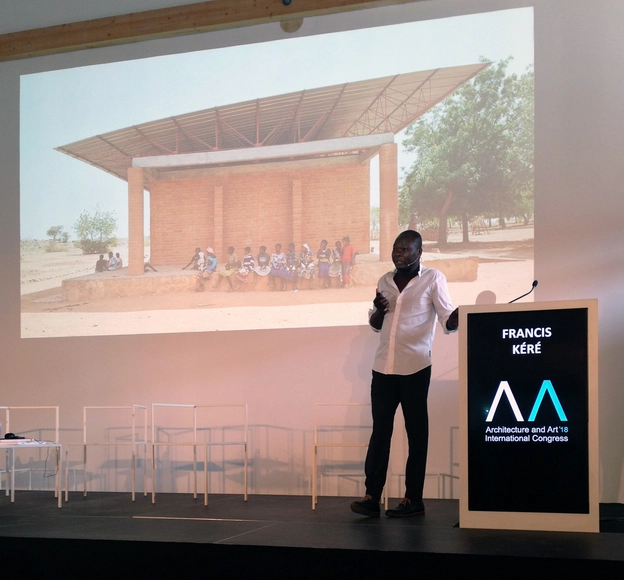
"I Draw on Paper, but I Prefer to Draw on the Ground". This phrase caught my eye during Diébédo Francis Kéré's speech at the AAICO (Architecture and Art International Congress), which took place in Porto, Portugal from September 3 to 8, 2018. After being introduced by none other than Eduardo Souto de Moura, Kéré began his speech with the simplicity and humility that guides his work. His best-known works were built in remote places, where materials are scarce and the workforce is of the residents themselves, using local resources and techniques.

Around the two-year anniversary of the start of the COVID-19 pandemic, there is little that looks the same as it did in March 2020, whether it’s how we work, how we study, or even how we move about our own homes. Many titles in this selection of spring architecture and design book releases show just how authors and design professionals are grappling with the major changes of our time. Volumes such as Debbie Millman’s Why Design Matters and Paola Antonelli’s Design Emergency share the diverse viewpoints and design solutions of some of the world’s leading creative voices; Otto von Busch’s Making Trouble and Max Holleran’s Yes to the City evaluate forms of DIY and housing activism; and Stephen Vider’s Queerness of Home and Suchi Reddy’s Form Follows Feeling tap into a more empathetic, human-centered approach to space. All of them, in some way, look at the past as a way to see clearly into the future of the built environment.

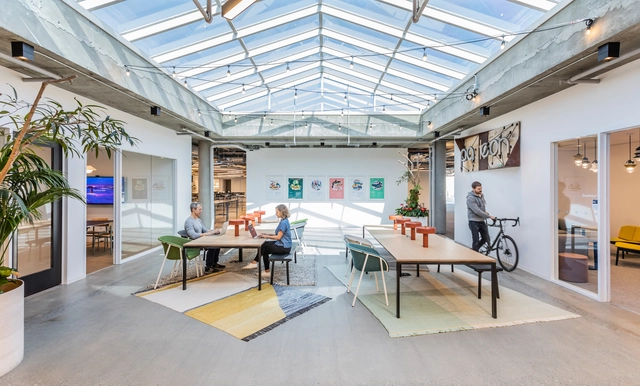
Office repositioning is one of the biggest struggles global businesses face today. This stands true for both: architecture businesses and the clients you’re servicing with your design solutions. In the last 18 months there have been enormous transformations within the AEC industry and arguably across most industries, many of which have influenced and shaped business decisions made during the pandemic. You could say the pandemic has only sought to accelerate some of the transformation we had started to see. The biggest and most notable is in the area of communication and connectivity. Staying connected and providing employees with the tools and platforms they need to collaborate, innovate and stay productive has been at the forefront for all companies.

.jpg?1647823485 "Gando Primary School Extension / Kéré Architecture. Image © Erik Jan Ouwerkerk")
.jpg?1647822667 "Serpentine Pavilion / Kéré Architecture. Image")
.jpg?1647822697 "Startup Lions Campus / Kéré Architecture. Image")
.jpg?1647823274)