“Let me tell you what I think of the bicycle. It has done more to emancipate women than anything else in the world. It gives women a sense of freedom and self-confidence. I appreciate every time I see a woman cycling... an image of freedom”. Susan Anthony, one of the most important American suffragette leaders, said this at the beginning of the 20th century, praising the libertarian power represented by women and their bicycles at the time.
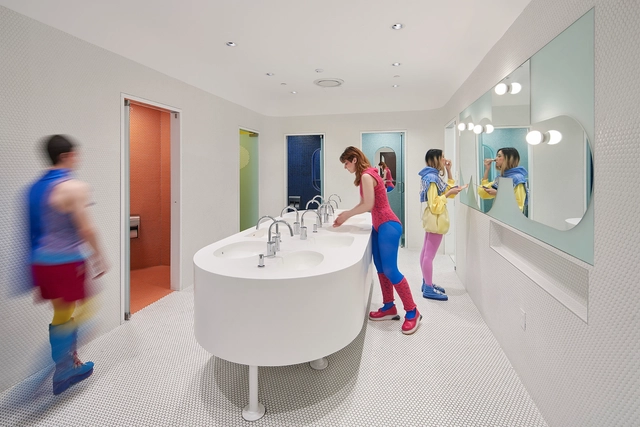
“Creating an equitable city implies that every citizen has their needs met”, states architect Wanda Dalla Costa at a time when metropolises were noticing change. Architects and the public have started to acknowledge the gender-driven design of public spaces. Across the world, urban areas have been a site of discrimination and danger to the LGBTQ+ community. Gender is demonstrated in public zones that promote visibility and interaction between people. An arduous challenge lays upon architects and planners to design fair environments and equitable spaces.
In the face of increasingly alarming predictions regarding the climate crisis, just increasing the efficiency of buildings is no longer enough. Zero energy buildings - or, better yet, energy positive buildings - make it possible to mitigate the negative impacts of the construction industry, which is responsible for 40% of all greenhouse gas emissions. These are buildings capable of producing more energy than they consume through the use of renewable sources. To reach this ambitious goal, it is necessary to follow three main steps:
Install a renewable power system to provide clean energy;
Include high efficiency systems, such as climatization equipment and low energy lighting.
Improve the construction envelope to conserve energy and reduce loads.
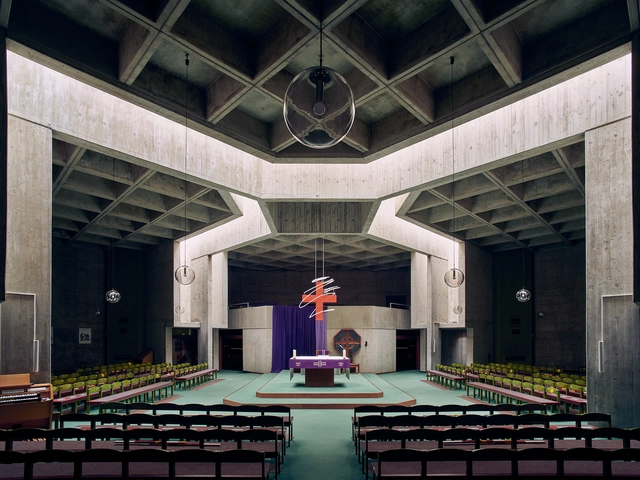
If one were asked to picture a Catholic Church, the first image to come to mind would probably resemble a medieval gothic cathedral with buttresses, pointed arches, and a spire pointing toward the sky. On second thought, many more styles could easily be identified as catholic architecture: the simple yet grandiose structures of the Romanesque or maybe the ornate styles of Baroque and Rococo. An image more difficult to associate with sacred architecture is that of Modernism. The Roman Catholic Church is a particularly conservative establishment. Modernism, on the other hand, is revolutionary; it is rational, functional, and technical; it rejects ornaments and embraces innovation. Surprisingly, in the years after the end of the Second World War, places of worship defied expectations. Blocks of concrete, raw materials, angular shapes, and exposed structures have all been employed to break from tradition and create churches that barely resemble a church. This article will explore Modernist mid-century Church architecture with the support of images from Jamie McGregor Smith.
Suburbs are one of the favorite fields of action for people who deal with social architecture in “first world” contexts. In 2020, a group of students from the Architecture for Humanity course at YAcademy– the renowned international school of architecture located in Bologna, Italy – had the opportunity to work with Michele De Lucchi in order to bring arts, beauty and quality into the drab suburbs of Milan.
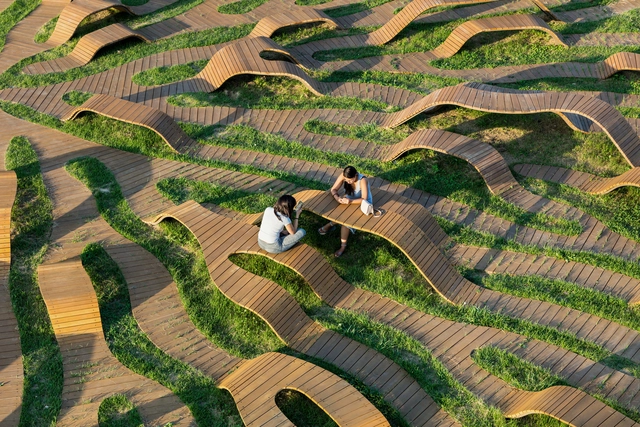
The design and functionality of public spaces in cities are always under scrutiny. Whether its accessibility to public parks and green spaces, the distance people live from public transportation, or the ways that spaces can be designed to make city life more safe and equitable. But now a new issue and one that lives at a smaller scale is starting to arise- where did all of the public seats go?
HeartFelt® Multipanel. Image Courtesy of Hunter Douglas Architectural
Known as the “fifth wall,” a ceiling is the interior overhead surface that covers the upper limit of a room. Unlike decor, wallpaper, furniture and other pieces that define indoor ambiance, it is not usually emphasized as a crucial design component, often resulting in the classic plain white shade that continues to be the norm in many, if not most, interior spaces. Nonetheless, ceilings can serve multiple purposes in any architectural project. For example, they provide comfort, act as protective surfaces for other building systems, conceal structural elements, and add layers of texture, movement and color. They also allow the enclosure or separation of spaces and contribute to sound diffusion, hence reducing noise transfer between rooms.
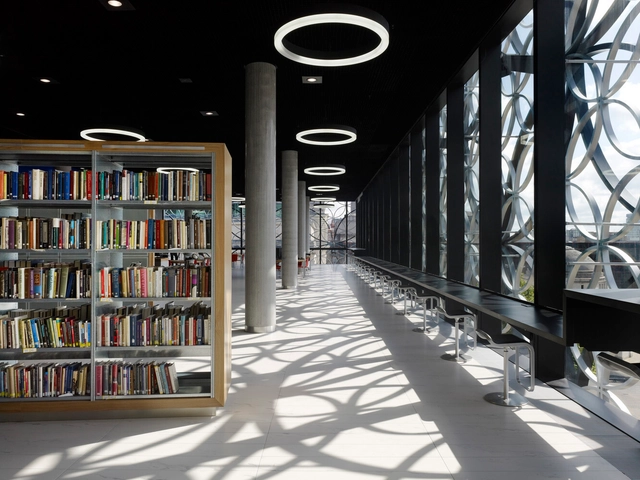
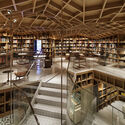
As gateways to knowledge and culture, libraries play a fundamental role in society. Foundational in creating opportunities for learning, as well as supporting literacy and education, the resources and services each library offers all work towards helping to shape new ideas that are central to building a creative and innovative society.
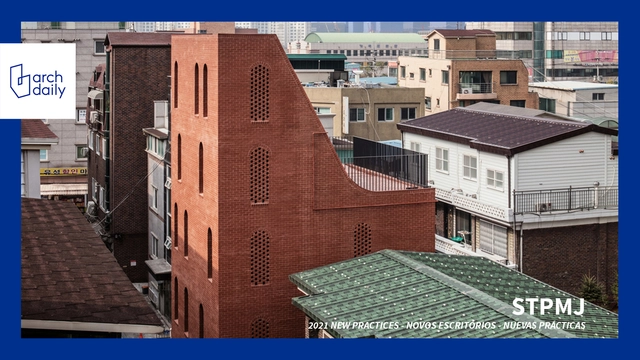
Seoul, similar to numerous large cities across the globe, are characterized by land scarcity, overpopulation, staggering real estate prices, and urban segregation. These living conditions forced architects and urban planners to pursue alternatives, (re)introducing new models of co-living, low-cost housing in suburban areas, and mixed-use developments. However, proximity to work, educational, commercial, health facilities, and public transportation, as well as optimized infrastructure and better governance have sustained living within compact city boundaries desirable. Tucked within the busy streets of Gangseo-gu, Five Story House by stpmj is a project that explores the relationship between single-family housing and dense urban contexts beyond investment value and contextual constraints.
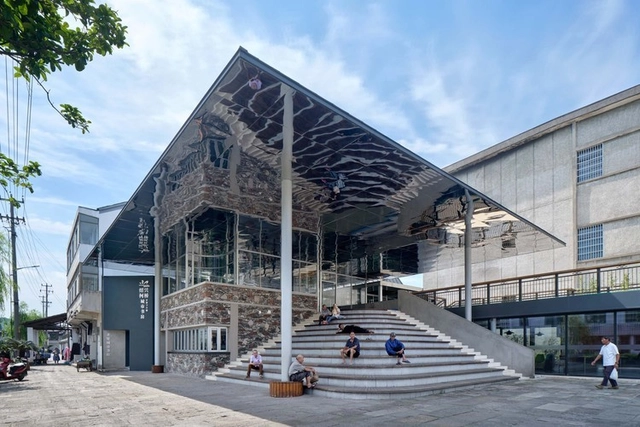
A public program fulfills several functions that, in addition to improving the social dynamics of the surroundings, can be an important factor in increasing the feeling of belonging, the offer of jobs and services, and the quality of life in the area. Therefore, after presenting popular housing projects developed in Brazilian communities, we searched for cultural equipment that occupy rural and urban areas that are less privileged in terms of infrastructure.
Democracy’s essence is the people's self-government and autonomy based on their own rights, and its characteristics are demonstrated through equality and participation. If democracy means a more equitable way of public life in architecture, then, this way of life is dependent on the homogenization of the building's spatial structure, with open, transparent, and functionally diverse public spaces. It is also possible to argue that the birth, maintenance, and demise of democracy all occurred in public space.
The democratic regime of Athens began in the sixth century B.C. The square became a meeting place, a symbol of architecture's democratic politics. Although people's access to assembly has become more widespread and convenient as technology has advanced, the existence of public space in the city remains critical, representing the spatial demands of citizens' public rights beyond the basic conditions of survival and serving an important spiritual function of expressing democracy. So, how architecture be democratic? How can we realize the public nature of architecture?
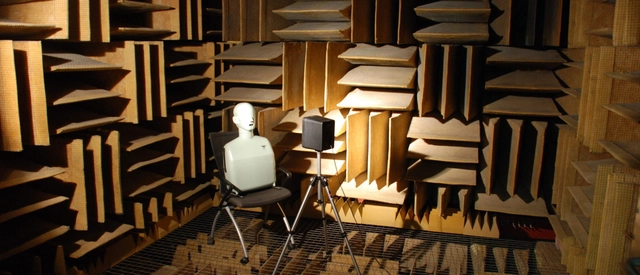
Steven J. Orfield's firm, Orfield Laboratories (OL), has spent 50 years in architectural design, research, and testing, dedicated to the premise that what matters in design is the end user, because design in the absence of user comfort, preference, and satisfaction is a failure. In this process, the firm has developed building performance standards for most commercial building types, and has now added to those standards the requirements for half of the world: people who are perceptually and cognitively disabled (PCD). The expense in doing this has been significant, but it has been one of the most important quests in Orfield's life.
https://www.archdaily.com/984212/when-it-comes-to-design-for-the-disabled-let-the-science-lead-the-processSteven J. Orfield
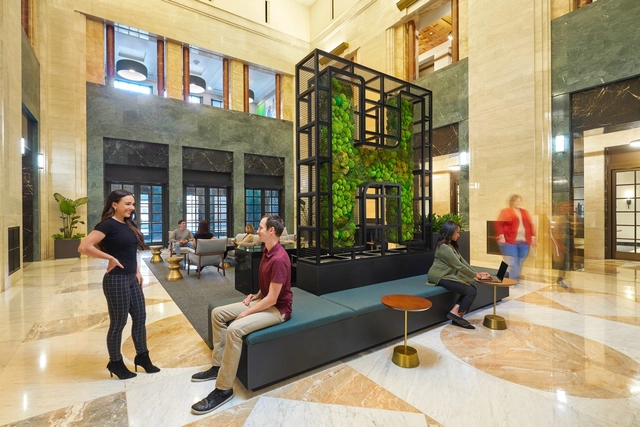
The pandemic has transformed how we work around the world. Companies have quickly rethought traditional workflows to stay connected and focus on the employee experience. Reimagining their workplaces in a holistic way, designers at Louisville-based Humana are working on new workplace models that ensure employee safety and well-being while creating greater flexibility and diverse ways to collaborate.
A few years ago, it was more common for the bicycle to be seen as an option for leisure and sport in large Brazilian cities. Currently, in the face of the climate crisis, the price of fuel, and more cyclist-friendly planning (although far from ideal), the bicycle has gained more and more prominence and has become a transport option for the population. However, we know that it is not always easy to find a place to keep it in our homes. Therefore, we present some possibilities.
Standing at 78 meters tall, the Museum of the Future (MOTF) is far from reaching Dubai’s famous skyline, which features skyscrapers like the unparalleled Burj Khalifa – the world’s tallest tower. However, with its bold shape and striking façade illuminated by more than 14,000 meters of Arabic calligraphy, it certainly succeeds in taking its place among the city’s most iconic buildings. The award-winning project by Killa Design and Buro Happold, described by many as ‘the most beautiful building in the world’, opened in February of 2022 in Dubai’s Financial District. In a total built up area of 30,000 sqm, it accommodates exhibition spaces for innovative ideologies, services, and products, as well as theater spaces, a laboratory, and a research center.
Most visitors to Mexico City spend their time exploring tranquil, idyllic neighborhoods like Roma and Condesa, filled with quaint buildings, bustling pedestrian promenades, and cosmopolitan attractions. But life in the Mexican capital finds most of the population on the disadvantaged side of a vertiginous inequality, defined by meager wages, the looming threat of violence, and a glaring lack of public infrastructure. The government’s attempts to address the latter have often stumbled; it is common practice for projects that require architectural expertise to be assigned to building contractors, who produce layouts lacking in any design sensibility. This even though Mexico City now boasts one of the world’s most fertile design scenes and has a strong legacy of renowned architects working in tandem with the government to produce exceptional public works—from the urban housing projects of Mario Pani to the monumental buildings of Pedro Ramírez Vázquez.
'You'll always find me in the kitchen at parties,' goes the old pop song from the 1980s.
But when it comes to Sven Rensinghoff, the marketing chief at premium German bathroom brand Bette, it’s mostly the bath. The first time I met him, a number of years ago, he was in the middle of a photo shoot at the ISH Frankfurt trade fair, lying in one of the manufacturer’s latest, high-end tubs. Clothes on, I should add. No water.
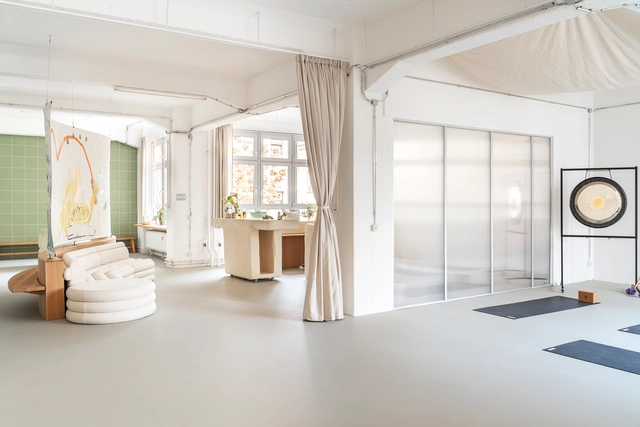
Originating in ancient India and verbally transmitted through the ages, Yoga has become a widespread and popular practice that engages the body and the spirit into reaching a stillness of the mind and a clear self-consciousness. There are varied schools of Yoga that reflect different origins and types of practices, however, they all require a combination the physical movement with mental, and spiritual awareness. The physical and mental health benefits that a regular practice can generate, despite turbulent or hard times, were recognized by the United Nations on the 21st of June 2022 Yoga day with the theme of Yoga for Humanity.







_Evgeny_Evgrafov_02.jpg?1655225292 "© Evgeny Evgrafov")



.jpg?1649785401&format=webp&width=640&height=580)



.jpg?1656064406 "© Bae Jihun")











![[DON'T TRANSLATE] The PILARES Program Seeks to Bring Beautiful Design to Mexico City’s Neglected Neighborhoods - Featured Image](https://snoopy.archdaily.com/images/archdaily/media/images/62b4/21c2/3e4b/31ac/f100/0004/slideshow/8D5A7030-1024x682.jpg?1655972285&format=webp&width=640&height=580)

![[DON'T TRANSLATE] The PILARES Program Seeks to Bring Beautiful Design to Mexico City’s Neglected Neighborhoods - Image 1 of 4](https://images.adsttc.com/media/images/62b4/221e/3e4b/31ac/f100/0009/thumb_jpg/Untitled-7.jpg?1655972378 "© Onnis Luque")
![[DON'T TRANSLATE] The PILARES Program Seeks to Bring Beautiful Design to Mexico City’s Neglected Neighborhoods - Image 2 of 4](https://images.adsttc.com/media/images/62b4/2205/3e4b/31ac/f100/0007/thumb_jpg/Untitled-4.jpg?1655972352 "© Onnis Luque")
![[DON'T TRANSLATE] The PILARES Program Seeks to Bring Beautiful Design to Mexico City’s Neglected Neighborhoods - Image 3 of 4](https://images.adsttc.com/media/images/62b4/21c2/3e4b/3137/e400/0008/thumb_jpg/8D5A6928-682x1024.jpg?1655972285 "Variegated bricks form a series of arched windows and doors in Dellekamp Schleich’s PILARES project, DIF Quetzalcoatl, located in the south of the city, near Xochimilco.. Image © Onnis Luque")
![[DON'T TRANSLATE] The PILARES Program Seeks to Bring Beautiful Design to Mexico City’s Neglected Neighborhoods - Image 4 of 4](https://images.adsttc.com/media/images/62b4/21eb/3e4b/31ac/f100/0006/thumb_jpg/Untitled-1.jpg?1655972327 "“Even the most privileged person can find themselves in need of a place to sit, rest, and feel safe when they’re walking around the city,” notes architect Fernanda Canales. Through her PILARES project (left, in construction), Reforma, she is seeking to create democratic indoor and outdoor spaces for the local community to find solace and protection. Architect Alberto Kalach of TAX (Taller de Arquitectura X) designed La Pulga, a lofty, long-arched, two-story concrete building in the Cuauhtémoc district.. Image © Onnis Luque")
![[DON'T TRANSLATE] The PILARES Program Seeks to Bring Beautiful Design to Mexico City’s Neglected Neighborhoods - More Images](https://images.adsttc.com/media/images/62b4/21c2/3e4b/31ac/f100/0004/newsletter/8D5A7030-1024x682.jpg?1655972285)