1. ArchDaily
  2. Architecture News

Architecture News

Finnish Architects Win Competition to Connect Two Alvar Aalto Museums

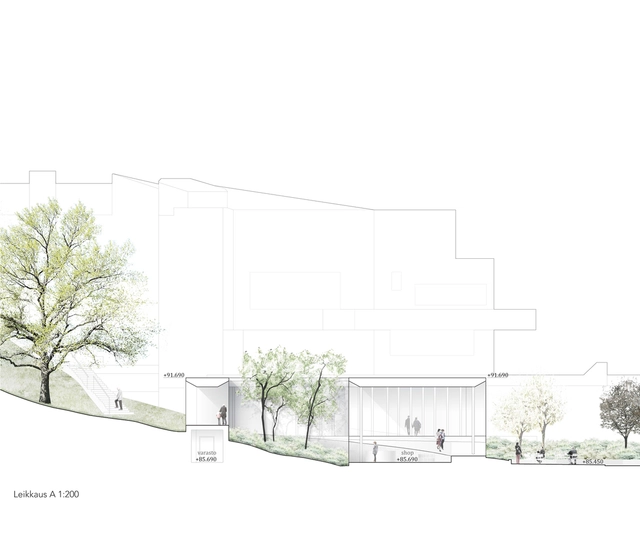
A group of young Finnish architects - Sini Rahikainen, Hannele Cederström, Inka Norros, Kirsti Paloheimo, Maria Kleimola - has won an open competition seeking ideas to "connect and integrate" two Alvar Aalto masterpieces - the Alvar Aalto museum and the Museum of Central Finland in Jyväskylä's Ruusupuisto park. With their entry, "Silmu," the winning team was selected over 689 other entries for creating a sensible proposal that met the competitions main goal - "to adapt to its worthy environment in a balanced way, and to find a natural connection with the architecture of Alvar Aalto."

“The high-end entries stand out from the rest with their clear, striking ideas and formal properties. The best things about Silmu were its atmosphere and the subtle contours. It was also seen as adding an extra, tranquil element between the Alvar Aalto Museum and the Museum of Central Finland, while further increasing the functionality of the outdoor spaces,” says Director of the Alvar Aalto Foundation Tommi Lindh.

2016 Wood Design Award Winners Announced

WoodWorks, an initiative of the Wood Products Council, has announced the winners of the 2016 Wood Design Awards. Honoring projects that “showcase the innovative use of wood as both a structural and finish material,” this year’s awards highlight the many uses and attributes of wood, “from structural performance and design versatility to sustainability and cost effectiveness.”

The Wood Design Awards are both National and Regional, with regional awards being presented at Wood Solutions Fairs across the country starting in late March.

The winners of the Wood Design Awards are:

Harvard GSD Students Win International Urban Design Competition for Shanghai Rail Station

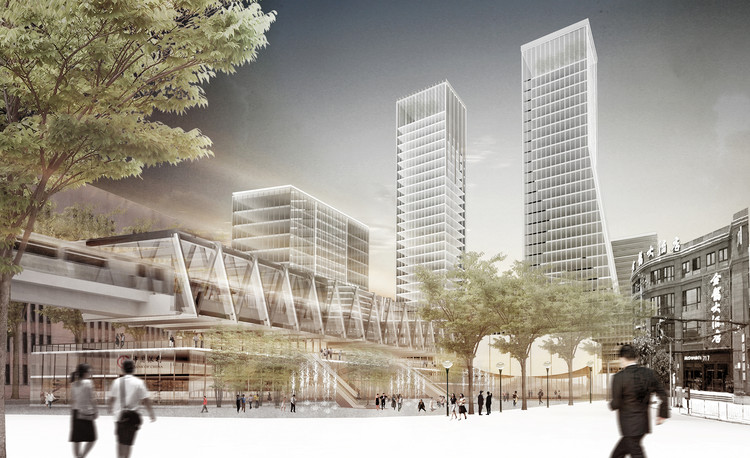
A team of urban design students from the Harvard Graduate School of Design has won first prize in UD Shanghai’s 2015 International Student Urban Design Competition for the Shanghai Railway Station Area. Through the competition, the team reimagined the “Shanghai Railway Station, one of the city’s four major railway stations and one of China’s major rail hubs, in the context of the next round of the Shanghai Master Plan (2020 to 2040). In particular, the competition asked teams to promote walkability and smoother traffic patterns,” where the station creates a topographical gap, “and to consider thee-dimensional urban development around the station.”

Harvard GSD Students Win International Urban Design Competition for Shanghai Rail Station - Image 1 of 4Harvard GSD Students Win International Urban Design Competition for Shanghai Rail Station - Image 2 of 4Harvard GSD Students Win International Urban Design Competition for Shanghai Rail Station - Image 3 of 4Harvard GSD Students Win International Urban Design Competition for Shanghai Rail Station - Image 4 of 4Harvard GSD Students Win International Urban Design Competition for Shanghai Rail Station - More Images+ 16

Boris Brorman Jensen and Kristoffer Lindhardt Weiss to Curate Danish Pavilion at 2016 Venice Biennale

Boris Brorman Jensen and philosopher Kristoffer Lindhardt Weiss have been appointed to curate the Danish contribution to the 2016 Venice Biennale. Their exhibition will centre on the theme of 'humanism', a "central leitmotif in Danish architecture," which "promotes a sense of community and expresses civic pride." Although it is top of the agenda, they state that "there is not much agreement on how, when and by what means this 'humanistic architecture' should be realised."

Grimshaw and BVN to Design Parramatta's First High-Rise Public School

Grimshaw and BVN have won an international competition to redesign schools in Parramatta, a suburb in Sydney, Australia. Planned to be the state's first high-rise educational facility, the proposal combines the Arthur Phillip High School (APHS) and Parramatta Public School (PPS) into a 14-story building designed after the ‘Schools-within-Schools’ (SWIS) model - "a template which delivers learning in stages rather than via age groups."

2016 ArchDaily Building of the Year Awards: The Finalists

Following an exciting week of nominations, ArchDaily’s readers have evaluated over 3,000 projects and selected 5 finalists in each category of the Building of the Year Award.

Over 18,000 architects and enthusiasts participated in the nomination process, choosing projects that exemplify what it means to push architecture forward. These finalists are the buildings that have most inspired ArchDaily readers.

This diverse group of projects hail from all corners of the globe and from firms of different sizes and style. This year's selection includes some Building of the Year stalwarts alongside a healthy selection of lesser-known and emerging practices - but most importantly, they all capture architecture's capacity to spark positive change in the environment.

Take AD Magazine’s Women in Architecture Survey for Upcoming Special Edition

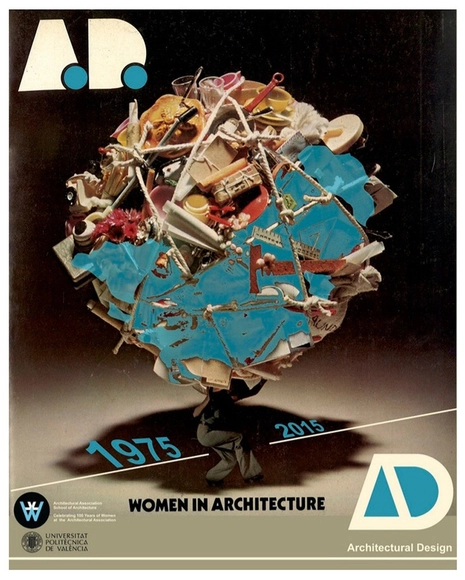
In August 1975, Architectural Design magazine published a special edition about Women in Architecture. At the time, director Monica Pidgeon sent letters to 100 architects asking what women can contribute to architecture that men can’t (and vice-versa), as well as the advantages and disadvantages of being a woman in the profession.

Now, 40 years later, a new version of the study aims to repeat Pidgeon’s initiative through an online survey with similar questions.

Public Vote Selects A Collection Of 'Future Architecture' Ideas

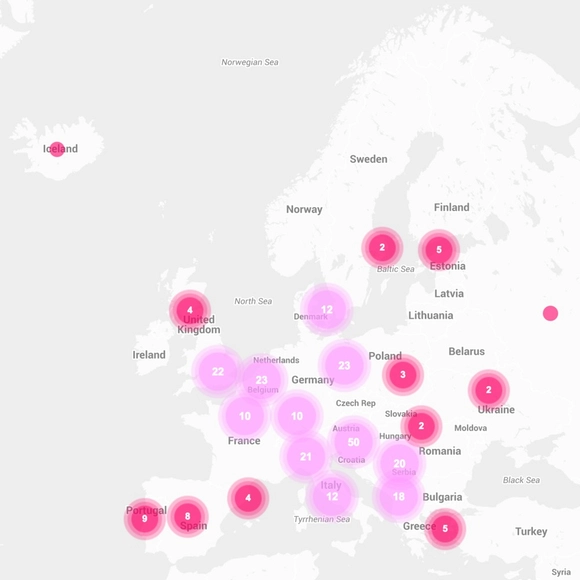
The results of the 2015 Future Architecture Call for Ideas have been announced, "revealing the critical thinking of the currently emerging generation of designers and architects in relation to the existing models that shape architecture as a discipline." Submissions presented visions "of what architecture could be, and highlighted architects and designers as initiators of change in the larger societal picture." As the first pan-European platform of architecture museums, festivals and producers, it has been designed to both bring together ideas about the future of cities and architecture closer to the wider public.

You can browse the selection after the break.

Escobedo Soliz Studio Wins MoMA PS1's 2016 Young Architects Program

Mexico City-based Escobedo Soliz Studio has been named the winner of MoMA and MoMA PS1's annual Young Architects Program (YAP) in New York - now in its 17th edition. Selected over four other finalists, the winning project, Weaving the Courtyard is “neither an object nor a sculpture standing in the courtyard, but a series of simple, powerful actions that generate new and different atmospheres," says the architect. It will serve as a "temporary urban landscape" for the 2016 Warm Up summer music series in MoMA PS1’s outdoor courtyard.

"Weaving the Courtyard is a site-specific architectural intervention using the courtyard’s concrete walls to generate both sky and landscape, with embankments in which platforms of soil and water suggest the appearance of a unique topography," says MoMA.

MIT Students Win Competition to Design Hyperloop Pods

A group of Massachusetts Institute of Technology (MIT) engineering students has won the first round of a competition to design transport "pods" for Elon Musk's ultra-fast Hyperloop. Selected from more than 100 other university teams, the top teams will now have the opportunity to build their pods for a trial run on the Hyperloop Test Track (now under construction) by April 2016. If successful, the pods will be able to transport up to 30 people at speeds of 700 miles-per-hour through the Hyperloop's 12-foot diameter tube.

Developer Pulls Planning on Renzo Piano's Controversial Paddington Tower

Protestors have prompted developer Sellar Property Group to pull plans on the Renzo Piano-designed skyscraper sited in London's Paddington area. The 72-story "skinny Shard" has been harshly criticized by locals and Historic England for "blighting views" of the capital and being out-of-place, hence its popular nickname - the "Paddington Pole."

“London’s skyline is unique, iconic and loved. It has to be managed sensitively and with proper planning,” Historic England chief executive Duncan Wilson told The Guardian. “Tall buildings can be exciting and useful, but if they are poorly designed, or in the wrong place, they can really harm our cities. We trust that the revised plans for Paddington Place will take the area’s unique character into account.”

With "Ordos – A Failed Utopia," Raphael Olivier Captures the Contradictions of Chinese Construction

For the past quarter century, China’s rapidly expanding economy provided architects with an almost endless supply of building opportunities. Easy lending allowed for an exponential rise in infrastructure projects – China used more concrete in three years than the United States used in the entire twentieth century. But in a country where the number of cities with over a million inhabitants jumped from 16 in 1970 to 106 in 2015, the speed of development enabled high profile, but flawed, experiments alongside the many necessary building projects. There is perhaps no better example of this phenomenon than the city of Ordos. The Inner Mongolian metropolis – home to 100,000 – which sprang from the northern desert in the mid-2000s was designed for over a million inhabitants. The reality of the city came to public attention in 2009 when Al Jazeera wrote about an early uncertainty in the Chinese real estate market.

After living in China for a number of years, photographer Raphael Olivier finally gave in to the nagging urge to see Ordos for himself. Visiting last year, he found a well-maintained city that is still largely uninhabited. I interviewed Olivier about the project, his views on Ordos, Chinese prosperity, and what it means to photograph architecture.

12 Tips For Making an Outstanding Architecture Portfolio

Getting a job or internship at an architecture firm doesn't only depend on your skills as an architect (or student). The way you present your skills plays an essential role. At a time of great professional competitiveness and with resumes becoming more globalized, assembling a portfolio may seem like a chore and often very involving: Which projects do I list? What personal information do I add? Should I include my academic papers in professional portfolios?

Brazilian architect Gabriel Kogan has shared with us a list of twelve tips on how to build a good architectural portfolio, ranging from graphic design to the type of personal information and content that should be included in your resume. Read his guidelines after the break, and if you have any other tips share them with us in the comments section.

Dutch Designers Propose Ways of Transforming Decommissioned Oil Tankers Into Tiny Cities

Four Dutch designers—Chris Collaris, Ruben Esser, Sander Bakker and Patrick van der Gronde—have envisioned a sustainable design of re-use for a discarded oil tanker in the Southern Gulf Region, which they have entitled The Black Gold. They believe that the oil tanker is the "perfect icon" for representing "the geographic, economic and cultural history of the Arabic oil states" – an icon which they predict will become more and more obsolete as the supply of crude oil is moved away from shipping and into pipe infrastructure.

Nike, Inc. Unveils Plans for World Headquarters Expansion

Nike has unveiled plans to expand their World Headquarters, located near Beaverton, Oregon. Their campus first opened in 1990 and has undergone three waves of construction, doubling its size. Now, Nike will expand the facility again, adding 3.2 million square feet of office, mixed-use and parking facilities.

Winner Announced in Baltic Way Memorial Competition

Bee Breeders has announced the winners of their Baltic Way Memorial architecture competition. The competition sought to create a reminder of the impact of the 1989 Baltic Way, a peaceful demonstration that occurred when people across three Baltic countries joined hands to form a human chain stretching more than 600 kilometers. Each entry was judged on how successfully it both drew on the seriousness of the Baltic Way event, while simultaneously representing a hope for the future. The jury evaluated all entries on a number of criteria including clarity and strength of concept, originality, quality of work, appropriateness to context and scale, and its strength as a public symbol to memorialize the event.

Students Propose to Revitalize Sydney Opera House in 2015 MADE Program

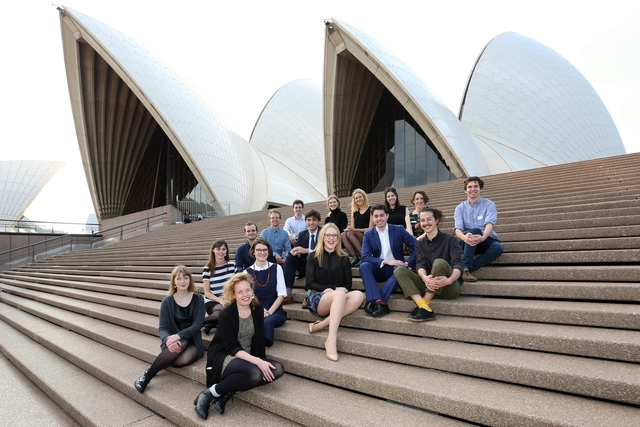
The 2015 session of MADE—the Multidisciplinary Australian Danish Exchange—has recently been completed and presented to the public. Established in 2013 by the Sydney Opera House, the MADE Program is an extracurricular experience for Australian and Danish students of architecture, engineering, and design.

Teams of five students are exchanged between Australia and Denmark and work in multidisciplinary teams of two architects, two engineers, and one designer for six weeks on a collaborative project aligned with Jørn Utzon’s Design Principles.

Women in Architecture Teams Up With the Architectural Review to Launch Annual Survey

As a part of the Women in Architecture (WIA) program and its greater campaign, readers are invited to participate in a survey to help track the evolving status of women in the profession on a global level. The anonymous survey is “open to men and women working in the built environment and aims to track perceptions of equality, salary, and flexible working.”

In alliance with Architonic
Check the latest Architecture NewsCheck the latest Architecture NewsCheck the latest Architecture News

Check the latest Architecture News