


Health has become a central concern in architecture, planning, and design, driven by a growing awareness of how the built environment influences physical, mental, social, and environmental well-being. In 2025, this awareness moved beyond specialized building types or performance metrics and became central to architectural decision-making, informing how spaces are conceived, built, and inhabited across diverse contexts. Architects are no longer treating health as an external requirement but as an integral condition of everyday life.
This shift reflects broader pressures shaping contemporary practice, including social inequality, displacement, environmental instability, aging populations, and the cumulative effects of stress and isolation. As health systems and public policy struggle to respond at the required pace and scale, architecture increasingly operates at the intersection of care, environment, and culture, translating complex health challenges into spatial, material, and social responses. Buildings, landscapes, and infrastructure are becoming active participants in shaping how people move, gather, recover, and coexist.
As the year concludes, this article reflects on lessons from 2025 through a set of built projects that reveal how health has informed architectural practice across regions and scales. Each project is examined as a distinct lens on health, from collective care and ecological stewardship to mental well-being, autonomy across the life course, domestic environmental quality, and spaces for shared encounter. Together, they suggest that health is not a singular design goal, but a guiding ethic that increasingly defines how architecture engages with life itself.
Related Article
Building Optimism: Lessons from Climate Adaptation in 2025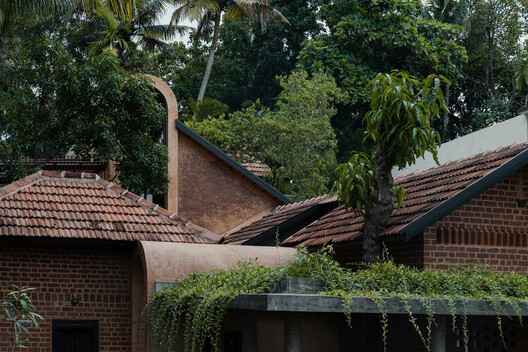
Social Health: Design as Collective Care
Hway Ka Loke School / Simple Architecture
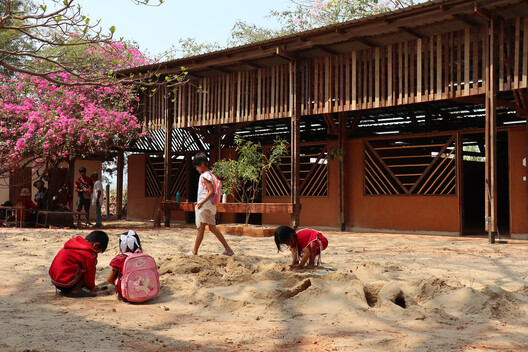
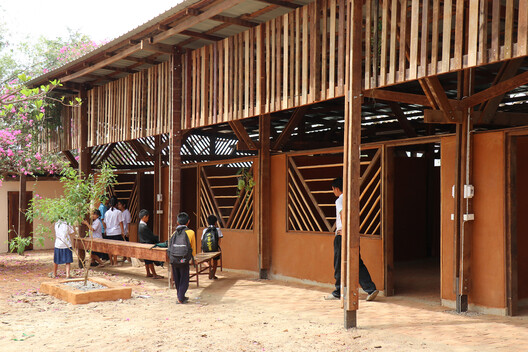
Social health in architecture takes shape when buildings are collective processes that reinforce dignity, agency, and belonging, as demonstrated by Hway Ka Loke School, where design and construction were shaped through sustained collaboration with migrant and refugee communities living under conditions of long-term precarity. Located near the Thai–Myanmar border, the school operates in a context where educational infrastructure is underdeveloped, placing primary responsibility for learning environments on communities.
With our initiatives, we aim to collaborate with rural migrant and refugee communities from Burma. The process of making adobe bricks is highly replicable, and the technique of making earthen bricks and using them as a construction material is fairly simple. Every year, we invite local architecture faculties and high schools to participate in brick-making workshops and in the process of building earthen walls.
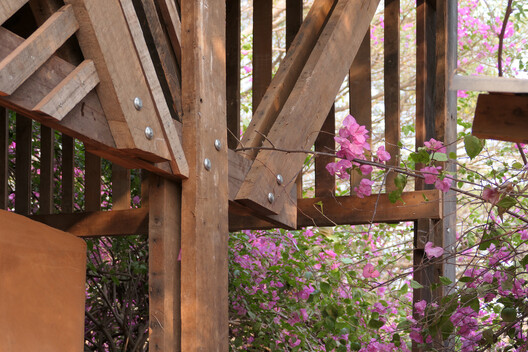
Material and construction choices reinforce this social framework. Adobe bricks produced on-site using local soil and rice husk were assembled in workshops, making the building process accessible, replicable, and rooted in shared knowledge. These workshops extend the project's impact beyond the completed classrooms by transferring skills, strengthening social ties, and exposing participants to the political realities shaping the lives of Burmese migrants and refugees. Through this approach, the project demonstrates how architecture can support social health by embedding care, participation, and continuity directly into the building process.
We are trying to continue and multiply these workshops year by year. During the workshops, students are not only learning about natural buildings, but they are also getting exposed to the complex political situation of Burmese migrants and refugees who are fleeing from a civil war conflict across the border into Thailand.
Planetary Health and Ecological Infrastructure
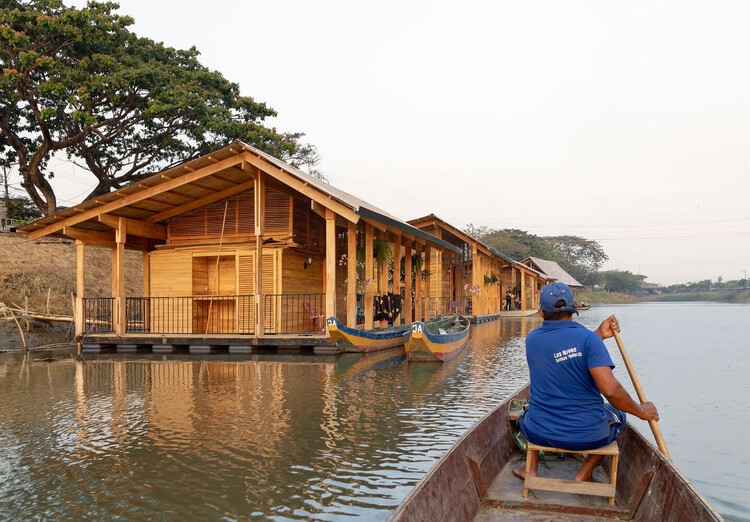
The Floating Neighborhood of Las Balsas / Natura Futura
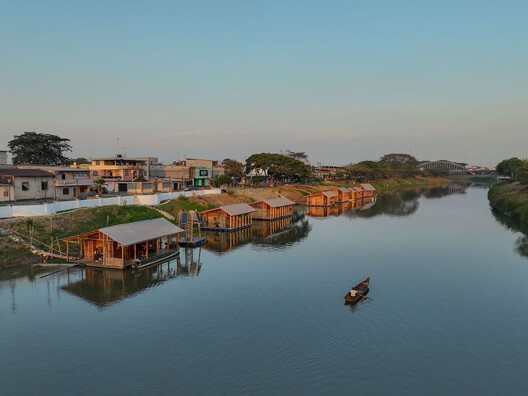
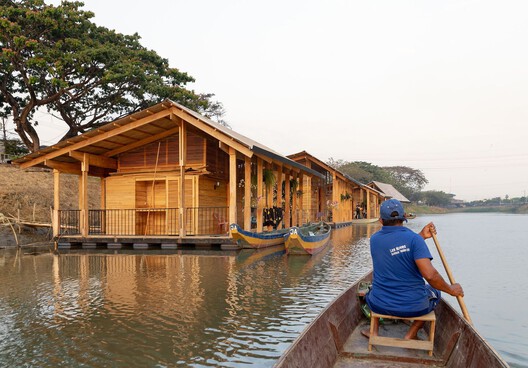
Planetary health in architecture becomes tangible when human settlement is designed as an extension of living ecological systems, as demonstrated by the Floating Neighborhood of Las Balsas, where housing, infrastructure, and landscape are conceived together to sustain community life and the health of the Babahoyo River ecosystem. Developed along a flood-prone riverbank, the project responds to decades of displacement that severed residents from the environmental systems that once supported their social, cultural, and economic lives. Working with local inhabitants, the architects established strategies that integrate floating housing platforms, floodable public spaces, and riverbank restoration as permanent conditions of living with water.
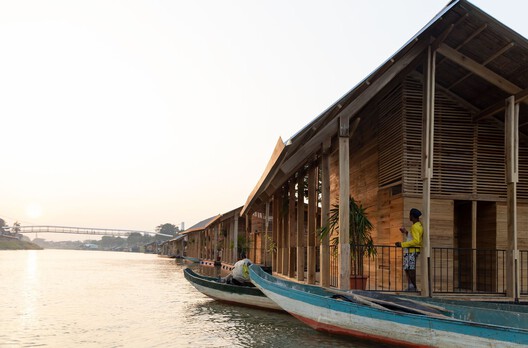
In cooperation with REARC Practice Lab and the local community, strategies were established for the rehabilitation of seven existing houses of various dimensions, the restoration of the riverbank with endemic vegetation, and the creation of floodable public spaces capable of adapting to the river's seasonal changes. The system consists of floating platforms, replicable wooden truss modules that can be expanded or reduced according to each inhabitant's specific needs, floodable walkways, dry toilets, and filtration systems that ensure permanent access to clean water.
As the architects explain, the project seeks to "revalue the floating ecosystem by recovering traditional building techniques for the preservation of the river's social and natural habitat." Environmental health is reinforced through concrete infrastructural decisions, including dry toilets and domestic filtration systems that prevent approximately 350 cubic meters of wastewater from entering the river each year, alongside the reforestation of 750 square meters of riverbank with native species capable of withstanding prolonged flooding. Governance strategies ensure that property and usage rights remain with families, aligning ecological care with social continuity.
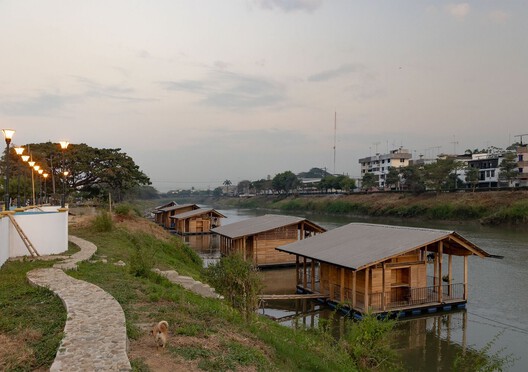
The urban strategies include the restoration of 750 m² of riverbank, reforested with native species such as Pechiche and Matapalo, capable of withstanding up to three months of flooding and helping to control soil erosion. These actions encourage the recovery of native plant species, stabilization of slopes, and regeneration of the riparian ecosystem. In parallel, the management model ensures that property and usage rights remain in the hands of the families, while the municipality provides technical support for maintaining shared infrastructure.
Mental Health: Grounded Design for Mental Wellbeing
Of Trees and Gods and Mud House / Urava Architecture
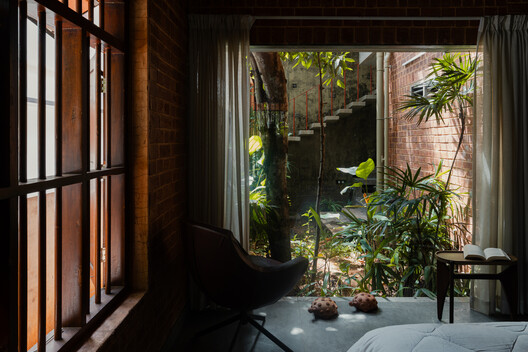
Mental health in architecture is shaped through environments that cultivate calm, continuity, and meaning by aligning spatial experience with memory, belief, and sensory balance, as demonstrated by Of Trees and Gods and Mud House, where the design draws directly from the sacred landscape and cultural narratives of its site. Set within the backwaters and holy groves of Paravur, the house is organized around existing trees, ritual references, and slow spatial sequences that anchor domestic life in a sense of rootedness and familiarity.
Guided by the spiritual beliefs of its residents, the home draws from the sacred character of the land, marked by nearby groves or 'Kaavu' and a tortoise found at the site's natural pond, rich with symbolic meaning. The residence integrates various elements from ancient temples and sacred architecture. The stone beams above passages echo traditional temple structures, recalling sculpted stone ceilings. Two Brick vaults rise like miniature 'Gopurams', their arched forms evoking distant mountain summits, resonating with the ancient Indian belief that mountains are sacred spaces.
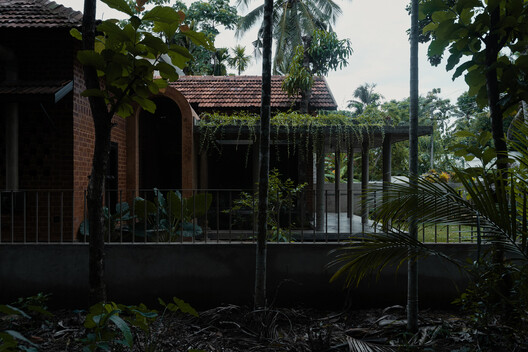
The project embraces what the architects describe as "the luxury of slow living that nurtures mental and physical well-being," framing mental health as a condition supported through pace, attentiveness, and everyday ritual. Spatial elements such as raised thinna platforms, varied ceiling heights, and long internal passages create moments of pause and transition. At the same time, symbolic references to temples and myth embed the home within a broader cultural continuum. Material choices further reinforce this atmosphere, with mud plasters, reclaimed stone, and natural finishes creating breathable, low-toxicity interiors that support sensory comfort and emotional stability.
Intergenerational Health: Autonomy, Dignity, and Connection
A Home for Seniors / acau architecture
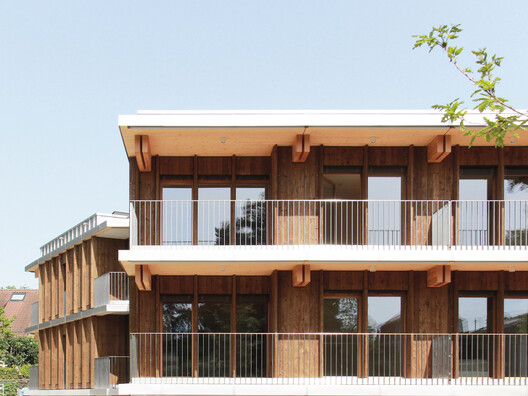
The Christinger Residence embodies an exemplary approach to sustainability. Using bio-based and locally sourced materials — wood, earth, and vegetation — and harnessing the climatic benefits of the patio, the project minimizes its carbon footprint while ensuring passive thermal and hygrometric comfort.
Health across the life course is supported when architecture enables autonomy, dignity, and social connection to persist as physical capacity changes, as demonstrated by A Home for Seniors, which designs housing for an aging population as a continuum of independent living rather than a transition to institutional care. Developed in response to declining autonomy among senior residents, the Christinger Residence reframes retirement housing through typology, circulation, and material choices that prioritize everyday agency and familiarity. The project is organized around a central patio that extends outdoor space into the heart of the building, using gradual thresholds to distinguish shared areas from private apartments while preserving intimacy and choice.
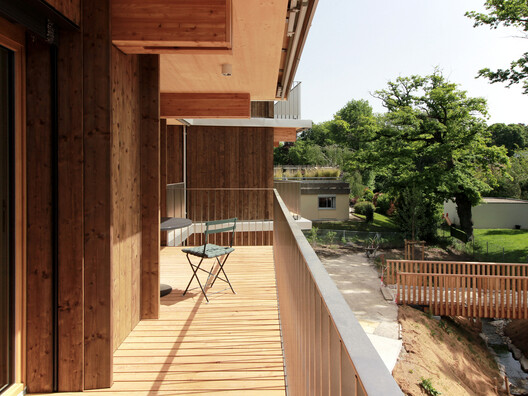
The patio, an insulated yet unheated space, provides an intermediate climate — warmer in winter, cooler in summer — regulated by the hygroscopic behavior of the earth bricks and operable façade and skylight openings. The green roof mitigates heat islands while cooling the photovoltaic and solar-thermal panels, improving their efficiency, and contributing to on-site stormwater management through retention and discharge into the stream.
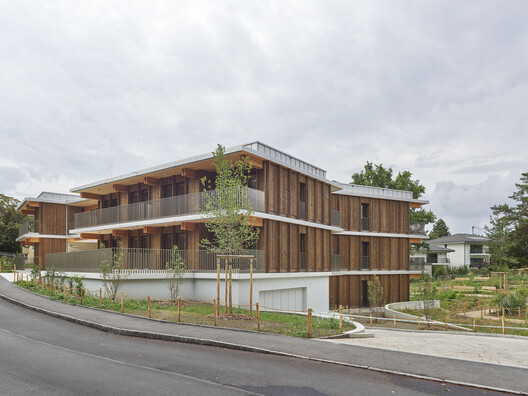
As the architects explain, the residence "seeks to avoid the institutional codes" associated with assisted living, instead offering shared kitchens, a library, a gym, and domestic-scale spaces that support social interaction without obligation. Environmental comfort reinforces well-being, with the patio serving as an intermediate climate-controlled space, regulated through earth construction, operable openings, and passive thermal behavior, reducing reliance on mechanical systems. Together, these strategies allow residents to remain active participants in their daily environments.
Environmental Health: the Home as a Living System
Zero-Carbon Eco Home / Bindloss Dawes
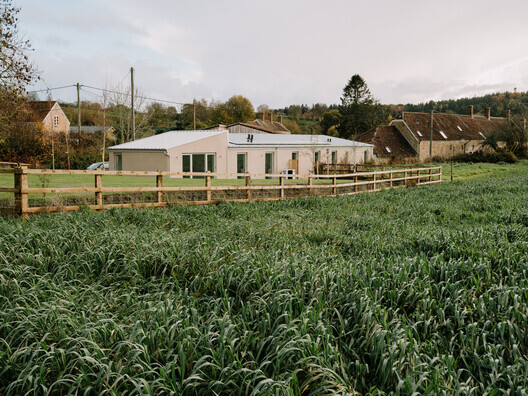
Bindloss Dawes Architects has completed a unique zero-carbon eco house created from the adaptive reuse of a former tractor shed on the edge of the idyllic village of Nether Compton in Somerset. The project embodies qualities central to Bindloss Dawes' approach: agricultural architecture, contemporary design, and exemplary environmental performance. The result is a home that feels both spacious and intimate.
Environmental health in architecture is most evident when the home operates as an integrated system that supports comfort, stability, and long-term well-being through material restraint, energy performance, and spatial clarity, as demonstrated by Bindloss Dawes' Zero-Carbon Eco Home. Adapted from a former agricultural shed in rural Somerset, the project retains the original structure while significantly upgrading thermal performance, insulation, and airtightness to create a home that is zero-carbon in use.
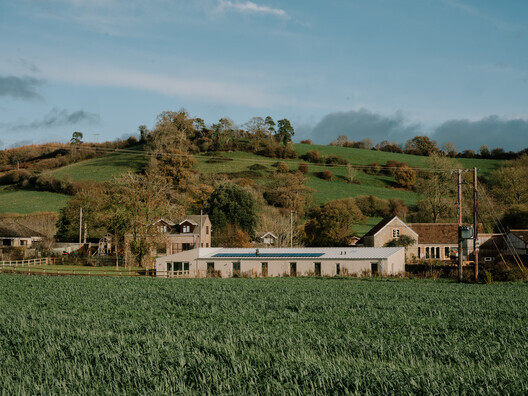
This project has been a rare opportunity to bring together many of the ideas of our architecture studio: to create a high-quality, sustainable home on a manageable budget. It demonstrates how an unassuming agricultural structure can be elevated into something that feels crafted and generous, combining the practical and the poetic.
The architects prioritized environmental conditions that directly affect daily health, including consistent indoor temperatures, high indoor air quality, and abundant natural light, delivered through high-performance envelopes, triple-glazing, and on-site renewable energy generation. As director George Dawes notes, the project demonstrates how "an unassuming agricultural structure can be elevated into something that feels crafted and generous," reinforcing the compatibility of environmental responsibility and domestic comfort. Exposed structure, natural timber finishes, and durable details create interiors that feel calm, legible, and long-lasting.
Shared Spaces: Health in Public Spaces
David Rubenstein Treehouse - Harvard University / Studio Gang
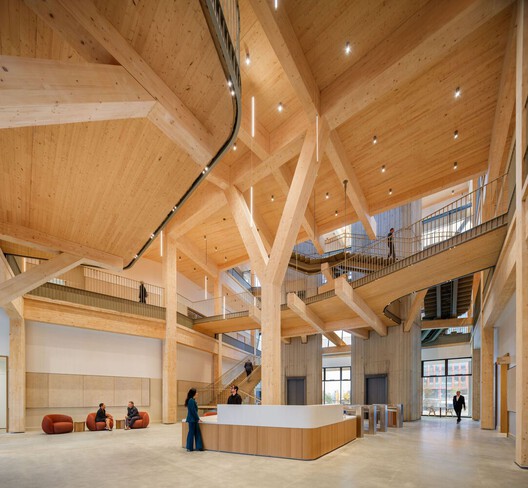
Collective health in architecture is sustained when buildings create conditions for openness, encounter, and shared purpose across diverse groups, as demonstrated by the David Rubenstein Treehouse, where spatial organization, material choices, and programmatic flexibility support social connection and intellectual exchange at an institutional scale. Conceived as Harvard's first university-wide hub for convening, the building anchors the Enterprise Research Campus and brings together students, faculty, industry partners, and the wider public. Multiple entrances lead into a central atrium that connects interior gathering spaces to outdoor porches and the surrounding campus.
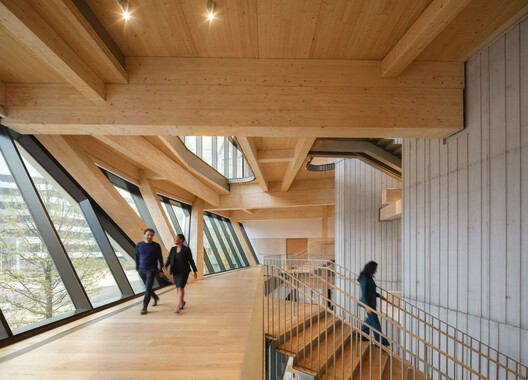
The building's main space, the Canopy Hall, features an adjoining open-air terrace and expansive views of the city framed by the structure's timber columns. Additional spaces that encourage informal convening and interaction are designed into every floor.
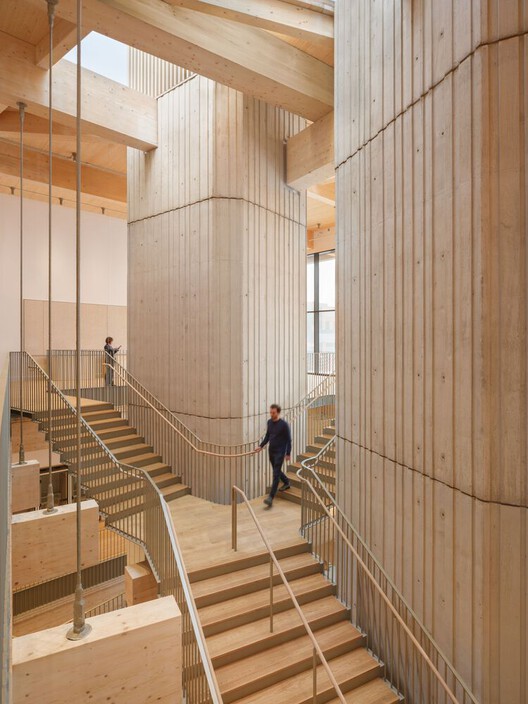
Interior circulation is organized around a central stair and a sequence of varied meeting spaces that encourage informal interaction alongside formal events. As Jeanne Gang describes, the building "opens itself up, welcomes all people, and serves as a visual and programmatic anchor," positioning inclusivity as a spatial condition. Material warmth, mass timber structure, and visible circulation reinforce a sense of accessibility and shared ownership.
The Rubenstein Treehouse is among the first buildings to open on Harvard's Enterprise Research Campus, a new mixed-use district in the Boston neighborhood of Allston that has transformed a large parcel of formerly industrial and vacant land into a welcoming and active area focused on research, enterprise, and innovation.
This article is part of the ArchDaily Topic: Year in Review, proudly presented by GIRA.
GIRA sets the standard where architectural design meets intelligence. From the defining moments of 2025 to the innovations shaping 2026, we create smart solutions that elevate living and working environments with timeless aesthetics. Join us in shaping the future of architecture and interior design — where vision becomes reality.
Every month we explore a topic in-depth through articles, interviews, news, and architecture projects. We invite you to learn more about our ArchDaily Topics. And, as always, at ArchDaily we welcome the contributions of our readers; if you want to submit an article or project, contact us.


