Are living spaces getting smaller? As cities densify and the global population continues its steady migration toward urban centers—projected to reach around 70% by 2050—domestic space is becoming increasingly compressed. Rising land prices, high construction costs, and a surge in single-person households push developers toward smaller units and tighter floor plans. At the same time, cultural shifts toward resource efficiency and minimal living support this move. Shrinking living spaces require fewer materials, consume less energy, and encourage people to live closer to their means.
From Tokyo's modular micro-living to Hong Kong's high-density vertical housing, and Berlin's adaptive-reuse apartments, architects have long demonstrated that small spaces can be deeply livable when every centimeter is treated with care. These compact spaces force a reconsideration of how space is organized. How can a space of only a few square meters feel generous, intentional, and complete? As Paola Bagna, a Berlin-based architect who specializes in adaptive-reuse projects and micro-living designs, explains:
It is possible to live comfortably in small spaces. To achieve good results, each centimeter counts.
Yet compactness only succeeds when spatial intelligence elevates the experience rather than diminishes it. Where once spacious, compartmentalized floor plans dominated, designers now rely on multifunctionality, clarity, and maximum space utilization. Hallways shrink or disappear, and rooms blend or double in function. Nowhere is this shift more revealing than in the bathroom—a space with fixed technical demands and high ritual significance. In response, manufacturers such as Dornbracht refine products that meet technical requirements with minimal footprints, helping architects maintain spatial clarity.
Rethinking Space: Design Strategies for Small Bathrooms
Within a few square meters, the bathroom becomes a testing ground for proportion, light, materiality, and ritual. It is a compressed environment in which architectural precision and intelligent solutions are non-negotiable, as moving a bolted sink is not as simple as rearranging furniture in a living room. And it is at this intersection of spatial generosity and technical constraints that manufacturers such as Dornbracht have gained significant architectural relevance, alongside their aesthetics, functional presence, and focus on users and their individual needs.
Founded in 1950 and headquartered in Iserlohn, South Westphalia, the brand combines advanced technologies with precise craftsmanship to produce high-quality, "Made in Germany" solutions for bathrooms, spas, and kitchens. Specific fittings in their portfolio place particular emphasis on proportion, projection, and spatial clarity, addressing the demands of micro-living environments.
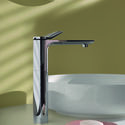
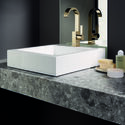
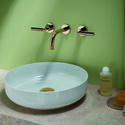
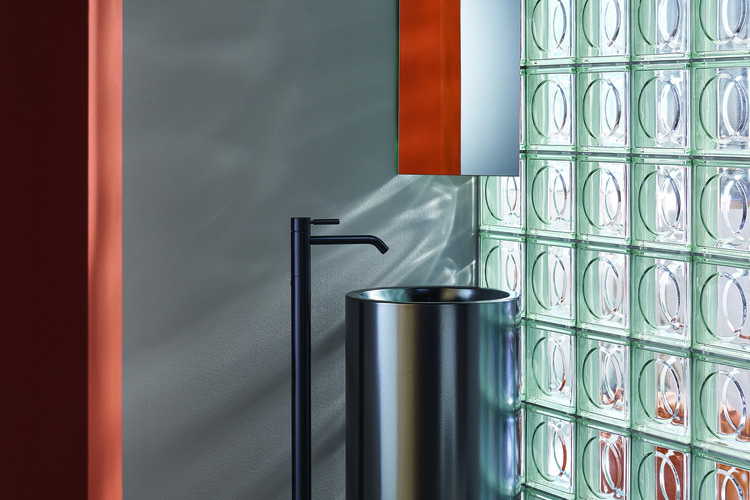
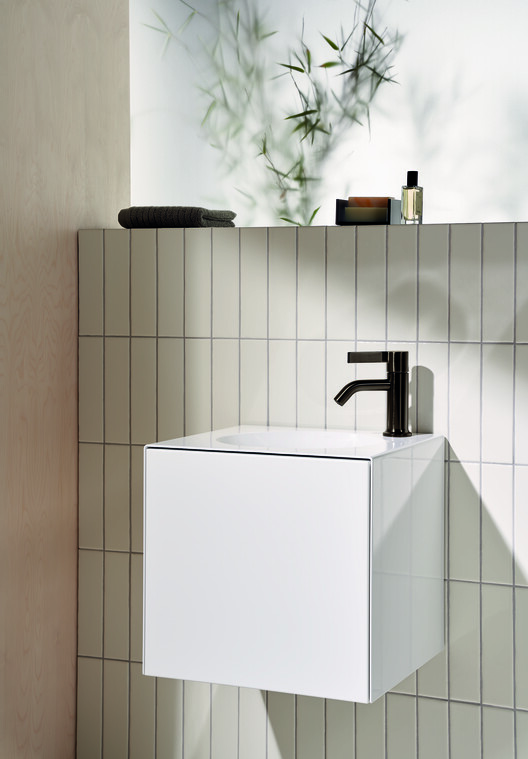
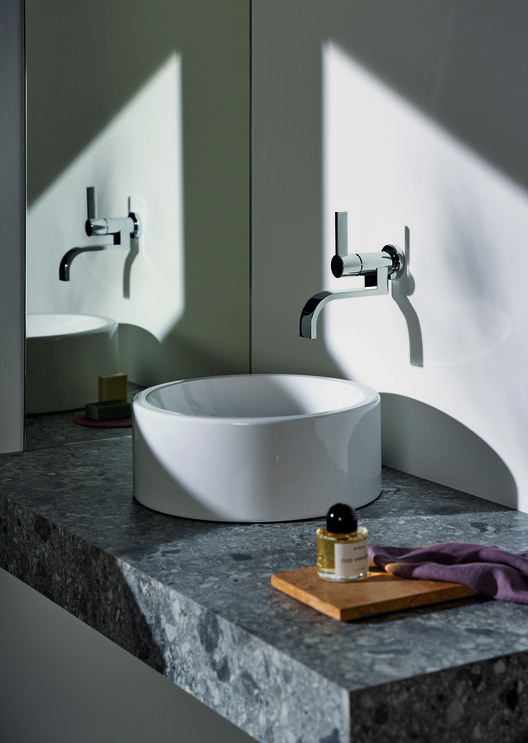
A fitting with a reduced projection, such as Dornbracht's Vaia mixer, can free valuable centimeters in a compact wash zone; a space-saving wall-mounted model, such as Tara or MEM can lift the visual plane of the room, expanding the visual field; while a freestanding fitting, such as Meta in Matte Black can redefine a tight layout by allowing flexibility of placement. These are not mere stylistic choices—they are architectural tools that enable small bathrooms to function efficiently without compromise.
Crafting Calm Through Materiality, Light, and Atmosphere
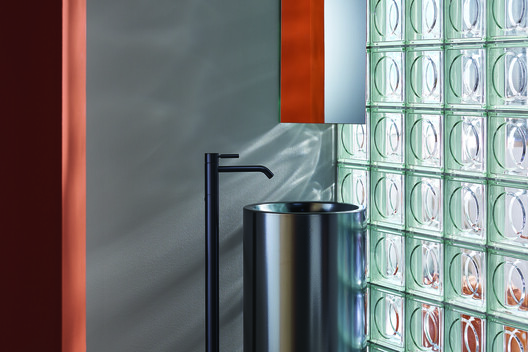
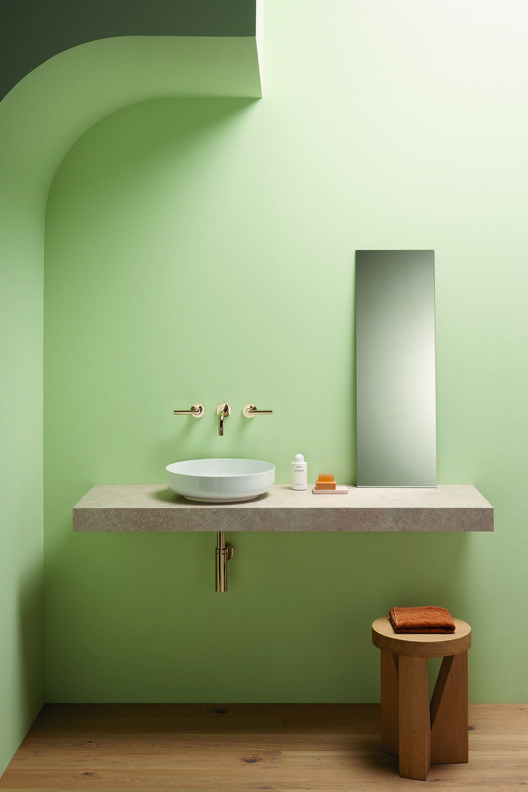
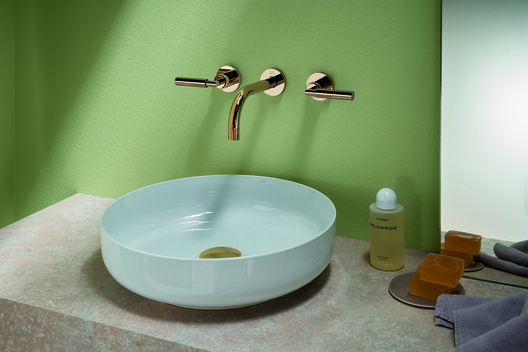
Beyond efficiency and precision, small bathrooms carry emotional and ritual significance. As daily life accelerates, they anchor personal routines—morning pauses, evening unwinding, moments of reset—providing privacy and retreat in dense urban life. Materiality plays a defining role: a surface that feels warm underhand, a continuous wall plane without visual interruption, or a fitting in a subdued, tactile finish can determine whether a small bathroom feels composed or chaotic. Examples such as Meta in Dark Chrome, which harmonizes quietly with minimalist surroundings, or Tara in Champagne (22kt Gold), used as a subtle focal point against a muted lime-green background, show how a single element can add depth without overwhelming the room. Even expressive choices like Meta Slim in Orange can bring personality to compact spaces when carefully integrated.
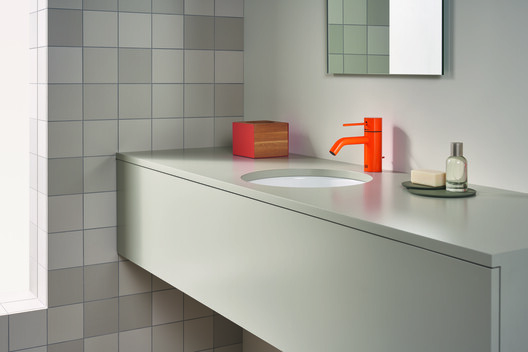
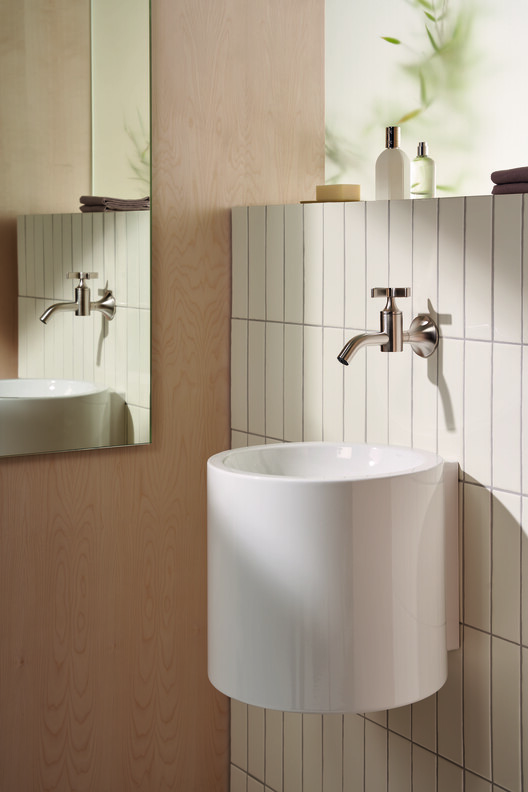
Light and proportion are equally decisive. A floating vanity lifts the floor plane and creates breathing space; a frameless mirror doubles perceived volume; and a consistent material palette prevents visual fragmentation. Wall-mounted fittings like MEM in Chrome or the raised-base Lissé in Chrome maintain clean surfaces that enhance spatial coherence. In micro spaces, these subtle alignments accumulate into an atmosphere of ease, one that cannot be measured in square meters but is immediately felt.
Beyond the Surface: Technical Complexity Concealed in Compact Spaces
Yet behind this calm and retreat lies hidden complexity. Within a few square meters, structure, plumbing, waterproofing, ergonomics, light, and storage must be carefully planned without compromising ease of use, emotion, or expression. When poorly planned, a small bathroom can feel cramped or chaotic. When handled with care, it demonstrates that generosity is not a matter of size but of intention. Plumbing runs, drainage gradients, waterproofing layers, and fixture sequencing must all interlock with millimeter precision. The simplicity a user experiences is the result of meticulous behind-the-scenes coordination by designers and manufacturers such as Dornbracht, whose design intelligence supports spatial diversity while remaining technically rigorous.
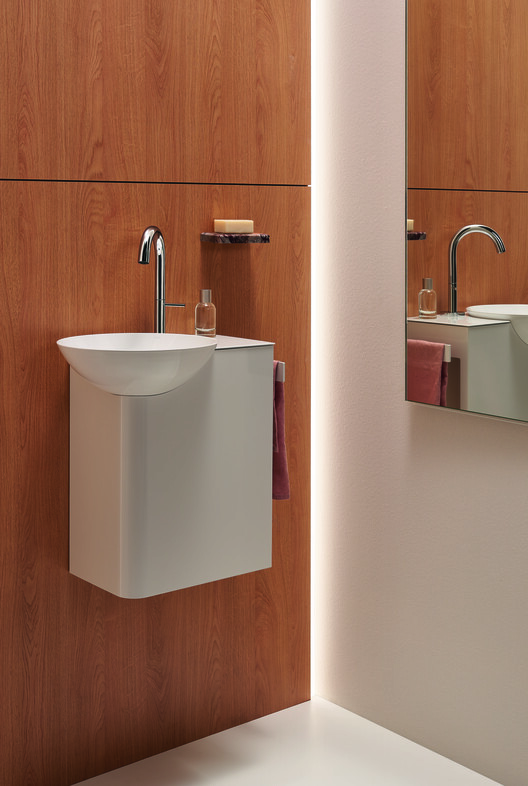
Through careful planning, material sensitivity, and the support of fittings designed with product intelligence in mind—such as those from Dornbracht, which balance tactile quality, spatial clarity, and technical precision—even a few square meters can feel expansive, composed, and complete. As the acceptance of well-designed compact environments grows, so too will the willingness to embrace smaller homes as urban living continues to tighten.