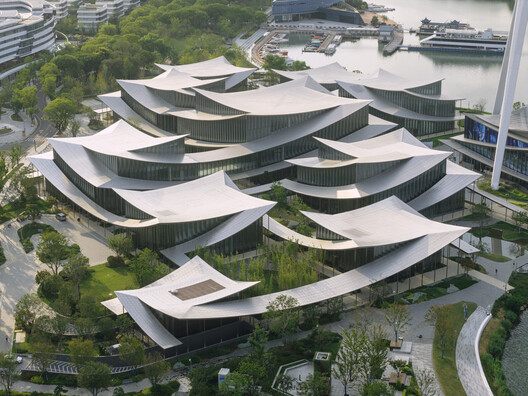
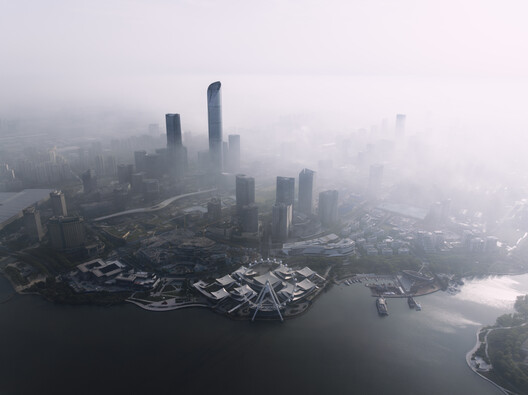
The Suzhou Museum of Contemporary Art (Suzhou MoCA), designed by BIG – Bjarke Ingels Group, is nearing completion along the Jinji Lake waterfront in Suzhou, China. Conceived as a cluster of twelve pavilions beneath a continuous, ribbon-like roof, the 60,000-square-meter complex reinterprets the traditional garden architecture that has long defined Suzhou's urban and cultural identity. Commissioned by the Suzhou Harmony Development Group and developed in collaboration with ARTS Group and Front Inc., the project is expected to open officially in 2026. The museum will debut with "Materialism," an exhibition curated by BIG that traces a material journey from stone to recyclate.
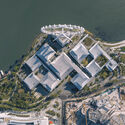
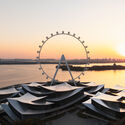
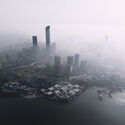
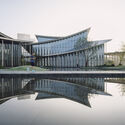
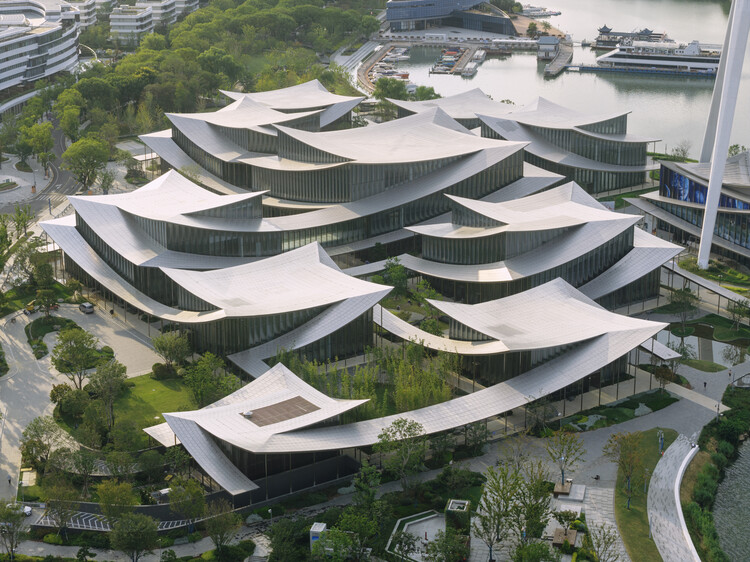
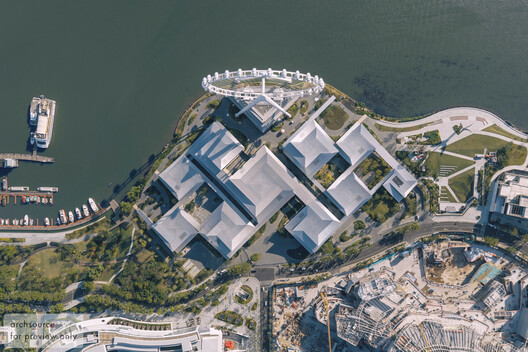
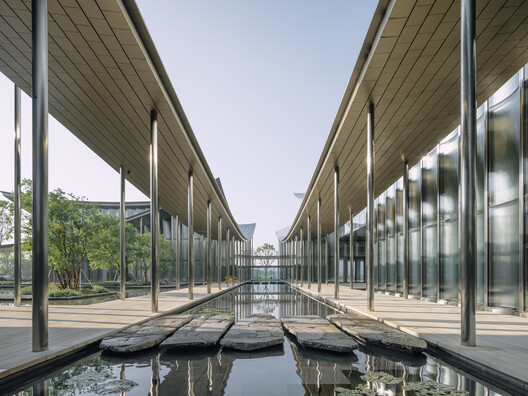
The design draws inspiration from Suzhou's landscape heritage, integrating water, vegetation, and built form into a continuous sequence of galleries and courtyards. Rooted in the concept of the lang (廊), a covered corridor found in classical Chinese gardens, the museum organizes its spaces as ten interconnected pavilions unified by undulating rooflines that recall traditional tiled eaves. Two additional pavilions extending over Jinji Lake are planned for completion next year, connected to the main structure via covered walkways.
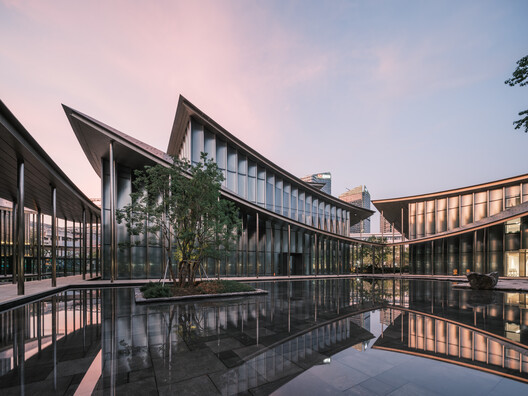
Clad in curved glass and warm-toned stainless steel, the facades reflect the surrounding environment, merging the structure with the sky and lake. Above and below ground, bridges and tunnels connect the galleries, allowing flexible circulation throughout the building. The museum's arrival plaza opens toward Jinji Lake, creating a public space that transitions naturally between urban, garden, and waterfront conditions.
Related Article
BIG’s Suzhou Museum of Contemporary Art Tops Out in ChinaInside, natural light filters through skylights and clerestories, animating the interior with shifting patterns of shadow and reflection. The main program includes four large galleries complemented by a grand entrance, a multifunctional hall, a theater, and a restaurant. The surrounding landscape is designed as a series of interconnected gardens that move from paved plazas to planted areas, ultimately blending into the lakeshore. The museum targets China's GBEL 2-Star Green Building certification, incorporating passive cooling, shading, and locally sourced materials.
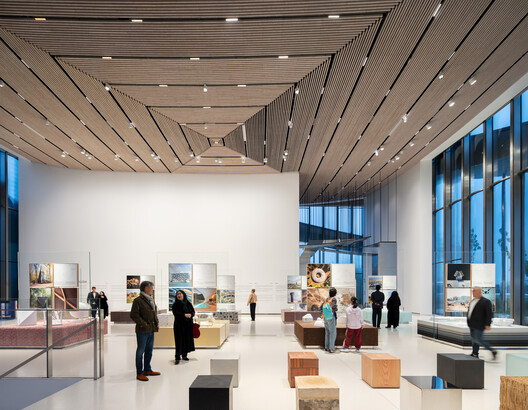
Curated by BIG, Materialism expands upon Bjarke Ingels' year-long editorial series for Domus magazine, in which each issue focused on a single material. The exhibition features large-scale mock-ups and models of twenty BIG projects, including Google Bay View, The Plus, and the Danish Maritime Museum, exploring how diverse materials inform architectural expression. Each gallery's seating and signage are made from the materials they represent, such as rammed earth, terrazzo, and rust stone, emphasizing the tactile relationship between matter and design.
In other recent updates from BIG, the studio's Gelephu Mindfulness City in Bhutan, an urban plan integrating ecology, heritage, and wellbeing, is named among the winners of the 2025 Holcim Awards. In France, BIG revealed the design for The Sail, a new congress center in Rouen featuring a sweeping timber roof inspired by the city's connection to the Seine River. Meanwhile, in Los Angeles, the City Council has approved the long-awaited 670 Mesquit mixed-use complex in the Arts District, paving the way for phased construction of BIG's first project in the city.